Itchy Mole: Possible Causes and When to Seek Care

Many itchy moles are linked to harmless irritation, rubbing, or dry skin. Itching alone does not confirm cancer, but itching with visible mole changes needs medical review.
Key Takeaways
- Many itchy moles are linked to harmless irritation, rubbing, or dry skin.
- Itching alone does not confirm cancer, but itching with visible mole changes needs medical review.
- The ABCDE pattern and the “ugly duckling” sign can help identify concerning moles.
- A dermatologist may examine the mole with dermoscopy and sometimes recommend a biopsy.
- Sun protection and regular skin checks can help lower risk and support early detection.
An itchy mole is commonly caused by irritation, dryness, or friction, and many itchy moles are not dangerous. However, a mole that itches along with changing size, shape, color, or bleeding should be assessed by a doctor because these can be warning signs of skin cancer.
Overview: What an Itchy Mole Can Mean
An itchy mole can happen for simple reasons such as dry skin, friction from clothing, shaving, or irritation from soaps and cosmetics. In many cases, the itch comes from the skin around the mole rather than the mole itself. This means an itchy mole is not automatically a sign of something serious.
That said, a new itch in a mole should not be ignored if it comes with other changes. Doctors pay closer attention when a mole becomes itchy and also changes in color, shape, size, texture, or starts to bleed or crust. These changes can sometimes be seen in skin cancer, including melanoma, so professional assessment is important when the pattern is unusual.
Moles, also called nevi, are clusters of pigment-producing cells. They may be flat or raised, smooth or slightly rough, and can darken or fade over time. Some changes are expected with age, pregnancy, or sun exposure, but sudden or progressive changes deserve closer review.
Common Reasons a Mole May Itch
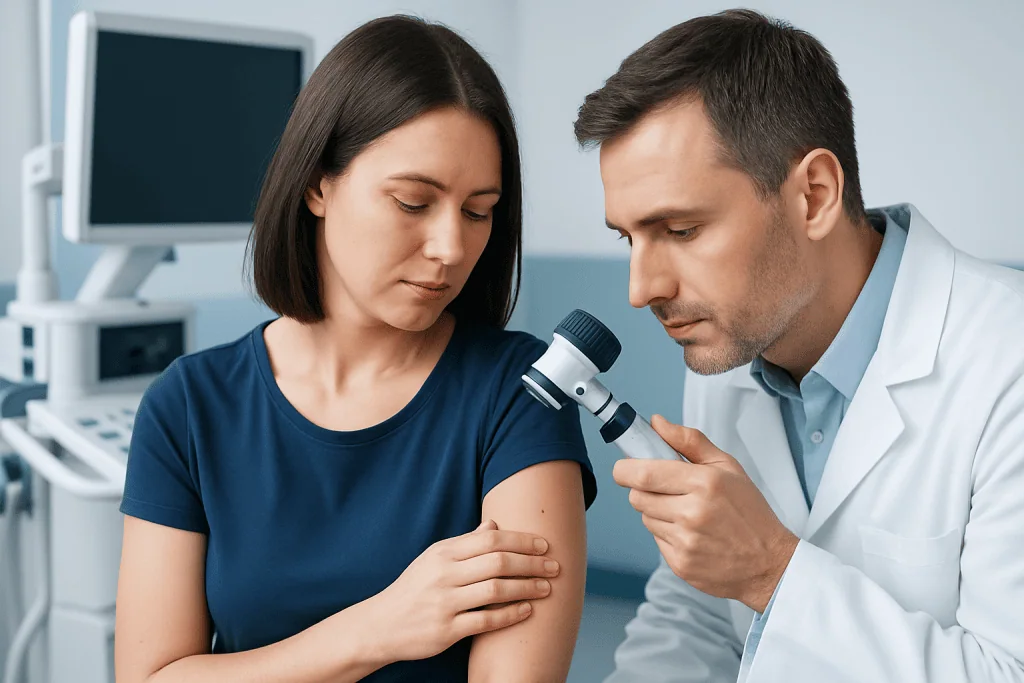
The most common causes of an itchy mole are harmless. Skin can become sensitive from dryness, eczema, heat, sweating, insect bites, or irritation after shaving. Tight waistbands, bra straps, or backpack straps may repeatedly rub a mole and trigger itching or tenderness.
Products applied to the skin can also play a role. Fragranced lotions, sunscreen ingredients, detergents, and adhesives may irritate the surrounding skin and make a mole seem itchy. In some people, seasonal dryness or sunburn can make existing moles more noticeable or temporarily uncomfortable.
Less commonly, itching may happen because the mole itself is changing. This does not always mean cancer, but any evolving lesion should be looked at more carefully. Some noncancerous growths, such as seborrheic keratoses or inflamed benign moles, may itch too, which is one reason a clinical examination is helpful.
- Dry or sensitive skin
- Friction from clothing or shaving
- Sunburn or recent sun exposure
- Eczema or contact dermatitis
- Inflammation within a benign mole
- Rarely, skin cancer such as melanoma
Warning Signs That Need More Attention

Doctors do not rely on itching alone when judging a mole. The concern rises when itching appears together with visible warning signs. A helpful guide is the ABCDE rule: asymmetry, border irregularity, color variation, diameter getting larger, and evolution, meaning any ongoing change over time.
Another useful clue is the “ugly duckling” sign. This means one mole looks noticeably different from a person’s other moles in color, shape, or behavior. A lesion that stands out, feels new, or keeps changing should be evaluated even if it is small.
Symptoms that deserve prompt review include bleeding without injury, crusting, oozing, pain, persistent tenderness, or a mole that becomes raised after being flat. It is also wise to seek advice for a new dark spot in adulthood, especially if it grows quickly or looks irregular.
- Itching that persists for weeks
- Changes in size, shape, or color
- Bleeding, crusting, or oozing
- Pain or tenderness
- A mole that looks different from others
- A new pigmented spot appearing in adulthood
Who Is at Higher Risk of a Serious Cause?
Anyone can develop skin cancer, but some people have a higher risk that makes mole changes more important to investigate. Risk is increased in people with fair skin, light eyes, or hair that burns easily in the sun. A personal or family history of melanoma, many moles, atypical moles, or intense sun exposure also raises concern.
Use of tanning beds is a known risk factor. So are repeated blistering sunburns, especially earlier in life. People with weakened immune systems may also have a higher chance of skin cancers and should be especially careful about skin changes.
Location matters as well. Moles on the back, scalp, soles, under nails, and areas that are hard to see may go unnoticed for longer. If a person has many moles or trouble checking certain areas, regular skin exams with a dermatologist can be especially valuable.
How Doctors Evaluate an Itchy Mole
A doctor usually begins by asking when the itching started, whether the mole has changed, and whether there has been sun exposure, rubbing, or use of new skin products. The skin is then examined closely, not just the single mole, because the overall pattern of moles can offer important clues.
Dermatologists often use dermoscopy, a handheld magnifying tool with light, to look at pigment patterns and structures not visible to the naked eye. This can help distinguish many benign lesions from suspicious ones, although it cannot replace a biopsy when there is real concern.
If the mole appears suspicious, the doctor may recommend removing part or all of it for laboratory analysis. This is called a biopsy and is the only way to confirm whether a lesion is benign or malignant. If needed, evaluation and dermatology care can guide next steps in a safe and timely way.
Treatment and Next Steps
Treatment depends on the cause. If itching is due to dryness, eczema, or irritation, management may involve avoiding triggers, using bland moisturizers, and treating inflamed skin as advised by a clinician. Friction can often be reduced by changing clothing, shaving habits, or skin products.
If a mole is suspicious, the main treatment is removal and laboratory examination. If cancer is diagnosed, treatment depends on the type and stage. For melanoma or other skin cancers, care may include surgical excision and, in selected cases, wider surgery or oncology input. This may involve skin cancer treatment and, when appropriate, coordinated medical oncology assessment.
People should avoid trying to scratch off, burn, or self-remove a mole. Home remedies can injure the skin, delay diagnosis, and make later evaluation harder. Near the end of the care pathway, some international patients may choose assessment at Acibadem International, where multidisciplinary specialists in JCI-accredited hospitals diagnose and treat skin lesions and related cancers.
Self-Checks and Prevention
Regular self-checks can help a person notice changes early. It is helpful to examine the skin in good light once a month, using a mirror for the back, scalp, and other hard-to-see areas. Taking photos can make subtle changes easier to compare over time.
Sun protection remains one of the most practical prevention steps. This includes seeking shade, wearing protective clothing and hats, and applying broad-spectrum sunscreen to exposed skin. Avoiding tanning beds is also important, since ultraviolet exposure increases the risk of skin cancer and can contribute to premature skin damage.
For people with many moles, atypical moles, or a history of skin cancer, a doctor may suggest professional skin exams at regular intervals. Prevention does not mean avoiding all outdoor activity; it means reducing unnecessary ultraviolet damage and responding promptly to suspicious changes.
When to Seek Medical Care
An itchy mole should be checked by a doctor if the itching does not settle, keeps returning, or comes with any visible change. Changes that matter most include growth, border irregularity, multiple colors, darkening, bleeding, crusting, or a mole that becomes painful or sore.
Prompt assessment is especially important for anyone with a personal or family history of melanoma, many atypical moles, or significant sun exposure. Even when the cause is minor, a professional review can provide reassurance and help decide whether observation, treatment of irritation, or biopsy is the safest option.
If the lesion looks suspicious, doctors may also evaluate for related conditions such as melanoma. Early review supports earlier treatment when needed and may prevent delays in diagnosis.
Frequently asked questions
Is an itchy mole always cancer?
No. Many itchy moles are caused by dry skin, friction, irritation, or inflammation around the mole. However, if the mole also changes in size, shape, color, or starts to bleed, it should be checked by a doctor.
How long should an itchy mole last before seeing a doctor?
A brief itch after irritation or sun exposure may settle within days. If the itching persists for a few weeks, keeps coming back, or is linked with visible mole changes, medical review is advisable.
What does a concerning itchy mole look like?
Doctors look for asymmetry, irregular borders, uneven color, increasing size, and evolution over time. Bleeding, crusting, oozing, pain, or a mole that looks different from all the others are also warning signs.
Can scratching an itchy mole make it dangerous?
Scratching does not cause melanoma, but it can injure the skin and lead to bleeding, scabbing, or infection. It may also make the area harder to assess, so it is best to avoid repeated scratching and arrange a medical review if the itch persists.
Should a child’s itchy mole be checked?
Most moles in children are benign, and irritation is common. Still, a child’s mole should be assessed if it is changing, bleeding, painful, very different from other moles, or if the parent is unsure.
Will a doctor always remove an itchy mole?
Not always. If the doctor believes the itch is caused by irritation and the mole appears benign, they may recommend observation and skin care measures. Removal or biopsy is more likely when the lesion looks suspicious or keeps changing.
References
- American Academy of Dermatology
- National Cancer Institute
- American Cancer Society
- National Health Service
- World Health Organization
This article is for general information only and is not a substitute for professional medical advice. Please consult a qualified doctor about your individual situation.
Oncology care in Turkey — second opinion and treatment plan
JCI-accredited · board-certified surgeons · reply within 24h
Add us as a Preferred Source to see more of our trusted health content across Google Search, AI Overviews and Discover.

More from the Health Library



Related Specialists

Dr. Meltem Hüner
Infectious Diseases & Clinical Microbiology
Dr. Esen Canbaz
Ophthalmology
Dr. Özge Kaymaz Yılmaz
Gynecology & Obstetrics
Dr. Münür Selçuk Kendir
Aesthetic Plastic & Reconstructive Surgery