IVF With Donor Eggs: Candidates, Process, and Success Factors

IVF with donor eggs may be considered for diminished ovarian reserve, premature ovarian insufficiency, repeated IVF failure, certain genetic risks, or age-related egg quality concerns. The donor and recipient both undergo medical, infectious disease, genetic, and counseling assessments before treatment begins.
Key Takeaways
- IVF with donor eggs may be considered for diminished ovarian reserve, premature ovarian insufficiency, repeated IVF failure, certain genetic risks, or age-related egg quality concerns.
- The donor and recipient both undergo medical, infectious disease, genetic, and counseling assessments before treatment begins.
- Success depends on embryo quality, sperm factors, uterine health, laboratory standards, and the recipient’s overall health rather than egg age alone.
- Treatment usually includes donor egg retrieval or use of frozen donor eggs, fertilization with sperm, embryo culture, and transfer into a prepared uterus.
- Legal rules, donor anonymity, and consent requirements differ by country, so patients should receive clear counseling before starting.
- A fertility specialist can personalize the approach and explain realistic expectations, benefits, limitations, and alternatives.
IVF with donor eggs can help people achieve pregnancy when the intended mother’s own eggs are not available or are unlikely to result in a healthy embryo. The process involves medical screening, donor selection, fertilization in the laboratory, embryo transfer, and careful pregnancy follow-up.
Overview
IVF with donor eggs is a form of assisted reproduction in which eggs from a donor are fertilized with sperm in a laboratory, and the resulting embryo is transferred to the uterus of the intended mother or a gestational carrier. It is considered when a person cannot use their own eggs, has a very low chance of success with their own eggs, or wishes to reduce the risk of passing on a serious inherited condition.
The treatment follows many of the same principles as standard IVF treatment, but the source of the eggs is different. Donor eggs may come from a known donor, such as a relative or friend, or from an anonymous or identity-release donor depending on local regulations and clinic policies. Eggs may be fresh, meaning retrieved during the same treatment cycle, or frozen, meaning previously collected and stored in an egg bank.
For many patients, donor egg IVF is both a medical and emotional decision. It can offer a realistic path to pregnancy when egg quality is the main barrier, but it also raises questions about genetics, disclosure to the child, legal parenthood, and personal values. A thoughtful consultation helps patients understand not only the medical steps, but also the practical and emotional aspects of treatment.
Who May Be a Candidate for Donor Egg IVF
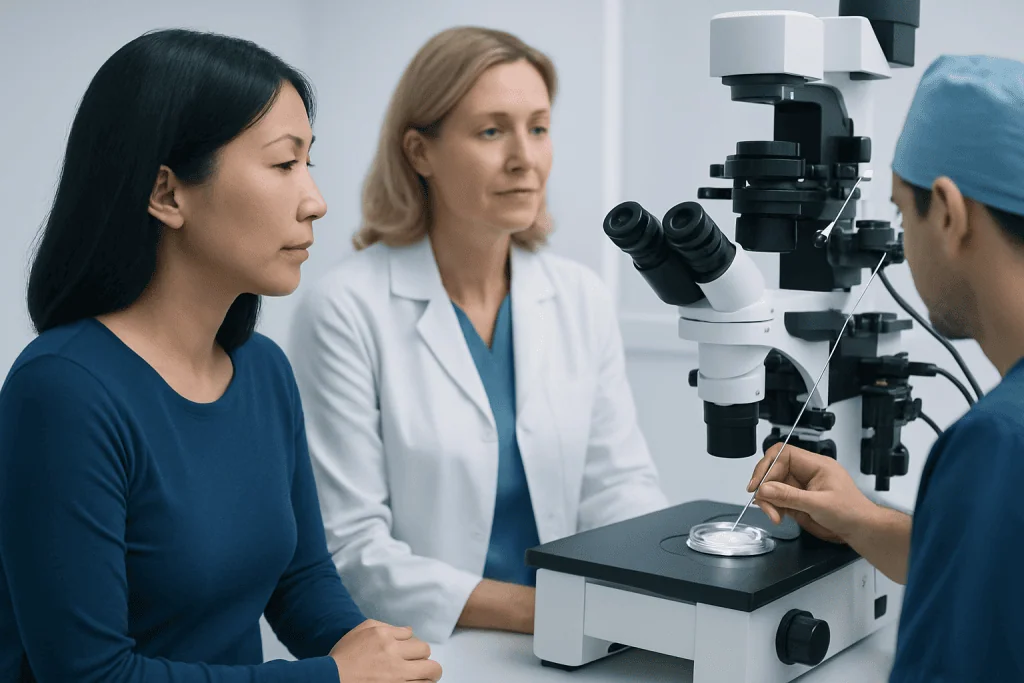
Donor egg IVF may be recommended for women with diminished ovarian reserve, premature ovarian insufficiency, or menopause, including early menopause after surgery, chemotherapy, or radiation. It may also be considered when repeated IVF cycles have produced few eggs, poor-quality embryos, or no pregnancy despite appropriate treatment. In some cases, age-related decline in egg quality is the main reason for considering donor eggs.
Another important indication is the risk of passing on a serious genetic condition. If preimplantation genetic testing with the patient’s own eggs is not suitable or has not resulted in transferable embryos, donor eggs may be discussed as an alternative. People with certain chromosomal conditions, previous removal of the ovaries, or absent ovarian function may also be candidates.
A fertility evaluation is still necessary before donor egg IVF, because pregnancy depends on more than eggs alone. The medical team assesses the uterus, sperm quality, general health, medications, and any conditions that could affect pregnancy. Patients being evaluated for female infertility may be offered several options, and donor eggs are usually discussed when the expected benefit is meaningful compared with other approaches.
Donor Selection, Screening, and Matching
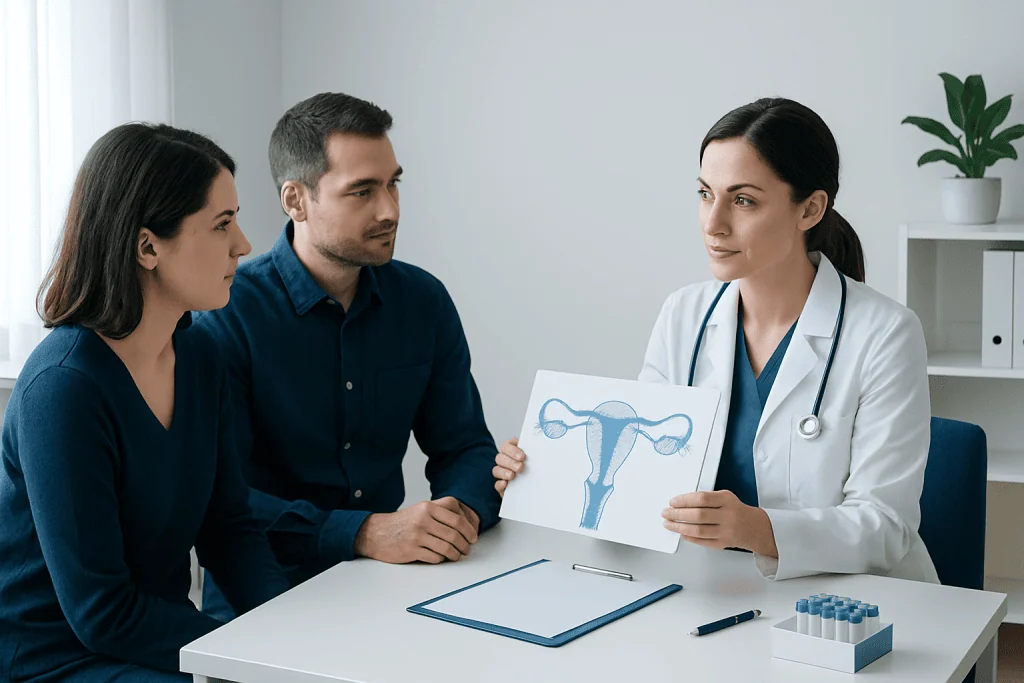
Egg donors are screened carefully to support the safety of the donor, the recipient, and the future child. Screening usually includes a detailed medical and family history, physical evaluation, infectious disease testing, and assessment for inherited conditions according to professional guidelines and local law. Psychological counseling or a psychosocial assessment is commonly included, especially when the donor is known to the recipient.
Recipient parents may be able to review non-identifying donor characteristics such as age, blood type, physical traits, education, interests, and medical history. Some programs also provide information about genetic carrier screening results. Matching is a personal process, and clinics encourage patients to focus on medical suitability and comfort with the donor arrangement rather than trying to predict a child’s exact appearance or personality.
Legal rules vary widely between countries and sometimes within regions. Regulations may determine whether donors can be anonymous, how many families may use one donor’s eggs, what information can be shared with a child in the future, and how consent is documented. Patients should receive clear written information and, where appropriate, independent legal advice before treatment begins.
The Step-by-Step Process
The process begins with consultation and testing for both partners or the individual planning treatment. The recipient typically has an ultrasound to assess the uterus, blood tests, and review of medical conditions such as thyroid disease, diabetes, hypertension, or clotting history. If a male partner’s sperm is used, semen analysis is performed; donor sperm may also be considered when needed.
In a fresh donor egg cycle, the donor takes ovarian stimulation medications so several eggs can mature at the same time. The recipient’s uterine lining is prepared with hormone medication so it is receptive when embryos are ready. In a frozen donor egg cycle, the timing may be simpler because the eggs have already been retrieved and stored.
After eggs are collected or thawed, they are fertilized with sperm in the laboratory. Conventional IVF or ICSI may be used depending on sperm quality, egg factors, and clinic practice. Embryos are then cultured for several days, and the embryology team evaluates their development. Some patients may also discuss preimplantation genetic testing, although its usefulness depends on the individual situation and is not required for every donor egg cycle.
Embryo transfer is usually a short procedure in which a selected embryo is placed into the uterus using a thin catheter. Many clinics recommend single embryo transfer to reduce the chance of twins or higher-order multiple pregnancy, which carries higher risks for both mother and babies. After transfer, the recipient continues prescribed hormone support until pregnancy testing and, if pregnant, for the period recommended by the fertility specialist.
Success Factors and What Affects Outcomes
Donor egg IVF often has favorable pregnancy potential because donor eggs usually come from younger, medically screened donors. However, no treatment can guarantee pregnancy. Outcomes depend on embryo development, sperm quality, laboratory conditions, embryo transfer technique, and the health of the uterus and endometrium.
The recipient’s age is less important for egg quality when donor eggs are used, but overall health remains important. Conditions such as uncontrolled diabetes, significant obesity, hypertension, untreated thyroid disease, uterine fibroids that distort the cavity, endometrial polyps, or chronic inflammation may affect implantation or pregnancy safety. Addressing these issues before treatment can help create the best possible conditions.
Sperm factors also matter. If semen analysis shows low count, poor movement, abnormal shape, or high DNA fragmentation concerns, the doctor may recommend additional evaluation or laboratory techniques. When donor sperm is used, it is also screened and selected according to medical and legal standards.
Success is best discussed as an individualized estimate rather than a single number. Clinics may consider the donor’s age, whether eggs are fresh or frozen, the number of mature eggs available, fertilization results, embryo stage, prior pregnancy history, and uterine assessment. A transparent discussion helps patients understand the chance of pregnancy, the possibility of needing more than one transfer, and when alternative plans should be considered.
Risks, Limitations, and Emotional Considerations
For the recipient, the medical risks of donor egg IVF are generally related to hormone preparation, embryo transfer, and pregnancy itself. Possible issues include medication side effects, bleeding or infection after procedures, ectopic pregnancy, miscarriage, and complications associated with multiple pregnancy if more than one embryo is transferred. Careful monitoring and single embryo transfer when appropriate can reduce some risks.
The donor also has medical considerations, especially in fresh cycles. Ovarian stimulation and egg retrieval are generally well-established procedures, but they may involve discomfort, bleeding, infection, or ovarian hyperstimulation syndrome. Ethical donor programs prioritize informed consent, medical safety, and the donor’s right to ask questions before participating.
Emotionally, donor egg IVF can bring hope as well as complex feelings. Some intended parents need time to process the loss of a genetic connection to the mother, while others feel comfortable once they understand that pregnancy, birth, and parenting still create a profound biological and emotional bond. Counseling can help individuals and couples discuss disclosure, family communication, and expectations for the future.
Patients should also consider financial, travel, and legal planning, particularly if treatment occurs abroad. Consent documents should clearly address ownership and storage of embryos, future use, withdrawal of consent, donor information, and what happens to unused eggs or embryos. A well-organized program gives patients time to review these decisions without pressure.
Preparation, Self-Care, and Follow-Up
Before treatment, patients can support their health by reviewing chronic conditions, medications, vaccinations, and lifestyle factors with their doctor. A balanced diet, regular moderate activity, stopping smoking, avoiding recreational drugs, limiting alcohol, and taking recommended prenatal vitamins can help prepare for pregnancy. Any medication changes should be made with medical advice, especially for people taking treatments for blood pressure, mood disorders, autoimmune disease, epilepsy, or diabetes.
Uterine assessment is an important part of preparation. Depending on the history, the doctor may recommend ultrasound, saline infusion sonography, hysteroscopy, or treatment of polyps, fibroids, adhesions, or fluid in the fallopian tubes. The goal is to make sure the uterine cavity is suitable for implantation before embryos are transferred.
After embryo transfer, patients are usually advised to continue prescribed medications exactly as directed and return for a pregnancy blood test at the scheduled time. Normal daily activities are often allowed, but heavy exertion, unapproved medications, and home pregnancy testing too early can increase stress or confusion. If pregnancy occurs, fertility care transitions gradually to obstetric care, with attention to the recipient’s age, medical history, and pregnancy risk profile.
When to See a Fertility Specialist
A fertility specialist should be consulted if a woman has known low ovarian reserve, early menopause, previous ovarian surgery, repeated unsuccessful IVF cycles, or a genetic condition that may affect future children. Consultation is also appropriate for people who have been advised that their own eggs are unlikely to produce a healthy pregnancy or who are exploring donor eggs after an infertility evaluation.
Medical advice is especially important before pregnancy if the intended mother has heart disease, kidney disease, hypertension, diabetes, autoimmune disease, a history of blood clots, or prior severe pregnancy complications. These conditions do not always prevent treatment, but they require individualized planning to protect maternal and fetal health.
Acibadem International’s multidisciplinary specialists and JCI-accredited hospitals diagnose and treat infertility-related conditions for international patients, including evaluation for donor egg IVF when appropriate. Patients should seek care from a qualified fertility clinic that provides clear counseling, ethical donor screening, transparent consent processes, and coordinated pregnancy follow-up.
Frequently asked questions
What is IVF with donor eggs?
IVF with donor eggs is a fertility treatment in which eggs from a screened donor are fertilized with sperm in a laboratory. The resulting embryo is transferred to the uterus of the intended mother or a gestational carrier. It is often considered when the intended mother’s own eggs are unavailable or unlikely to result in pregnancy.
Who is a good candidate for donor egg IVF?
Candidates may include women with premature ovarian insufficiency, menopause, very low ovarian reserve, repeated IVF failure, or age-related egg quality concerns. It may also be considered when there is a high risk of passing on a serious genetic condition. A fertility specialist evaluates the uterus, sperm factors, medical history, and pregnancy safety before recommending treatment.
Are donor eggs fresh or frozen?
Donor eggs can be fresh or frozen. Fresh cycles require coordination between the donor’s egg retrieval and the recipient’s uterine preparation, while frozen eggs have already been collected and stored. Both options can be appropriate, and the choice depends on availability, clinic experience, legal rules, cost considerations, and the patient’s treatment plan.
Will the baby be genetically related to the intended mother?
When donor eggs are used, the baby is genetically related to the egg donor and the sperm provider, not to the intended mother who carries the pregnancy. However, the intended mother provides the pregnancy environment and gives birth if she is the recipient. Many families find counseling helpful when thinking about genetics, bonding, and future disclosure.
How long does donor egg IVF take?
The timeline varies depending on donor selection, screening, legal consent, and whether eggs are fresh or frozen. A frozen donor egg cycle may be shorter once preparation begins, while a fresh cycle requires more scheduling coordination. The fertility clinic can provide a personalized timeline after the initial evaluation.
Is donor egg IVF safe?
Donor egg IVF is an established fertility treatment, but it still involves medical procedures and pregnancy-related risks. The recipient may need hormone medications and embryo transfer, while a fresh donor undergoes ovarian stimulation and egg retrieval. Careful screening, monitoring, informed consent, and appropriate embryo transfer decisions help reduce avoidable risks.
Can donor egg IVF guarantee pregnancy?
No fertility treatment can guarantee pregnancy or birth. Donor egg IVF can improve the chance of success when egg quality is the main barrier, but results still depend on embryo development, sperm quality, uterine health, medical conditions, and laboratory factors. A fertility specialist can explain realistic expectations for an individual case.
References
- European Society of Human Reproduction and Embryology
- American Society for Reproductive Medicine
- Royal College of Obstetricians and Gynaecologists
- World Health Organization
- Centers for Disease Control and Prevention
This article is for general information only and is not a substitute for professional medical advice. Please consult a qualified doctor about your individual situation.
IVF & fertility treatment in Turkey — success rates and costs
JCI-accredited · board-certified surgeons · reply within 24h

Related Treatments
Related Conditions
More from the Health Library

Related Specialists

Prof. Dr. Bülent Tıraş
Gynecology & Obstetrics
Prof. Dr. Mete Güngör
Gynecology & Obstetrics
Prof. Dr. Faruk Suat Dede
Gynecology & Obstetrics
Prof. Dr. Tansu Küçük
Gynecology & Obstetrics