J Pouch Surgery: Procedure, Recovery and Results

J pouch surgery, also called ileal pouch-anal anastomosis, uses the small intestine to create an internal pouch connected to the anus. The operation is usually performed in stages and may involve a temporary ileostomy while the pouch heals.
Key Takeaways
- J pouch surgery, also called ileal pouch-anal anastomosis, uses the small intestine to create an internal pouch connected to the anus.
- The operation is usually performed in stages and may involve a temporary ileostomy while the pouch heals.
- Recovery takes months rather than weeks; bowel frequency and urgency usually improve gradually as the pouch adapts.
- Potential benefits include avoiding a permanent stoma, but risks include pouchitis, blockage, leakage and changes in bowel control.
- Care from an experienced colorectal surgery and gastroenterology team is important before and after surgery.
J pouch surgery is a reconstructive operation that creates a new stool reservoir from the end of the small intestine after the colon and rectum are removed. It is most often considered for selected people with ulcerative colitis or familial adenomatous polyposis who wish to avoid a permanent ileostomy.
J Pouch Surgery: How It Works
J pouch surgery is an operation that removes the colon and rectum and creates a new internal reservoir for stool using the last part of the small intestine, called the ileum. The surgeon folds and stitches or staples the ileum into a shape that resembles the letter J, then connects this pouch to the anus. The formal name is ileal pouch-anal anastomosis, or IPAA.
The procedure allows stool to leave through the anus, so a permanent ileostomy is not needed for many suitable patients. It is most commonly used when the colon and rectum must be removed because of ulcerative colitis or familial adenomatous polyposis, an inherited condition that greatly raises colorectal cancer risk.
A J-pouch is not the same as a cure for every digestive symptom. The colon’s functions, including absorbing water and storing stool, cannot be fully replaced. Most people have more frequent and looser bowel movements than before surgery, although function often becomes more predictable as healing progresses.
Who May Be a Candidate for J Pouch Surgery?
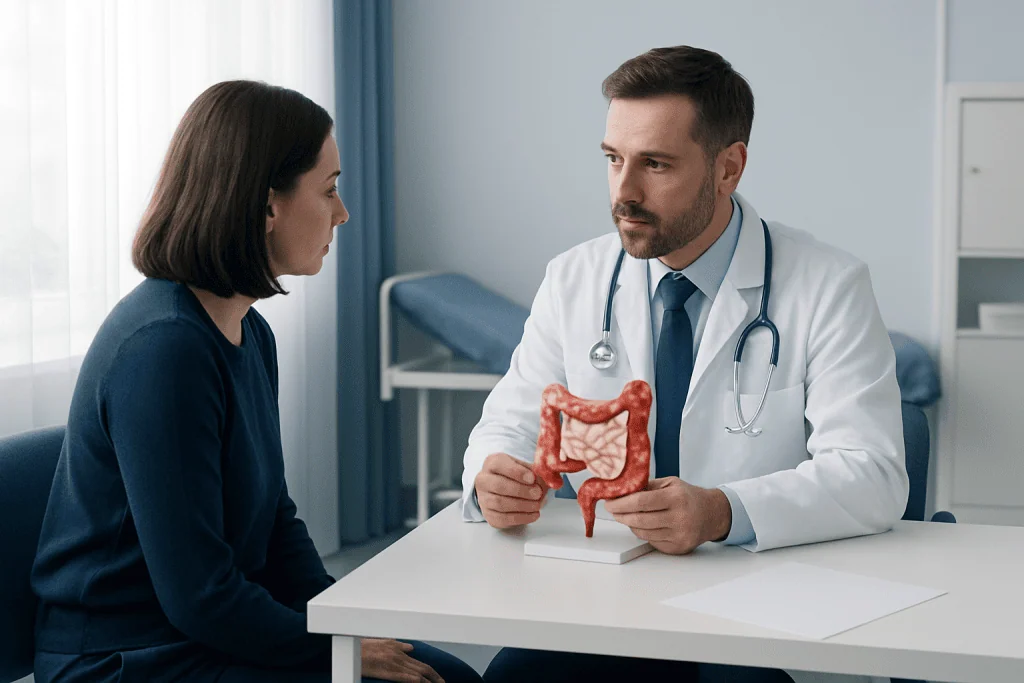
J pouch surgery may be discussed for people with ulcerative colitis whose symptoms remain difficult to control despite appropriate medical treatment, who develop serious treatment complications, or who have precancerous changes or cancer risk that makes colon removal advisable. It may also be considered for familial adenomatous polyposis after removal of the colon and rectum.
Not everyone needing colon surgery is a good candidate. A pouch is generally avoided in people with Crohn’s disease involving the small bowel, anus, or rectum because inflammation can recur in or around the pouch. It may also be unsuitable when anal sphincter function is significantly reduced, pelvic surgery or radiation has affected the area, or a person’s overall health makes a complex reconstruction unsafe.
Assessment usually includes review by a colorectal surgeon and gastroenterologist, testing of bowel and anal sphincter function when needed, nutritional evaluation, and discussion of fertility, sexual function, continence, work, travel, and personal preferences. The choice between a J-pouch and a permanent ileostomy is individual and should be made with clear information about both options.
Step-by-Step: What Happens During the Procedure?
J pouch surgery is frequently completed in two or three stages, although the safest plan depends on the person’s condition, medicines, nutritional status, and urgency of surgery. Operations may be performed through open surgery, laparoscopic surgery, or robotic-assisted techniques in appropriately selected cases.
In a typical staged approach, the surgeon removes the colon and rectum, forms the J-shaped pouch from the ileum, and connects it to the anal canal. A temporary loop ileostomy is often created at the same operation. This opening on the abdomen directs stool into an external pouch while the new internal connection heals.
After healing is confirmed, often using an examination and imaging or endoscopic assessment, a later operation closes the temporary ileostomy. In some urgent situations, colon removal is performed first, with pouch construction and ileostomy closure planned later after recovery. The exact sequence is designed to reduce risk rather than follow one fixed timetable.
- Removal of diseased colon and rectum
- Construction of a J-shaped pouch from ileum
- Connection of the pouch to the anus
- Temporary ileostomy in many cases
- Later closure of the ileostomy after safe healing
Recovery Timeline and What to Expect After J Pouch Surgery
Hospital recovery commonly includes pain control, early walking, breathing exercises, gradual return to food and careful monitoring of hydration and bowel function. The length of stay varies with the type and number of procedures, whether surgery was planned or urgent, and whether complications occur. Patients are usually advised to avoid heavy lifting and strenuous activity until their surgeon confirms that healing is adequate.
After ileostomy closure, bowel frequency is often high at first, and stools are usually loose. Many people need to pass stool several times during the day and may wake at night. Over the following months, the pouch generally stretches and adapts, allowing more time between bowel movements. Dietary adjustments, adequate fluid and salt intake, and individualized medicines may help manage frequency or urgency when recommended by the clinical team.
Skin irritation around the anus can occur because stool is more liquid. Gentle cleansing, protective barrier products, and avoiding foods that clearly worsen output may be useful. Patients should not restrict food unnecessarily; a dietitian can help identify practical eating strategies while maintaining adequate protein, calories, fluids, and nutrients.
How long does it take for a J-pouch to heal after surgery? The internal surgical connection generally needs several weeks to heal before a temporary ileostomy can be considered for closure, but the complete functional recovery of a J-pouch often takes several months and may continue to improve for up to a year. Individual recovery is affected by the number of surgical stages, baseline health, healing, and whether pouch-related complications develop.
Benefits, Risks and the Disadvantages of J Pouch Surgery
The main potential benefit of J pouch surgery is that it can remove the diseased colon and rectum while preserving the ability to pass stool through the anus. For people with ulcerative colitis, removing the colon also removes the organ affected by colitis and substantially changes the long-term risk related to colonic disease. Many patients value avoiding a permanent stoma, though a temporary stoma is common during treatment.
All major abdominal operations carry risks, including bleeding, infection, blood clots, anesthesia reactions, wound problems, bowel obstruction, and leakage at a surgical connection. Specific pouch-related concerns include pouchitis, cuff inflammation, pelvic infection, fistula, narrowing at the connection, difficulty emptying the pouch, and pouch failure requiring a permanent ileostomy in a minority of patients.
What are the disadvantages of J-pouch surgery? It is a major, sometimes multi-stage operation with a meaningful recovery period. Bowel movements remain more frequent than in people with an intact colon, urgency or nighttime stools may occur, and pouch inflammation can require medical treatment. Pelvic surgery may also affect fertility, sexual function, or urinary function in some people, so these issues should be discussed before surgery.
Is J-pouch surgery worth it? For an appropriate candidate, it can be a valuable option that offers freedom from a permanent ileostomy and relief from colon disease. Whether it is the right choice depends on medical factors and the person’s priorities; a permanent ileostomy may be the safer or more satisfying option for others. A detailed discussion with a colorectal surgeon helps set realistic expectations.
Living With a J-Pouch and Ongoing Follow-Up
Life with a J-pouch usually becomes easier with time and experience. People often learn patterns related to meals, hydration, sleep, physical activity, and foods that make stools more frequent or irritating. Regular meals, sufficient fluids, and gradual return to usual activity can support recovery, but recommendations should be tailored to the individual.
Pouchitis is inflammation of the pouch and may cause increased stool frequency, urgency, cramps, pelvic discomfort, fever, bleeding, or feeling unwell. It is important not to assume that all symptom changes are expected adaptation. A clinician may use stool testing, pouchoscopy, and other assessments to identify pouchitis or another cause, then recommend suitable treatment.
Follow-up remains important even when a person feels well. The care team may monitor nutritional status, anemia, bone health, inflammation, and the small remaining area of rectal tissue where relevant. In selected people, endoscopic surveillance of the pouch or anal transition area may also be advised.
Acibadem International’s multidisciplinary specialists and JCI-accredited hospitals evaluate and treat complex colorectal conditions for international patients, with coordinated support from gastroenterology, colorectal surgery, nutrition, imaging, and rehabilitation services.
When to Seek Medical Care
After J pouch surgery, patients should follow the instructions provided by their surgical team and contact them promptly for worsening abdominal pain, persistent vomiting, fever, chills, a swollen abdomen, inability to pass stool or gas, significant rectal bleeding, signs of dehydration, or a sudden major increase in bowel frequency. These symptoms can have several causes and should be assessed rather than managed alone.
People with a temporary ileostomy should seek advice for very high or unusually watery output, dizziness, reduced urination, or difficulty keeping fluids down, as dehydration can develop quickly. Stoma color changes, severe skin irritation, or problems with the pouching system also merit contact with a stoma nurse or surgical team.
Emergency assessment is appropriate for severe pain, fainting, chest pain, shortness of breath, confusion, or uncontrolled bleeding. For less urgent but persistent symptoms, early review by a gastroenterologist or colorectal surgeon can help protect pouch function and improve quality of life.
Frequently asked questions
What should I expect after J-pouch surgery?
Early after surgery, patients can expect fatigue, abdominal discomfort, dietary progression, and gradual return of bowel function. After a temporary ileostomy is closed, frequent loose stools, urgency, and nighttime bowel movements are common initially. These usually improve over months as the pouch adapts, although bowel habits may not return to those of a person with an intact colon.
How long does it take for a J-pouch to heal after surgery?
The surgical connections generally need weeks to heal, particularly when a temporary ileostomy is in place. Closure of the ileostomy is considered only after the surgeon confirms that healing is satisfactory. Full adjustment to J-pouch function commonly takes several months and may continue for up to a year.
Is J-pouch surgery worth it?
J-pouch surgery can be worthwhile for eligible people who want to avoid a permanent ileostomy after colon and rectum removal. It can provide good long-term function for many patients, but it also involves major surgery and ongoing risks such as pouchitis. The best choice depends on diagnosis, health status, anatomy, lifestyle, and personal priorities.
What are the disadvantages of J-pouch surgery?
The procedure may require two or three operations, often including a temporary ileostomy. Bowel movements can remain more frequent and looser than before, and some people experience urgency, nighttime stools, leakage, or pouch inflammation. There are also surgical risks and possible effects on fertility, sexual function, or urinary function.
Can Crohn’s disease be treated with J-pouch surgery?
A J-pouch is usually not recommended for people with known Crohn’s disease because inflammation may affect the pouch, small intestine, or anal area after surgery. In some cases, the diagnosis becomes clearer only after an operation, so specialists carefully review the history, imaging, endoscopy, and pathology before recommending a pouch.
How many bowel movements are normal with a J-pouch?
The number varies widely, especially during the first months after ileostomy closure. Many people have several bowel movements each day, and some have one or more overnight. The trend over time, stool consistency, urgency, hydration, and overall wellbeing are often more informative than a single number.
References
- American Society of Colon and Rectal Surgeons
- Crohn's & Colitis Foundation
- National Institute of Diabetes and Digestive and Kidney Diseases
- Mayo Clinic
This article is for general information only and is not a substitute for professional medical advice. Please consult a qualified doctor about your individual situation.
Persistent digestive symptoms? Get evaluated in Turkey
JCI-accredited · board-certified surgeons · reply within 24h
Add us as a Preferred Source to see more of our trusted health content across Google Search, AI Overviews and Discover.