Jaw Hurts Heart Attack: What Patients Need to Know

Jaw pain can be a heart attack symptom, even if chest pain is mild or absent. Heart-related jaw pain is more concerning when it occurs with shortness of breath, sweating, nausea, or pressure in the chest, arm, shoulder, neck, or back.
Key Takeaways
- Jaw pain can be a heart attack symptom, even if chest pain is mild or absent.
- Heart-related jaw pain is more concerning when it occurs with shortness of breath, sweating, nausea, or pressure in the chest, arm, shoulder, neck, or back.
- Dental problems, temporomandibular joint disorders, sinus issues, and nerve pain are also common causes of jaw discomfort.
- Sudden, unexplained jaw pain with other heart attack symptoms needs emergency care.
- Doctors use the symptom pattern, exam findings, ECG, blood tests, and sometimes imaging to find the cause.
Jaw pain can sometimes be a sign of a heart attack, particularly when it appears suddenly or happens with chest discomfort, shortness of breath, sweating, nausea, or pain spreading to the arm or back. Because jaw pain also has many non-cardiac causes, medical evaluation is important when symptoms are new, severe, or unexplained.
Overview: Can jaw pain mean a heart attack?
Yes. If the jaw hurts, a heart attack is one possible cause, especially when the pain starts suddenly or comes with chest pressure, shortness of breath, sweating, nausea, dizziness, or discomfort spreading to the arm, neck, shoulder, or back. Although many cases of jaw pain are not related to the heart, unexplained jaw pain should not be ignored when it appears alongside other symptoms.
Heart-related jaw pain happens because the brain can interpret pain signals from the heart as coming from another area, a process called referred pain. This is why a person may feel aching, tightness, pressure, or heaviness in the lower jaw even when the main problem is reduced blood flow to the heart muscle. In some people, jaw discomfort may be one of the earliest or most noticeable symptoms.
At the same time, jaw pain is far more commonly caused by dental conditions, jaw joint strain, teeth grinding, sinus inflammation, or nerve-related problems. The safest approach is to consider the whole symptom pattern rather than the jaw pain alone. If symptoms suggest a cardiac emergency, urgent evaluation is essential.
How heart-related jaw pain may feel
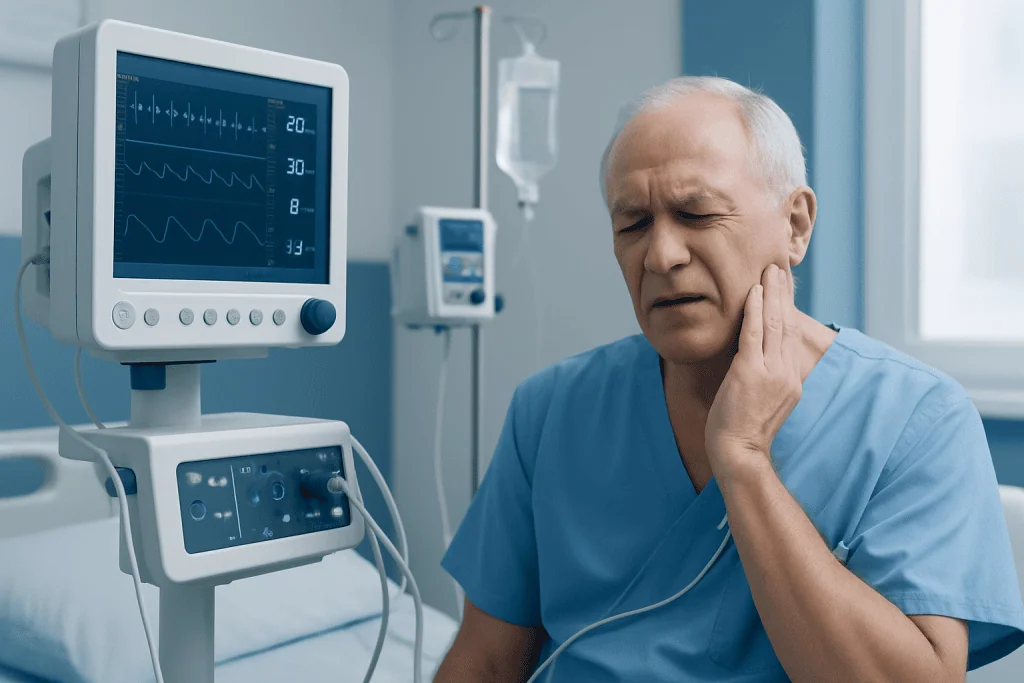
Jaw pain linked to a heart attack is often described as pressure, aching, tightness, squeezing, fullness, or a heavy sensation rather than sharp, pinpoint pain. It may affect the lower jaw on one or both sides and can spread from the chest, neck, or shoulder. Some people notice it during physical effort or emotional stress, while others develop it at rest.
Not everyone experiences the same symptoms. Some people, especially older adults, people with diabetes, and women, may have less typical warning signs. Instead of severe chest pain, they may notice unusual fatigue, shortness of breath, indigestion-like discomfort, upper back pain, or pain in the jaw. This can make it easier to mistake a serious problem for something minor.
Features that may raise concern for a heart-related cause include:
- Jaw discomfort that begins suddenly and has no clear dental or jaw-joint trigger
- Pain or pressure in the chest, arm, shoulder, back, or neck at the same time
- Shortness of breath, sweating, nausea, vomiting, or lightheadedness
- Symptoms that worsen with exertion or emotional stress
- A feeling of pressure or heaviness rather than a brief, localized stab of pain
Because symptoms vary, it is important not to rely on one “classic” pattern. A healthcare professional can help determine whether jaw discomfort is part of heart attack symptoms or another condition.
Other common causes of jaw pain

Most jaw pain is not caused by a heart problem. A frequent reason is temporomandibular joint dysfunction, which affects the joint connecting the jaw to the skull. This may cause pain near the ear, clicking, locking, stiffness, or discomfort when chewing. Teeth grinding, clenching, stress, or bite problems can also strain the jaw muscles.
Dental causes are also very common. Tooth decay, gum disease, dental abscess, impacted teeth, and recent dental work can all produce pain that spreads through the jaw or face. These problems are often linked with chewing pain, temperature sensitivity, gum swelling, or a clear tooth-related source. Sinus infections may cause pressure in the upper jaw and cheeks, while nerve pain can create burning, electric, or stabbing sensations.
Muscle strain, arthritis, injury, ear conditions, and certain headaches can also lead to jaw discomfort. Sometimes symptoms overlap, making the cause difficult to identify without a medical or dental examination. If jaw pain is severe, persistent, or unexplained, evaluation is the best way to rule out urgent causes and guide treatment.
Why a heart attack can cause pain in the jaw
A heart attack usually happens when blood flow through a coronary artery becomes suddenly blocked. Without enough oxygen, part of the heart muscle becomes injured. The nerves that carry pain signals from the heart travel through pathways that overlap with nerves serving the chest, neck, shoulder, arm, and jaw. Because of this overlap, the brain may “project” the pain to those areas.
This referred pain does not mean there is anything wrong inside the jaw itself. Instead, the jaw is where the body feels the warning signal. In some people, the discomfort may begin in the chest and move upward; in others, the jaw may hurt first or be more noticeable than the chest symptoms. That is one reason cardiac symptoms can sometimes be missed.
Jaw pain may also occur with other heart-related conditions, such as angina, which is chest discomfort caused by reduced blood flow to the heart that has not yet caused permanent injury. Angina often appears with activity or stress and improves with rest, but it still requires medical attention because it can signal underlying coronary artery disease.
How doctors evaluate jaw pain and possible heart causes
Assessment starts with the history of symptoms. Doctors ask when the pain began, where it is felt, what it feels like, what brings it on, and whether it happens with exertion, stress, chewing, fever, swelling, or recent dental issues. They also ask about chest discomfort, breathing symptoms, nausea, sweating, and risk factors such as smoking, high blood pressure, diabetes, high cholesterol, or a family history of early heart disease.
A physical examination may include the heart, lungs, jaw joint, teeth, gums, neck, and nerves. If a heart problem is possible, an electrocardiogram (ECG) and blood tests that look for heart muscle injury are commonly used. Depending on the situation, a person may also need chest imaging, stress testing, or advanced heart imaging. When symptoms point to another cause, dental evaluation or imaging of the jaw may be recommended.
The goal is to identify whether the situation is an emergency, a heart-related issue that needs follow-up, or a non-cardiac condition requiring dental, ear-nose-throat, or musculoskeletal care. If needed, specialists may use tests related to cardiology check-up or further coronary angiography to clarify the diagnosis.
Treatment depends on the cause
If jaw pain is caused by a heart attack, treatment focuses on restoring blood flow to the heart quickly and protecting heart muscle. Emergency care may include medications and procedures to open a blocked coronary artery. After the immediate event, long-term treatment often includes medicines, risk-factor control, and cardiac follow-up. In selected cases, procedures such as coronary stent treatment may be used.
If the cause is angina or another form of heart disease rather than an acute heart attack, treatment may include lifestyle changes, medicines to improve blood flow and reduce risk, and monitoring by a cardiology team. The exact approach depends on the underlying problem, overall health, and test results.
For non-cardiac causes, treatment is different. Dental infections may require dental procedures and appropriate medication. Jaw joint disorders may improve with a soft diet, stress reduction, bite protection, physical therapy, or other measures recommended by a dentist or doctor. Muscle strain, sinus disease, or nerve pain are each treated according to the cause. Because treatment varies widely, self-diagnosing based on symptoms alone can lead to delay or the wrong care.
Reducing risk and caring for symptoms
Prevention depends partly on the cause. To lower the risk of heart-related jaw pain, people can focus on heart health: not smoking, staying physically active, eating a balanced diet, maintaining a healthy weight, controlling blood pressure and cholesterol, and managing diabetes if present. Regular medical care helps identify risk factors before they lead to more serious disease.
For jaw joint and dental causes, practical habits matter. Good oral hygiene, routine dental visits, and treatment of tooth problems can prevent many cases of jaw pain. People who clench or grind their teeth may benefit from stress management, attention to sleep habits, or a mouth guard if recommended by a dental professional. Avoiding excessive gum chewing and very hard foods may help when the jaw is irritated.
At home, it is reasonable to rest the jaw, eat softer foods for a short time, and avoid activities that worsen pain if the symptoms are mild and clearly linked to chewing or strain. However, home care should not replace urgent assessment if there are warning signs of heart disease. A careful medical review is especially important if symptoms are new, recurring, or not clearly explained.
When to seek medical care
Emergency care is needed if jaw pain appears suddenly and occurs with chest pressure, shortness of breath, sweating, nausea, faintness, marked weakness, or pain spreading to the arm, shoulder, neck, or back. The same is true if symptoms are severe, last more than a few minutes, come and go in a concerning pattern, or occur during exertion and do not settle promptly. In these situations, a heart attack must be considered.
Prompt medical attention is also important for jaw pain with facial swelling, fever, difficulty opening the mouth, trouble swallowing, worsening dental pain, or symptoms after an injury. These features may point to infection, joint injury, or another condition needing timely treatment.
If the cause is uncertain, it is safer to be checked rather than wait. For international patients who need further evaluation, Acibadem International’s multidisciplinary specialists and JCI-accredited hospitals diagnose and treat heart, dental, and jaw-related conditions with coordinated care.
Frequently asked questions
Can jaw pain be the only sign of a heart attack?
Yes, it can be, although this is not the most common presentation. Some people have little or no chest pain and may notice discomfort in the jaw, neck, back, or arm instead, especially if the pain is accompanied by shortness of breath, nausea, sweating, or unusual fatigue.
How can someone tell the difference between jaw pain from the heart and jaw pain from the jaw joint?
Jaw joint pain is often linked to chewing, clicking, locking, tenderness near the ear, or teeth grinding. Heart-related jaw pain is more concerning when it appears suddenly, feels like pressure or heaviness, and occurs with chest symptoms, breathlessness, sweating, nausea, or exertion.
Is left-sided jaw pain more likely to be a heart problem?
Heart-related pain can affect the left side, right side, or both sides of the jaw. Side alone is not a reliable way to tell the cause, so the full symptom pattern and a medical assessment are more important.
What should a person do if jaw pain starts during exercise?
Exercise-related jaw pain should be taken seriously, especially if it comes with chest discomfort, shortness of breath, or dizziness. The person should stop the activity and seek prompt medical evaluation, because exertional symptoms can suggest reduced blood flow to the heart.
Are women more likely to have jaw pain with a heart attack?
Women may be more likely than men to have less typical heart attack symptoms, including jaw, neck, back, or upper abdominal discomfort. This does not mean men cannot have these symptoms, but it is one reason unexplained jaw pain should not be dismissed.
When is jaw pain probably not an emergency?
Jaw pain is less likely to be an emergency when it is clearly related to chewing, a recent dental problem, mild muscle strain, or known jaw joint irritation and there are no heart warning signs. Even then, persistent, worsening, or unexplained symptoms should still be assessed by a doctor or dentist.
This article is for general information only and is not a substitute for professional medical advice. Please consult a qualified doctor about your individual situation.
Persistent digestive symptoms? Get evaluated in Turkey
JCI-accredited · board-certified surgeons · reply within 24h
Add us as a Preferred Source to see more of our trusted health content across Google Search, AI Overviews and Discover.

More from the Health Library

Decaf Coffee: What Patients Need to Know

Ph — Explained by Medical Evidence, Not Myths

Oxalic Acid — Explained by Medical Evidence, Not Myths

Penis: An Evidence-Based Guide for Patients

ALT Elevated — Explained by Medical Evidence, Not Myths