Jugular: What Patients Need to Know

The jugular veins are major neck veins that help return blood from the head and neck to the heart. Visible or bulging neck veins can be normal in some situations, but persistent swelling may signal a circulation or heart-related issue.
Key Takeaways
- The jugular veins are major neck veins that help return blood from the head and neck to the heart.
- Visible or bulging neck veins can be normal in some situations, but persistent swelling may signal a circulation or heart-related issue.
- Pain, tenderness, redness, one-sided swelling, shortness of breath, or fever need medical assessment.
- Doctors evaluate jugular concerns with a physical exam and may use ultrasound, blood tests, or heart imaging.
- Treatment depends on the cause and may range from observation to medicines or a vascular procedure.
Jugular usually refers to the jugular veins in the neck, which carry blood from the brain, face, and neck back to the heart. Most people ask about the jugular when they notice neck vein fullness, pain, swelling, or hear about a doctor checking neck veins during an exam.
What the jugular is and why it matters
The term jugular usually refers to the jugular veins, a pair of important veins on each side of the neck. Their job is to carry blood from the brain, face, and neck back toward the heart. There are internal and external jugular veins, and both are part of the body’s normal circulation.
People often become concerned about the jugular when they notice a vein standing out in the neck, feel swelling or discomfort, or hear a clinician mention the “jugular venous pulse” during an examination. In many cases, the jugular itself is not diseased; instead, it can reflect what is happening elsewhere in the body, especially with blood flow, fluid balance, or heart function.
The jugular veins are also clinically useful because they give doctors visible clues. For example, a raised neck vein while a person is at rest can suggest increased pressure in the venous system. This does not automatically mean a serious problem, but it does mean the finding should be interpreted in context with symptoms, medical history, and examination.
Common signs and symptoms involving the jugular
Many jugular-related concerns begin with a visible change in the neck. A person may notice bulging veins, fullness above the collarbone, or swelling on one side of the neck. Some people describe a throbbing sensation, tenderness, or a tight feeling when turning the head.
Other symptoms depend on the cause. If a jugular issue is related to a clot or local inflammation, there may be redness, warmth, pain, or firmness along the vein. If it is connected to circulation or heart function, symptoms may include shortness of breath, ankle swelling, fatigue, or discomfort when lying flat.
Temporary neck vein prominence can happen normally during coughing, straining, heavy lifting, or intense exercise. It may also be more noticeable in thin individuals or in certain body positions. However, persistent swelling, a new neck lump, or symptoms such as chest pain, breathlessness, dizziness, or fever should not be ignored.
- Visible bulging neck vein at rest
- One-sided neck swelling or tenderness
- Neck pain with redness or warmth
- Shortness of breath or chest discomfort
- Swelling in the legs or abdomen
- Fever or feeling unwell with neck symptoms
What can cause jugular problems or neck vein swelling?

Causes range from harmless to medically important. A jugular vein may look prominent simply because of body position, exercise, or straining. In other cases, swelling reflects increased pressure in the veins, which can happen with certain heart or lung conditions. Doctors pay attention to whether the vein is visible only briefly or remains distended while a person is upright or resting.
Local vein problems can also affect the jugular. These include inflammation, injury, compression from nearby structures, and blood clots. A clot in a neck vein is uncommon but important because it can cause pain and swelling and may need prompt treatment. Sometimes central venous catheters, recent surgery, trauma, infection, or clotting disorders increase risk.
Broader circulation conditions may also be involved. For example, fluid overload, reduced heart pumping function, or obstruction to blood returning to the heart can raise venous pressure and make the jugular more visible. Related conditions may overlap with heart failure or other cardiovascular disorders. In some cases, specialists may investigate for disorders of the veins such as deep vein thrombosis when symptoms and imaging suggest clot formation in the venous system.
- Normal straining, coughing, or exercise
- Dehydration or fluid balance changes
- Heart or lung conditions that raise venous pressure
- Jugular vein thrombosis or inflammation
- Compression by a nearby mass or enlarged structure
- Recent catheter use, surgery, infection, or trauma
How doctors evaluate the jugular
Assessment starts with a medical history and physical examination. A doctor will ask when the swelling or pain began, whether it changes with position, and whether there are symptoms such as fever, shortness of breath, chest pain, headache, or arm swelling. They will also review recent travel, infections, operations, cancer history, catheter use, and medicines that may affect clotting.
During the examination, the clinician looks at the neck veins with the patient positioned at an angle rather than completely flat. This helps estimate jugular venous pressure and identify whether there is abnormal fullness. The doctor may also check the heart, lungs, legs, and abdomen for signs of fluid retention or circulation problems.
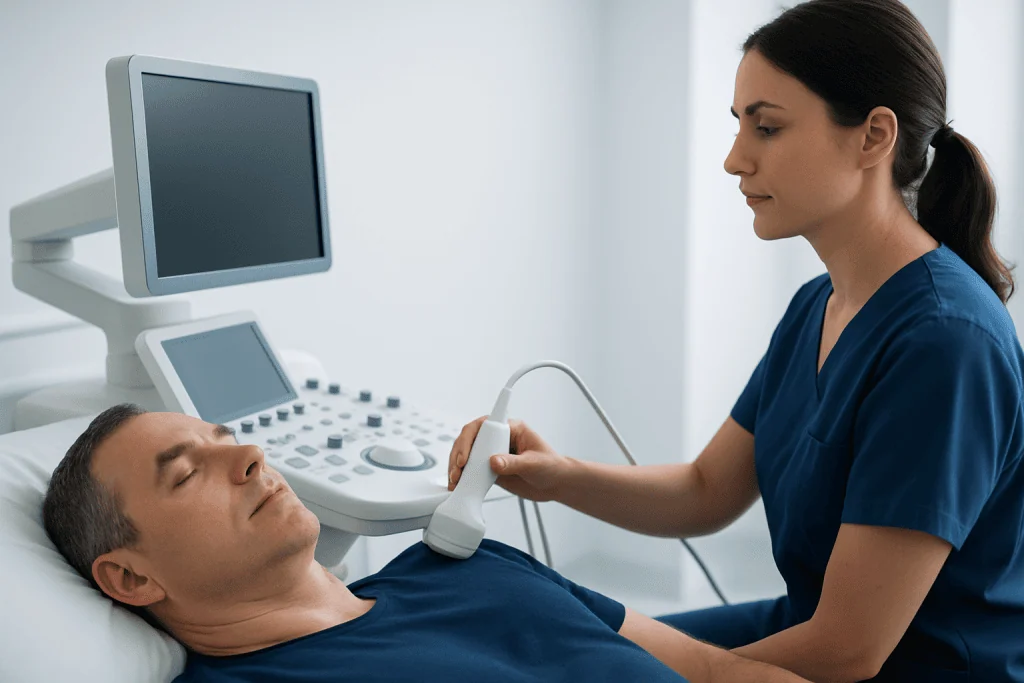
If more information is needed, imaging is commonly used. Doppler ultrasound is often the first test because it can show blood flow and detect a clot without radiation. Depending on the situation, further tests may include blood work, echocardiography, chest imaging, or CT angiography to better define nearby blood vessels and surrounding anatomy.
Treatment depends on the cause
There is no single treatment for “the jugular” because the right approach depends on what is causing the symptom or examination finding. If the neck veins are simply more visible during exertion or straining and there are no other concerning features, treatment may not be needed. Reassurance and monitoring can be appropriate after clinical assessment.
When a clot is present, treatment may involve blood-thinning medicine and close follow-up, depending on the clot’s location, cause, and a person’s overall health. If infection is suspected, antibiotics or drainage of the source may be needed. When the jugular appearance reflects a heart or lung issue, treatment focuses on managing that underlying condition rather than the vein itself.
Some patients need specialist care from vascular, cardiology, or radiology teams. In selected cases where a blocked or narrowed vein requires intervention, doctors may consider endovascular treatment. Care is individualized, especially if symptoms are severe, there is risk of complications, or several conditions may be contributing at the same time.
Prevention and self-care
Not all jugular-related problems can be prevented, but general vascular health measures are helpful. Staying active, avoiding smoking, keeping chronic conditions well managed, and following advice after surgery or hospitalization can support healthy circulation. People at risk for clots should follow their clinician’s guidance about movement, hydration, and medicines.
Self-care also means observing symptoms carefully without trying to diagnose the cause by appearance alone. A neck vein can look more prominent for simple reasons, but a new change that persists should be checked. It is best not to massage a painful swollen vein, as that could worsen discomfort or be unsafe if a clot is present.
If a clinician has identified an underlying condition such as heart disease, vein disease, or a clotting tendency, attending follow-up appointments is important. Imaging or repeat examination may be needed to confirm that blood flow is stable and symptoms are improving.
- Stay well hydrated unless a doctor has restricted fluids
- Move regularly during long travel or recovery periods
- Avoid smoking and manage blood pressure and cholesterol
- Seek review for persistent neck swelling or pain
- Follow treatment plans for heart, lung, or clotting conditions
When to seek medical care
Medical review is appropriate if a jugular vein becomes newly swollen, remains visibly distended at rest, or is associated with pain, redness, tenderness, fever, or one-sided neck fullness. It is also sensible to seek care if there is unexplained swelling of the face or arm, or if a neck lump does not settle.
Urgent care is needed for symptoms that suggest a more serious circulation or heart problem. These include shortness of breath, chest pain, fainting, sudden severe swelling, bluish discoloration, or rapid worsening. Anyone with recent surgery, a central line, active cancer, or a known clotting disorder should be especially cautious if neck symptoms appear.
For international patients needing coordinated assessment, Acibadem International’s multidisciplinary specialists and JCI-accredited hospitals evaluate vascular and related conditions with appropriate imaging and treatment planning. The most suitable specialist may be a cardiologist, vascular surgeon, radiologist, or emergency physician depending on the symptoms and suspected cause.
Frequently asked questions
Is it normal to see the jugular vein in the neck?
Sometimes, yes. The jugular vein can become more visible during straining, coughing, exercise, or certain body positions. A vein that stays prominently bulged at rest, especially with other symptoms, should be assessed by a doctor.
What does a bulging jugular vein mean?
A bulging jugular vein can mean increased pressure in the venous system, but it can also happen temporarily for normal reasons. Doctors consider the whole picture, including symptoms, body position, and examination findings. Persistent bulging may point to a heart, lung, or vein-related problem.
Can the jugular vein develop a blood clot?
Yes, although it is less common than clots in the legs. Risk factors can include a central venous catheter, infection, trauma, cancer, surgery, or clotting disorders. Symptoms may include neck pain, swelling, tenderness, and sometimes fever.
How is a jugular vein problem diagnosed?
Diagnosis usually begins with a physical exam and review of symptoms and medical history. Ultrasound is often the first imaging test because it can show blood flow and detect a clot. Some people also need blood tests, heart ultrasound, or CT imaging.
Which doctor treats jugular vein conditions?
That depends on the cause. A primary care doctor or emergency physician may make the first assessment, and treatment may then involve a cardiologist, vascular specialist, radiologist, or another hospital specialist. Care is based on whether the issue is local to the vein or related to heart, lung, or systemic disease.
When is a jugular problem an emergency?
It can be urgent if neck swelling is sudden, painful, rapidly worsening, or linked with shortness of breath, chest pain, fainting, fever, or bluish discoloration. These features can signal a circulation problem, infection, or another condition needing prompt care. Emergency evaluation is especially important in people with recent surgery, a catheter, or cancer.
References
- American Heart Association
- National Heart, Lung, and Blood Institute
- Society for Vascular Surgery
- Merck Manual Consumer Version
- Mayo Clinic
This article is for general information only and is not a substitute for professional medical advice. Please consult a qualified doctor about your individual situation.
Explore treatments in Turkey — costs, top hospitals & a free quote
JCI-accredited · board-certified surgeons · reply within 24h
Add us as a Preferred Source to see more of our trusted health content across Google Search, AI Overviews and Discover.