Kidney Cancer Specialist Fort Worth: An Evidence-Based Patient Guide

Kidney cancer care commonly involves urology, medical oncology, radiology, pathology and, when needed, radiation oncology or nephrology. Small, localized tumors may be managed with active surveillance, ablation, partial nephrectomy or radical nephrectomy.
Key Takeaways
- Kidney cancer care commonly involves urology, medical oncology, radiology, pathology and, when needed, radiation oncology or nephrology.
- Small, localized tumors may be managed with active surveillance, ablation, partial nephrectomy or radical nephrectomy.
- The best specialist is one with relevant kidney cancer expertise and access to a coordinated multidisciplinary team, rather than a single universally “best” doctor.
- Treatment decisions depend on cancer stage, tumor features, overall health, kidney function and personal priorities.
- Many people with localized kidney cancer can have excellent long-term outcomes, but individual outlooks vary.
- Blood in the urine, persistent flank pain, unexplained weight loss or a newly found kidney mass should be assessed promptly.
A kidney cancer specialist Fort Worth patients consult may be a urologic oncologist, medical oncologist, or multidisciplinary team, depending on the tumor’s size, stage, location and biology. The most appropriate care combines accurate diagnosis, kidney-preserving planning when feasible, and clear follow-up support.
Overview: Finding a Kidney Cancer Specialist in Fort Worth
A kidney cancer specialist Fort Worth patients seek is usually a physician experienced in urologic oncology or genitourinary oncology. For a newly found kidney mass, a urologist with cancer expertise often leads the initial assessment and discusses surgery, surveillance, or kidney-sparing approaches. If cancer has spread or has a higher risk of recurrence, a medical oncologist may guide systemic treatment.
Kidney cancer is not one single disease. The most common type in adults is renal cell carcinoma, but several subtypes exist and can behave differently. A careful review of imaging, pathology when available, kidney function and a person’s medical history helps the care team recommend an individualized plan.
People do not need to make decisions alone. The strongest care models bring together urology, medical oncology, radiology, pathology, nephrology and supportive-care professionals. A second opinion can also be useful when surgery is complex, the diagnosis is uncertain, or more than one reasonable treatment approach is available.
How Kidney Cancer Is Evaluated and Diagnosed
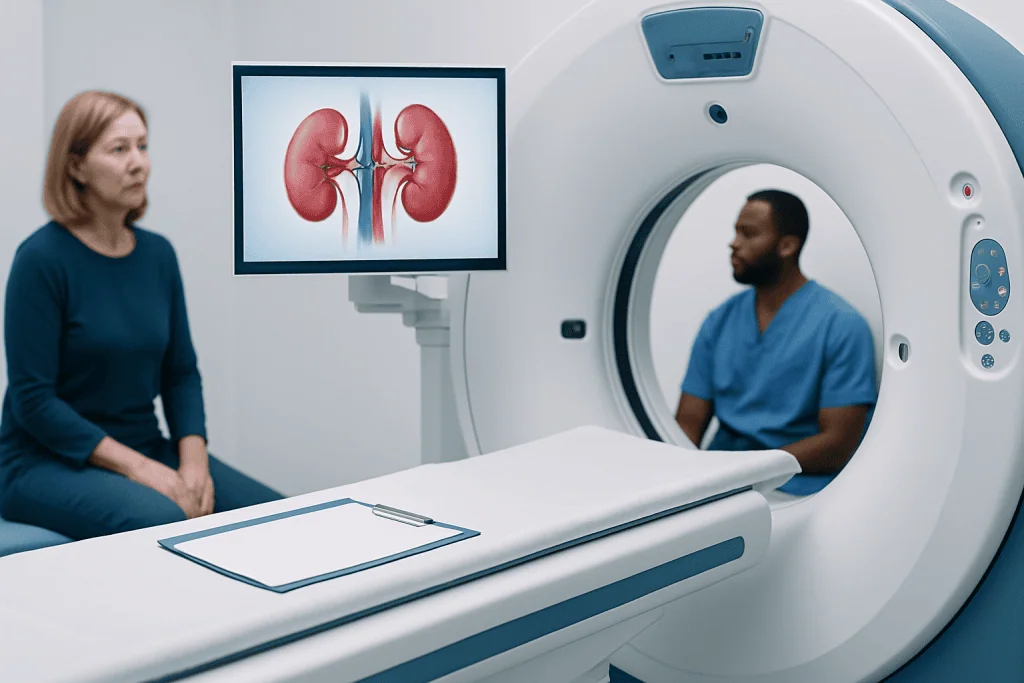
Kidney tumors are often found incidentally during an ultrasound, CT scan or MRI performed for another reason. Some people develop visible or microscopic blood in the urine, flank discomfort, a palpable mass, fatigue, fever or unexplained weight loss. These symptoms are not specific to kidney cancer, so testing is needed to identify their cause.
Evaluation usually begins with a medical history, physical examination, blood tests and urine testing. Contrast-enhanced CT or MRI helps define the mass, assess its relationship to blood vessels and nearby structures, and look for signs of spread. Chest imaging may also be part of staging. Doctors assess kidney function because it influences both treatment planning and long-term follow-up.
A biopsy is not required for every kidney mass before surgery, particularly when imaging strongly suggests a removable cancer. However, a needle biopsy may be recommended when imaging is unclear, before thermal ablation, before systemic therapy, or when results could change the treatment decision. The sample is reviewed by a pathologist to identify the tumor type and grade where possible.
Staging describes whether the cancer is limited to the kidney, has reached nearby tissues or lymph nodes, or has spread to distant organs. Stage is important, but it is only one part of prognosis; tumor subtype, grade, overall health and response to treatment also matter.
How Kidney Cancer Treatment Works

Treatment aims to remove, destroy, control or monitor the tumor while protecting kidney function and quality of life whenever possible. The choice depends on tumor size and position, evidence of spread, the function of both kidneys, other health conditions and the patient’s preferences. A kidney cancer specialist should explain the purpose of each option and what follow-up it requires.
For small tumors, active surveillance may be appropriate for selected people, especially when the tumor appears slow-growing or the risks of intervention outweigh likely benefit. Surveillance involves scheduled imaging and clinical review, with treatment reconsidered if the mass grows or changes. It is an active, structured plan rather than ignoring the tumor.
Localized cancers are commonly treated with surgery. A partial nephrectomy removes the tumor and a margin of surrounding tissue while preserving the rest of the kidney. A radical nephrectomy removes the whole kidney and may be needed when a tumor is large, centrally located or cannot be safely removed with kidney preservation. Many procedures can be performed with minimally invasive laparoscopic or robotic techniques when clinically suitable.
For selected small tumors, ablation may be considered. This image-guided treatment uses heat or cold to destroy tumor tissue and is often evaluated in people who are not ideal surgical candidates. Advanced or metastatic kidney cancer may be treated with immunotherapy, targeted therapy, surgery in selected circumstances, radiation for symptom control or specific sites, and clinical trials.
Procedure Planning, Candidacy and Step-by-Step Surgery
Partial nephrectomy is generally considered when a tumor is small enough and located where it can be removed without compromising too much healthy kidney tissue. It may be especially valuable for people with reduced kidney function, one kidney, tumors in both kidneys, or conditions that increase future kidney disease risk. Radical nephrectomy may be safer or more effective for certain larger or more complex tumors.
Before surgery, the team reviews imaging, blood tests, medications, heart and lung health, anesthesia needs and kidney function. Some medicines, including blood thinners, may need adjustment under the prescribing clinician’s guidance. The surgeon discusses whether an open, laparoscopic or robotic approach is appropriate; the choice should be based on safety and expected cancer control, not technology alone.
During a partial nephrectomy, the surgeon accesses the kidney, temporarily controls blood flow when necessary, removes the tumor and repairs the remaining kidney tissue. During radical nephrectomy, the surgeon removes the kidney and surrounding tissue as indicated. Tissue is sent to pathology to confirm the diagnosis and provide details that guide surveillance.
Thermal ablation is commonly performed using CT or ultrasound guidance. After anesthesia or sedation, a probe is placed into the tumor through the skin. Heat-based or cold-based energy destroys the targeted tissue, followed by imaging surveillance to confirm treatment effect. Not every tumor is suitable for ablation, particularly if it is large or close to vulnerable structures.
Recovery, Benefits and Possible Risks
Recovery varies with the procedure, surgical approach, overall health and whether complications occur. After minimally invasive kidney surgery, some people leave hospital within a few days, while open surgery may require a longer stay. Fatigue and discomfort can continue for several weeks. The care team provides individualized guidance about wound care, activity, driving, work and follow-up imaging.
The main benefit of surgery for localized kidney cancer is the possibility of complete cancer removal. Partial nephrectomy may better preserve kidney function than removing the whole kidney when it can be performed safely. Ablation may offer a less invasive alternative for carefully selected small tumors, although it requires close imaging follow-up and may not be appropriate for every cancer.
Potential risks of kidney procedures include bleeding, infection, blood clots, injury to nearby organs, urine leakage after partial nephrectomy, anesthesia-related complications and reduced kidney function. Ablation can cause bleeding, pain, injury to nearby structures or incomplete tumor destruction. The risk profile differs between individuals, so patients should ask their specialist to explain their own likely benefits and risks.
Long-term follow-up often includes periodic CT, MRI, ultrasound, blood pressure checks and kidney function testing. Follow-up schedules vary by cancer stage, tumor type and treatment received. Maintaining healthy blood pressure, avoiding unnecessary kidney-toxic medicines and discussing medication safety with a clinician can help protect remaining kidney function.
What Foods Should I Avoid if I Have Kidney Cancer?
There is no specific food proven to cure kidney cancer or prevent it from returning. Most people benefit from a balanced eating pattern that supports strength, stable weight and heart and kidney health. During treatment, nutrition needs can change, particularly if appetite, taste, digestion or kidney function are affected.
It is generally sensible to limit heavily processed foods, processed meats, excess alcohol and foods high in added sugars or salt. High salt intake can worsen blood pressure, which is important to manage after kidney surgery or with reduced kidney function. People with chronic kidney disease may need individualized advice about protein, potassium, phosphorus or fluid intake; these restrictions should not be started without professional guidance.
Herbal products and supplements deserve special caution. Some can affect kidney function, blood clotting, anesthesia or cancer medicines. A patient should tell the oncology and surgical teams about all vitamins, supplements and complementary products before using them. A registered dietitian, especially one familiar with oncology or kidney disease, can provide practical, personalized support.
Can You Live a Long Life After Kidney Cancer?
Many people can live a long life after kidney cancer, particularly when it is found while confined to the kidney and can be successfully treated. Individual outlook depends on stage, tumor subtype and grade, whether treatment removes or controls all known disease, kidney function and a person’s general health. Only the treating team can put these factors together for an individual prognosis.
Even after successful treatment, follow-up matters because recurrence can occur and because one kidney or reduced kidney function may require ongoing care. Scheduled scans and clinical visits are designed to identify concerns early and to monitor overall health. Keeping follow-up appointments is one of the most practical ways patients can participate in their long-term care.
For metastatic kidney cancer, treatment has advanced substantially through immunotherapies and targeted medicines. These therapies may control disease for meaningful periods in some people, but outcomes remain variable. Honest discussion of treatment goals, possible side effects and available clinical trials can support informed decisions.
Who Is the Best Doctor for Kidney Cancer? When to Seek Medical Care
There is no single best doctor for kidney cancer for every person. The right clinician is a specialist with experience in the patient’s type and stage of disease, who communicates clearly and works with an appropriate multidisciplinary team. For a localized kidney mass, this is often a urologic oncologist; for advanced disease, care commonly includes a medical oncologist with genitourinary cancer expertise.
When comparing specialists, patients may ask how often the clinician treats kidney cancer, whether kidney-preserving surgery and minimally invasive options are available, how pathology and imaging are reviewed, and how follow-up is coordinated. A second opinion is reasonable and can confirm the diagnosis or clarify treatment choices. At Acibadem International, multidisciplinary specialists and JCI-accredited hospitals diagnose and treat kidney cancer for international patients.
People should seek medical assessment promptly for visible blood in the urine, persistent pain in the side or back, a newly discovered kidney mass, unexplained weight loss, ongoing fever or marked fatigue. Urgent care is appropriate for heavy bleeding in urine, inability to pass urine, severe pain, fainting or symptoms of significant illness. These symptoms can have causes other than cancer, but they should not be self-diagnosed.
Who is the best oncologist in Fort Worth, Texas? A reliable answer cannot name one universally best oncologist because the right choice depends on the diagnosis, insurance and access needs, treatment goals, and the doctor’s experience with kidney cancer. Patients can seek referrals from their primary care clinician or urologist, verify board certification, and choose a specialist or cancer center that offers coordinated kidney cancer expertise and timely access to support services.
Frequently asked questions
What kind of specialist treats kidney cancer?
Kidney cancer is commonly treated by a urologist or urologic oncologist, particularly when surgery is being considered. A medical oncologist is often involved for advanced disease, systemic therapy, or higher-risk cancers. Radiologists, pathologists, nephrologists and other specialists may also be part of the care team.
Do all kidney masses require surgery?
No. Some small kidney masses can be monitored with active surveillance, and others may be suitable for thermal ablation. Surgery is often recommended for cancers that are growing, symptomatic, larger, or likely to benefit from complete removal. The safest option depends on imaging findings, kidney function and overall health.
Can a person live normally with one kidney?
Many people live healthy, active lives with one functioning kidney. Regular blood pressure checks and kidney function monitoring are important, especially after nephrectomy. A clinician can advise on medication safety, hydration and any individual activity considerations.
Should I get a second opinion for kidney cancer?
A second opinion can be helpful before major surgery, when biopsy findings are uncertain, or when more than one treatment option is reasonable. It may confirm the original recommendation or identify another approach that fits a patient’s priorities. Requesting one is a common part of cancer care.
Is kidney cancer always hereditary?
Most kidney cancers are not inherited. However, younger age at diagnosis, cancer in both kidneys, multiple kidney tumors, or a strong family history may suggest an inherited cancer syndrome. Genetic counseling may be recommended in these situations.
What follow-up is needed after kidney cancer treatment?
Follow-up usually includes regular medical visits, imaging and kidney function tests. The schedule is tailored to the cancer stage, pathology results and treatment received. Patients should also discuss new symptoms, blood pressure control and medication changes with their care team.
References
- National Cancer Institute
- American Cancer Society
- American Urological Association
- National Comprehensive Cancer Network
- National Kidney Foundation
This article is for general information only and is not a substitute for professional medical advice. Please consult a qualified doctor about your individual situation.
Kidney Cancer in Turkey — costs, top hospitals & a free quote
JCI-accredited · board-certified surgeons · reply within 24h
Add us as a Preferred Source to see more of our trusted health content across Google Search, AI Overviews and Discover.

Medical Oncology Department
Medical treatment of cancer with chemotherapy, immunotherapy and targeted therapies under a multidisciplinary tumor board.
60 specialists in this unit