Knee Extension: What Patients Need to Know
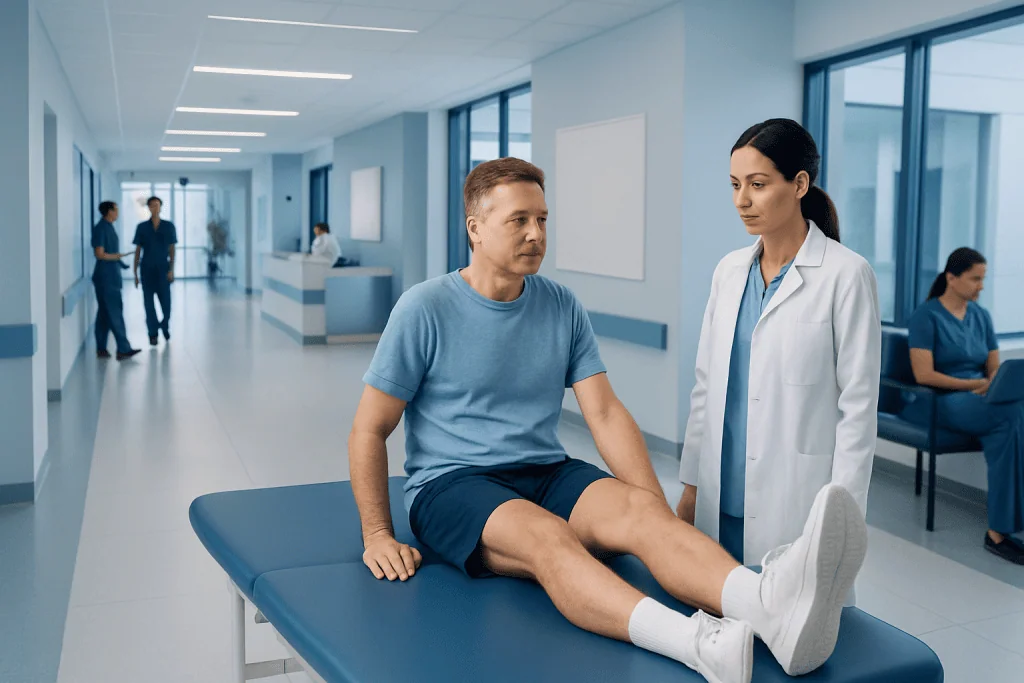
Knee extension refers to straightening the knee and is essential for normal walking and balance. Loss of knee extension may result from swelling, pain, muscle tightness, arthritis, or injury inside the joint.
Key Takeaways
- Knee extension refers to straightening the knee and is essential for normal walking and balance.
- Loss of knee extension may result from swelling, pain, muscle tightness, arthritis, or injury inside the joint.
- Persistent difficulty straightening the knee should be evaluated, especially after trauma or surgery.
- Treatment depends on the cause and may include rest, physical therapy, medication, bracing, or surgery.
- Early assessment and guided rehabilitation can help prevent long-term stiffness and gait problems.
Knee extension is the movement that straightens the knee, allowing the leg to reach a fully or nearly fully straight position. When knee extension is limited, everyday activities such as walking, standing, climbing stairs, and recovering from injury or surgery can become more difficult.
Overview: what knee extension means
Knee extension is the motion that straightens the knee. In simple terms, it is the opposite of bending the knee. A person uses knee extension when standing up, taking a step, rising from a chair, or stabilizing the leg while walking.
Most people do not think about this movement until it becomes difficult. If the knee cannot fully straighten, even by a small amount, the leg may feel stiff or unstable. This can change how a person walks and may place extra strain on the thigh, hip, or lower back.
Limited knee extension is not a diagnosis by itself. Instead, it is a sign that something may be affecting the joint, the muscles and tendons around it, or the nerves that control movement. Common examples include swelling after an injury, joint irritation, muscle tightness, or structural problems such as a torn meniscus or arthritis.
Because full knee straightening is important for movement efficiency, restoring extension is often a major goal in rehabilitation. It matters not only for athletes, but also for anyone recovering from an injury, an operation, or age-related joint changes.
Why full knee extension matters in daily life
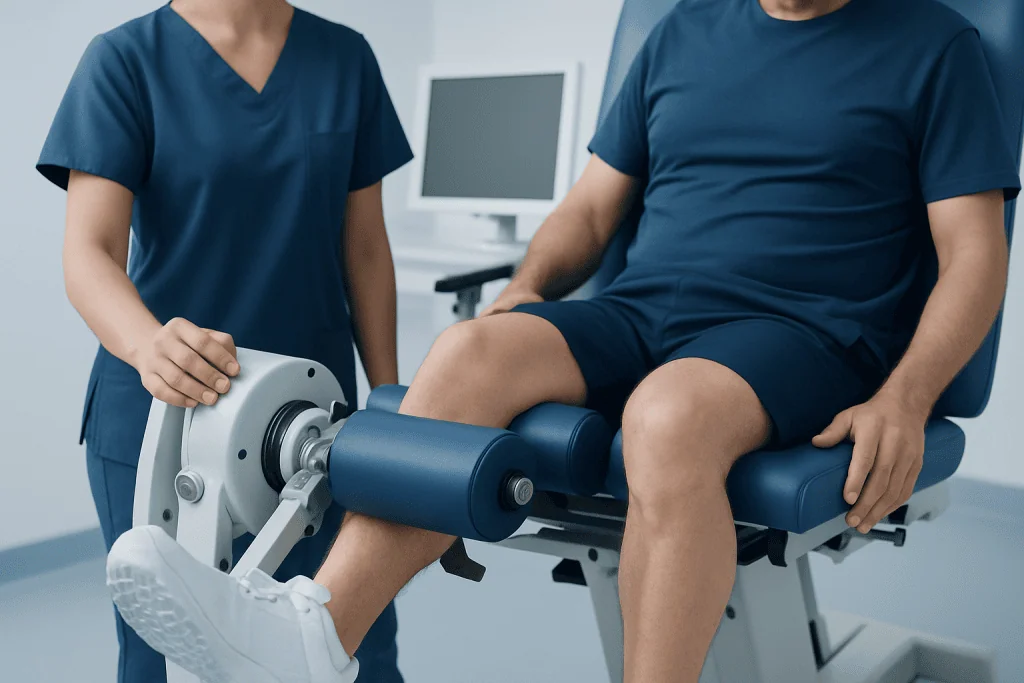
Full knee extension helps the leg support body weight with less effort. When the knee reaches a straight position, the body can move forward more smoothly during walking. This improves balance, reduces energy use, and helps protect other joints from compensation.
If extension is limited, a person may keep the knee slightly bent while standing or walking. Over time, this can lead to a limp, fatigue, tightness in the hamstrings or calf, and discomfort in the front of the knee. Some people also notice trouble standing for long periods or fully activating the thigh muscles.
Knee extension is especially important after injury or surgery. A knee that remains stiff in a flexed position can be harder to rehabilitate, even if bending improves. For this reason, clinicians often check extension early in recovery after problems such as meniscus tears or ligament injuries.
In children, adults, and older people alike, the goal is not forced straightening but safe, comfortable function. Restoring normal mechanics often depends on identifying and treating the reason the knee will not extend fully.
Symptoms that may occur with limited knee extension
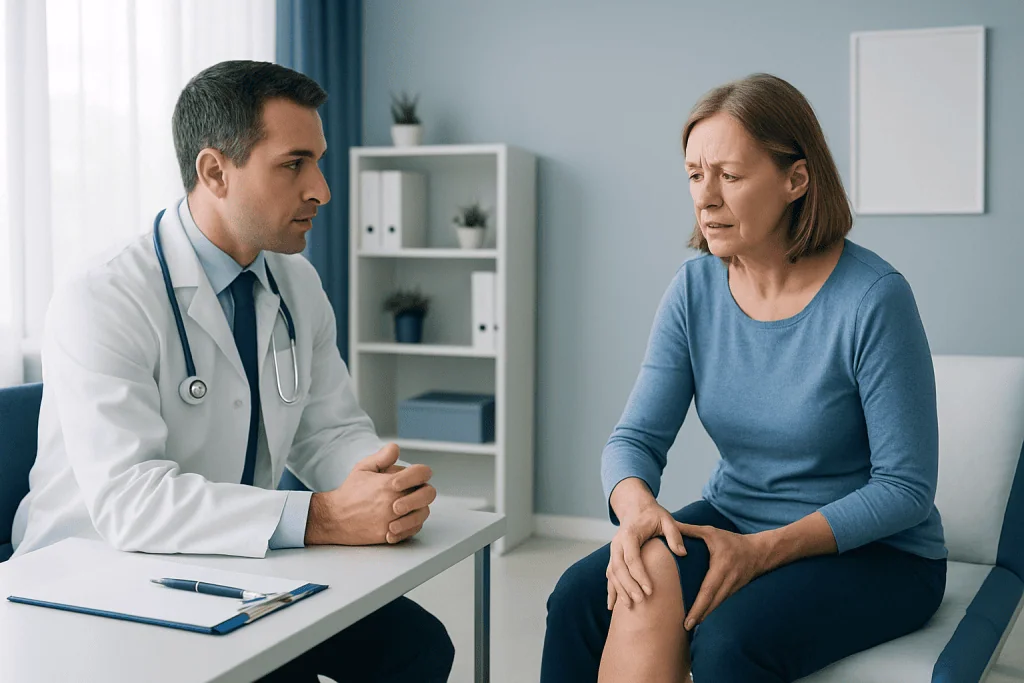
The most obvious symptom is an inability to fully straighten the knee. Some people feel a physical block, while others feel pain, tightness, or weakness when trying to extend the leg. The limitation may appear suddenly after an injury or develop gradually over time.
Other symptoms can help suggest the cause. Swelling is common after trauma or inflammation. Clicking, catching, or locking may point to a meniscus problem or loose tissue within the joint. Pain in the front of the knee may be linked to overuse, while deep joint aching can occur with degenerative changes.
A person may also notice changes in movement patterns, such as limping, avoiding weight-bearing, or keeping the knee slightly bent while sleeping or standing. In some cases, the quadriceps muscles feel difficult to activate, especially after surgery or when the knee is swollen.
- Stiffness, especially in the morning or after rest
- Swelling around the knee
- Pain with walking, stairs, or standing up
- A feeling of locking, catching, or instability
- Weakness in the thigh muscles
- Reduced range of motion after injury or surgery
Common causes and risk factors
Many different conditions can reduce knee extension. One frequent cause is swelling inside the joint after an injury, which can reflexively inhibit the quadriceps and make straightening difficult. Soft-tissue tightness, especially in the hamstrings or calf, can also contribute.
Structural joint problems are another important group of causes. These include meniscus tears, cartilage injury, ligament damage, and osteoarthritis. In some cases, a displaced meniscus tear may create a true mechanical block that prevents full extension. Degenerative changes such as knee arthritis can gradually narrow motion over time.
After surgery, scar tissue formation and pain-related guarding may limit movement. This is one reason supervised rehabilitation is often recommended after procedures involving the knee. In other people, weakness, poor movement patterns, or prolonged inactivity may be the main issue rather than internal joint damage.
Risk factors depend on the underlying cause but may include sports injuries, repetitive kneeling or squatting, previous knee surgery, excess body weight, older age, and inflammatory joint conditions. A careful medical evaluation helps separate temporary stiffness from a problem that needs more targeted treatment.
How doctors evaluate knee extension
Assessment usually begins with a medical history and physical examination. The doctor asks when the problem started, whether there was a specific injury, and what symptoms occur with movement. Details such as swelling, locking, instability, fever, or the inability to bear weight are important.
During the examination, the clinician compares both knees and measures range of motion. They look at how far the knee can straighten and bend, whether movement causes pain, and whether there is a hard stop or soft-tissue tightness. Gait, muscle strength, swelling, and ligament stability are also assessed.
Imaging is sometimes needed to confirm the cause. X-rays can show alignment and arthritis. MRI is more useful for soft tissues such as ligaments, cartilage, and menisci. Ultrasound may help in selected cases involving tendons or fluid. Blood tests are considered if infection or inflammatory arthritis is suspected.
Early diagnosis matters because prolonged loss of extension can become harder to reverse. In some patients, referral to orthopedic care, sports medicine, or rehabilitation specialists is helpful to guide the next steps.
Treatment options and rehabilitation
Treatment depends on why knee extension is limited. When pain and swelling are the main causes, initial care may include relative rest, ice, compression, elevation, and short-term use of pain-relieving or anti-inflammatory medicines when appropriate. These steps may reduce joint irritation and allow movement to improve.
Physical therapy is a common part of care. Therapy may focus on gentle range-of-motion work, quadriceps activation, stretching, gait retraining, and gradual strengthening. A therapist may also address tight hamstrings, calf muscles, or hip weakness that affects knee mechanics. In many patients, a structured physical therapy and rehabilitation plan is central to recovery.
If a mechanical problem is present, treatment may need to go beyond exercises alone. Some meniscus injuries, ligament injuries, or advanced joint damage require orthopedic evaluation. Depending on the condition, options may include knee replacement for severe degeneration or robotic knee replacement in selected surgical pathways. Patients with significant sports-related injury may also be evaluated through orthopedics and traumatology services.
Recovery timelines vary widely. Mild stiffness may improve within days to weeks, while recovery after injury or surgery may take longer. The safest approach is guided progression rather than forcing the knee straight, since aggressive stretching against pain can worsen irritation.
Self-care and prevention
Not every episode of limited knee extension can be prevented, but joint-friendly habits may reduce risk. Regular movement helps maintain flexibility and muscle support. Strengthening the quadriceps, hamstrings, hips, and core can improve lower-limb alignment and reduce stress on the knee.
After a mild strain or flare-up, early gentle motion is often more helpful than prolonged complete rest. Avoiding activities that sharply increase pain, while gradually returning to normal walking and guided exercises, may help preserve range of motion. Good footwear and attention to movement mechanics during sport or work can also support knee health.
Weight management can reduce load across the knee, especially in people with arthritis. Warm-up before exercise and appropriate recovery afterward may lower the chance of overuse problems. For individuals recovering from surgery, following the rehabilitation plan closely is one of the best ways to protect extension.
Near the end of care, some patients benefit from multidisciplinary follow-up. Acibadem International’s specialists in JCI-accredited hospitals diagnose and treat knee conditions for international patients, coordinating imaging, orthopedic assessment, and rehabilitation when needed.
When to seek medical care
A person should seek medical care if the knee cannot fully straighten for more than a short time, especially if the problem started after a fall, twist, sports injury, or surgery. Ongoing loss of extension may indicate internal joint injury or significant inflammation that needs proper assessment.
Urgent evaluation is important if the knee is locked, gives way, becomes very swollen, or is too painful to bear weight. Medical attention is also recommended if there is redness, warmth, fever, or increasing pain, as these can suggest infection or another serious inflammatory process.
Even when symptoms are not severe, it is reasonable to arrange an appointment if walking feels abnormal, stiffness keeps returning, or home measures are not helping. Early evaluation can support a more effective treatment plan and may help prevent long-term gait changes or muscle weakness.
Frequently asked questions
What is knee extension?
Knee extension is the movement that straightens the knee joint. It is needed for standing, walking efficiently, and stabilizing the leg during everyday activities.
Is it normal if the knee will not fully straighten after an injury?
Temporary difficulty straightening the knee can happen after an injury because of pain, swelling, or muscle inhibition. If it does not improve promptly or the knee feels locked, a doctor should assess it.
Can arthritis cause loss of knee extension?
Yes. Arthritis can lead to pain, swelling, stiffness, and structural joint changes that gradually reduce the knee's ability to fully straighten. Treatment often focuses on symptom control, exercise therapy, and protecting joint function.
Should exercises be done if knee extension is limited?
Gentle, guided exercises are often helpful, but the right plan depends on the cause. If there is severe pain, locking, or recent trauma, medical evaluation is recommended before starting exercises on your own.
How do doctors measure knee extension?
Doctors and physical therapists usually examine the knee and measure its range of motion with the leg moving from bent to straight. They may compare both knees and use imaging such as X-rays or MRI if an internal joint problem is suspected.
Can limited knee extension improve without surgery?
Yes, many cases improve with rest, swelling control, physical therapy, and treatment of the underlying problem. Surgery is usually considered when there is a mechanical block, significant structural damage, or severe arthritis that does not respond to conservative care.
References
- American Academy of Orthopaedic Surgeons
- National Institute of Arthritis and Musculoskeletal and Skin Diseases
- American Physical Therapy Association
- National Health Service
- Mayo Clinic
This article is for general information only and is not a substitute for professional medical advice. Please consult a qualified doctor about your individual situation.
Joint and spine care in Turkey — expert assessment & treatment
JCI-accredited · board-certified surgeons · reply within 24h
Add us as a Preferred Source to see more of our trusted health content across Google Search, AI Overviews and Discover.

More from the Health Library



Related Specialists

Dr. Ercan Paşaoğlu
Ophthalmology
Prof. Dr. Hüsnü Cemal Kahraman
Cardiovascular Surgery
Prof. Dr. Özmen Öztürk
Ear Nose & Throat
Sena Ezgi Şahin
Treatment of Respiratory