

Knee Is Stiff and Hurts: What Patients Need to Know

A stiff, painful knee can result from minor strain, osteoarthritis, meniscus problems, ligament injury, bursitis, or inflammatory joint disease. Sudden pain after a twist or fall suggests injury, while gradual stiffness that is worse after rest often points to arthritis or overuse.
Key Takeaways
- A stiff, painful knee can result from minor strain, osteoarthritis, meniscus problems, ligament injury, bursitis, or inflammatory joint disease.
- Sudden pain after a twist or fall suggests injury, while gradual stiffness that is worse after rest often points to arthritis or overuse.
- Urgent medical care is needed for fever, marked swelling, inability to bear weight, a locked knee, or redness and warmth.
- Evaluation may include a physical exam, X-ray, MRI, or blood tests depending on the pattern of symptoms.
- Treatment usually starts with activity adjustment, ice, physical therapy, and pain relief, but some cases need injections or surgery.
If a knee is stiff and hurts, the cause is often joint irritation from overuse, arthritis, strain, or injury, but infection and inflammatory disease can also be responsible. The right next step depends on how symptoms started, whether swelling or instability is present, and how long the problem has lasted.
What it can mean when a knee is stiff and hurts
When a person says a knee is stiff and hurts, it usually means the joint is inflamed, irritated, injured, or worn down. In many cases, the problem is not dangerous and improves with rest, time, and targeted care. Still, the symptom deserves attention because the knee is a complex joint, and similar symptoms can come from very different causes.
Stiffness often refers to difficulty bending or straightening the knee, especially after waking up, sitting for a long time, or being active. Pain may be sharp, aching, throbbing, or felt mainly when climbing stairs, standing up, squatting, or walking. Some people also notice swelling, clicking, a sense of giving way, or a feeling that the knee is locked.
A helpful way to think about this symptom is by timing and trigger. Sudden pain and stiffness after a twist, direct blow, or sports movement may point to a meniscus tear, ligament injury, or fracture. Gradual stiffness that builds over months is more often linked to wear-and-tear arthritis, muscle imbalance, or chronic overuse.
Because treatment depends on the cause, it is important not to assume that all knee pain is the same. A clinician will usually look at age, activity level, where the pain is located, whether the knee is swollen or unstable, and what movements make symptoms better or worse.
Common symptoms and patterns doctors look for
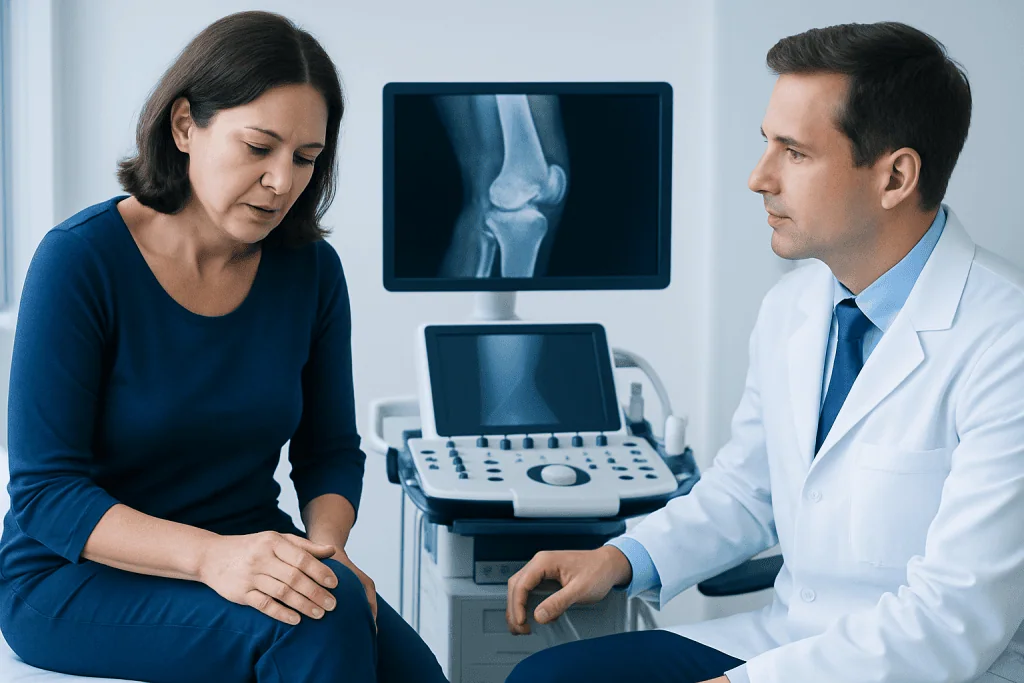
The exact pattern of symptoms often gives important clues. Morning stiffness that improves after gentle movement can occur with arthritis, while pain that worsens later in the day after repeated use may suggest overuse or degenerative change. Stiffness after sitting, sometimes called the “theater sign,” is common in knee arthritis and kneecap-related pain.
Swelling can appear quickly or gradually. Rapid swelling after an injury may suggest bleeding into the joint from a ligament tear or other internal injury. Slower swelling over hours to days may happen with a meniscus problem, bursitis, or an arthritis flare.
Doctors also ask whether the knee catches, locks, or gives way. Locking can happen when a torn piece of cartilage blocks motion. A feeling of instability may be related to a ligament injury or weakness around the knee. Pain with stairs or sitting for long periods can be seen in patellofemoral pain, where the kneecap and surrounding tissues become irritated.
- Pain with swelling after a twist: meniscus or ligament injury
- Gradual stiffness with creaking: osteoarthritis
- Warm, red, very painful joint: possible infection or severe inflammation
- Pain at the front of the knee: patellofemoral irritation or tendon problems
- Pain below or around the kneecap after jumping or sports: tendon overload
Causes and risk factors

One of the most common causes of a stiff, painful knee is osteoarthritis, in which joint cartilage gradually wears down and the surrounding tissues become irritated. This is more common with age, previous injury, excess body weight, and long-term mechanical stress. People may notice pain with walking, stiffness after rest, and reduced range of motion over time. Related information may be found in knee arthritis.
Injuries are another major cause. Meniscus tears can occur after twisting, especially during sports, but they can also happen with ordinary movements in an already worn knee. Ligament injuries, including ACL or MCL sprains, may cause pain, swelling, and instability. Tendonitis, bursitis, and muscle strain can produce pain and stiffness without major internal damage.
Inflammatory conditions should also be considered. Rheumatoid arthritis, gout, pseudogout, and other inflammatory disorders can affect the knee and may cause swelling, warmth, and morning stiffness. Infection inside a joint is less common but important to rule out because it needs urgent treatment.
Risk factors include older age, repetitive kneeling or squatting, high-impact sports, weak hip or thigh muscles, obesity, poor flexibility, prior knee surgery, and a history of joint injury. Sometimes pain felt in the knee is influenced by nearby problems, such as hip disease or poor foot alignment, which can change how forces move through the joint.
How the cause is diagnosed
Diagnosis begins with a careful history and physical examination. The doctor will ask when the stiffness started, whether there was an injury, how severe the pain is, and whether there are symptoms such as fever, numbness, or inability to bear weight. They will usually examine swelling, tenderness, stability, walking pattern, and how far the knee can bend and straighten.
Imaging is used when needed rather than automatically. X-rays help show arthritis, bone alignment, and fractures. MRI is more useful for soft tissues such as cartilage, meniscus, ligaments, and tendons. Ultrasound may help assess fluid collections or some tendon and bursa problems.
Blood tests are sometimes ordered if inflammatory arthritis, infection, or gout is suspected. If the knee is significantly swollen, a doctor may remove a small amount of joint fluid with a needle to test for infection, crystals, or bleeding. This can provide important answers and may also relieve pressure.
Not every painful, stiff knee needs extensive testing. If symptoms are mild, clearly linked to overuse, and improving with basic care, a doctor may recommend short-term conservative treatment first. However, persistent or worsening symptoms should be reassessed so that the diagnosis is not missed.
Treatment options for a stiff, painful knee
Treatment depends on the diagnosis, severity, and the person’s daily needs. For many minor strains and overuse problems, early care includes reducing aggravating activity, using ice for short periods, elevating the leg, and considering compression if swelling is present. Short-term pain relief may be discussed with a clinician, especially for people who have stomach, kidney, heart, or bleeding concerns.
Physical therapy is often a key part of recovery. Strengthening the quadriceps, hamstrings, hips, and core can reduce stress on the knee and improve movement patterns. Stretching and mobility work may help restore range of motion, particularly after swelling or prolonged inactivity. For chronic symptoms, exercise is usually more helpful than complete rest.
Some patients benefit from targeted procedures. In certain cases, doctors may consider knee replacement for advanced joint damage that limits daily life despite conservative care. Arthroscopic surgery may be used in selected situations, such as specific meniscus injuries or mechanical symptoms, often within the wider scope of orthopedic evaluation and treatment.
If inflammatory arthritis, gout, or infection is the cause, treatment focuses on that condition rather than the knee alone. Severe structural injuries may require bracing or surgery, while recovery programs may include supervised physical therapy and rehabilitation. Near the end of the care pathway, some international patients seek assessment at centers such as Acibadem International, where multidisciplinary specialists in JCI-accredited hospitals diagnose and treat knee conditions.
Self-care, prevention, and daily habits that help
When symptoms are mild and there are no warning signs, simple self-care measures can often help. A person should avoid movements that sharply increase pain, but gentle range-of-motion activity is usually preferable to complete immobility. Ice may ease swelling in the first day or two after strain, while some people find warmth more comfortable for chronic stiffness.
Supportive habits can lower knee stress over time. These include maintaining a healthy body weight, choosing low-impact exercise such as cycling or swimming, and building strength in the thigh and hip muscles. Good footwear, gradual training progression, and proper technique during sports or exercise can also reduce repeat irritation.
For people who sit for long periods, standing up regularly and moving the joint through a comfortable range may decrease stiffness. After an injury, returning to activity too quickly can prolong symptoms, so it is usually best to increase walking, stairs, and exercise step by step. Braces or sleeves may help selected patients, but they are not a substitute for strengthening and medical evaluation when symptoms persist.
Prevention also means paying attention to recurring warning patterns. Repeated swelling after exercise, frequent giving way, or progressive loss of motion should not be ignored. Early evaluation may prevent ongoing joint damage and help a person return to normal activity more comfortably.
When to seek medical care
Medical care is recommended if a knee is stiff and hurts for more than a few days without clear improvement, or if the pain repeatedly returns. A doctor should also assess symptoms that limit walking, disturb sleep, or interfere with work, exercise, or daily routines such as climbing stairs and getting out of a chair.
Urgent care is important if the knee becomes very swollen, red, or warm, or if there is fever, severe pain, or an inability to bear weight. These signs can suggest infection, fracture, or significant internal injury. A knee that suddenly locks and cannot fully bend or straighten also needs prompt assessment.
People should seek medical attention after a twist, fall, sports injury, or direct blow if they heard a pop, felt the knee give way, or developed rapid swelling. Numbness, deformity, calf swelling, or symptoms in more than one joint can also change the evaluation and should be reported clearly.
In short, a stiff painful knee is common, but not every case should be managed at home. Early, accurate evaluation can clarify the cause, guide treatment, and help protect long-term joint function.
Frequently asked questions
Why is my knee stiff and painful without an injury?
A knee can become stiff and painful without a clear injury because of osteoarthritis, overuse, bursitis, tendon irritation, or inflammatory arthritis. Less commonly, gout or infection may be involved. The timing of symptoms, swelling, warmth, and how the knee moves help doctors narrow the cause.
Is knee stiffness in the morning a sign of arthritis?
It can be. Morning stiffness that improves after moving around is common in arthritis, including osteoarthritis and inflammatory forms of joint disease. The duration of stiffness and whether swelling or warmth is present can help distinguish between different types.
Should a person walk on a stiff, painful knee?
Gentle walking is often reasonable if the pain is mild and the knee feels stable. However, a person should stop or reduce activity if walking sharply increases pain, swelling, or instability. If bearing weight is difficult, or the knee gives way, medical evaluation is important.
When is a stiff painful knee an emergency?
Urgent assessment is needed if the knee is very swollen, red, hot, severely painful, or impossible to bear weight on. Fever, deformity, a locked joint, or sudden symptoms after trauma also need prompt care. These features can indicate infection, fracture, or major internal injury.
What tests may be needed for knee pain and stiffness?
A clinician may begin with an exam and then decide whether imaging is needed. X-rays are useful for arthritis and fractures, while MRI can show meniscus, ligament, and cartilage injuries. Blood tests or joint fluid analysis may be used if inflammation, gout, or infection is suspected.
Can knee stiffness and pain go away on its own?
Yes, mild symptoms from a minor strain or brief overuse often improve with rest, ice, activity modification, and gradual return to movement. Still, symptoms that last more than a few days, keep returning, or worsen over time should be checked by a doctor. Persistent stiffness can signal a condition that needs more specific treatment.
References
- American Academy of Orthopaedic Surgeons
- National Institute of Arthritis and Musculoskeletal and Skin Diseases
- Arthritis Foundation
- American College of Rheumatology
- Mayo Clinic
This article is for general information only and is not a substitute for professional medical advice. Please consult a qualified doctor about your individual situation.
Joint and spine care in Turkey — expert assessment & treatment
JCI-accredited · board-certified surgeons · reply within 24h
Add us as a Preferred Source to see more of our trusted health content across Google Search, AI Overviews and Discover.

More from the Health Library



Related Specialists

Dr. Utku Şenol
Cardiology
Dr. Murat Yıldırım
Physical Medicine & Rehabilitation
Prof. Dr. Elif Eroğlu Büyüköner
Cardiology
Dr. Osman Bütün
Medical Oncology