Knee Osteoarthritis: Pain, X-Ray Findings, and Treatment Options

Knee osteoarthritis is not simply “wear and tear”; it involves the whole joint, including cartilage, bone, ligaments, menisci and surrounding muscles. X-ray findings can help confirm osteoarthritis, but the level of pain does not always match the severity seen on imaging.
Key Takeaways
- Knee osteoarthritis is not simply “wear and tear”; it involves the whole joint, including cartilage, bone, ligaments, menisci and surrounding muscles.
- X-ray findings can help confirm osteoarthritis, but the level of pain does not always match the severity seen on imaging.
- First-line treatment usually includes education, targeted exercise, weight management when appropriate and pain-relieving strategies.
- Medicines and injections may help some patients, but their benefits and risks should be discussed with a qualified doctor.
- Knee replacement surgery may be considered when pain and disability remain significant despite appropriate non-surgical care.
Knee osteoarthritis is a common joint condition in which cartilage and other joint tissues gradually change, leading to pain, stiffness and reduced function. Diagnosis is based on symptoms, examination and imaging when needed, while treatment ranges from exercise and weight management to injections and knee replacement surgery in advanced cases.
Overview
Knee osteoarthritis is a long-term condition affecting one or both knee joints. It develops when the normal balance of repair and breakdown in the joint is disturbed. Cartilage, the smooth tissue that helps bones glide over one another, may become thinner, while the underlying bone, joint lining, menisci and surrounding soft tissues can also change.
Although osteoarthritis is more common with increasing age, it is not an unavoidable part of aging. Many people with X-ray changes have mild symptoms, while others experience pain that affects walking, stairs, sleep or daily activities. The condition often progresses slowly, and symptoms may fluctuate, with better and worse periods.
The main goals of care are to reduce pain, maintain mobility, support independence and improve quality of life. A personalized plan is important because knee osteoarthritis can differ widely from person to person. Treatment may include lifestyle measures, rehabilitation, medicines, injections and, for selected patients with advanced disease, surgery.
Symptoms of Knee Osteoarthritis
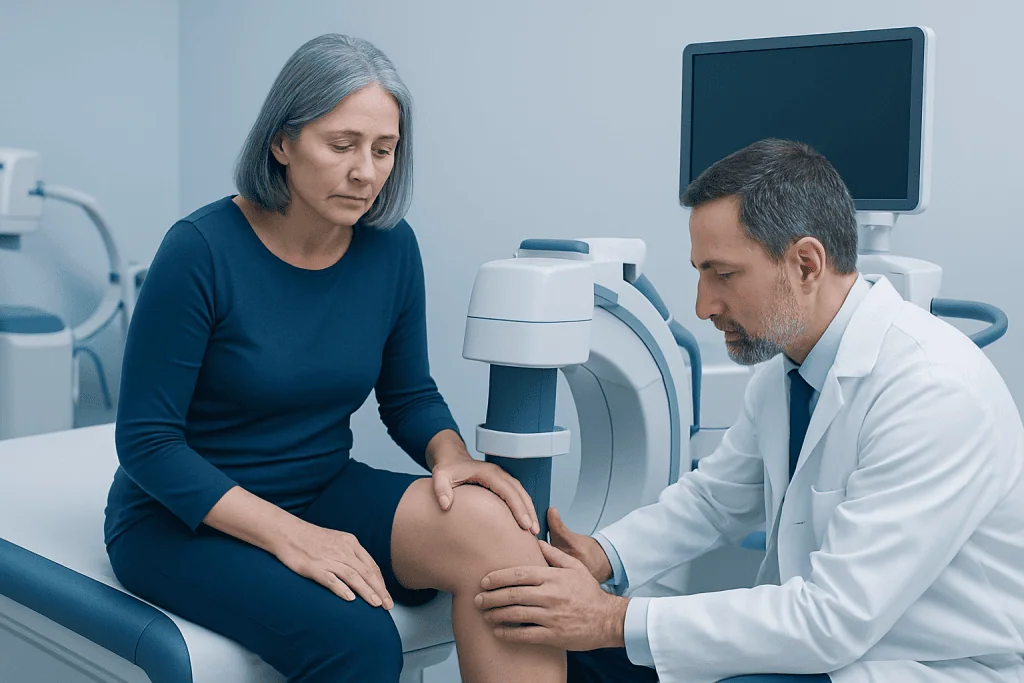
The most common symptom is knee pain. Pain may be felt at the front, inner or outer side of the knee, or more generally around the joint. It often worsens with weight-bearing activities such as walking, climbing stairs, standing from a chair or kneeling. In earlier stages, pain may improve with rest; in more advanced cases, discomfort may occur even at rest or at night.
Stiffness is also common, especially after sitting for a long time or upon waking. Morning stiffness in knee osteoarthritis usually improves within a short period once the joint starts moving. Some people notice swelling, warmth, grinding or crackling sensations, known as crepitus, when bending or straightening the knee.
Other symptoms can include reduced range of motion, a feeling of weakness, difficulty fully straightening the leg, or the sensation that the knee may give way. The knee may gradually look bowed or knocked-kneed if joint alignment changes over time. These changes can affect gait and place extra strain on the hips, feet or back.
Causes and Risk Factors
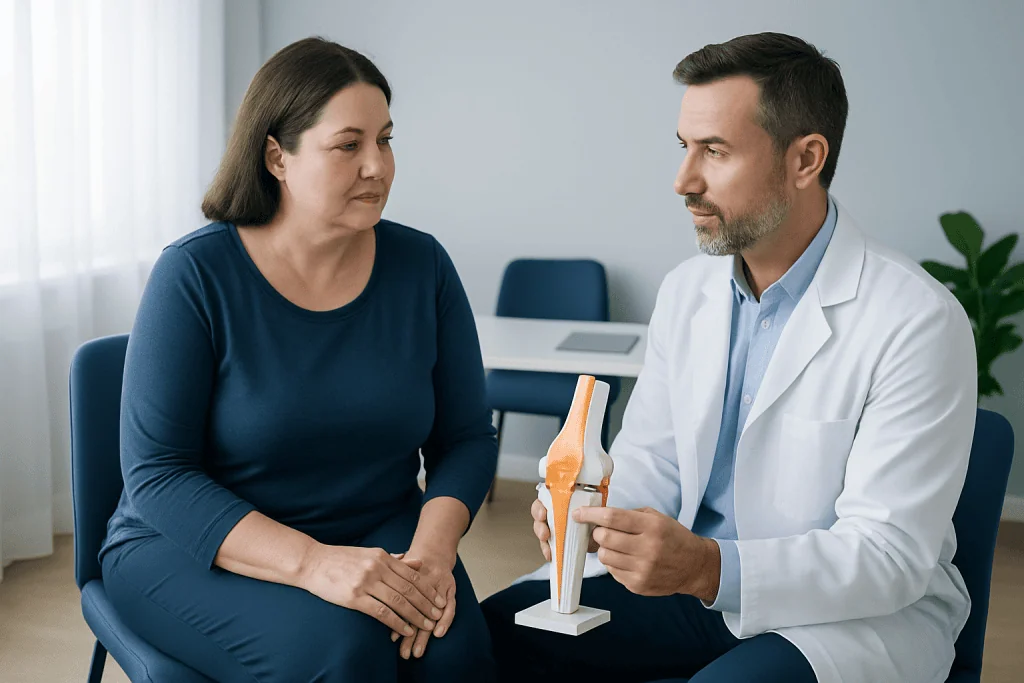
Knee osteoarthritis develops from a combination of mechanical, biological and genetic factors. It is not caused by a single event in most patients. The joint responds to stress and microscopic injury by attempting repair; over time, this process may lead to cartilage thinning, bone remodeling and inflammation within the joint lining.
Several factors can increase the likelihood of developing knee osteoarthritis or worsening symptoms. These include older age, previous knee injury, meniscus or ligament damage, repetitive heavy loading, certain occupations, high-impact sports injuries, and excess body weight. Family history and sex may also play a role, with knee osteoarthritis being more common in women after midlife.
Common risk factors include:
- Previous knee trauma, including anterior cruciate ligament or meniscus injury
- Higher body weight, which increases mechanical load and may contribute to inflammation
- Muscle weakness, especially in the quadriceps and hip muscles
- Joint malalignment, such as bow-legged or knock-kneed alignment
- Repetitive squatting, kneeling, lifting or stair climbing over many years
- Other joint or metabolic conditions that may affect cartilage health
Having risk factors does not mean that severe arthritis is inevitable. Strengthening muscles, maintaining healthy movement patterns and addressing modifiable risks can help many people manage symptoms and protect function.
Diagnosis and X-Ray Findings
Diagnosis begins with a careful medical history and physical examination. The doctor asks about pain location, stiffness, swelling, activity limitations, previous injuries and treatments already tried. During examination, the knee is assessed for swelling, tenderness, range of motion, stability, alignment, muscle strength and walking pattern.
X-rays are commonly used when symptoms suggest osteoarthritis, especially if pain is persistent, function is limited, or surgery is being considered. Typical knee X-ray findings may include narrowing of the joint space, bone spurs called osteophytes, increased bone density under the cartilage called subchondral sclerosis, and small cyst-like changes in the bone. Weight-bearing X-rays can be particularly useful because they show how the joint space looks when the knee is carrying body weight.
It is important to understand that X-ray findings and pain do not always match. Some people have significant X-ray changes with little discomfort, while others have notable pain with only mild changes. Pain can be influenced by inflammation, muscle weakness, sleep, mood, activity level, other pain conditions and the sensitivity of the nervous system.
MRI is not always needed for typical knee osteoarthritis. It may be considered when symptoms are unusual, the diagnosis is unclear, there is concern about another problem, or a patient has mechanical symptoms after injury. Blood tests are not required for routine osteoarthritis diagnosis but may be used if inflammatory arthritis, infection or another condition is suspected.
Treatment Options
Treatment for knee osteoarthritis is usually stepwise and individualized. Most patients benefit from a combination of education, exercise, weight management if relevant, pain control and activity modification. The aim is not only to reduce pain but also to improve confidence in movement and maintain daily function.
Exercise is a cornerstone of care. A physiotherapist or rehabilitation specialist may recommend strengthening exercises for the quadriceps, hamstrings, hip and core muscles, along with flexibility and balance training. Low-impact aerobic activities such as walking, cycling, swimming or water-based exercise may help maintain cardiovascular fitness without excessive joint stress.
Medicines may be used when symptoms interfere with function. Options can include topical anti-inflammatory gels, oral pain relievers or oral non-steroidal anti-inflammatory drugs when appropriate. These medicines are not suitable for everyone, especially people with certain stomach, kidney, liver, heart or bleeding risks, so medical advice is important before regular use.
Injections may be considered for selected patients. Corticosteroid injections can provide short-term relief for inflamed or painful knees, although repeated use requires caution. Hyaluronic acid and platelet-rich plasma injections are used in some settings, but recommendations vary because benefits can differ between patients and studies. A doctor can explain what is reasonable based on the stage of osteoarthritis, medical history and treatment goals.
Surgery and Knee Replacement
Surgery is not the first treatment for most people with knee osteoarthritis. It may be considered when pain, stiffness and disability remain significant despite well-planned non-surgical treatment. The decision is based on symptoms, examination findings, imaging results, general health and the patient’s goals, rather than X-ray appearance alone.
Arthroscopic “clean-out” surgery is generally not recommended for routine knee osteoarthritis because it has not shown reliable long-term benefit for typical degenerative symptoms. However, surgery may be appropriate for certain specific problems, such as loose bodies causing locking or other carefully selected conditions. The orthopedic surgeon will discuss whether any joint-preserving option is relevant.
Knee replacement surgery may be partial or total. In a total knee replacement, damaged joint surfaces are replaced with artificial components designed to restore alignment and smoother movement. Partial knee replacement may be an option when osteoarthritis is limited to one compartment of the knee and the ligaments and other compartments are suitable.
Recovery requires rehabilitation, gradual strengthening and attention to wound care, swelling control and walking practice. Knee replacement can reduce pain and improve function for many appropriately selected patients, but it is still major surgery and has possible risks, including infection, blood clots, stiffness, implant wear or the need for future revision. A detailed discussion with the surgical team helps patients make an informed decision.
Prevention, Self-Care and Daily Living
Not all knee osteoarthritis can be prevented, especially when genetics, age or past injuries are involved. However, many strategies can reduce strain on the knee and help control symptoms. Maintaining a healthy body weight, if needed, can reduce load through the joint. Even modest weight loss may improve comfort for some people with overweight or obesity.
Activity modification does not mean avoiding movement. Instead, it means choosing joint-friendly ways to stay active. Patients may benefit from shorter, more frequent walks; using handrails on stairs; avoiding prolonged kneeling or deep squatting; and alternating activity with rest. Supportive footwear, shock-absorbing soles or prescribed insoles may help selected patients.
Heat may ease stiffness, while cold packs can help with swelling or flare-ups. A cane used in the opposite hand may reduce load on the painful knee. Knee braces may help some people, particularly those with alignment-related symptoms, but they should be fitted properly. Sleep quality, stress management and treatment of other health conditions can also influence pain coping and daily function.
Patients should be cautious with unproven supplements or treatments that promise cartilage regrowth or guaranteed cures. Some supplements may interact with medicines or be unsafe for certain medical conditions. It is best to discuss any complementary approach with a healthcare professional.
When to See a Doctor
A medical assessment is recommended if knee pain lasts more than a few weeks, limits walking or daily activities, causes recurrent swelling, or does not improve with simple self-care. Earlier review is especially helpful after injury, if the knee gives way, or if there is difficulty fully bending or straightening the joint.
Urgent medical attention is needed if knee pain is associated with fever, marked redness, severe swelling, inability to bear weight after an injury, sudden calf swelling, or symptoms that suggest infection or a blood clot. These situations are less common than osteoarthritis but require prompt evaluation.
People considering injections or surgery should seek advice from an orthopedic specialist or a clinician experienced in musculoskeletal care. A personalized plan can clarify whether symptoms are due to osteoarthritis alone or whether another condition is contributing. For international patients, Acibadem International’s multidisciplinary specialists and JCI-accredited hospitals provide diagnosis and treatment for knee osteoarthritis within coordinated orthopedic and rehabilitation care.
Frequently asked questions
Does knee osteoarthritis always get worse over time?
Not always. Knee osteoarthritis often changes slowly, and symptoms can fluctuate with activity, inflammation, muscle strength and general health. Many people maintain good function for years with exercise, weight management and appropriate pain control.
Why does my knee hurt if my X-ray shows only mild osteoarthritis?
Pain does not always match X-ray severity. Pain can come from the joint lining, bone, tendons, muscles or menisci, and it can be influenced by swelling, sleep, stress and nervous system sensitivity. A doctor can assess whether another knee problem is also present.
Can exercise damage an arthritic knee?
Appropriate exercise is generally beneficial and is a key part of treatment. Strengthening and low-impact aerobic activities can reduce pain and improve stability. Exercises should be progressed gradually, and a physiotherapist can adapt them for pain level and fitness.
Are knee injections a cure for osteoarthritis?
No injection is considered a cure for knee osteoarthritis. Some injections may reduce pain for a period of time in selected patients, but results vary. Benefits, risks and timing should be discussed with a qualified doctor.
When is knee replacement considered?
Knee replacement may be considered when osteoarthritis causes persistent pain and disability despite appropriate non-surgical treatment. The decision depends on symptoms, examination, imaging, overall health and personal goals. It is important to understand both expected benefits and possible surgical risks.
Can diet help knee osteoarthritis?
A balanced diet can support overall health and may help with weight management, which can reduce stress on the knees. There is no specific diet proven to rebuild cartilage, but healthy eating patterns that include vegetables, fruits, whole grains, lean proteins and healthy fats may support inflammation control and general wellbeing.
References
- World Health Organization
- American Academy of Orthopaedic Surgeons
- National Institute for Health and Care Excellence
- Osteoarthritis Research Society International
- European Alliance of Associations for Rheumatology
This article is for general information only and is not a substitute for professional medical advice. Please consult a qualified doctor about your individual situation.
Osteoarthritis in Turkey — costs, top hospitals & a free quote
JCI-accredited · board-certified surgeons · reply within 24h
Add us as a Preferred Source to see more of our trusted health content across Google Search, AI Overviews and Discover.

Physical Medicine & Rehabilitation
Restoring movement and function after injury, surgery or neurological conditions.
150 specialists in this unit