Knee Pain: Common Causes, Related Conditions, and When to See a Doctor

Knee pain can start suddenly after an injury or develop gradually from wear, inflammation, or overuse. The location and pattern of pain often help suggest the cause, such as ligament injury, cartilage damage, tendon irritation, or arthritis.
Key Takeaways
- Knee pain can start suddenly after an injury or develop gradually from wear, inflammation, or overuse.
- The location and pattern of pain often help suggest the cause, such as ligament injury, cartilage damage, tendon irritation, or arthritis.
- Persistent swelling, locking, instability, fever, or inability to bear weight are important reasons to seek medical care.
- Diagnosis may include a physical exam, imaging, and sometimes blood tests to look for injury, arthritis, or infection.
- Treatment depends on the cause and may include activity changes, medication, physiotherapy, injections, or surgery in selected cases.
Knee pain is a common symptom that may result from overuse, injury, arthritis, or problems affecting the muscles, cartilage, ligaments, or bones around the joint. Many cases improve with rest and guided care, but swelling, instability, severe pain, or trouble bearing weight should be assessed by a doctor.
Overview: what knee pain can mean
Knee pain is one of the most common joint symptoms in adults and children. It may happen after a twist, fall, sports injury, or sudden increase in activity, but it can also appear gradually over time due to strain, aging, or inflammation. In many people, knee pain improves with rest, exercise guidance, and treatment of the underlying cause.
The knee is a complex joint where the thighbone, shinbone, kneecap, cartilage, ligaments, tendons, muscles, and lining of the joint all work together. Because so many structures are involved, knee pain is not a diagnosis by itself. Instead, it is a symptom that can point to several different conditions, from a simple overuse problem to arthritis or a torn ligament.
A useful way to think about knee pain is by asking where it hurts, how it started, and what other symptoms are present. Pain in the front of the knee may relate to the kneecap or tendons, pain on the sides may involve ligaments or cartilage, and pain deep inside the joint may be linked to arthritis, swelling, or meniscus injury. A clinician uses this pattern together with an examination to identify the likely cause.
How knee pain feels: common symptoms and patterns
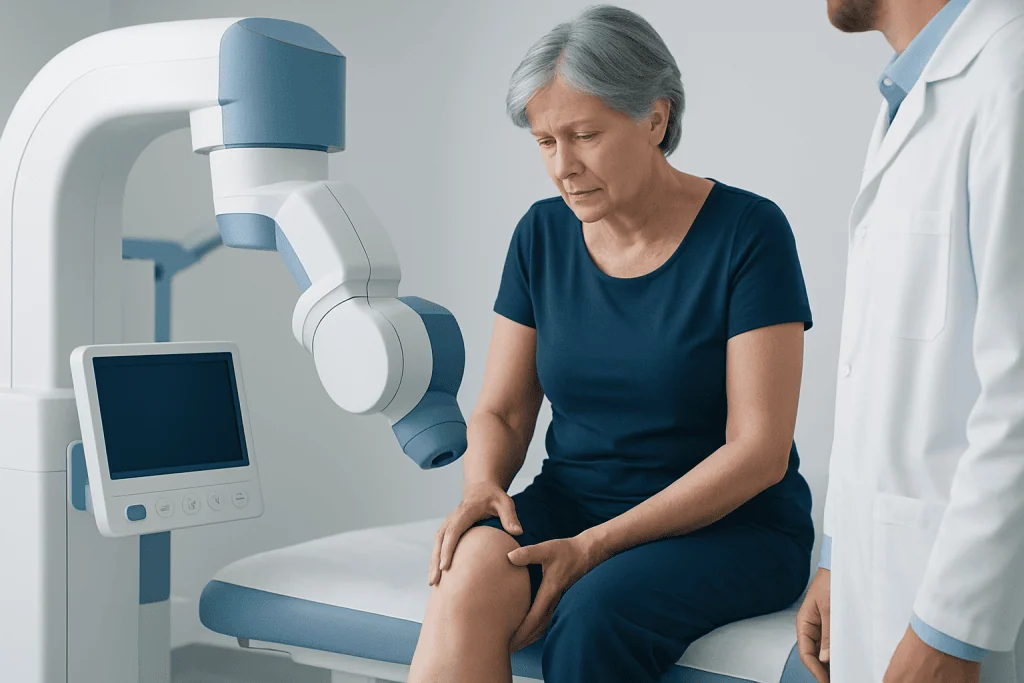
Knee pain can range from a mild ache to sharp pain that makes walking difficult. Some people notice discomfort only with certain movements, such as climbing stairs, squatting, kneeling, or running. Others feel stiffness in the morning, swelling after activity, or a sense that the knee is weak or may give way.
Associated symptoms often provide important clues. Swelling soon after an injury can suggest bleeding into the joint, while swelling that builds more slowly may be related to inflammation or fluid from irritation. Clicking can occur for harmless reasons, but locking, catching, or a true inability to straighten the knee may suggest a meniscus tear or loose fragment inside the joint.
Symptoms that deserve extra attention include redness, warmth, fever, significant deformity, or severe pain at rest. Numbness, pain spreading down the leg, or symptoms coming from the hip or back can sometimes make the problem feel like knee pain even when the main cause is elsewhere. A full evaluation helps separate knee joint problems from referred pain.
- Front knee pain: often related to the kneecap, tendon irritation, or overuse
- Inner or outer knee pain: may involve ligaments, meniscus, or alignment issues
- Deep aching and stiffness: often seen with osteoarthritis or inflammatory conditions
- Sudden swelling and instability: can occur with ligament injuries
Common causes and related conditions
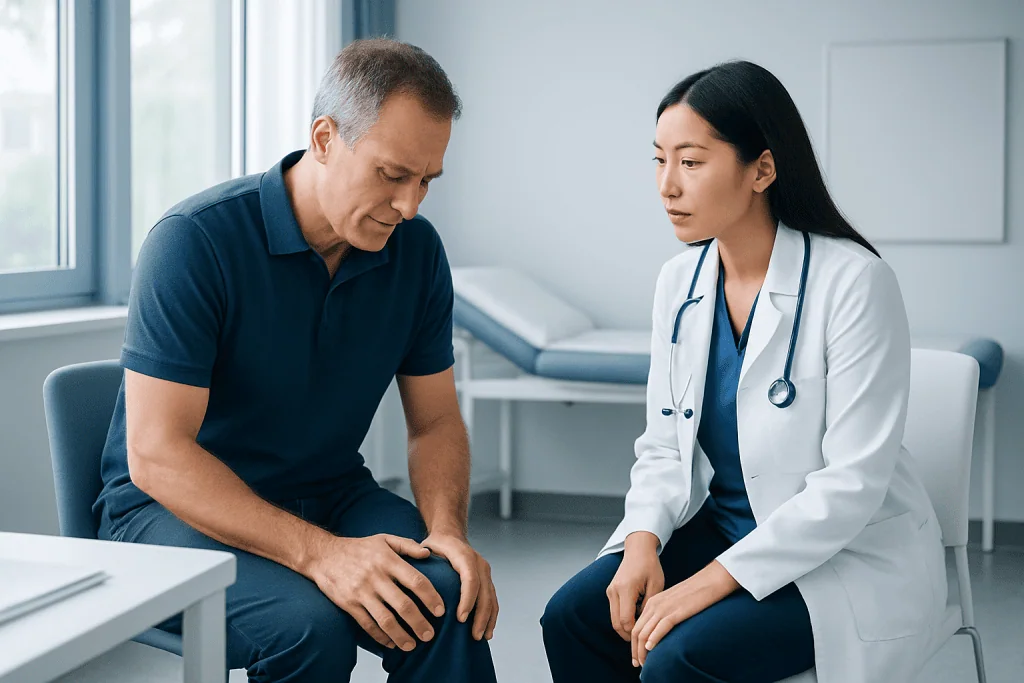
Acute injuries are a frequent cause of knee pain, especially in sports or after falls. These include sprains of the ligaments, tears of the meniscus, tendon injuries, and fractures around the knee. A twist while the foot is planted may injure the meniscus or anterior cruciate ligament, while a direct blow can damage the kneecap or surrounding soft tissues. In some cases, the knee feels unstable or swells rapidly.
Gradual-onset knee pain is often linked to overuse or age-related changes. Repetitive bending, jumping, running, or prolonged kneeling can irritate tendons or the tissues around the kneecap. Common examples include patellofemoral pain syndrome, patellar tendinopathy, and bursitis. Osteoarthritis is another major cause, especially in older adults, and may bring pain, stiffness, and reduced mobility. Readers looking for more about knee arthritis may benefit from a separate condition-focused overview.
Inflammatory and systemic conditions can also affect the knee. These include rheumatoid arthritis, gout, pseudogout, and infections inside the joint. These causes are less common than overuse or osteoarthritis, but they are important because they may need prompt treatment. The knee can also become painful after previous injury, surgery, or changes in leg alignment that place uneven stress on the joint.
Related conditions may involve structures above or below the knee. Hip problems, tight or weak thigh muscles, and foot alignment can all change the way force moves through the knee. This is why assessment often looks beyond the joint itself and may include gait, flexibility, strength, and balance.
Who is more likely to develop knee pain?
Knee pain can affect people of any age, but certain factors increase the chance of developing it. Athletes and physically active adults may be more likely to have ligament sprains, meniscus injuries, or overuse conditions. Older adults are more likely to experience degenerative cartilage wear, reduced joint flexibility, and osteoarthritis.
Body weight can also play a role because the knee carries load with each step. Excess weight may increase stress on the joint surfaces and may worsen symptoms in people with arthritis or alignment problems. Weakness in the hip and thigh muscles, reduced flexibility, and poor movement patterns can also contribute to pain during walking, running, or stair use.
Previous injury is one of the strongest risk factors for future knee symptoms. A person who has torn a ligament, damaged cartilage, or fractured a bone near the joint may later develop instability or arthritis. Occupations that involve repetitive kneeling, squatting, or heavy lifting can also raise the risk of ongoing discomfort.
Not every risk factor can be changed, but many can be managed. Building strength, improving balance, choosing supportive footwear, and returning to sports gradually after injury may help reduce stress on the knee and lower the chance of recurring pain.
How doctors diagnose the cause of knee pain
Diagnosis begins with a detailed history. A doctor will usually ask when the pain started, whether there was an injury, where the pain is located, what makes it worse or better, and whether there is swelling, locking, or instability. They may also ask about sports, work activities, past injuries, medical conditions, and symptoms such as fever or stiffness in other joints.
The physical examination often includes checking swelling, warmth, range of motion, tenderness, joint alignment, muscle strength, and the stability of the ligaments. Specific movement tests can help identify meniscus tears, patellar tracking problems, or ligament injury. Because pain can be referred, the doctor may also examine the hip, lower leg, and lower back.
Imaging is not always needed for mild, straightforward knee pain, but it can be useful in the right setting. X-rays can show fractures, alignment changes, and arthritis. MRI may help evaluate cartilage, meniscus, tendons, and ligaments, especially after injury or when surgery is being considered. Ultrasound may sometimes be used for fluid collections or tendon problems. If arthritis or infection is suspected, blood tests or joint fluid analysis may be recommended.
When evaluation suggests a more serious injury, specialists may recommend orthopedic rehabilitation as part of recovery planning or, in selected cases, targeted procedures after imaging confirms the problem. The goal is not simply to name the condition, but to identify what is driving the pain and what treatment is most appropriate.
Treatment options for knee pain
Treatment depends on the cause, severity, and effect on daily life. For many mild or moderate cases, initial care includes reducing activities that trigger pain, using ice after strain, and considering short-term pain relief recommended by a clinician. Gentle movement is often better than complete rest for too long, because prolonged inactivity can worsen stiffness and muscle weakness.
Physiotherapy is a cornerstone of treatment for many knee problems. A structured program can improve strength in the quadriceps, hamstrings, hips, and core, while also working on flexibility, balance, and movement patterns. This is especially important in patellofemoral pain, tendon problems, recovery after injury, and early arthritis. People with persistent symptoms may benefit from physical therapy and rehabilitation tailored to their diagnosis.
For inflammatory flare-ups or advanced arthritis, doctors may suggest medication, supportive bracing, walking aids, or injections in selected cases. If the knee remains painful because of a major structural problem such as a severe ligament tear, mechanical locking from a meniscus injury, or advanced joint damage, surgical treatment may be discussed. Depending on the diagnosis, options may include repair, reconstruction, or knee replacement for severe arthritis that does not respond to non-surgical measures.
Good treatment plans are individualized. Age, activity goals, work demands, imaging findings, general health, and personal preferences all influence what approach is most suitable. Near the end of the care pathway, some patients may be referred to orthopedic teams with experience in robotic orthopedic surgery when precision planning is helpful for selected procedures.
Self-care, prevention, and daily habits that help
Not all knee pain can be prevented, but everyday habits can make a meaningful difference. Regular strengthening of the thighs, hips, and core helps the leg absorb force more efficiently. Gentle stretching and warm-up before exercise may improve mobility and reduce strain, especially for people returning to activity after a break.
Training errors are a common reason for overuse pain. Increasing distance, speed, or intensity too quickly can overload tendons and the kneecap joint. A gradual progression, suitable footwear, and variation in training can help. For people who spend long periods kneeling or squatting, taking breaks and using supportive equipment may reduce irritation.
Weight management may ease stress on the knees in people who are overweight, particularly when arthritis is present. Low-impact activities such as cycling, swimming, walking on even ground, or exercise in water are often more comfortable than high-impact exercise during recovery. People with ongoing pain should avoid repeatedly pushing through symptoms without guidance, as that may prolong recovery.
Some knee conditions benefit from early attention rather than waiting for symptoms to become severe. For example, recurring swelling, weakness after injury, or gradually worsening function can respond better when addressed before movement patterns change too much. Specialist evaluation can also help exclude related problems such as meniscus tear or other internal joint injuries.
When to seek medical care
Medical care is recommended if knee pain is severe, follows a significant injury, or makes it difficult to bear weight. A doctor should also assess pain that does not improve, keeps returning, or limits normal walking, sleep, work, or exercise. Even when symptoms seem manageable, persistent swelling or reduced motion may indicate a problem that needs treatment.
Urgent medical attention is important if the knee is visibly deformed, rapidly swelling, locked in one position, or suddenly unstable after an injury. Redness, warmth, fever, or feeling generally unwell may point to infection or a strong inflammatory reaction and should not be ignored. Calf swelling, chest pain, or shortness of breath require immediate medical assessment because they may signal a problem beyond the knee itself.
People living with arthritis, previous surgery, or repeated sports injuries may benefit from earlier review if symptoms change. A new pattern of pain, clicking with blockage, or increasing loss of confidence in the joint can all justify reassessment. At Acibadem International, multidisciplinary specialists in JCI-accredited hospitals evaluate knee pain and related orthopedic conditions for international patients using diagnosis and treatment plans tailored to the underlying cause.
Frequently asked questions
What is the most common cause of knee pain?
Common causes include overuse, minor injuries, and osteoarthritis. The most likely cause depends on age, activity level, whether the pain started suddenly or gradually, and whether symptoms such as swelling or instability are present.
Can knee pain go away on its own?
Yes, mild knee pain from temporary strain or overuse often improves with activity modification, time, and simple self-care. However, pain that persists, worsens, or returns repeatedly should be assessed to identify the underlying cause.
How do I know if knee pain is serious?
Warning signs include inability to bear weight, major swelling, deformity, fever, locking, or a feeling that the knee gives way. These symptoms may suggest a more significant injury, infection, or inflammatory condition and should be evaluated by a doctor.
Is walking good for knee pain?
For many people, gentle walking can help maintain mobility and reduce stiffness, especially when pain is mild. But if walking sharply worsens symptoms or follows an injury, it is better to get medical advice before continuing.
What tests are used to diagnose knee pain?
Doctors usually begin with a medical history and physical examination. Depending on the situation, they may recommend X-rays, MRI, ultrasound, blood tests, or analysis of joint fluid to look for injury, arthritis, or infection.
Does knee pain always mean arthritis?
No. Arthritis is a common cause, especially in older adults, but knee pain can also come from tendons, ligaments, cartilage, overuse, or pain referred from other parts of the body. The pattern of symptoms helps guide diagnosis.
References
- American Academy of Orthopaedic Surgeons
- National Institute of Arthritis and Musculoskeletal and Skin Diseases
- National Health Service
- American College of Rheumatology
- Centers for Disease Control and Prevention
This article is for general information only and is not a substitute for professional medical advice. Please consult a qualified doctor about your individual situation.
Joint and spine care in Turkey — expert assessment & treatment
JCI-accredited · board-certified surgeons · reply within 24h
Add us as a Preferred Source to see more of our trusted health content across Google Search, AI Overviews and Discover.

More from the Health Library



Related Specialists

Assoc. Prof. Dr. Ali Titiz
Otorhinolaryngology
Dr. Cihan Deniz Keleş
Gynecology & Obstetrics
Dr. Alper Gölpınar
Orthopedic Surgery & Traumatology
Dr. Süleyman Büber
Clinical Laboratory