Knot on Top of Foot — Explained by Medical Evidence, Not Myths

A knot on top of foot can be soft or firm and may come from a cyst, tendon irritation, arthritis-related change, injury, or a bony prominence. The location, texture, size, pain level, and whether the lump changes over time help guide the diagnosis.
Key Takeaways
- A knot on top of foot can be soft or firm and may come from a cyst, tendon irritation, arthritis-related change, injury, or a bony prominence.
- The location, texture, size, pain level, and whether the lump changes over time help guide the diagnosis.
- Many lumps are harmless, but rapid growth, redness, warmth, numbness, or trouble walking needs prompt medical attention.
- Diagnosis may involve a physical exam and imaging such as ultrasound, X-ray, or MRI.
- Treatment depends on the cause and may include shoe changes, rest, anti-inflammatory measures, drainage, or surgery in selected cases.
A knot on top of foot is a common finding that may come from a ganglion cyst, irritation around a tendon or joint, a bone prominence, or less often another growth. Most causes are not dangerous, but persistent, painful, growing, red, or unexplained lumps should be assessed by a qualified doctor.
What a knot on top of foot usually means
A knot on top of foot usually refers to a visible or palpable lump over the upper part of the foot. In many people, the cause is benign, such as a ganglion cyst, a thickened area near a tendon, swelling after minor trauma, or a bony prominence related to joint wear. The term “knot” describes appearance rather than a diagnosis, so the underlying cause can vary.
The top of the foot contains bones, joints, tendons, ligaments, nerves, blood vessels, and soft tissue in a relatively small space. Because of this, even a small lump may become noticeable, especially when wearing tighter shoes. Some lumps are painful only with pressure from footwear, while others hurt with walking or movement.
Medical evaluation focuses on several practical questions: Is the knot soft or hard? Has it grown quickly or stayed the same? Is there redness, warmth, bruising, or numbness? Is there a history of injury, repetitive friction, or inflammatory joint disease? These clues are often more helpful than appearance alone.
Although internet myths may suggest that every foot lump is either “just a cyst” or automatically serious, the evidence-based view is more balanced. Most knots on the top of the foot are not emergencies, but ongoing symptoms or uncertain lumps deserve proper examination to confirm the cause and choose the right treatment.
Common causes of a lump on the top of the foot
One of the most common causes is a ganglion cyst. This is a fluid-filled sac that develops near a joint or tendon sheath. It may feel smooth, rounded, and slightly movable, and it can change in size over time. Ganglion cysts are benign, but they can be uncomfortable if they press on surrounding tissue or rub against shoes. Readers who want background on ganglion cysts may find that condition page helpful.
A knot may also be related to bone or joint changes. Osteoarthritis in the small joints of the foot can lead to bony enlargement, sometimes called a spur or dorsal bossing. These firmer lumps tend not to move under the skin and may become more noticeable over time. In some people, old injuries or repeated stress can also leave a residual bump.
Tendon and soft-tissue problems are another possibility. Inflammation or thickening around the extensor tendons on the top of the foot can create swelling, tenderness, or a cord-like raised area. Less commonly, a lipoma, inclusion cyst, localized bursitis, or scar tissue may be responsible.
Other causes are less common but important to consider, including inflammatory arthritis, gout, infection, or a benign or malignant tumor of soft tissue or bone. These are not the usual explanation, but they are part of the medical differential diagnosis when a knot is persistent, atypical, or accompanied by warning signs.
Symptoms that help doctors narrow the cause

The characteristics of the knot often give useful diagnostic clues. A soft, compressible, fluctuating lump may suggest a cyst, while a hard fixed lump can point toward bone prominence or another solid structure. A lump that appears after a specific injury may reflect swelling, a healing fracture, or post-traumatic tissue change.
Pain patterns matter as well. Some people only notice discomfort when shoes press on the area. Others feel aching during walking, sharp pain with movement, or tingling if a nearby nerve is irritated. If the knot is painless and stable, it may still need evaluation, but it is less likely to represent an urgent problem.
Associated symptoms can help identify a broader condition. Redness, warmth, fever, drainage, or skin breakdown raises concern for infection or significant inflammation. Morning stiffness, multiple swollen joints, or recurrent flares may suggest inflammatory arthritis or gout. Numbness or weakness can occur if a mass compresses a nerve.
Changes over time are especially important. A lump that increases in size, becomes harder, changes color, or starts waking a person from sleep should not be ignored. Tracking when it appeared, whether it fluctuates, and what makes it better or worse can make a clinic visit more productive.
How a knot on top of foot is diagnosed
Diagnosis begins with a focused history and physical examination. A clinician will ask about the timeline, pain, prior injuries, footwear, exercise, and any history of arthritis, gout, diabetes, or skin infection. On examination, they assess the exact location, size, firmness, mobility, tenderness, and whether movement of the toes or ankle affects the lump.
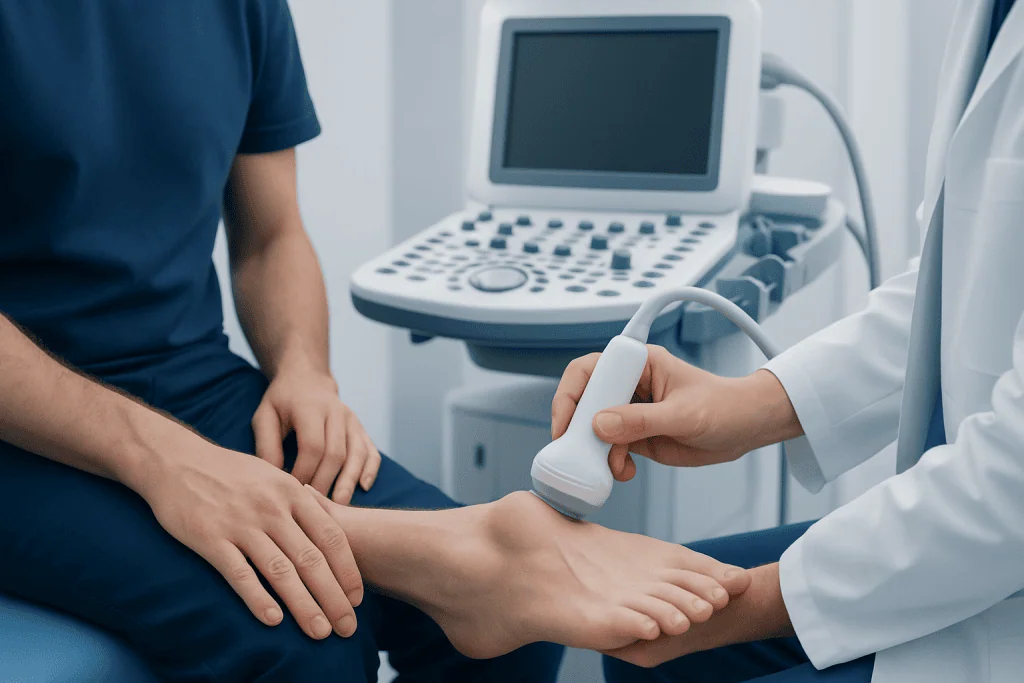
Imaging may be recommended depending on the findings. X-rays are useful when a bony prominence, arthritis, old fracture, or other bone-related cause is suspected. Ultrasound can help distinguish a fluid-filled cyst from a solid soft-tissue mass and may show tendon irritation. MRI is often used when the diagnosis remains unclear, symptoms are persistent, or surgery is being considered.
Sometimes additional tests are needed. Blood tests may be appropriate if inflammatory arthritis, gout, or infection is part of the differential diagnosis. If a fluid-filled lesion is aspirated, the fluid can occasionally be examined. A biopsy is not routine for common benign lumps, but it may be advised for lesions with unusual features.
The goal of diagnosis is not simply to label the lump, but to understand whether it is harmless, whether it explains the symptoms, and whether it needs treatment. In more complex cases, a patient may benefit from assessment by orthopedics and traumatology or by a foot and ankle specialist.
Treatment options based on the cause
Treatment depends on what is causing the knot and how much it affects daily life. If the lump is benign and not causing significant symptoms, observation may be reasonable. Many people only need reassurance, monitoring, and practical steps to reduce irritation from shoes or activity.
Conservative care often includes rest from aggravating activity, footwear with a roomier toe box or softer upper, padding to reduce pressure, and anti-inflammatory measures recommended by a doctor. If tendon irritation is contributing, temporary activity modification and structured rehabilitation may help. Some patients benefit from physical therapy and rehabilitation to improve biomechanics and reduce stress on the foot.
For ganglion cysts, treatment may range from observation to aspiration in selected cases, although cysts can recur. When a bony prominence, persistent cyst, or another localized lesion causes ongoing pain or shoe problems, surgery may sometimes be considered after proper evaluation. This is individualized and should follow clear diagnosis and discussion of risks and expected recovery.
If the knot is related to arthritis, gout, or another underlying condition, treatment also focuses on the broader disease process. In cases where imaging shows structural joint disease, further care may overlap with management of osteoarthritis. When surgery is appropriate, options may be reviewed within foot and ankle surgery services.
Self-care, shoe choices, and what not to do
Self-care should focus on reducing pressure and avoiding unnecessary irritation. Shoes that are tight across the top of the foot can worsen pain from even a small lump. Switching to footwear with more depth, adjustable lacing, or a softer upper may make a meaningful difference. Some people also benefit from protective padding placed away from the most sensitive area.
Activity modification can be helpful if the lump becomes more painful after running, prolonged walking, or repetitive strain. Ice may ease discomfort after activity, and over-the-counter pain relief may be suitable for some adults if their doctor considers it safe. Persistent symptoms should still be assessed rather than repeatedly masked.
It is best not to squeeze, puncture, or “pop” a knot at home. This can increase pain, cause infection, or delay diagnosis of a condition that needs a different approach. Home remedies promoted online may be unreliable and should not replace medical evaluation when a lump is new, painful, or changing.
Preventive steps are not always possible because some cysts and bony changes develop without a clear cause. Still, well-fitting shoes, gradual training progression, attention to recurrent friction, and early review of foot injuries may reduce some forms of irritation and help people seek care before symptoms become more limiting.
When to seek medical care
A person should seek medical care if a knot on top of foot lasts more than a few weeks, keeps growing, becomes painful, or interferes with walking or shoe wear. Medical review is also appropriate when the cause is unclear or when there is a history of injury that could involve bone or soft tissue damage.
Prompt assessment is important if the area is red, warm, very tender, draining, or associated with fever, as these features can suggest infection or significant inflammation. Rapid enlargement, a hard fixed mass, unexplained weight loss, night pain, numbness, or weakness are also reasons not to delay evaluation.
People with diabetes, poor circulation, immune suppression, inflammatory arthritis, or previous foot surgery may need earlier assessment because complications can develop more easily. Children and older adults should also be evaluated carefully, since lumps in these age groups may need a different approach.
For patients seeking specialized assessment, Acibadem International’s multidisciplinary specialists and JCI-accredited hospitals evaluate and treat foot lumps and related conditions for international patients. A doctor can determine whether the knot is a simple cyst, a structural foot problem, or a finding that needs further testing.
Frequently asked questions
Is a knot on top of foot usually serious?
Usually not. Many lumps on the top of the foot are benign, such as ganglion cysts or bony changes related to joints. However, a lump that is growing, very painful, red, hard, or unexplained should be checked by a doctor.
Can shoes cause a lump on the top of the foot?
Shoes may not create every type of lump, but tight or rigid footwear can irritate the top of the foot and make an existing lump more noticeable or painful. Repeated pressure can also contribute to soft-tissue swelling. Better shoe fit is often part of symptom relief.
What does a ganglion cyst on the foot feel like?
A ganglion cyst often feels like a smooth, rounded lump near a joint or tendon. It may be soft or slightly firm and can sometimes change in size. Some cysts are painless, while others cause discomfort when pressed by shoes.
Should a knot on top of foot be massaged or popped?
No. Trying to pop, puncture, or aggressively massage a foot lump can increase pain, cause infection, or injure nearby structures. It is safer to have the lump examined so the cause can be identified correctly.
What tests are used to diagnose a lump on the top of the foot?
A doctor usually starts with a physical exam and questions about symptoms, shoes, and any history of injury. Depending on the findings, imaging such as X-ray, ultrasound, or MRI may be used. Additional tests are sometimes needed if infection, gout, or inflammatory arthritis is suspected.
Can a knot on top of foot go away on its own?
Some can. Mild swelling after irritation or injury may settle, and some ganglion cysts can fluctuate or improve without treatment. If the knot persists, recurs, or causes pain, medical assessment is the best next step.
This article is for general information only and is not a substitute for professional medical advice. Please consult a qualified doctor about your individual situation.
Joint and spine care in Turkey — expert assessment & treatment
JCI-accredited · board-certified surgeons · reply within 24h
Add us as a Preferred Source to see more of our trusted health content across Google Search, AI Overviews and Discover.

More from the Health Library

Nose Ring Is Infected: A Complete Medical Overview

Performance Anxiety: An Evidence-Based Guide for Patients

Teriparatide: What Patients Need to Know

Oat Bran Cereal and Its Role in a Balanced Diet

Grapefruit liver detox: A Complete Medical Guide for Patients