Ktw Syndrome Treatment: How It Works, Results and What to Expect

Klippel-Trenaunay syndrome is a rare congenital vascular disorder that can affect a limb, skin, veins, lymphatic vessels and soft tissues. Treatment is based on symptoms and imaging findings; many people benefit from conservative measures such as properly fitted compression.
Key Takeaways
- Klippel-Trenaunay syndrome is a rare congenital vascular disorder that can affect a limb, skin, veins, lymphatic vessels and soft tissues.
- Treatment is based on symptoms and imaging findings; many people benefit from conservative measures such as properly fitted compression.
- Targeted procedures, including sclerotherapy, embolization, laser therapy or surgery, may be considered for selected complications.
- Care often involves vascular anomaly specialists, interventional radiologists, dermatologists, orthopedic surgeons, hematologists and rehabilitation professionals.
- New or worsening pain, sudden swelling, shortness of breath, unusual bleeding or skin infection needs prompt medical assessment.
Ktw syndrome treatment, more commonly called Klippel-Trenaunay syndrome treatment, is individualized care for abnormal blood and lymphatic vessels, limb overgrowth and related symptoms. Although the condition cannot currently be cured, coordinated treatment can reduce pain, swelling, bleeding, clotting risk and functional limitations while supporting everyday life.
Overview: how KTW syndrome treatment works
Klippel-Trenaunay syndrome (KTS), sometimes shortened to KTW syndrome in searches, is a congenital condition caused by changes in how blood vessels, lymphatic vessels and surrounding tissues develop before birth. It is often recognized by a capillary malformation (a pink, red or purple skin mark), enlarged or abnormal veins, and overgrowth of bone or soft tissue in part of one limb. The pattern and severity vary widely from person to person.
Ktw syndrome treatment does not follow one fixed procedure. Its purpose is to manage the specific problems a person has, such as limb heaviness, swelling, pain, recurrent skin breakdown, bleeding from vascular lesions, unequal limb size or blood-clot risk. A specialist team first maps the vascular changes and then builds a plan that may combine daily self-care, compression, medicines, minimally invasive procedures and, less commonly, surgery.
Long-term follow-up is important because needs may change during growth, pregnancy, after an injury or when symptoms evolve. Treatment decisions are usually based on function and safety rather than appearance alone, with the aim of helping the person remain active and comfortable.
What are the visible signs and symptoms of Klippel-Trenaunay syndrome?
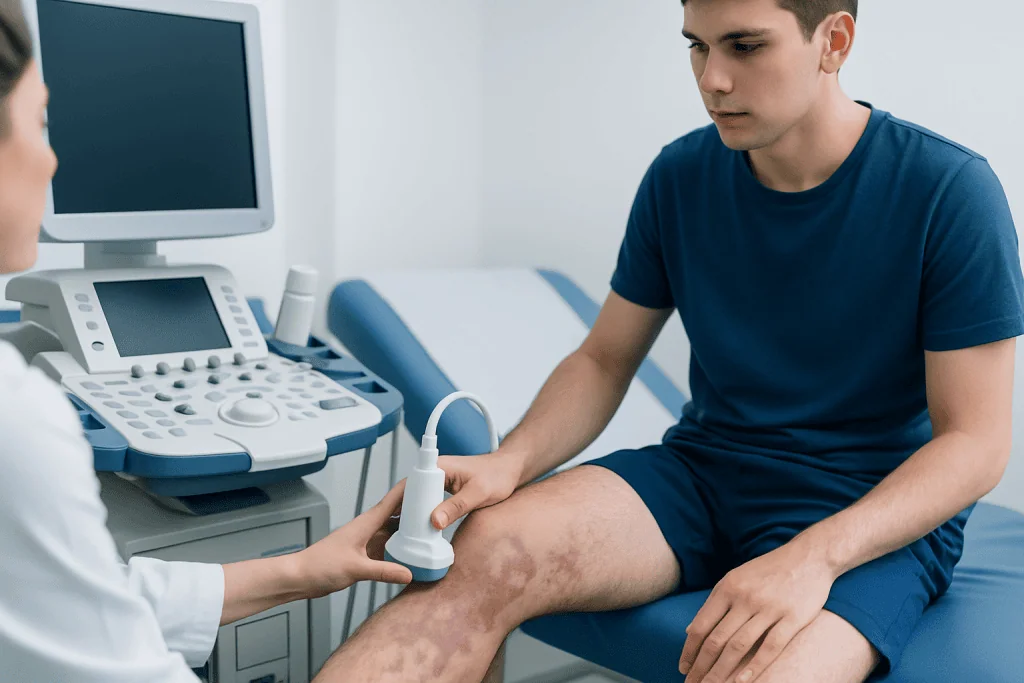
Visible signs often appear at birth or in early childhood. A capillary malformation, sometimes called a port-wine stain, may look like a flat pink, red, purple or darker patch on the skin. It commonly affects one leg but can involve an arm, trunk or other area. Prominent surface veins, varicose veins or bluish vascular clusters may become more noticeable over time.
One limb may be larger or longer because of excess growth of soft tissue and bone. This can lead to differences in gait, posture or clothing and shoe fit. Swelling may occur when venous or lymphatic drainage is reduced, particularly after standing, sitting for long periods, physical activity or warm weather.
Symptoms are not always visible. Some people experience aching, heaviness, fatigue, skin itching, recurrent cellulitis, ulceration or bleeding from affected skin or bowel and urinary tract lesions. The condition can also increase the risk of localized clotting in abnormal veins; symptoms of a possible deep vein thrombosis require urgent assessment.
Assessment, candidacy and treatment planning

A person may be referred to a vascular anomalies clinic when signs suggest Klippel-Trenaunay syndrome or when symptoms are affecting daily activities. Assessment usually begins with a detailed medical history and examination. The clinician considers the location of vascular changes, limb measurements, mobility, skin health, previous bleeding or clotting, and the person’s priorities.
Duplex ultrasound is often used to assess blood flow and veins. Magnetic resonance imaging may provide a more detailed map of venous, lymphatic and soft-tissue involvement, especially before an intervention. Additional tests may be needed for suspected clots, anemia from bleeding, limb-length difference or involvement of internal organs.
Candidacy for a procedure depends on whether there is a clearly treatable source of symptoms and whether the expected benefit outweighs the risks. For example, a painful focal venous malformation may be suitable for image-guided treatment, while widespread abnormalities are often best managed with ongoing conservative care. Children need plans that account for growth, and adults may need reassessment at important life stages.
Treatment options and the step-by-step pathway
Conservative treatment is often the foundation of care. Individually prescribed compression garments can support venous and lymphatic return, limit swelling and reduce discomfort. Skin moisturising, gentle activity, elevation when appropriate, weight management where relevant and physiotherapy may help protect mobility and skin integrity. A clinician may recommend pain relief or medicines for clot-related problems in selected situations; these choices require individualized medical guidance.
When a localized vascular abnormality is causing significant symptoms, minimally invasive treatment may be considered. During sclerotherapy, an interventional radiologist uses imaging to guide a needle into an abnormal vein or vascular space and injects a medicine that closes or shrinks it. In embolization, materials are delivered through a small catheter to reduce blood flow in a targeted abnormal vessel. Laser treatment may help selected superficial capillary malformations or bleeding skin lesions.
The usual pathway includes pre-procedure imaging and blood tests where needed, a discussion of anesthesia or sedation, and informed consent. The procedure is then performed with ultrasound or X-ray guidance; the area is observed afterward for pain, swelling, bleeding or circulation concerns. Follow-up imaging and repeat sessions may be needed because vascular malformations can be extensive or connected to normal veins.
Surgery is reserved for carefully selected issues, such as severe limb-length discrepancy, persistent bleeding, localized lesions not controlled by less invasive methods or major functional impairment. Surgery can be complex in KTS because abnormal vessels may increase bleeding and wound-healing risks, so planning within an experienced multidisciplinary service is important.
Benefits, risks and recovery timeline
Potential benefits of treatment include less pain and swelling, fewer episodes of bleeding or skin infection, improved mobility and better ability to participate in work, school or exercise. Results depend on the type, depth and extent of the malformation. Treatment may control a problem rather than remove every abnormal vessel, and symptoms can recur or change over time.
After a minimally invasive procedure, soreness, bruising and localized swelling are common for several days and sometimes longer. Compression may be advised during recovery, and a follow-up visit is typically arranged to review healing and response. Return to routine activity varies with the procedure and the area treated; the care team provides individualized guidance about exercise, bathing, wound care and travel.
Possible risks include pain, skin blistering or discoloration, infection, bleeding, nerve irritation, ulceration, damage to surrounding tissue, clot formation and incomplete response. Rarely, a clot can travel to the lungs. Risks differ by procedure and by the person’s underlying venous anatomy, which is why imaging, preventive planning and follow-up are essential.
People should ask their team what improvement is realistic, whether more than one session is likely, what symptoms require urgent review and how treatment may affect daily routines. Clear expectations can make long-term care more manageable.
Is Klippel-Trenaunay syndrome progressive?
Klippel-Trenaunay syndrome is present from birth, but its features can become more noticeable over time. The visible skin mark may remain relatively stable, while enlarged veins, swelling, limb asymmetry or pain can change as a child grows or as an adult’s activity level, body weight, hormonal status or circulation changes.
Progression does not occur in the same way for everyone. Some people have mild, stable symptoms and need limited support, while others develop complications that require repeated monitoring or treatment. Growth periods can make limb-length differences more apparent, and pregnancy may worsen venous symptoms in some individuals.
Regular review allows clinicians to respond early to changes in function, skin condition, swelling and clotting risk. It also helps ensure that compression and rehabilitation plans continue to fit properly and meet the person’s current needs.
Can a vascular malformation go away?
Most vascular malformations do not go away on their own because they are structural differences in blood or lymphatic vessels that are present from birth. They may grow proportionally with the body, become more noticeable with time or temporarily worsen with triggers such as injury, infection or hormonal changes.
However, symptoms can often improve substantially with appropriate treatment. Compression, targeted image-guided procedures, laser therapy and surgery in selected cases can reduce the size or activity of a malformation, relieve pain, decrease bleeding and improve function. Some lesions need more than one treatment session, and continued monitoring remains important.
It is helpful to distinguish vascular malformations from infantile hemangiomas, which are different vascular growths that often appear after birth and may shrink naturally. A vascular anomalies specialist can clarify the diagnosis and explain what changes are realistic for an individual lesion.
When to seek medical care
Medical review is appropriate for a new or enlarging vascular skin mark, noticeable limb-size difference, persistent swelling, painful visible veins, repeated skin infections, non-healing wounds or unexplained bleeding. People with a known diagnosis should arrange follow-up if symptoms become harder to control or if compression garments no longer fit comfortably.
Urgent medical care is needed for sudden limb swelling or pain, a warm or red limb, chest pain, shortness of breath, coughing blood, fainting, heavy bleeding, fever with spreading skin redness, or a rapidly worsening wound. These symptoms can have several causes, including potentially serious clotting, bleeding or infection complications.
For international patients, Acibadem International’s multidisciplinary specialists and JCI-accredited hospitals can assess and treat complex vascular anomalies with coordinated imaging, procedural and supportive care. A qualified clinician should always tailor recommendations to the individual’s anatomy, symptoms and overall health.
Frequently asked questions
What is the average life expectancy for someone with Klippel-Trenaunay syndrome?
Many people with Klippel-Trenaunay syndrome have a normal or near-normal life expectancy, particularly when complications are recognized and managed early. Prognosis varies because the condition ranges from mild to complex. Serious complications such as major bleeding, blood clots or pulmonary embolism are uncommon but require prompt specialist care.
Is there a cure for Klippel-Trenaunay syndrome?
There is currently no treatment that removes the underlying congenital vascular changes completely. Care focuses on controlling symptoms, preventing complications and improving mobility and quality of life. Many people benefit from a combination of monitoring, compression and targeted procedures when needed.
What is the average life expectancy for someone with Klippel-Trenaunay syndrome?
Life expectancy is often normal or close to normal for people with Klippel-Trenaunay syndrome. Individual outlook depends on the extent of vascular involvement and whether complications such as clotting, bleeding or severe infection occur. Ongoing follow-up helps reduce preventable risks.
Can a vascular malformation go away?
A vascular malformation usually does not disappear without treatment because it is a structural vessel abnormality present from birth. Its symptoms and visible appearance may improve with appropriate treatment, but follow-up may still be needed. A specialist can explain whether observation or intervention is most suitable.
What are the visible signs and symptoms of Klippel-Trenaunay syndrome?
Common visible features are a red, purple or darker capillary skin mark, enlarged or winding veins, and one limb that is larger or longer than the other. Swelling, skin changes and visible vascular clusters can also occur. Symptoms may include aching, heaviness, bleeding, recurrent infections or reduced mobility.
Is Klippel-Trenaunay syndrome progressive?
The condition is present at birth, but some features may become more prominent during childhood growth or later life. Venous problems, swelling, pain and limb asymmetry can change over time, although the rate and degree of change vary greatly. Regular assessment helps identify complications early.
References
- National Organization for Rare Disorders
- Vascular Anomaly Center, Boston Children’s Hospital
- National Institutes of Health Genetic and Rare Diseases Information Center
- International Society for the Study of Vascular Anomalies
This article is for general information only and is not a substitute for professional medical advice. Please consult a qualified doctor about your individual situation.
Explore treatments in Turkey — costs, top hospitals & a free quote
JCI-accredited · board-certified surgeons · reply within 24h
Add us as a Preferred Source to see more of our trusted health content across Google Search, AI Overviews and Discover.