L a C E R a T I O N: A Complete Medical Overview

A laceration is more than a simple scratch; it can involve skin, fat, muscle, tendons, nerves, or blood vessels. First aid focuses on stopping bleeding, gentle cleaning, and protecting the wound until it can be assessed.
Key Takeaways
- A laceration is more than a simple scratch; it can involve skin, fat, muscle, tendons, nerves, or blood vessels.
- First aid focuses on stopping bleeding, gentle cleaning, and protecting the wound until it can be assessed.
- Medical care is important for deep, gaping, contaminated, bite-related, or heavily bleeding lacerations.
- Treatment may include wound irrigation, stitches, adhesive strips, tissue glue, dressings, and tetanus review.
- Prompt evaluation can reduce the risk of infection, scarring, and loss of function.
A laceration is a cut or tear in the skin caused by a sharp or blunt force, and treatment depends on how deep it is, where it is located, and whether important tissues are involved. Many minor lacerations heal with proper first aid, but some need medical assessment, closure, and protection against infection or tetanus.
Overview
A laceration is a cut or tear in the skin that happens when tissue is split by a sharp edge, crushed by blunt force, or pulled apart. In everyday language, many people call all skin injuries “cuts,” but a laceration can vary widely in severity, from a small superficial break to a deep wound involving fat, muscle, tendons, nerves, or blood vessels.
Unlike a clean surgical incision, a laceration often has irregular edges and may contain dirt, glass, metal, or other debris. This matters because the wound’s shape, depth, location, and contamination level affect healing and determine whether it can be closed safely right away or needs more careful treatment first.
Most uncomplicated lacerations improve with prompt first aid and, when needed, professional wound care. The main goals are to stop bleeding, reduce infection risk, preserve movement and sensation, promote healing, and minimize scarring as much as possible.
What a laceration can look and feel like
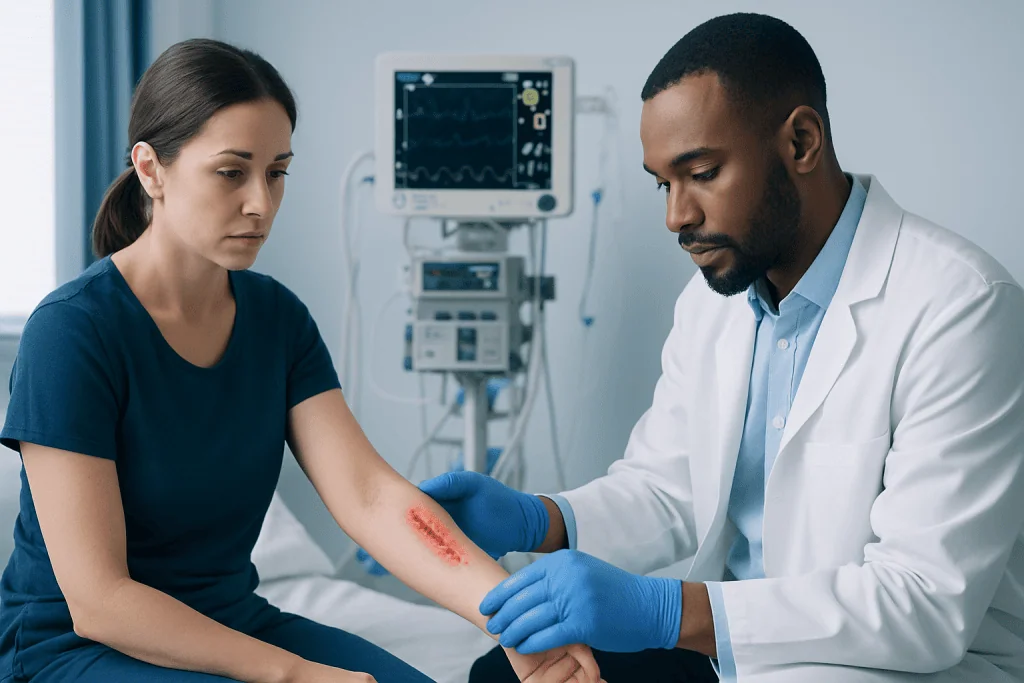
A laceration may appear as a straight cut, a jagged split, a flap of skin, or a tear with bruising around it. Some are shallow and affect only the outer skin layers, while others gape open and expose deeper tissue. Bleeding can range from mild oozing to more significant blood loss, depending on the size of the wound and whether a blood vessel is involved.
Common symptoms include pain, tenderness, swelling, redness around the edges, and difficulty using the injured body part. If deeper structures are affected, there may also be numbness, tingling, weakness, reduced range of motion, or an inability to bend or straighten a finger, toe, or limb normally.
Some features suggest a more complex injury. These include pulsating bleeding, visible yellow fat or deeper tissue, a wound crossing a joint, foreign material stuck in the wound, or a cut on the face, hand, genitals, or near the eye. These situations deserve prompt assessment because appearance alone does not always show the full extent of tissue damage.
- Superficial lacerations affect mainly the outer skin.
- Deep lacerations may involve fat, muscle, tendon, nerve, or blood vessels.
- Complicated wounds can be contaminated, bite-related, or associated with crush injury.
Common causes and risk factors

Lacerations are commonly caused by kitchen knives, broken glass, tools, falls, sports injuries, workplace accidents, and road traffic incidents. Children may be injured during play, while adults often experience lacerations during home repairs, food preparation, or outdoor activities. A blunt object can also produce a laceration by crushing the skin until it splits rather than slicing it cleanly.
Certain circumstances increase the chance of a more serious wound or slower healing. These include contamination with soil or dirty water, delayed cleaning, poor circulation, diabetes, immune system problems, smoking, and medications that affect clotting or healing. Older adults may have more fragile skin, making tears more likely even after relatively minor trauma.
Location also matters. Lacerations on the hands can affect tendons and fine movement. Facial wounds may bleed heavily because the face has a rich blood supply, but they often heal well when treated promptly. Scalp lacerations may look dramatic because they bleed a lot, while cuts over joints may reopen with movement if they are not properly protected.
First aid and early self-care
The first step is to apply steady, direct pressure with a clean cloth or sterile dressing to slow or stop bleeding. If possible, the injured area can be raised above heart level while pressure is maintained. A tourniquet should not be used unless a trained professional recommends it or severe bleeding cannot be controlled by direct pressure.
Once bleeding is controlled, the wound should be rinsed gently with clean running water to remove obvious dirt. Surrounding skin can be washed with mild soap, but harsh scrubbing inside the wound should be avoided because it may damage tissue. Large or deeply embedded debris should not be forcefully removed at home, especially if it appears lodged in deeper tissue.
A clean nonstick dressing can then be applied to protect the area. People should avoid putting powders or irritating substances into the wound. If a cut is deep, gaping, caused by an animal or human bite, or continues to bleed after several minutes of firm pressure, it should be examined promptly by a clinician rather than managed only at home. Some wounds may later need specialist care, including reconstructive treatment when tissue loss or cosmetic concerns are significant.
How doctors assess a laceration
Medical assessment begins with questions about how and when the injury happened, whether the object was dirty, and whether there may be glass, metal, or other foreign material in the wound. The clinician checks bleeding, wound depth, edge shape, contamination, and whether deeper structures are involved. Tetanus vaccination status is also reviewed.
The area is carefully examined for sensation, movement, circulation, and signs of injury to tendons or nerves. For example, a finger laceration may be tested for strength and the ability to bend and extend. If the injury is near the eye, face, or a major joint, the threshold for specialist assessment may be lower because both function and appearance are important.
Imaging is not needed for every laceration, but it may be helpful if there is concern about a retained foreign body, fracture, or deeper internal damage. In selected cases, a clinician may also evaluate related injuries such as tendon injuries or peripheral nerve damage when weakness or numbness is present.
Treatment options
Treatment depends on the wound’s depth, location, cleanliness, and timing. Many lacerations are first numbed with a local anesthetic, then thoroughly irrigated to lower infection risk. Small, shallow wounds with well-aligned edges may be treated with dressings alone, adhesive strips, or skin glue. Wider or deeper lacerations often need sutures or sometimes staples to bring the skin edges together.
Not every wound should be closed immediately. If a laceration is heavily contaminated, infected, or associated with extensive crush injury, a clinician may recommend delayed closure after additional cleaning and observation. This approach can help reduce the chance of trapping bacteria inside the wound.
Deeper injuries may require layered repair or specialist treatment if tendons, nerves, blood vessels, eyelids, lips, or other delicate structures are involved. In such cases, care may involve hand surgery or other targeted procedures to restore function. If there is concern about a significant blood vessel injury or poor blood flow to the area, evaluation by a team experienced in vascular surgery may be appropriate.
Antibiotics are not necessary for every laceration, but they may be considered for bites, contaminated wounds, or injuries with higher infection risk. Tetanus prevention is also part of treatment when indicated. Pain control, dressing instructions, and a plan for follow-up or suture removal are usually provided before discharge.
Healing, scar care, and prevention
Normal healing often includes mild redness, tenderness, and swelling in the first few days. As the wound closes, a thin scab or sealed surface forms and discomfort gradually improves. Keeping the area clean, protected, and appropriately moist with clinician-recommended dressings can support healing. Overuse of the injured area should be avoided if movement puts tension on the wound.
Once the skin has closed, scar care may include sun protection and, in some cases, silicone-based products if recommended by a clinician. Picking at scabs or stretching the wound early can worsen the final scar. Healing takes longer in deeper wounds, in areas with repeated motion, and in people with conditions that reduce circulation or immune response.
Prevention focuses on practical safety steps: using protective gloves when needed, handling knives and tools carefully, storing sharp objects safely, wearing seat belts, and keeping play and work areas free of broken glass or trip hazards. For people with ongoing wound healing concerns, regular medical follow-up is important. Acibadem International’s multidisciplinary specialists in JCI-accredited hospitals diagnose and treat lacerations and related injuries for international patients when more advanced care is needed.
When to seek medical care
Medical care is recommended if a laceration is deep, gaping, dirty, caused by a bite, or located on the face, hand, foot, genitals, or over a joint. A person should also be assessed if bleeding does not stop with firm direct pressure, if the edges are widely separated, or if fat, muscle, or other deeper tissue is visible.
Urgent evaluation is important when there is numbness, weakness, pale or cold skin beyond the injury, severe pain, trouble moving the area, or concern that glass or other material remains inside the wound. Fever, spreading redness, pus, increasing swelling, or worsening pain after the first day or two can suggest infection and should not be ignored.
It is also sensible to seek advice if tetanus vaccination status is uncertain, especially after a dirty wound. Early professional care can make treatment simpler and may reduce the risk of infection, stiffness, loss of function, or a more noticeable scar.
Frequently asked questions
What is the difference between a laceration and a simple cut?
A laceration is a cut or tear in the skin, often with irregular edges and possible damage to deeper tissues. A simple minor cut is usually more superficial and may heal with basic first aid alone. In practice, the terms are sometimes used interchangeably, but clinicians assess depth, contamination, and function to judge severity.
How can someone tell if a laceration needs stitches?
A laceration may need stitches if it is deep, gaping, keeps bleeding, exposes deeper tissue, or is located in an area where movement can pull the edges apart. Cuts on the face, hands, and over joints often deserve medical assessment even if they do not look very large. Only a clinician can decide the most suitable closure method after examining the wound.
Should a laceration be cleaned at home?
Yes, gentle rinsing with clean running water is helpful for many minor lacerations after bleeding is controlled. The wound should not be aggressively scrubbed, and large embedded debris should not be dug out at home. If the wound is dirty, deep, or hard to clean, professional care is safer.
Do all lacerations need antibiotics?
No, antibiotics are not routinely needed for every laceration. They may be considered when the wound is contaminated, caused by a bite, involves deeper structures, or when the person has higher infection risk. A doctor decides this based on the wound type and the person’s overall health.
How long does a laceration take to heal?
Healing time depends on the size, depth, location, and cleanliness of the wound, as well as the person’s general health. Minor lacerations may improve within days to weeks, while deeper injuries can take longer and may require follow-up. Even after the skin closes, scar remodeling continues for months.
What are the signs that a laceration may be infected?
Possible signs of infection include increasing redness, warmth, swelling, pain, pus, bad odor, or fever. Some discomfort and mild redness can be normal early on, so the key concern is worsening rather than steady improvement. If infection is suspected, a clinician should assess the wound promptly.
Can a laceration cause nerve or tendon damage?
Yes, a deep laceration can injure nearby nerves or tendons, especially in the hands, wrists, feet, and face. Warning signs include numbness, tingling, weakness, or inability to move part of the injured area normally. These symptoms should be evaluated quickly because early treatment can be important for recovery.
References
- American College of Emergency Physicians
- Centers for Disease Control and Prevention
- Mayo Clinic
- National Health Service
- Merck Manual Consumer Version
This article is for general information only and is not a substitute for professional medical advice. Please consult a qualified doctor about your individual situation.
Joint and spine care in Turkey — expert assessment & treatment
JCI-accredited · board-certified surgeons · reply within 24h
Add us as a Preferred Source to see more of our trusted health content across Google Search, AI Overviews and Discover.