Laryngoscopy: Candidacy, Procedure Steps, and Recovery Timeline

Laryngoscopy helps doctors examine the larynx, vocal cords, and nearby throat structures. It may be done in the clinic with a flexible scope or in the operating room with direct laryngoscopy under anesthesia.
Key Takeaways
- Laryngoscopy helps doctors examine the larynx, vocal cords, and nearby throat structures.
- It may be done in the clinic with a flexible scope or in the operating room with direct laryngoscopy under anesthesia.
- Doctors use laryngoscopy to diagnose symptoms, remove small lesions, collect biopsies, or assess airway problems.
- Recovery time depends on the type of laryngoscopy, with office procedures often allowing a same-day return to normal activities.
- Risks are usually low but can include sore throat, temporary voice changes, bleeding, or reactions to anesthesia.
Laryngoscopy is a medical procedure that allows a doctor to examine the throat, vocal cords, and voice box using a small lighted instrument or flexible camera. It is commonly used to investigate hoarseness, throat pain, swallowing problems, breathing symptoms, or suspicious findings, and recovery is usually brief for diagnostic exams.
Overview: what laryngoscopy is and how it works
Laryngoscopy is a procedure used to look at the larynx, also called the voice box, along with the vocal cords and surrounding throat structures. It helps doctors understand the cause of symptoms such as persistent hoarseness, throat discomfort, swallowing difficulty, chronic cough, noisy breathing, or a sensation of something stuck in the throat. In some cases, it is also used to guide treatment rather than only to make a diagnosis.
There are different ways to perform laryngoscopy. A flexible laryngoscopy usually uses a thin, bendable tube with a camera that passes gently through the nose after numbing spray is applied. A direct laryngoscopy uses a rigid instrument to view the larynx more closely and is often done under sedation or general anesthesia, especially if a biopsy, lesion removal, or more detailed examination is needed.
Because the voice box plays a key role in speaking, breathing, and swallowing, careful visualization can provide important information that a regular mouth or throat exam cannot. Laryngoscopy may also be part of the evaluation for conditions affecting the throat, including inflammation, vocal cord nodules, reflux-related irritation, infections, polyps, or suspicious growths such as throat cancer.
Who may need laryngoscopy
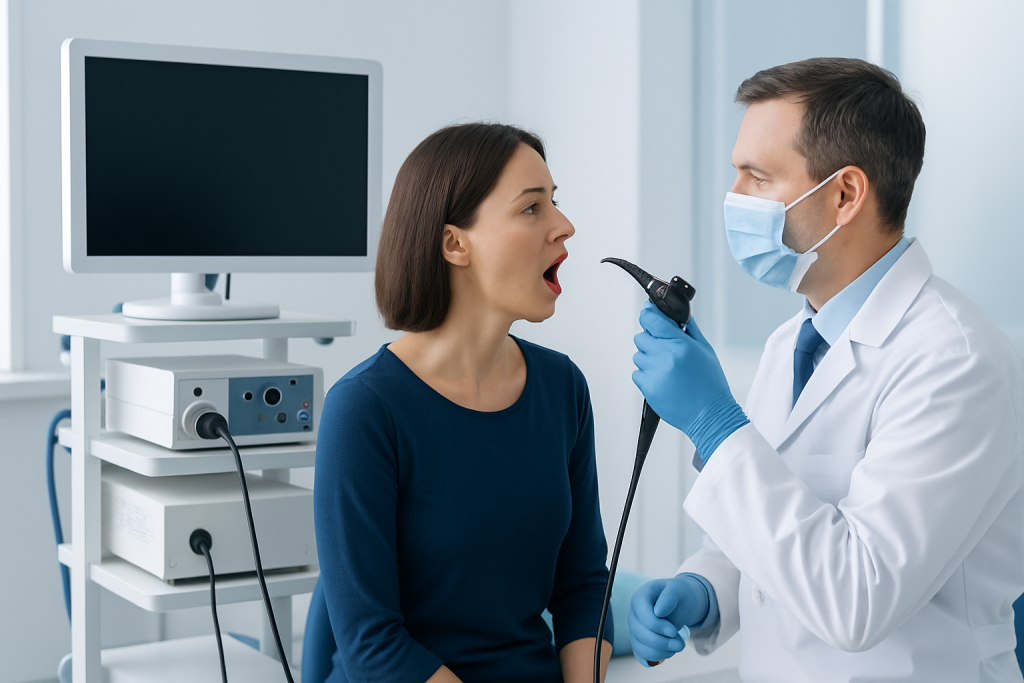
Laryngoscopy is usually recommended when symptoms involve the voice, throat, or airway and have not improved or are difficult to explain. A doctor may suggest it for hoarseness lasting more than a few weeks, throat pain that does not settle, coughing up blood, swallowing problems, chronic throat clearing, or unexplained ear pain. It can also be useful when breathing sounds noisy or strained, or when there is concern about narrowing of the airway.
Some people need laryngoscopy because imaging, a physical examination, or a prior treatment has raised questions that require a closer look. For example, it may be used to inspect a visible mass, assess possible injury after intubation, check vocal cord movement after neck or thyroid surgery, or investigate suspected reflux-related damage. It may also be used in ongoing monitoring after treatment for a throat condition.
Children and adults can both undergo laryngoscopy, but the setting and approach may differ depending on age, symptoms, and how detailed the examination needs to be. Patients with severe breathing difficulty, significant gag reflex, bleeding problems, or complex medical conditions may need special planning before the procedure.
Types of laryngoscopy and what each one is used for
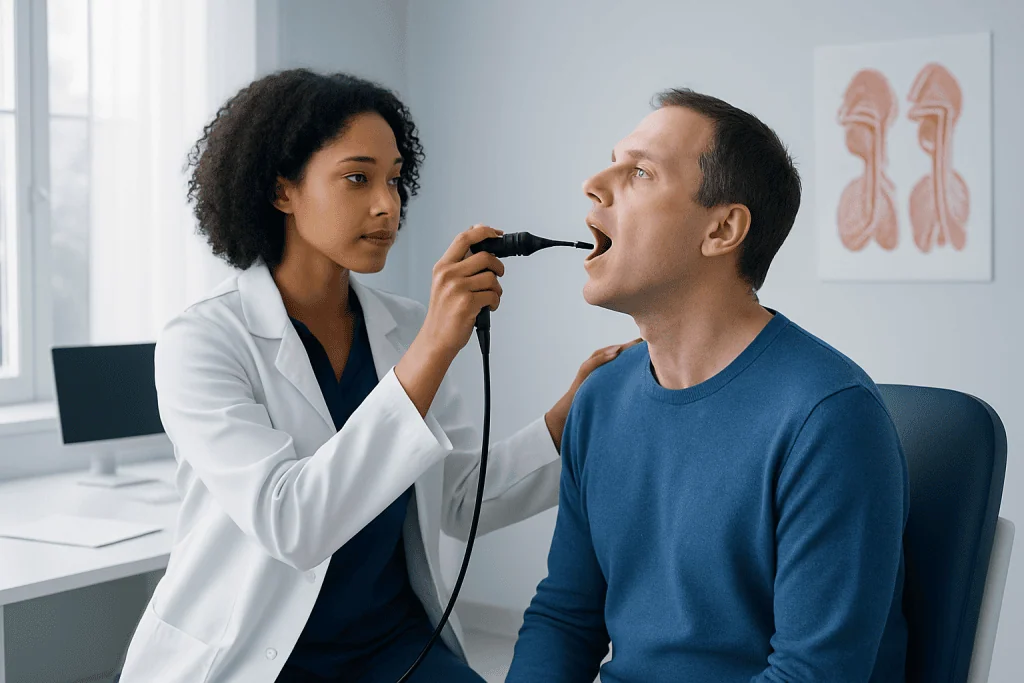
Flexible laryngoscopy is the most common office-based approach. The doctor inserts a very thin flexible scope through the nose to examine the throat and larynx while the patient is awake. This method is useful for checking vocal cord movement, inflammation, swelling, mucus, and many common causes of voice or throat symptoms. It is usually quick and does not require an incision.
Direct laryngoscopy offers a closer and more controlled view. It is often performed in the operating room using a rigid laryngoscope while the patient is under anesthesia. This method allows the doctor to inspect fine details, obtain tissue samples, remove certain lesions, or perform other procedures. When treatment is needed, direct laryngoscopy may be combined with microlaryngoscopy for highly precise examination and surgical work on the vocal cords.
Sometimes laryngoscopy is paired with related evaluations depending on the symptom pattern. If swallowing difficulty is a major concern, the doctor may consider additional tests. If the nose and deeper upper airway also need examination, an ENT specialist may expand the assessment. The exact type of laryngoscopy depends on the suspected problem, how urgent the symptoms are, and whether the goal is diagnosis, biopsy, or treatment.
Step by step: what happens before, during, and after the procedure
Before laryngoscopy, the doctor reviews symptoms, medical history, medications, allergies, and any prior throat or airway procedures. The patient may be asked about smoking history, reflux symptoms, voice use, bleeding disorders, and use of blood thinners. Instructions vary by procedure type. For an office-based flexible laryngoscopy, preparation is usually simple. For direct laryngoscopy under anesthesia, fasting and medication adjustments may be required.
During a flexible laryngoscopy, a numbing spray may be applied to the nose and throat to reduce discomfort. The scope is then passed through the nose while the patient sits upright. The doctor may ask the patient to breathe, speak, or make certain sounds so the vocal cords can be seen in motion. The examination often takes only a few minutes. Most people feel pressure, mild irritation, or the urge to swallow, but significant pain is uncommon.
During direct laryngoscopy, the patient is usually asleep under anesthesia. The doctor gently positions a rigid instrument to view the larynx and may use magnification or special instruments to collect a biopsy, remove a small lesion, or evaluate a narrowing. In some cases, treatment of benign vocal cord lesions may be done at the same time, and selected patients may go on to voice disorders treatment or other follow-up care.
After the procedure, the patient is monitored briefly. Following a flexible exam, normal activities can often resume soon afterward, though eating or drinking may need to wait until numbness wears off. After direct laryngoscopy, recovery takes longer because of anesthesia, and someone may need to accompany the patient home. The doctor explains initial findings and whether pathology results are pending.
Benefits, risks, and possible findings
The main benefit of laryngoscopy is that it gives a direct view of structures that cannot be adequately assessed from outside the body. This can help identify inflammation, infection, vocal cord weakness or paralysis, benign growths such as nodules or polyps, scarring, airway narrowing, reflux-related changes, or tumors. It also helps guide decisions about whether observation, medication, voice therapy, surgery, or additional tests are needed.
Risks are generally low, especially with flexible office-based laryngoscopy. Common short-term effects include a sore throat, nasal irritation, mild coughing, a bitter taste from the numbing medicine, or brief voice changes. Less common risks include nosebleed, gagging, vomiting, or a temporary feeling of throat swelling. Direct laryngoscopy carries the added risks associated with anesthesia and more invasive manipulation of the airway.
If a biopsy is taken or a lesion is removed, there may be mild bleeding, more throat discomfort, or temporary voice rest instructions. Rare complications can include dental injury, infection, breathing problems, or significant bleeding. A doctor weighs these risks against the expected benefit and chooses the safest approach for the patient’s symptoms and general health.
Recovery timeline and self-care after laryngoscopy
Recovery after laryngoscopy depends mainly on whether the procedure was flexible and diagnostic or direct and done under anesthesia. After flexible laryngoscopy in the clinic, many patients return to usual daily activities the same day. Mild throat or nasal irritation often fades within a few hours. If local anesthetic was used, eating and drinking are usually delayed until swallowing feels normal again.
After direct laryngoscopy, recovery is typically longer because the throat has been manipulated more and anesthesia can cause temporary fatigue, nausea, or grogginess. A sore throat, hoarseness, or mild discomfort when swallowing may last for one to several days. If tissue was removed, the doctor may recommend voice rest, hydration, avoiding smoking, and limiting throat clearing to support healing.
It is important to follow individual instructions, especially if a biopsy was performed or a lesion was treated. Patients should ask when they can return to work, exercise, speaking-heavy tasks, and travel. Depending on the findings, follow-up may include pathology review, repeat laryngoscopy, imaging, speech-language therapy, reflux management, or surgery such as head and neck cancer treatment when a more serious diagnosis is confirmed.
- First few hours: temporary numbness, mild irritation, and brief dietary restrictions may apply.
- First 1 to 3 days: sore throat or hoarseness may improve gradually, especially after direct laryngoscopy.
- Within days to weeks: biopsy results and a longer-term treatment plan are usually discussed at follow-up.
When to seek medical care
Medical care should be sought promptly for symptoms that suggest significant airway or swallowing problems. These include trouble breathing, a rapidly worsening voice change, inability to swallow liquids, coughing up more than a small amount of blood, severe throat pain, or high fever. After laryngoscopy, urgent advice is also needed if breathing becomes difficult, bleeding is persistent, or pain is getting worse instead of better.
Even when symptoms are not urgent, it is sensible to arrange an ENT evaluation if hoarseness lasts longer than a few weeks, swallowing feels persistently abnormal, or there is ongoing throat discomfort without a clear reason. Earlier assessment can help identify treatable causes and avoid delays in diagnosing less common but important conditions.
For patients who need coordinated evaluation and treatment, Acibadem International’s multidisciplinary specialists and JCI-accredited hospitals care for international patients with throat and voice disorders, including diagnostic procedures such as ENT treatment.
Frequently asked questions
Is laryngoscopy painful?
Most people find flexible laryngoscopy uncomfortable rather than painful. A numbing spray is usually used, and the exam is brief. Direct laryngoscopy is typically done under anesthesia, so pain is not felt during the procedure itself.
How long does a laryngoscopy take?
A flexible office-based laryngoscopy often takes only a few minutes, although the visit itself may be longer. Direct laryngoscopy takes more time because it involves preparation, anesthesia, and recovery monitoring.
Can a patient eat after laryngoscopy?
If the throat or nose has been numbed, eating and drinking are usually postponed until normal swallowing returns. This helps reduce the risk of choking. After direct laryngoscopy, the doctor gives specific instructions based on the procedure performed.
Why would a doctor order laryngoscopy for hoarseness?
Hoarseness can result from inflammation, reflux, vocal overuse, nodules, polyps, nerve problems, or more serious conditions. Laryngoscopy allows the doctor to see how the vocal cords look and move. This helps determine the cause and the most appropriate treatment.
What is the difference between flexible and direct laryngoscopy?
Flexible laryngoscopy is usually done while the patient is awake in a clinic and is mainly used for diagnosis and routine assessment. Direct laryngoscopy uses a rigid instrument, often under anesthesia, and provides a more detailed view. It is often chosen when a biopsy or treatment is needed.
How long is recovery after direct laryngoscopy?
Recovery varies, but mild throat discomfort and hoarseness may last for several days. Many people feel better within a short period, though healing can take longer if a biopsy or lesion removal was performed. The doctor will explain when normal speaking, work, and activity can safely resume.
References
- American Academy of Otolaryngology–Head and Neck Surgery
- National Institute on Deafness and Other Communication Disorders
- Merck Manual Professional Edition
- Mayo Clinic
- MedlinePlus
This article is for general information only and is not a substitute for professional medical advice. Please consult a qualified doctor about your individual situation.
Explore treatments in Turkey — costs, top hospitals & a free quote
JCI-accredited · board-certified surgeons · reply within 24h
Add us as a Preferred Source to see more of our trusted health content across Google Search, AI Overviews and Discover.