Lateral Collateral Ligament Injuries of the Knee
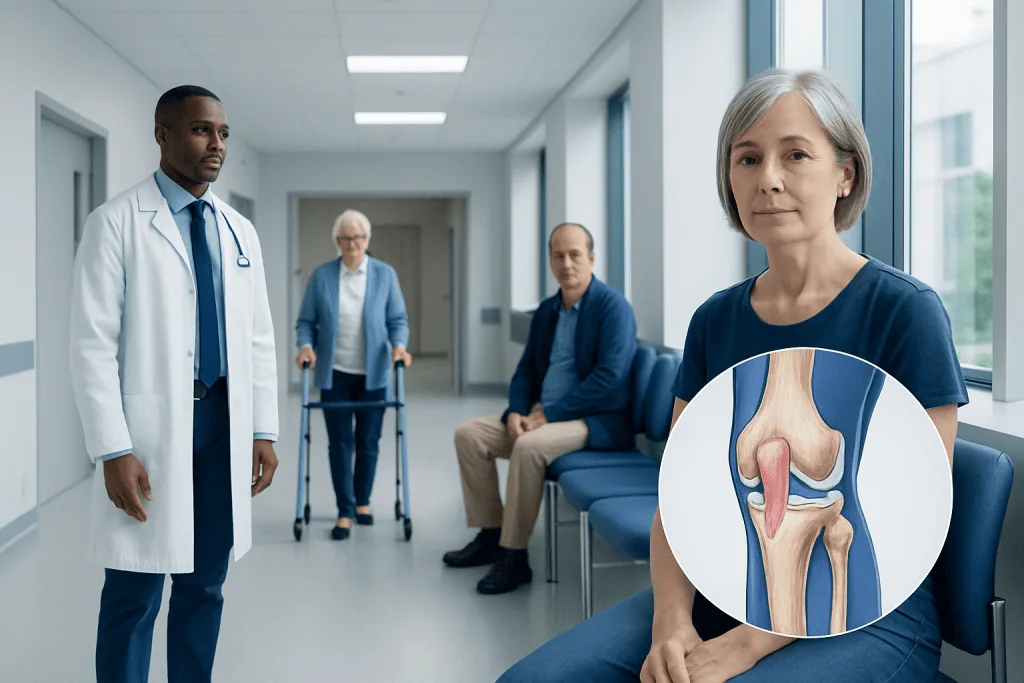
The lateral collateral ligament helps prevent the knee from opening outward and supports side-to-side stability. LCL injuries commonly occur after a blow to the inside of the knee, a twisting injury, or sports-related trauma.
Key Takeaways
- The lateral collateral ligament helps prevent the knee from opening outward and supports side-to-side stability.
- LCL injuries commonly occur after a blow to the inside of the knee, a twisting injury, or sports-related trauma.
- Pain and tenderness on the outside of the knee, swelling, and instability can suggest an LCL injury.
- A clinical examination and, when needed, MRI help confirm the injury and identify associated knee damage.
- Many isolated LCL sprains heal without surgery, but complete tears or combined ligament injuries may require surgical treatment.
The lateral collateral ligament (LCL) is a strong band of tissue on the outer side of the knee that helps keep the joint stable. An LCL injury can cause outer-knee pain and a feeling of instability, but many mild to moderate injuries recover well with appropriate protection and rehabilitation.
Overview: What Is the Lateral Collateral Ligament?
The lateral collateral ligament, often called the LCL, is one of the main ligaments supporting the knee. Ligaments are tough bands of connective tissue that join one bone to another. The LCL runs along the outer, or lateral, side of the knee, connecting the thighbone (femur) to the smaller lower-leg bone called the fibula.
Its key role is to limit excessive outward opening of the knee joint and help control side-to-side movement. It works together with other structures on the outside and back of the knee, including the posterolateral corner, to support stable walking, running, turning, and landing.
An LCL injury may be a stretch injury, a partial tear, or a complete tear. It can occur by itself, although more serious LCL tears may happen alongside injuries to other knee ligaments, cartilage, tendons, or nerves. A proper assessment is important because treatment and recovery depend on the severity of the injury and whether other structures are involved.
Symptoms of an LCL Injury
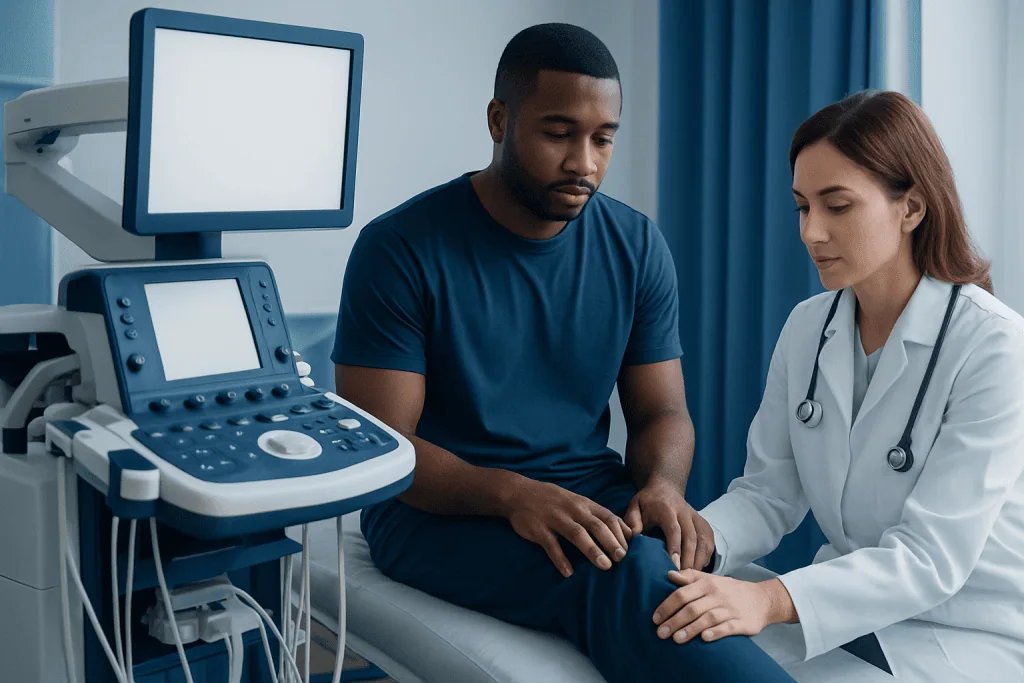
The most typical symptom is pain on the outside of the knee. The area may feel tender when pressed, especially near the fibular head on the outer upper part of the lower leg. Swelling and bruising may occur, although swelling is not always prominent with an isolated LCL injury.
Some people notice stiffness, reduced ability to bend or straighten the knee fully, or discomfort when walking, changing direction, squatting, or going downstairs. With a more significant tear, the knee may feel loose, unstable, or as though it could give way during weight-bearing activities.
A substantial injury can also cause symptoms beyond the knee itself. Because an important nerve passes close to the fibular head, weakness lifting the foot, numbness or tingling over the top of the foot, or changes in sensation in the lower leg need urgent medical assessment. These symptoms do not always mean nerve damage, but they should not be ignored.
- Outer-knee pain or tenderness
- Swelling, bruising, or stiffness
- Pain with pivoting, side-stepping, or bending the knee
- A feeling of instability or giving way
- In severe cases, numbness, tingling, or foot weakness
Causes and Risk Factors
LCL injuries often result from a force that pushes the knee outward while the lower leg is forced inward. This may happen after a direct blow to the inner side of the knee during contact sports, such as football, rugby, or martial arts. A fall, vehicle collision, or other high-energy trauma can also injure the LCL.
Non-contact injuries are possible as well. A sudden twist, awkward landing, rapid change of direction, or hyperextension of the knee may place excessive stress on the ligament. Skiing, basketball, football, and sports requiring cutting or pivoting movements can increase exposure to these mechanisms.
Risk can be influenced by previous knee injuries, reduced muscle control around the hip and knee, fatigue, poor landing technique, and returning to sport before a prior injury has recovered. However, an LCL injury can occur even in otherwise healthy, well-conditioned people after an unexpected impact or movement.
More severe trauma can affect several knee structures at once. For example, the LCL may be injured together with the anterior cruciate ligament, posterior cruciate ligament, meniscus, or posterolateral corner. These combined injuries generally require specialist evaluation because they can cause ongoing instability if not recognized and managed appropriately.
How LCL Injuries Are Diagnosed
A clinician begins by asking how the injury occurred, where the pain is located, whether the knee felt unstable, and whether there are any nerve-related symptoms. They will examine the knee for swelling, bruising, range of motion, tenderness, and stability. Comparison with the uninjured knee can help assess whether there is abnormal looseness.
During the examination, a clinician may gently apply controlled stress to the knee at different degrees of bending. This helps evaluate the LCL and other supporting structures. The examination is performed carefully, particularly soon after an injury when pain and swelling can make assessment more difficult.
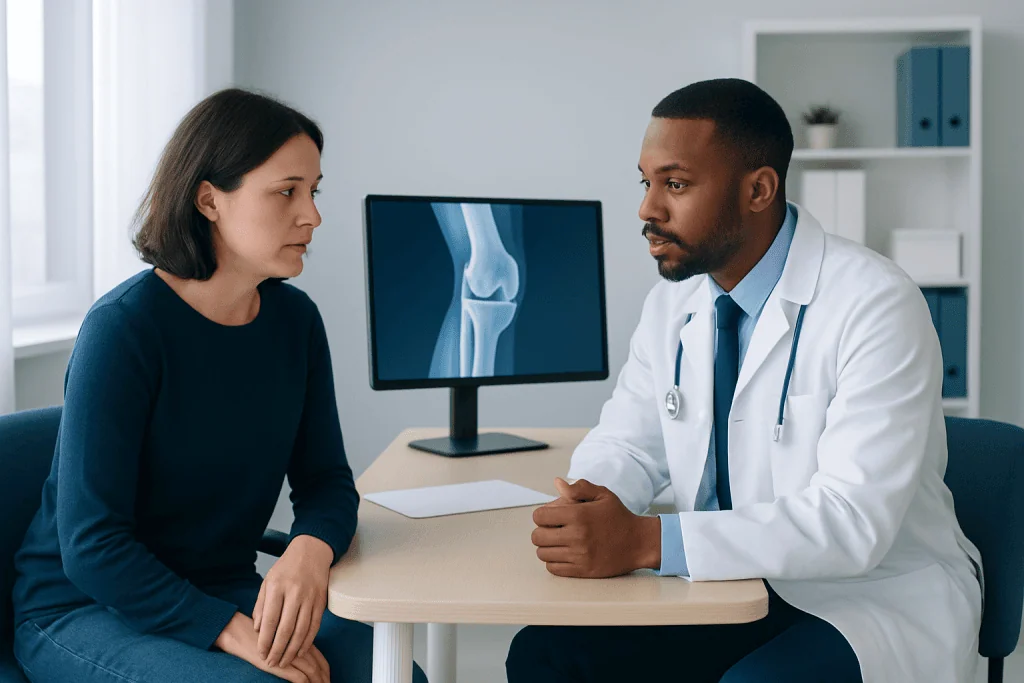
X-rays may be used to rule out a fracture or identify a small piece of bone pulled away where a ligament attaches. Magnetic resonance imaging (MRI) can provide detailed pictures of ligaments, tendons, cartilage, menisci, and other soft tissues. MRI is often useful when a complete tear or associated injury is suspected.
In some situations, especially after significant trauma, assessment of circulation and nerve function is also needed. Prompt evaluation helps guide safe treatment and reduces the chance that a more complex knee injury will be overlooked.
Treatment Options for the Lateral Collateral Ligament
Treatment is individualized according to the grade of injury, the person’s activity needs, symptoms, and whether other parts of the knee are damaged. Mild LCL sprains and many partial tears can usually be managed without surgery. Early care may include relative rest, ice wrapped in cloth for short periods, compression if advised, elevation, and avoiding movements that worsen pain or instability.
A hinged knee brace may be recommended to protect the ligament while healing. Crutches can be useful temporarily when walking is painful or the knee feels unreliable. A healthcare professional can advise when weight-bearing and normal daily activities can be increased safely.
Physiotherapy is a central part of recovery. Rehabilitation commonly focuses on restoring knee movement, reducing swelling, improving strength in the quadriceps, hamstrings, hips, and core, and rebuilding balance and movement control. Exercise progression should be guided by symptoms and clinical assessment rather than by a fixed timetable alone.
Complete LCL tears, persistent instability, injuries involving the posterolateral corner, or combined ligament injuries may need surgery. Surgery may involve repairing the injured tissue when appropriate or reconstructing the ligament using a tissue graft. Surgical planning is particularly important for complex knee injuries, and rehabilitation remains essential after an operation.
Recovery, Prevention, and Self-Care
Recovery time varies substantially. A mild sprain may improve over several weeks, while a more severe tear or combined injury can require a longer period of rehabilitation. Returning to demanding work, pivoting sports, or contact activities should wait until pain and swelling have settled and the knee has regained adequate strength, movement, stability, and functional control.
During recovery, it is helpful to follow the rehabilitation plan and avoid testing the knee through twisting, cutting, jumping, or contact activities too soon. Continuing exercises that improve lower-limb strength, balance, and coordination can support a safer return to activity. A brace may be used for a period if a clinician recommends it.
There is no guaranteed way to prevent all knee injuries, but practical measures can reduce risk. These include warming up before activity, progressing training gradually, using appropriate footwear and sport-specific equipment, practicing safe landing and cutting techniques, and allowing adequate recovery after training.
People with previous knee injuries should be particularly cautious about returning to sport before they are ready. Persistent pain, repeated giving way, or a sense that the outer knee is unstable should be reviewed rather than managed by simply pushing through symptoms.
When to See a Doctor
Medical assessment is advisable after a knee injury causing significant outer-knee pain, swelling, bruising, difficulty walking, reduced movement, or a feeling that the knee is unstable. Early review is especially useful after a direct blow, forceful twist, or hyperextension, as these mechanisms can cause more than one structure to be injured.
Urgent assessment is needed if the knee looks deformed, cannot bear weight, becomes very swollen quickly, feels cold or pale below the knee, or is associated with numbness, tingling, or weakness in the foot or lower leg. These features can indicate an injury requiring prompt attention.
A doctor or orthopedic specialist can determine whether imaging, bracing, physiotherapy, or surgical consultation is appropriate. For patients travelling for care, Acibadem International’s multidisciplinary specialists and JCI-accredited hospitals diagnose and treat knee ligament injuries for international patients.
With an accurate diagnosis and a structured recovery plan, many people regain comfortable knee function and return to their usual activities. Follow-up is important if symptoms fail to improve, instability continues, or new symptoms develop during rehabilitation.
Frequently asked questions
Can a lateral collateral ligament injury heal without surgery?
Many mild and moderate isolated LCL injuries heal without surgery when the knee is protected and rehabilitation is completed. A brace, activity modification, and physiotherapy may be part of non-surgical care. Complete tears or injuries involving other knee ligaments may need surgical assessment.
How does an LCL injury differ from an MCL injury?
The LCL is located on the outside of the knee, while the medial collateral ligament, or MCL, is on the inside. An LCL injury commonly causes outer-knee pain and may result from force applied to the inner knee. An MCL injury more often causes pain on the inner side of the knee.
Can someone walk with an LCL tear?
Some people can walk with a mild or partial LCL injury, although walking may be painful or uncomfortable. A more severe tear can make the knee feel unstable and may require a brace or crutches initially. A clinician should assess the injury before activity is resumed.
How long does recovery from an LCL injury take?
Recovery depends on the grade of the injury and whether other structures are affected. Mild sprains can improve within weeks, while severe tears and surgical reconstructions require a longer, carefully supervised rehabilitation period. Return to sport should be based on function and medical guidance, not time alone.
Should ice be used after an LCL injury?
Ice can help reduce pain and swelling soon after an injury for some people. It should be wrapped in a cloth and applied for brief periods to protect the skin. Ice is supportive care and does not replace medical assessment when there is significant pain, instability, or difficulty bearing weight.
What happens if an LCL tear is left untreated?
A minor injury may settle with appropriate rest and rehabilitation, but a significant tear can lead to ongoing instability if not treated properly. Untreated combined ligament injuries may place additional stress on other knee structures. Persistent symptoms should be evaluated by a qualified healthcare professional.
References
- American Academy of Orthopaedic Surgeons
- OrthoInfo
- National Institute of Arthritis and Musculoskeletal and Skin Diseases
- Mayo Clinic
- Merck Manual Consumer Version
This article is for general information only and is not a substitute for professional medical advice. Please consult a qualified doctor about your individual situation.
Joint and spine care in Turkey — expert assessment & treatment
JCI-accredited · board-certified surgeons · reply within 24h
Add us as a Preferred Source to see more of our trusted health content across Google Search, AI Overviews and Discover.