Lateral Malleolus — Explained by Medical Evidence, Not Myths
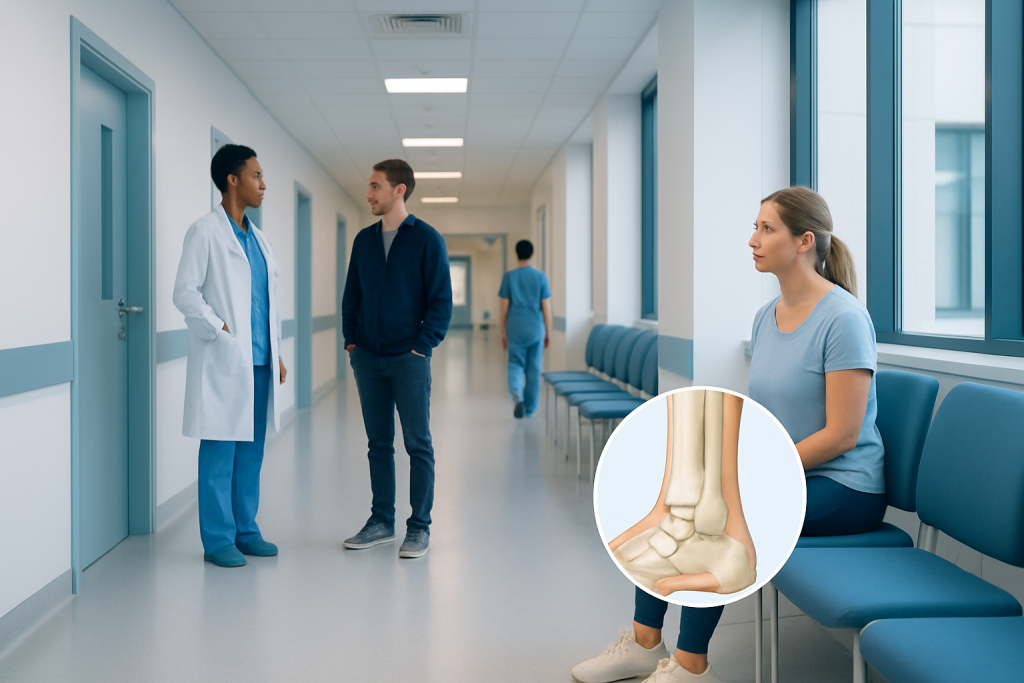
The lateral malleolus is the outer ankle bone and part of the fibula. It helps stabilize the ankle joint and supports normal walking and balance.
Key Takeaways
- The lateral malleolus is the outer ankle bone and part of the fibula.
- It helps stabilize the ankle joint and supports normal walking and balance.
- Pain near the lateral malleolus may come from a sprain, fracture, tendon problem, or arthritis.
- Inability to bear weight, marked swelling, deformity, or persistent pain should be medically assessed.
- Diagnosis may involve examination, X-rays, and sometimes MRI or CT scanning.
- Treatment depends on the cause and can range from rest and bracing to surgery and rehabilitation.
The lateral malleolus is the bony prominence on the outside of the ankle, formed by the lower end of the fibula. It plays an important role in ankle stability and is commonly involved in sprains, fractures, and tendon irritation, so pain in this area should be assessed in context rather than assumed to be “just a twist.”
What the lateral malleolus is
The lateral malleolus is the bony bump on the outer side of the ankle. It is the lower end of the fibula, the smaller of the two bones in the lower leg. In simple terms, when people point to the “outside ankle bone,” they are usually referring to the lateral malleolus.
This structure is more than a visible landmark. It forms part of the ankle joint and helps keep the talus, the bone beneath the shin bones, in a stable position during standing, walking, and turning. Ligaments attach around this area, and tendons pass nearby, so the lateral malleolus acts as both a support point and a guide for movement.
Because it is close to ligaments, cartilage, and tendons, pain around the lateral malleolus does not always mean a broken bone. A person may have a sprain, a small avulsion injury, tendon inflammation, arthritis, or less commonly a stress injury. Understanding the anatomy helps explain why symptoms on the outside of the ankle can have several different causes.
Why it matters for ankle stability and movement
The ankle is a weight-bearing joint that must be stable enough for standing and flexible enough for walking, running, and changing direction. The lateral malleolus helps create the outer wall of the ankle joint. Its shape and position contribute to how the joint stays aligned when the foot moves up, down, inward, and outward.
Important ligaments connect near the lateral malleolus, especially the ligaments commonly injured in an ankle sprain. These tissues help prevent excessive rolling of the foot. Tendons, including the peroneal tendons, also run behind this bony area and assist with foot eversion and balance on uneven ground.
When the lateral malleolus or nearby structures are injured, the result may be pain, swelling, instability, or a feeling that the ankle may “give way.” Even a seemingly minor injury can affect daily activities because the ankle is involved in almost every step.
Common symptoms linked to the lateral malleolus

Symptoms around the lateral malleolus depend on the underlying problem. The most common complaints are pain on the outside of the ankle, swelling, tenderness to touch, and discomfort when walking or standing. Some people notice bruising after an injury, while others mainly feel weakness or instability.
A sudden twisting injury may cause immediate pain and swelling, suggesting a sprain or fracture. Gradual pain that worsens with activity may point more toward tendon irritation, overuse, or a stress-related bone injury. Stiffness, clicking, or a sensation of the ankle catching can sometimes occur if cartilage or tendon structures are involved.
- Outer ankle pain after rolling the foot inward
- Swelling or bruising around the ankle bone
- Pain when bearing weight
- Tenderness directly over the bone
- Reduced range of motion
- A feeling of ankle instability
Symptoms that are severe, persistent, or associated with deformity deserve prompt medical assessment. Bone pain over the lateral malleolus is especially important to evaluate because fractures may not always be obvious without imaging.
Causes of pain and injury in this area
The most common cause of pain near the lateral malleolus is an ankle sprain. This usually happens when the foot rolls inward and stretches or tears the ligaments on the outer side of the ankle. In mild cases, the joint remains stable but painful. In more significant sprains, swelling and difficulty bearing weight may be prominent, as in an ankle sprain.
Fractures are another major cause. A lateral malleolus fracture may occur after a fall, sports injury, or direct blow. Some fractures are stable and can heal with immobilization, while others are displaced or occur with additional injuries around the ankle and may need closer orthopedic care. Stress fractures can also develop over time from repetitive loading.
Other possible causes include peroneal tendonitis or tendon tears, osteoarthritis, inflammatory joint disease, cartilage injuries, and less commonly infection or nerve irritation. In children and adolescents, the growth plate can be involved rather than the mature bone. Because several conditions can produce similar symptoms, diagnosis should be based on examination and, when needed, imaging rather than assumptions.
How doctors diagnose lateral malleolus problems
Diagnosis begins with a careful history and physical examination. A clinician will usually ask how the symptoms started, whether there was a twisting injury or fall, where the tenderness is located, and whether the person can bear weight. Examination may include checking swelling, bruising, alignment, ankle motion, ligament stability, circulation, and nerve function.
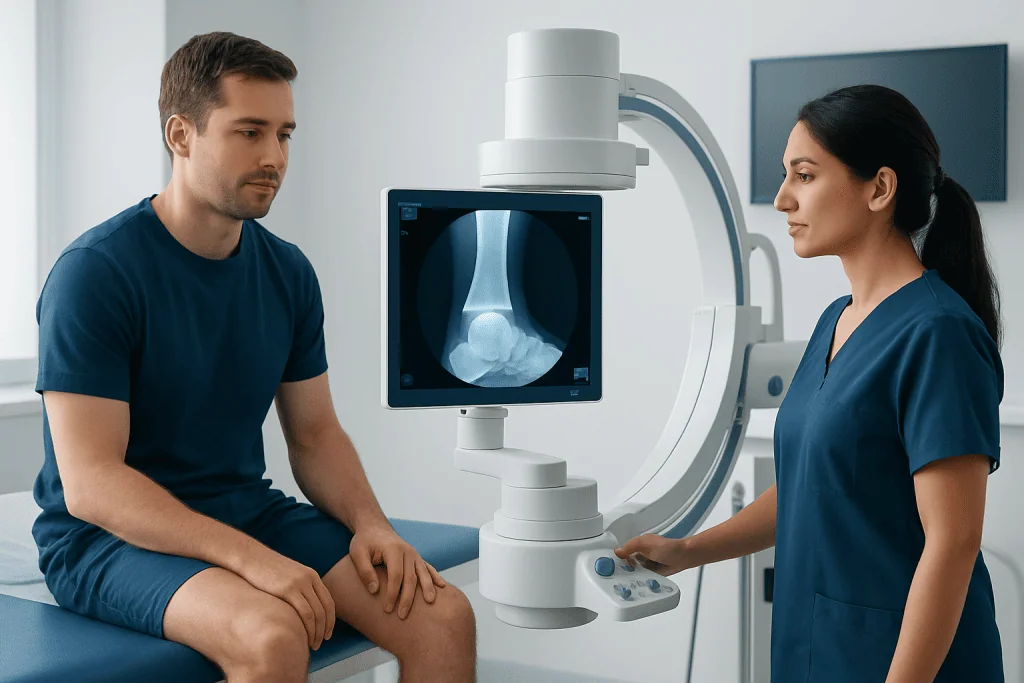
X-rays are often the first imaging test when a fracture is suspected, especially if there is tenderness directly over the lateral malleolus or difficulty walking after an injury. Imaging helps determine whether the bone is broken, whether the fracture is stable, and whether the joint alignment is normal. In some cases, a doctor may order a CT scan for more bone detail or an MRI to assess ligaments, cartilage, tendons, or occult fractures that are not clear on X-ray.
Ultrasound may sometimes help evaluate tendon problems around the outer ankle. If symptoms are long-lasting or recurrent, doctors may also consider biomechanical issues, previous injuries, footwear, training changes, or inflammatory conditions. The goal is not only to label the pain but to identify the exact structure involved so treatment matches the cause.
Treatment options and recovery
Treatment depends on whether the problem is a sprain, fracture, tendon condition, or another disorder. Mild soft tissue injuries often improve with temporary activity reduction, ice, compression, elevation, and a brace or supportive footwear. Recovery usually also includes a gradual rehabilitation program to restore strength, balance, and range of motion. For some people, formal physical therapy and rehabilitation is helpful to reduce the risk of repeat injury.
If a fracture is present, management depends on fracture type and ankle stability. Stable fractures may be treated with a cast, walking boot, or other form of orthopedic rehabilitation after initial immobilization. Unstable fractures, displaced fractures, or injuries involving multiple parts of the ankle may require surgery to restore alignment and joint stability. Imaging findings, symptoms, and activity needs all guide the plan.
Tendon injuries may respond to rest, bracing, rehabilitation, and footwear changes. Persistent instability after repeated sprains may need specialist evaluation, and some patients may be considered for ankle surgery if conservative treatment does not restore function. Pain control should be individualized, and a doctor can advise on the safest options based on age, medical history, and the exact diagnosis.
Near the end of care, rehabilitation remains important even when symptoms are improving. Balance training, calf and ankle strengthening, and a guided return to sports or daily activity can help the ankle recover more fully and may lower the chance of future injury.
Self-care and ways to help prevent future ankle problems
Not every episode of lateral malleolus pain can be prevented, but a few measures can reduce risk. Supportive footwear, especially during sport or long periods of walking, helps the ankle cope with uneven surfaces and directional changes. Warm-up exercises and gradual increases in training load also matter, particularly for runners and recreational athletes.
After an ankle injury, returning to activity too quickly may raise the risk of re-injury. A structured recovery that includes mobility work, strengthening, and balance exercises is often more effective than stopping treatment as soon as pain improves. People with repeated sprains may benefit from an ankle brace or taping during higher-risk activities.
- Wear shoes that fit well and support the ankle and foot
- Strengthen the lower leg and improve balance
- Increase exercise intensity gradually
- Use caution on uneven or slippery ground
- Follow rehabilitation advice fully after any ankle injury
If pain keeps coming back, the problem may not be simple overuse. Recurring symptoms can reflect chronic instability, tendon problems, or an incompletely healed injury and should be reassessed by a qualified doctor.
When to seek medical care
Medical care is appropriate if there is significant pain over the lateral malleolus after an injury, especially when walking is difficult or impossible. A person should also seek assessment if the ankle looks deformed, swelling is marked, or there is numbness, color change, or an open wound. These features can suggest a more serious injury that needs prompt attention.
Evaluation is also important when pain does not improve within a few days, keeps returning, or is associated with repeated ankle “giving way.” Ongoing symptoms may indicate a fracture that was not initially recognized, a ligament injury that has not healed well, or tendon problems requiring more targeted treatment.
People with diabetes, poor circulation, osteoporosis, or weakened immunity should be especially cautious with foot and ankle injuries. In these groups, healing may be slower and complications may be more likely, so earlier assessment is sensible.
For patients who need specialist care, Acibadem International’s multidisciplinary teams in JCI-accredited hospitals diagnose and treat ankle injuries and related conditions for international patients, including imaging, rehabilitation, and orthopedic treatment planning.
Frequently asked questions
Is the lateral malleolus a bone on its own?
No. The lateral malleolus is the lower end of the fibula, not a separate bone. It forms the bony prominence on the outside of the ankle and helps support ankle stability.
Can lateral malleolus pain happen without a fracture?
Yes. Pain in this area is often caused by ligament sprains, tendon irritation, bruising, or overuse rather than a broken bone. However, because fractures can look similar at first, persistent or severe pain should be evaluated.
How can someone tell the difference between a sprain and a fracture?
It is not always possible to tell based on symptoms alone. Bone tenderness directly over the outer ankle, inability to bear weight, marked swelling, or deformity may raise concern for fracture, but an examination and often an X-ray are needed for a reliable diagnosis.
How long does it take for a lateral malleolus injury to heal?
Healing time depends on the exact injury. Mild sprains may improve over a few weeks, while fractures or significant ligament injuries can take much longer and may require immobilization, rehabilitation, or surgery.
Should a person walk on an injured outer ankle?
That depends on the severity and the diagnosis. If walking causes significant pain, there is concern for fracture, or the ankle feels unstable, it is safer to limit weight-bearing until a doctor advises otherwise.
Why does the outside of the ankle keep hurting after repeated twists?
Repeated ankle sprains can lead to chronic ligament laxity, tendon irritation, cartilage injury, or altered movement patterns. When symptoms keep returning, a specialist assessment can help identify the cause and guide treatment to improve stability.
References
- American Academy of Orthopaedic Surgeons
- National Institute of Arthritis and Musculoskeletal and Skin Diseases
- MedlinePlus
- Mayo Clinic
- American Orthopaedic Foot & Ankle Society
This article is for general information only and is not a substitute for professional medical advice. Please consult a qualified doctor about your individual situation.
Joint and spine care in Turkey — expert assessment & treatment
JCI-accredited · board-certified surgeons · reply within 24h
Add us as a Preferred Source to see more of our trusted health content across Google Search, AI Overviews and Discover.

More from the Health Library

Man Breasts: A Complete Medical Overview

Gallbladder Ultrasonography — Explained by Medical Evidence, Not Myths

Aluminum Deodorant: A Complete Medical Overview

Bathing in Oats: An Evidence-Based Guide for Patients

Macule: A Complete Medical Overview