Lipedema: A Complete Medical Overview

Lipedema causes a symmetrical buildup of fat, usually in the legs, and often spares the feet. Common symptoms include heaviness, pain, tenderness, swelling that worsens during the day, and easy bruising.
Key Takeaways
- Lipedema causes a symmetrical buildup of fat, usually in the legs, and often spares the feet.
- Common symptoms include heaviness, pain, tenderness, swelling that worsens during the day, and easy bruising.
- Lipedema is different from obesity and lymphedema, though these conditions can overlap.
- Diagnosis is mainly clinical and may include imaging to rule out other causes of swelling.
- Treatment focuses on symptom control, mobility, compression, exercise, weight support, and selected procedures when appropriate.
Lipedema is a chronic condition in which fat builds up in a symmetrical pattern, most often in the legs and sometimes the arms, often causing tenderness, heaviness, and easy bruising. It is not simply weight gain, and proper diagnosis can help guide symptom relief, mobility support, and long-term care.
Overview: what lipedema is
Lipedema is a long-term disorder of abnormal fat distribution that most often affects the hips, buttocks, thighs, and lower legs, and sometimes the arms. It usually appears on both sides of the body in a similar pattern. The feet and hands are often less affected or spared, which can help distinguish it from other causes of swelling.
People with lipedema may notice that the lower body seems disproportionately larger than the upper body, even with healthy eating and regular activity. The affected tissue can feel soft, nodular, or painful to pressure. Symptoms may gradually progress over time, especially during hormonal changes such as puberty, pregnancy, or menopause.
Lipedema is frequently misunderstood as simple obesity or fluid retention. However, it is a distinct medical condition. While body weight can also increase in people with lipedema, the condition itself involves characteristic changes in fat tissue and often causes discomfort, bruising, and swelling that are not explained by weight alone.
How lipedema may feel and look
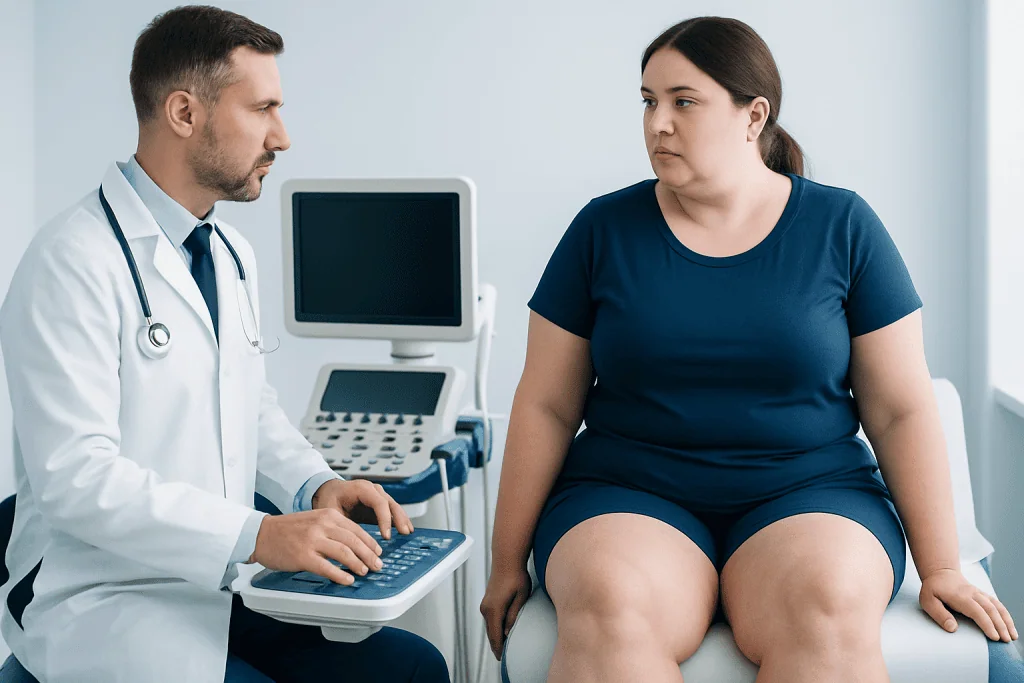
The symptoms of lipedema vary from person to person, but many describe a sense of heaviness in the legs, tenderness to touch, and swelling that becomes more noticeable later in the day. The skin may feel tight, and the tissues underneath may feel uneven or bead-like. Some people also report fatigue in the legs and discomfort after standing for long periods.
Easy bruising is another common feature. Because the affected tissues can be sensitive, even minor bumps may leave visible bruises. Pain may range from mild soreness to more persistent aching, and symptoms may worsen with heat, prolonged sitting, or reduced movement.
Typical signs can include:
- Symmetrical enlargement of the legs or arms
- Disproportion between the lower and upper body
- Pain, tenderness, or a feeling of pressure in the tissues
- Swelling that can fluctuate during the day
- Easy bruising
- Feet often spared, creating a cuff-like appearance near the ankles
Some people later develop fluid-related swelling in addition to lipedema. When that happens, the condition can overlap with lymphedema, which may make symptoms more complex and require more specialized care.
Why lipedema happens and who is at risk
The exact cause of lipedema is not fully understood, but it is thought to involve genetic and hormonal factors. It occurs predominantly in women and often begins or worsens during times of hormonal change. A family history is common, suggesting an inherited tendency in many cases.
Lipedema is not caused by laziness or lack of willpower, and it should not be reduced to a cosmetic concern. Although excess body weight can coexist with lipedema and may worsen strain on the joints and circulation, the condition can also occur in people of different body sizes. Many people find that the affected areas respond differently to dieting than the rest of the body.
Risk factors and associated features may include:
- Female sex
- Family history of similar symptoms
- Onset around puberty, pregnancy, or menopause
- Coexisting overweight or obesity
- Reduced mobility due to pain or heaviness
Because symptoms may overlap with vascular and lymphatic problems, doctors may also consider other conditions, including chronic venous disease or varicose veins, during assessment.
How doctors diagnose lipedema
There is no single blood test that confirms lipedema. Diagnosis is usually based on a careful medical history and physical examination. A doctor will ask when symptoms began, whether they changed with hormones or weight changes, and whether pain, bruising, or swelling are present. The pattern of fat distribution and whether the feet are involved are important clinical clues.
The evaluation often includes checking for conditions that can resemble or accompany lipedema, such as obesity, lymphedema, venous insufficiency, arthritis, or endocrine disorders. Imaging may sometimes be used to rule out other causes of swelling or to better understand the tissues involved. Depending on symptoms, this can include vascular ultrasound or other forms of diagnostic imaging.
Because lipedema is still underrecognized, some people live with symptoms for years before receiving an explanation. Seeing a clinician familiar with fat-distribution and swelling disorders can help improve diagnostic accuracy and support a more tailored treatment plan.
Treatment options and long-term management
Lipedema treatment usually aims to reduce symptoms, improve mobility, support daily function, and help prevent progression. A complete plan often combines conservative measures with specialist input. Treatment is individualized because symptoms, body shape, pain levels, and associated swelling can differ widely.
Conservative care may include compression garments, manual therapy when appropriate, skin care, movement programs, and weight support. Exercise does not remove lipedema fat, but it can improve circulation, joint health, stamina, and overall well-being. Low-impact activities such as walking, swimming, cycling, and strength training are often easier to maintain.
When excess fat and symptoms are substantial, some patients may be evaluated for procedural treatment by experienced teams. In carefully selected cases, liposuction techniques designed for lipedema may help reduce symptom burden and improve mobility. If coexisting obesity is severe and affecting health, broader weight-management strategies, and sometimes obesity surgery, may also be discussed as part of overall care rather than as a cure for lipedema itself.
Pain management, emotional support, and rehabilitation can also be important. Chronic symptoms may affect body image, mood, sleep, and physical confidence. A multidisciplinary approach can help address the condition more fully than any single treatment alone.
Daily self-care, movement, and lifestyle support
Self-care does not cure lipedema, but it can make day-to-day symptoms more manageable. Many people benefit from wearing properly fitted compression garments, elevating the legs when possible, avoiding long periods of standing still, and staying physically active within their comfort level. Gentle, regular movement is often more sustainable than intense exercise programs.
Eating patterns that support overall health may help with weight management and inflammation-related symptoms, even though lipedema fat itself can be resistant to diet alone. Hydration, balanced meals, and enough protein and fiber can support general well-being. If weight management is difficult, medical nutrition guidance may be useful.
Helpful daily strategies can include:
- Using compression if recommended by a clinician
- Choosing low-impact exercise most days of the week
- Protecting the skin and treating irritation early
- Taking movement breaks during travel or desk work
- Seeking support for pain, stress, or body image concerns
For some patients, structured rehabilitation or physical therapy and rehabilitation can improve strength, gait, flexibility, and confidence with movement.
When to seek medical care
Medical assessment is appropriate when symmetrical leg or arm enlargement, pain, tenderness, or easy bruising are persistent or worsening. A doctor should also evaluate swelling that is new, one-sided, sudden, or associated with redness, warmth, fever, chest symptoms, or shortness of breath, because these features can suggest other conditions that need prompt attention.
It is also a good idea to seek care if mobility is declining, clothes no longer fit the lower body in a stable and unexplained way, or weight-loss efforts change the upper body much more than the legs. Early assessment may help distinguish lipedema from related conditions and allow symptoms to be addressed sooner.
For people seeking coordinated evaluation, Acibadem International’s multidisciplinary specialists and JCI-accredited hospitals diagnose and treat lipedema and related vascular, lymphatic, and mobility concerns for international patients.
Frequently asked questions
Is lipedema the same as obesity?
No. Lipedema is a distinct disorder of fat distribution that often causes pain, tenderness, and easy bruising. Obesity can occur alongside lipedema, but lipedema has a characteristic pattern and may not respond to weight loss in the same way as general body fat.
How is lipedema different from lymphedema?
Lipedema mainly involves abnormal fat buildup in a symmetrical pattern, often with pain and bruising, and it commonly spares the feet. Lymphedema is caused by impaired lymph drainage and often produces more fluid-based swelling, which may affect one limb or include the feet and toes.
Can lipedema be cured?
There is no simple cure, but many people can manage symptoms effectively with a structured care plan. Compression, movement, weight support, rehabilitation, and selected procedures may improve comfort, mobility, and quality of life.
Does diet and exercise help lipedema?
Diet and exercise are important for overall health and can help reduce strain on the body, improve stamina, and support weight management. However, lipedema fat may be resistant to diet alone, so lifestyle measures are usually part of management rather than a complete solution.
Who is most likely to develop lipedema?
Lipedema occurs mainly in women and often starts or becomes more noticeable during puberty, pregnancy, or menopause. A family history is common, which suggests a genetic contribution in many cases.
When should someone with suspected lipedema see a doctor?
A person should seek medical advice if there is persistent symmetrical enlargement of the legs or arms, pain, heaviness, easy bruising, or swelling that interferes with daily life. Urgent evaluation is needed if swelling is sudden, one-sided, or accompanied by redness, warmth, chest pain, or shortness of breath.
References
- National Institutes of Health
- National Organization for Rare Disorders
- International Society of Lymphology
- American Vein and Lymphatic Society
- Mayo Clinic
This article is for general information only and is not a substitute for professional medical advice. Please consult a qualified doctor about your individual situation.
Medical weight-loss options in Turkey — costs & eligibility
JCI-accredited · board-certified surgeons · reply within 24h
Add us as a Preferred Source to see more of our trusted health content across Google Search, AI Overviews and Discover.