Liver Cyst: What Patients Need to Know

Most liver cysts are simple, benign, and found incidentally on imaging. Many people with a liver cyst have no symptoms and do not need treatment.
Key Takeaways
- Most liver cysts are simple, benign, and found incidentally on imaging.
- Many people with a liver cyst have no symptoms and do not need treatment.
- Imaging tests such as ultrasound, CT, or MRI help identify the type of cyst.
- Treatment depends on the cyst's size, symptoms, and whether it has complex features.
- Medical review is important if there is pain, fever, jaundice, or uncertainty about the diagnosis.
A liver cyst is a fluid-filled sac in the liver. Most liver cysts are benign and cause no symptoms, but some may need follow-up or treatment if they grow, become infected, bleed, or are linked to a specific liver condition.
Overview: what a liver cyst means
A liver cyst is a sac filled with fluid that develops in the liver. In many cases, it is a simple liver cyst, meaning it has a thin wall, contains clear fluid, and is not cancer. These cysts are often found by chance during an ultrasound or scan done for another reason.
For most patients, a liver cyst does not cause harm and does not affect how the liver works. Small, simple cysts usually do not need treatment. Instead, the main goal is to confirm the diagnosis and make sure the cyst does not have features suggesting infection, bleeding, or a more complex condition.
Not all liver cysts are the same. Some are linked to inherited conditions such as polycystic liver disease, while others may be parasitic or have internal septations or solid areas that need closer evaluation. This is why the type of cyst matters as much as its size.
Symptoms and possible complications
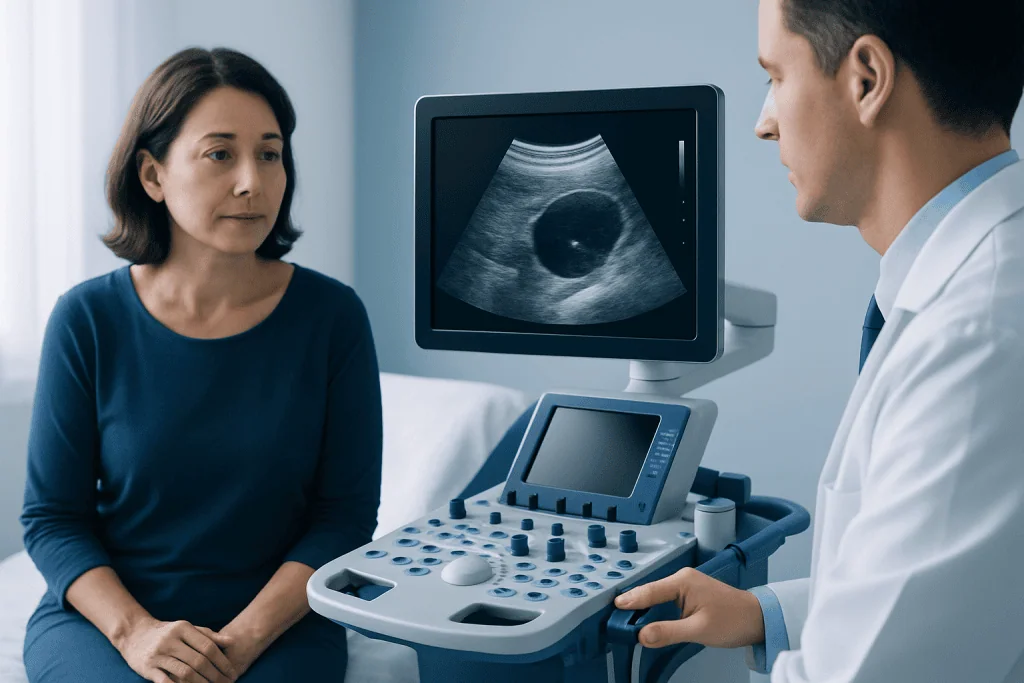
Many people with a liver cyst have no symptoms at all. When symptoms do occur, they are often related to the cyst becoming large enough to press on nearby organs or stretch the liver capsule. This may cause a feeling of fullness, bloating, or discomfort in the upper right side of the abdomen.
Some patients notice nausea, early satiety, or mild abdominal swelling if a cyst is large. These symptoms are not specific to liver cysts, so doctors usually consider other digestive or liver conditions as well before deciding that the cyst is the cause.
Less commonly, complications can develop. A cyst may bleed internally, become infected, twist, or rupture. Complex cysts can sometimes raise concern for other diagnoses, including cystic tumors, so imaging findings guide the next steps carefully.
- Upper right abdominal pain or pressure
- Bloating or fullness after eating
- Nausea or reduced appetite
- Fever if infection develops
- Jaundice if a large cyst affects bile flow
Causes and types of liver cysts
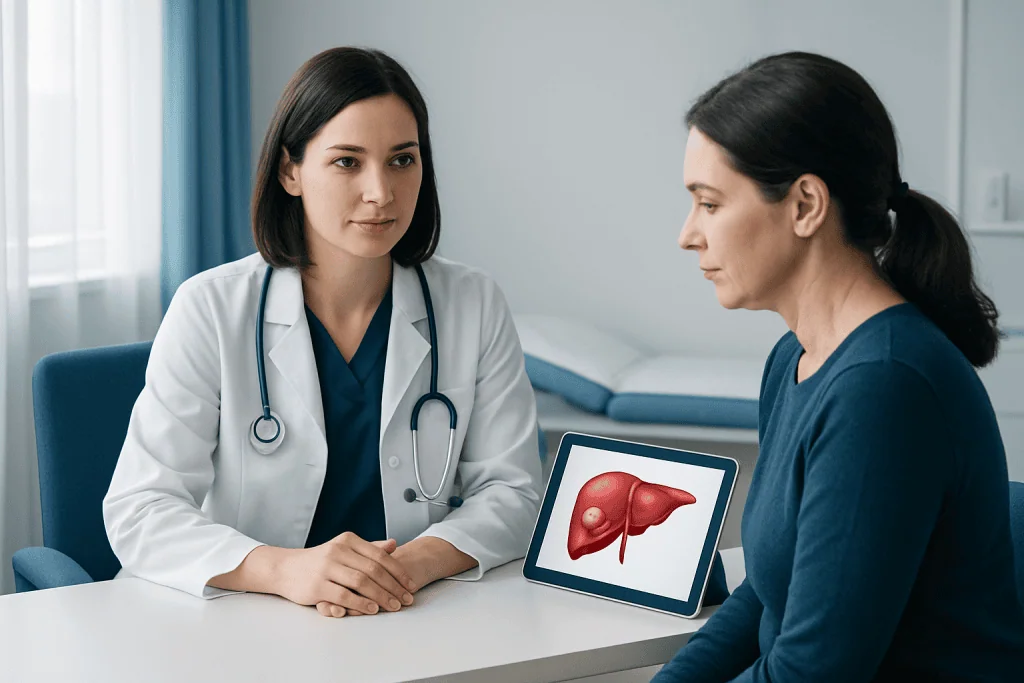
The exact reason simple liver cysts form is not always clear. They are thought to arise from small abnormalities in bile duct development during early growth. They are not usually caused by lifestyle choices, and in most cases they are not related to liver failure or chronic liver disease.
Doctors often classify liver cysts by type. Simple cysts are the most common and are usually benign. Polycystic liver disease involves multiple cysts and may occur together with kidney cysts. Another category includes hydatid cysts, caused by a parasite in some parts of the world, which require special management.
There are also complex cysts, which may contain septa, debris, wall thickening, or nodules. These features do not automatically mean cancer, but they do require more detailed imaging and specialist assessment. In selected cases, doctors may also evaluate for related conditions such as liver cancer when imaging findings are not typical for a simple cyst.
Risk factors vary depending on the cyst type. Age can increase the chance of finding a simple cyst, and inherited conditions can run in families. Travel history, animal exposure, and place of residence may matter when a parasitic cyst is possible.
How a liver cyst is diagnosed
Diagnosis usually begins with imaging. Ultrasound is often the first test because it can show whether a cyst is fluid-filled and whether it appears simple or complex. A simple liver cyst typically looks smooth, round, and clear on ultrasound.
If the cyst has unclear features or is causing symptoms, a doctor may recommend CT or MRI for a more detailed view. These scans help assess the size, location, wall thickness, internal septations, and any pressure on nearby bile ducts or blood vessels. In some cases, blood tests are also used to check liver function or look for signs of infection.
Doctors generally avoid routine needle aspiration just to diagnose a simple cyst, because imaging often gives enough information. If there is a concern about a specific diagnosis, the care team may involve specialists in gastroenterology, hepatobiliary surgery, infectious diseases, or radiology. Advanced evaluation can include MRI or other tailored imaging to clarify the nature of the cyst.
Treatment options and when treatment is needed
Treatment for a liver cyst depends on the type of cyst, its size, whether it causes symptoms, and what the imaging shows. Most simple liver cysts do not need active treatment. If the cyst is clearly benign and not causing problems, the safest plan may simply be observation, sometimes with follow-up imaging.
When a cyst causes persistent pain, pressure, early satiety, or repeated complications, treatment may be considered. Options can include draining the cyst and reducing recurrence with sclerotherapy, or surgically opening or removing part of the cyst wall. The choice depends on the cyst’s location and the patient’s overall health.
Complex cysts need more individualized care. If there is concern for infection, parasitic disease, or a cystic tumor, treatment is planned according to the suspected cause. In selected cases, minimally invasive procedures or laparoscopic surgery may be appropriate, while some patients may need hepatobiliary surgical assessment.
Patients with multiple or very large cysts may benefit from care in centers experienced in liver disorders. Near the end of the evaluation pathway, it may be natural to involve multidisciplinary teams; Acibadem International’s specialists in JCI-accredited hospitals diagnose and treat liver cyst conditions for international patients, including imaging review and procedural care when needed.
Monitoring, self-care, and daily life
Living with a simple liver cyst is often straightforward. Most people can continue normal daily activities, work, and exercise unless they have symptoms. There is no specific diet proven to shrink a simple cyst, but general liver-friendly habits support overall health.
Useful self-care measures include staying well hydrated, maintaining a balanced diet, limiting alcohol if advised by a doctor, and seeking review if new symptoms appear. Patients should also tell their clinician if they have a family history of cystic liver or kidney disease, or if they have traveled to regions where parasitic infections are more common.
Follow-up plans differ from person to person. Some simple cysts need no repeat imaging, while larger or less typical cysts may be checked again after a period of time. If symptoms overlap with broader liver concerns, doctors may also evaluate related findings using tests such as liver function tests.
When to seek medical care
Medical review is important if a person develops new or ongoing upper abdominal pain, a growing feeling of fullness, unexplained nausea, or symptoms that interfere with eating and daily life. A clinician can decide whether the liver cyst is likely responsible or whether another condition should be considered.
Urgent care is needed if there is fever, jaundice, severe abdominal pain, faintness, or sudden worsening symptoms. These may suggest infection, bleeding, rupture, or pressure on the bile ducts and should not be ignored.
It is also sensible to seek medical advice if imaging has shown a complex liver cyst, if there are multiple cysts, or if there is a personal or family history of liver or kidney cystic disease. Clear diagnosis helps avoid unnecessary worry and ensures that treatment, if needed, is timed appropriately.
Frequently asked questions
Is a liver cyst usually serious?
Most liver cysts are not serious. Simple liver cysts are commonly benign and often do not cause symptoms or damage the liver. The main concern is making sure the cyst is truly simple and not a more complex type that needs follow-up.
Can a liver cyst go away on its own?
Some liver cysts remain stable for years, while others may slowly enlarge. They do not always disappear on their own, but many never cause problems. A doctor can advise whether monitoring is enough based on imaging results.
What size liver cyst needs treatment?
Size alone does not always determine treatment. A large cyst may still be observed if it is simple and not causing symptoms, while a smaller complex cyst may need more evaluation. Decisions are based on symptoms, imaging features, and possible complications.
Can a liver cyst be cancer?
A simple liver cyst is usually not cancer. However, some cystic liver lesions can have features that need closer imaging and specialist assessment. That is why doctors look carefully at the cyst wall, internal contents, and surrounding liver tissue.
What is the best test for a liver cyst?
Ultrasound is often the first and most useful test for identifying a liver cyst. If the appearance is not clearly simple, CT or MRI may be recommended for more detail. These tests help guide whether observation or treatment is appropriate.
Should a liver cyst be drained?
Drainage is not needed for most simple liver cysts. It may be considered when a cyst causes symptoms or complications, often along with a method to reduce the chance of the fluid returning. The best approach depends on the cyst type and location.
References
- National Institute of Diabetes and Digestive and Kidney Diseases
- American College of Gastroenterology
- European Association for the Study of the Liver
- Mayo Clinic
- National Health Service
This article is for general information only and is not a substitute for professional medical advice. Please consult a qualified doctor about your individual situation.
Oncology care in Turkey — second opinion and treatment plan
JCI-accredited · board-certified surgeons · reply within 24h
Add us as a Preferred Source to see more of our trusted health content across Google Search, AI Overviews and Discover.

More from the Health Library



Related Specialists

Assoc. Prof. Dr. Semiha Urvay
Medical Oncology
Dr. Merve Albayrak Barı
Gynecology & Obstetrics
Dr. Sedenay Oskeroğlu Kaplan
Radiation Oncology
Prof. Dr. Ilgaz Doğusoy
Thoracic Surgery