Lobes of the Brain: What Each Lobe Controls
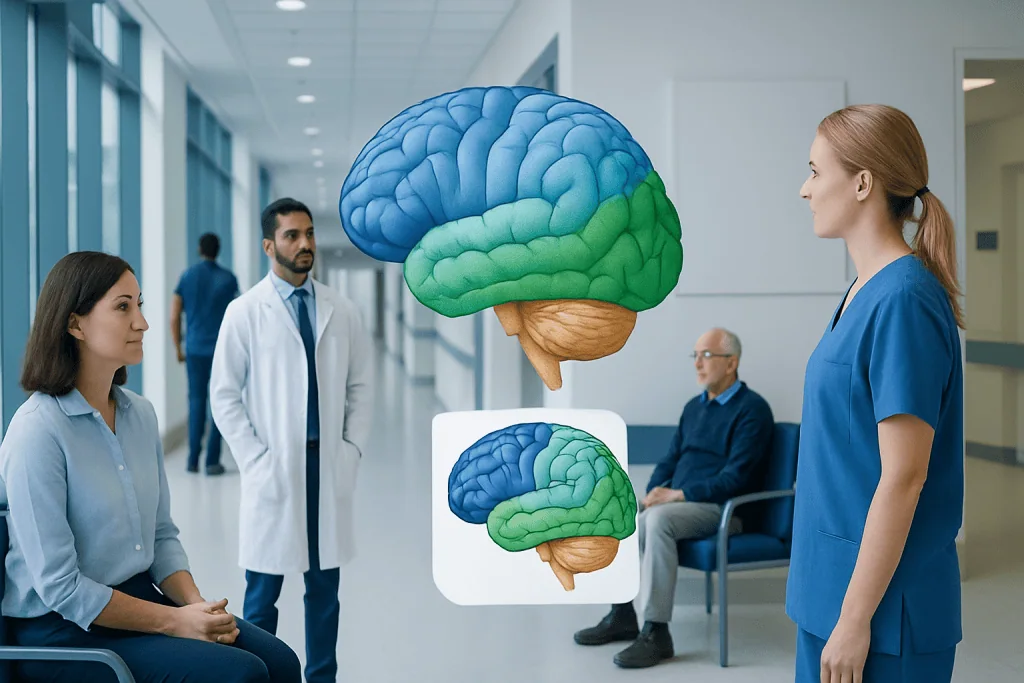
The brain has four main lobes: frontal, parietal, temporal, and occipital. Each lobe has leading roles, but brain functions depend on networks that connect many regions.
Key Takeaways
- The brain has four main lobes: frontal, parietal, temporal, and occipital.
- Each lobe has leading roles, but brain functions depend on networks that connect many regions.
- The frontal lobe helps with planning, decision-making, behavior, and voluntary movement.
- The parietal lobe processes touch, body awareness, and spatial orientation.
- The temporal lobe supports hearing, language understanding, and memory.
- The occipital lobe is mainly responsible for visual processing.
The lobes of the brain are large regions of the cerebral cortex that work together to support thinking, movement, sensation, language, memory, and vision. Understanding what each lobe controls can make it easier to recognize how the brain organizes everyday functions.
Overview of the Brain Lobes
The cerebrum, the largest part of the brain, is divided into right and left hemispheres. Each hemisphere contains four main lobes: the frontal, parietal, temporal, and occipital lobes. These lobes are separated by grooves called sulci and folds called gyri, which help increase the brain’s surface area.
Although each lobe is known for certain tasks, brain function is not strictly divided into isolated compartments. Most daily activities, such as speaking, reading, driving, or remembering a face, depend on several lobes working together through complex nerve networks. This is why a problem affecting one area can influence multiple abilities.
The brain also includes other important structures, such as the cerebellum, brainstem, and deeper regions involved in emotion, memory, and movement control. Still, the four cerebral lobes remain a useful way to understand how higher brain functions are organized.
Frontal Lobe: Planning, Movement, and Behavior
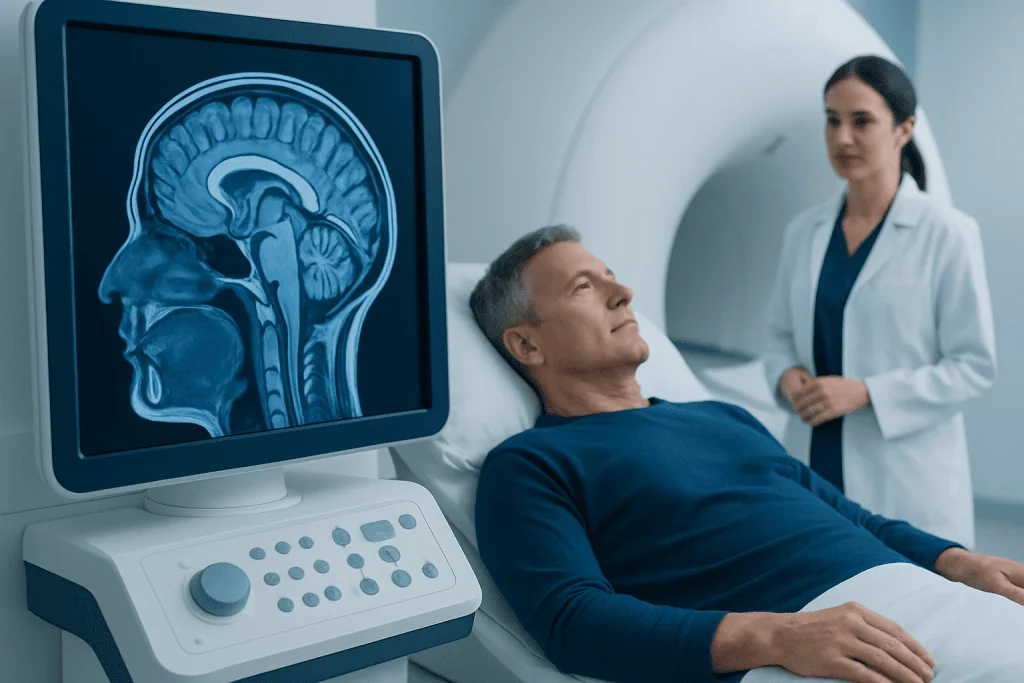
The frontal lobe is located at the front of the brain, behind the forehead. It plays a major role in what are often called executive functions. These include planning, organizing, problem-solving, decision-making, attention, impulse control, and aspects of personality and social behavior.
This lobe also contains the primary motor cortex, which helps initiate voluntary movement in different parts of the body. In most people, the left frontal lobe also includes Broca’s area, which is important for speech production. Because of this, frontal lobe changes can affect both movement and communication.
When the frontal lobe is injured or affected by disease, symptoms can vary widely. A person may have weakness on one side of the body, difficulty starting tasks, poor judgment, changes in mood or behavior, or problems expressing words clearly. These changes may be subtle or more noticeable, depending on the area involved.
- Planning and organization
- Voluntary movement
- Attention and working memory
- Speech production
- Emotional regulation and impulse control
Parietal Lobe: Touch, Awareness, and Spatial Skills

The parietal lobe sits near the upper middle part of the brain, behind the frontal lobe. It helps process sensory information from the body, including touch, pressure, pain, temperature, and body position. The primary sensory cortex, located here, receives signals that allow a person to sense what is happening on the skin and within the limbs.
Beyond basic sensation, the parietal lobe supports spatial awareness. It helps people understand where their body is in space, judge distances, and coordinate movement in response to the environment. These abilities are important for tasks such as reaching for an object, getting dressed, writing, or navigating a familiar room.
Problems in the parietal lobe can lead to numbness, difficulty identifying objects by touch, confusion about left and right, or trouble with spatial tasks. In some cases, a person may ignore one side of the body or one side of the surrounding world, especially after injury to the non-dominant hemisphere.
Temporal Lobe: Hearing, Language, and Memory
The temporal lobe is located on the sides of the brain, roughly behind the temples and ears. It is strongly involved in processing sound, recognizing spoken words, and supporting language comprehension. In many people, the left temporal lobe contains Wernicke’s area, which helps make sense of spoken and written language.
The temporal lobe also works closely with deeper brain structures involved in memory, including the hippocampus. This makes it important for forming new memories and linking sounds, words, and experiences to meaning. It also contributes to recognizing faces, objects, and emotional tone in speech.
When the temporal lobe is affected, a person may have hearing-related processing difficulties, trouble understanding language, memory problems, or unusual sensory experiences. Some forms of epilepsy may begin in this region, and temporal lobe symptoms can sometimes include brief episodes of altered awareness or déjà vu.
Occipital Lobe: Vision and Visual Processing
The occipital lobe is located at the back of the brain. Its main role is visual processing. It receives information from the eyes and helps the brain interpret shape, color, movement, depth, and visual patterns. This means vision involves much more than the eyes alone; the brain must also process and understand what the eyes detect.
Different parts of the occipital lobe contribute to different aspects of seeing. Some areas help identify lines and edges, while others help interpret motion or connect visual input to memory and recognition. The occipital lobe communicates closely with the parietal and temporal lobes so that what a person sees can be understood and acted on.
Damage to the occipital lobe may cause blurred vision, blind spots, difficulty recognizing objects, or trouble interpreting visual information despite healthy eyes. In some cases, symptoms are not immediately obvious because the issue lies in brain processing rather than eyesight itself.
How the Lobes Work Together
Although each lobe has key responsibilities, real-life brain function depends on communication across many regions. For example, speaking a sentence may involve the frontal lobe for speech production, the temporal lobe for word meaning, the parietal lobe for integrating sensory feedback, and the occipital lobe if reading is involved. Even a simple action such as picking up a cup relies on planning, sensation, visual input, and movement control working at the same time.
The right and left hemispheres can also have different strengths. In many people, the left side is more involved in language, while the right side contributes more to visual-spatial skills, attention, and some aspects of emotional interpretation. Still, these patterns are not absolute, and brain organization can vary from person to person.
The brain’s connections are carried through networks of nerve fibers, including major pathways between the hemispheres. This is one reason why neurologists look not only at one lobe but also at how different parts of the nervous system interact when evaluating symptoms.
Conditions such as stroke, trauma, infections, tumors, or degenerative disorders can affect one lobe more than another, but they may also disrupt wider brain circuits. Understanding the lobes can therefore help explain symptoms, but a full medical assessment looks at the whole person and the whole brain.
What Symptoms Can Happen When a Lobe Is Affected?
Symptoms depend on which lobe is involved, how large the affected area is, and how quickly the change happened. Sudden symptoms may point to an urgent problem, while gradual changes can appear over time. Not everyone will have the same pattern, even with issues in a similar brain region.
Frontal lobe problems may cause weakness, speech difficulty, personality changes, poor concentration, or reduced judgment. Parietal lobe issues may lead to numbness, clumsiness, trouble with spatial awareness, or difficulty recognizing body position. Temporal lobe changes can affect memory, language understanding, hearing-related processing, or awareness during certain seizures. Occipital lobe problems mainly affect vision and visual interpretation.
Doctors may investigate these symptoms with a neurological examination and imaging tests such as MRI imaging or CT scans. If seizures are suspected, an EEG test may also help assess brain electrical activity.
- Sudden weakness or numbness
- Trouble speaking or understanding speech
- Vision loss or unusual visual symptoms
- Memory problems or confusion
- Behavior or personality changes
- Seizures or episodes of altered awareness
Diagnosis, Care, and When to Seek Medical Help
Diagnosis begins with a medical history and a detailed neurological examination. A doctor may assess strength, sensation, reflexes, coordination, speech, memory, and visual fields. Depending on the symptoms, brain imaging and other tests may be used to identify whether the cause is structural, inflammatory, vascular, or functional.
Treatment depends on the underlying condition rather than on the lobe alone. Care may include medicines, rehabilitation, speech and language therapy, occupational therapy, treatment for seizures, or urgent care for problems such as stroke. In some cases, managing risk factors like high blood pressure, diabetes, smoking, or head injury risk is an important part of protecting brain health.
Anyone with sudden facial drooping, arm weakness, difficulty speaking, sudden severe confusion, or sudden vision loss should seek emergency medical care right away, as these can be signs of a serious neurological event such as stroke. Ongoing but less urgent symptoms, such as memory changes, persistent numbness, new headaches with neurological symptoms, or unexplained changes in behavior, should also be evaluated by a qualified doctor.
For patients who need specialist evaluation, Acibadem International’s multidisciplinary teams in JCI-accredited hospitals assess and treat brain and nervous system conditions for international patients. The most appropriate care plan depends on the person’s symptoms, examination findings, and test results.
Frequently asked questions
How many lobes does the brain have?
The cerebrum has four main lobes on each side: frontal, parietal, temporal, and occipital. Each lobe has major roles, but they work together as part of connected brain networks.
What does the frontal lobe control?
The frontal lobe helps control planning, decision-making, attention, behavior, personality, and voluntary movement. In many people, it also plays an important role in speech production.
Which lobe is responsible for memory?
Memory is supported by several brain areas, but the temporal lobe is especially important for forming new memories. Deeper structures linked to the temporal lobe, such as the hippocampus, are central to this process.
What lobe controls vision?
The occipital lobe is the main visual processing center of the brain. It helps interpret what the eyes see, including shape, color, movement, and visual patterns.
Can one brain lobe work alone?
No, most brain functions rely on communication between several regions. Even simple tasks like reading, speaking, or reaching for an object involve multiple lobes working together.
What symptoms suggest a problem in a brain lobe?
Symptoms may include weakness, numbness, trouble speaking, memory problems, behavior changes, seizures, or visual disturbances. The exact symptoms depend on which lobe is affected and what underlying condition is present.
References
- World Health Organization
- National Institute of Neurological Disorders and Stroke
- MedlinePlus
- Mayo Clinic
- Cleveland Clinic
This article is for general information only and is not a substitute for professional medical advice. Please consult a qualified doctor about your individual situation.
Explore treatments in Turkey — costs, top hospitals & a free quote
JCI-accredited · board-certified surgeons · reply within 24h
Add us as a Preferred Source to see more of our trusted health content across Google Search, AI Overviews and Discover.