

Low Back Pain Rehabilitation: Core Strength and Movement Retraining

Most low back pain improves with active rehabilitation, education and gradual movement rather than prolonged rest. Core strengthening is not only about abdominal muscles; it includes the back, pelvis, hips and breathing mechanics.
Key Takeaways
- Most low back pain improves with active rehabilitation, education and gradual movement rather than prolonged rest.
- Core strengthening is not only about abdominal muscles; it includes the back, pelvis, hips and breathing mechanics.
- Movement retraining helps people bend, lift, sit, walk and exercise with less strain and more confidence.
- A rehabilitation plan should be individualized according to symptoms, fitness level, medical history and personal goals.
- Urgent medical assessment is needed for red-flag symptoms such as new bladder or bowel problems, major weakness, fever, trauma or unexplained weight loss.
Low back pain rehabilitation uses education, targeted exercise and movement retraining to help people move with more confidence and reduce pain-related limitations. A structured program focuses on core support, hip mobility, posture habits and gradual return to daily activities.
Overview
Low back pain rehabilitation is a structured approach that helps people recover function, reduce pain-related limitations and return to daily life as safely as possible. It is commonly recommended for persistent low back pain, recurrent episodes, pain after a strain, disc-related symptoms, degenerative changes, or recovery after certain spine procedures. Rehabilitation is not a single exercise or quick correction; it is a gradual process that combines education, movement practice, strength training and self-management strategies.
The lower back works together with the pelvis, hips, abdominal wall, diaphragm and legs. When pain develops, the body often changes how it moves. A person may stiffen the trunk, avoid bending, walk differently, or rely on protective postures. These changes can be useful for a short time, but if they continue, they may contribute to weakness, reduced mobility and fear of movement. Rehabilitation aims to restore comfortable, efficient movement patterns step by step.
Modern low back pain care usually encourages staying active within safe limits. Prolonged bed rest is rarely helpful for nonspecific low back pain and may slow recovery. A rehabilitation professional can help distinguish between movement that is safe but uncomfortable and symptoms that need medical review. The goal is not to force through pain, but to build tolerance, strength and confidence using well-chosen activities.
Why Core Strength Matters
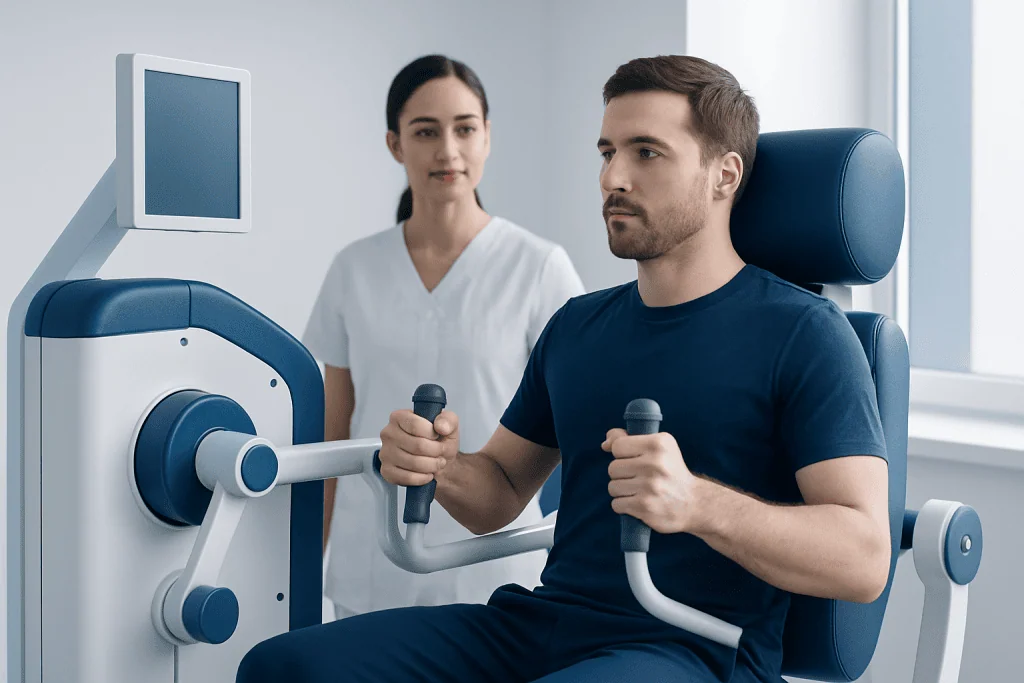
Core strength is often discussed in relation to low back pain, but the term is sometimes misunderstood. The core includes more than the visible abdominal muscles. It involves the deep abdominal muscles, spinal muscles, pelvic floor, diaphragm, gluteal muscles and hip stabilizers. These structures help control the position of the spine and pelvis during walking, lifting, reaching, sitting and exercise.
A healthy core does not need to be rigid all the time. In fact, efficient movement requires the trunk to provide support while still allowing breathing and natural motion. Some people with back pain over-brace the spine, hold their breath or keep the back very stiff. Others may have reduced endurance or difficulty coordinating the trunk and hips. Rehabilitation looks at both strength and control, not just how hard a muscle can contract.
Core strengthening for back pain usually begins with low-load, well-controlled exercises and progresses gradually. Common early goals include learning to breathe while engaging the trunk, maintaining a neutral or comfortable spine position, activating the gluteal muscles, and improving pelvic control. As symptoms improve, exercises may progress toward squats, step-ups, carrying tasks, resistance training or sport-specific movements.
Exercise selection should be individualized. A movement that helps one person may aggravate another, especially if symptoms travel down the leg or if certain positions are poorly tolerated. For this reason, people with ongoing pain, repeated flare-ups or neurological symptoms benefit from assessment by a qualified clinician before starting an intensive program.
Movement Retraining for Daily Activities
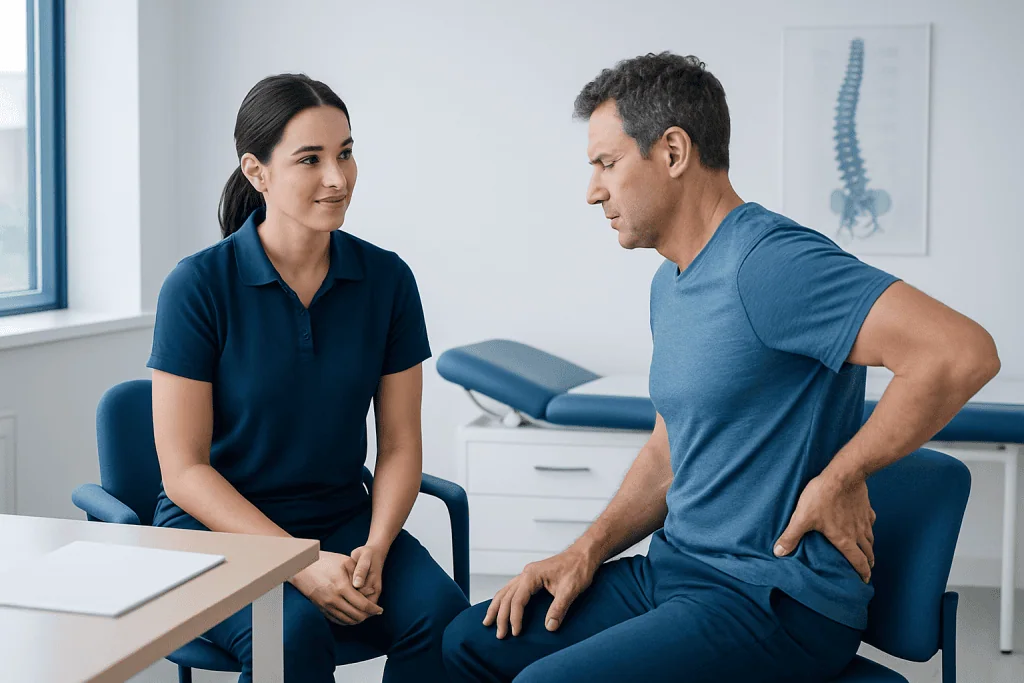
Movement retraining teaches the body to perform daily tasks with better coordination and less unnecessary strain. It does not mean there is only one perfect posture or one correct way to move. Instead, it helps a person develop options: how to bend, lift, sit, stand, turn, walk and exercise in ways that match their body, symptoms and environment.
Many people with low back pain become cautious about normal activities such as picking up a bag, getting out of a chair or loading a dishwasher. Avoidance can be understandable, especially after a painful episode, but over time it may reduce physical capacity. A rehabilitation program may break these tasks into smaller steps, then gradually rebuild them. For example, hip-hinge practice can help a person bend by sharing the movement between the hips, knees and spine rather than relying on one area.
Retraining may also address pacing and workload. Pain can flare when activity increases too quickly, even if the movement itself is safe. Patients often learn to use a baseline approach: identify an amount of walking, sitting, lifting or exercise they can tolerate, then increase it slowly. This helps build confidence and reduces the cycle of doing too much on a good day and needing prolonged rest afterward.
Examples of movement retraining goals may include:
- Getting in and out of bed using a comfortable rolling strategy.
- Standing from a chair with balanced use of the hips and legs.
- Lifting light objects close to the body while breathing normally.
- Changing sitting positions regularly instead of trying to hold a single posture all day.
- Returning to walking, swimming, cycling or gym exercise in gradual stages.
Assessment and Diagnosis Before Rehabilitation
Before starting low back pain rehabilitation, a clinician usually takes a detailed history and performs a physical examination. The assessment may include questions about the location of pain, how symptoms started, what makes them better or worse, whether pain travels into the leg, and how daily activities are affected. Medical history, previous injuries, work demands, sleep, stress and exercise habits may also be relevant.
The physical examination may assess posture, spinal and hip movement, strength, reflexes, sensation, walking pattern and functional tasks such as squatting or bending. When nerve-related symptoms are present, the clinician may check for signs of nerve root irritation or compression. This helps guide exercise choices and identify whether further medical evaluation is needed.
Imaging tests such as X-rays or MRI scans are not required for every case of low back pain. Many imaging findings, including disc bulges or degenerative changes, can also be seen in people without pain. Imaging may be recommended when symptoms suggest a specific condition, after significant trauma, when red flags are present, or when symptoms do not improve as expected despite appropriate care.
A clear diagnosis can be helpful, but many cases are classified as nonspecific low back pain, meaning no single dangerous or structural cause is identified. This does not mean the pain is not real. It means that recovery often depends on improving movement, strength, activity tolerance and pain management rather than targeting one isolated structure.
Treatment Options in a Rehabilitation Program
A comprehensive rehabilitation plan usually combines several components. Education is a key part of treatment because understanding pain can reduce fear and support better decision-making. Patients may learn which activities are safe to continue, how to respond to flare-ups, and how to gradually return to work, home tasks, sport or travel.
Therapeutic exercise is central to most programs. Depending on the person, this may include mobility exercises for the hips and spine, core stabilization, gluteal strengthening, balance training, walking programs, aerobic conditioning and progressive resistance training. Exercises are typically introduced at a manageable level and adjusted according to response. The aim is to improve capacity over time, not to complete the hardest exercises immediately.
Manual therapy, such as joint mobilization or soft tissue techniques, may be used as an adjunct for short-term symptom relief or to improve movement tolerance. It is usually most effective when paired with active exercise and self-management. Other supportive approaches may include heat or cold, ergonomic advice, relaxation strategies and guidance on sleep positions. Medications or injections may be considered by physicians in selected cases, but they do not replace rehabilitation when movement and function are affected.
For people recovering after spine surgery or managing complex conditions, rehabilitation should follow the surgeon’s or physician’s precautions. Progression may be more structured, especially when tissues are healing or when lifting restrictions apply. Communication between the patient, physician and rehabilitation team helps ensure that exercises match the stage of recovery.
Prevention, Self-Care and Safe Progression
Prevention of recurring low back pain often focuses on keeping the body prepared for everyday demands. Regular physical activity, adequate sleep, weight management when appropriate, smoking cessation, and stress management can all influence back health. No single posture or mattress prevents all back pain, but frequent movement and general fitness are consistently helpful for many people.
Self-care during a mild flare-up may include staying gently active, walking short distances, changing positions often, and using heat or cold if it feels helpful. Most people do better by avoiding prolonged bed rest. Activities can be temporarily modified, but complete avoidance is usually unnecessary unless advised by a clinician. A gradual return to normal routines is often more effective than waiting for all discomfort to disappear.
Exercise progression should be steady and symptom-guided. Mild muscle soreness after new exercises can be normal, but sharp, worsening or spreading pain should be respected. A useful approach is to monitor how symptoms respond during activity, immediately afterward and the next day. If pain increases significantly or function worsens, the program may need to be adjusted.
Practical habits that support the lower back include varying sitting positions, taking brief movement breaks, strengthening the hips and legs, using breathing rather than breath-holding during effort, and planning heavier tasks when the body is warmed up. People who work at a desk, drive long distances or do manual labor may benefit from workplace-specific guidance.
When to See a Doctor
Many episodes of low back pain improve with time, activity modification and rehabilitation. However, medical assessment is important when pain is severe, persistent, recurrent, or associated with symptoms in the leg such as numbness, tingling or weakness. A doctor or physiotherapist can help determine whether the problem is suitable for conservative rehabilitation or whether further tests are needed.
Urgent medical care is needed if low back pain occurs with new loss of bladder or bowel control, numbness in the saddle area, major or progressive leg weakness, fever, unexplained weight loss, a history of cancer, recent significant trauma, or pain that is constant and not relieved by rest. These symptoms are uncommon, but they require prompt evaluation.
People should also seek guidance if pain prevents normal walking, work, sleep or self-care, or if fear of movement is limiting recovery. Early advice can help prevent unnecessary deconditioning and provide a safe plan for returning to activity. For international patients, Acibadem International offers multidisciplinary assessment and rehabilitation support in JCI-accredited hospitals, including care from relevant spine, orthopedic, neurology and physical therapy specialists when appropriate.
Frequently asked questions
Is exercise safe when low back pain is present?
In many cases, gentle and well-chosen exercise is safe and helpful for low back pain. The key is to start at a level the body can tolerate and increase gradually. Exercise should be adjusted if pain becomes sharp, spreads down the leg, or causes worsening function.
What are the best core exercises for low back pain?
There is no single best exercise for everyone. Common starting points may include breathing with gentle abdominal activation, pelvic control, bridges, bird-dog variations or modified side supports. A clinician can choose exercises based on symptoms, strength, mobility and goals.
Should a person rest until the pain is gone?
Short periods of relative rest may help during an acute flare, but prolonged bed rest is usually not recommended for nonspecific low back pain. Most people recover better by staying gently active and gradually returning to normal movement. Activities can be modified rather than completely stopped.
How long does low back pain rehabilitation take?
The timeline depends on the cause of pain, symptom duration, general health, work demands and consistency with the program. Some people improve within a few weeks, while persistent or recurrent pain may require a longer plan. Progress is usually measured by improved function and confidence, not only pain intensity.
Can poor posture cause low back pain?
Posture can influence comfort, but low back pain is rarely caused by one posture alone. Staying in any position for too long may increase stiffness or discomfort. Rehabilitation often teaches people to vary positions, build strength and move more comfortably rather than chase one perfect posture.
When is imaging needed for low back pain?
Imaging is not necessary for every episode of low back pain. A doctor may recommend X-rays, MRI or other tests when there are red-flag symptoms, significant trauma, suspected nerve compression, or pain that does not improve as expected. Imaging results should always be interpreted together with symptoms and examination findings.
References
- World Health Organization
- National Institute for Health and Care Excellence
- American Physical Therapy Association
- American College of Physicians
- Cochrane
This article is for general information only and is not a substitute for professional medical advice. Please consult a qualified doctor about your individual situation.
Joint and spine care in Turkey — expert assessment & treatment
JCI-accredited · board-certified surgeons · reply within 24h
Add us as a Preferred Source to see more of our trusted health content across Google Search, AI Overviews and Discover.

More from the Health Library


Related Specialists

Dr. Vusal Mahmudov
Cardiovascular Surgery
Dr. Bülent Yücel
Orthopedic Surgery & Traumatology
Prof. Dr. A. Sibel Erdamar Çetin
Gastrointestinal Oncology Unit Clinical Service
Assoc. Prof. Dr. Abdullah Okan
Gastroenterology