Low Level Light Therapy for Dry Eyes: How It Works, Results and What to Expect
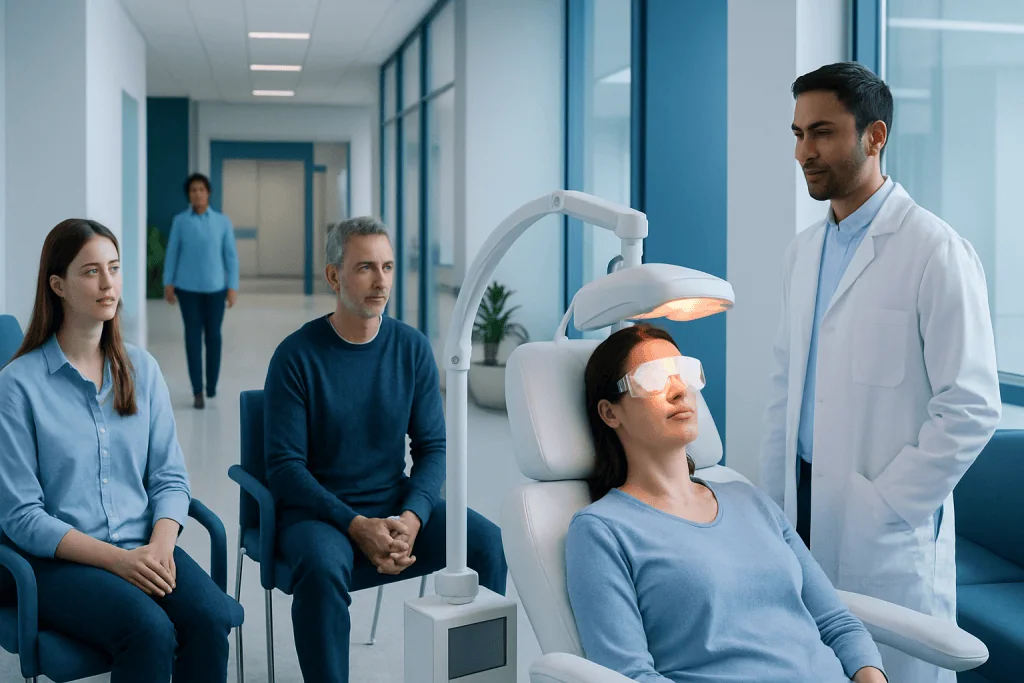
Low level light therapy is most often considered for evaporative dry eye related to meibomian gland dysfunction. The treatment is non-invasive, performed with the eyes protected, and commonly delivered as a course of sessions.
Key Takeaways
- Low level light therapy is most often considered for evaporative dry eye related to meibomian gland dysfunction.
- The treatment is non-invasive, performed with the eyes protected, and commonly delivered as a course of sessions.
- Studies suggest symptoms and tear-film measures may improve for some patients, although results vary and longer-term evidence is still developing.
- LLLT is usually combined with measures such as eyelid hygiene, lubricating drops, and treatment of contributing conditions.
- Eye pain, marked redness, light sensitivity, or sudden vision changes need prompt medical assessment.
Low level light therapy for dry eyes is an in-clinic treatment that uses controlled light energy around the eyelids to support meibomian gland function and reduce inflammation. It may help selected people with evaporative dry eye, especially when meibomian gland dysfunction is involved, but it is not a replacement for a full eye assessment or ongoing dry-eye care.
Overview: low level light therapy for dry eyes
Low level light therapy for dry eyes is a non-invasive, clinic-based approach that applies carefully controlled light to the skin around the eyelids. It is mainly used for evaporative dry eye caused by meibomian gland dysfunction (MGD), a common condition in which the oil-producing eyelid glands do not release enough healthy oil into tears. Without this oil layer, tears evaporate too quickly and the eye surface can become irritated.
Low level light therapy, often called LLLT or photobiomodulation, is not the same as using a home red-light device. Medical treatment uses an approved device, defined treatment settings, eye protection, and assessment by an eye-care professional. It is generally considered an adjunct to a broader dry-eye plan rather than a stand-alone cure.
Dry eye can also arise from reduced tear production, allergy, autoimmune disease, medication effects, contact lenses, screen habits, or environmental exposure. Identifying the main cause matters because the most appropriate treatment differs between individuals.
How the treatment works
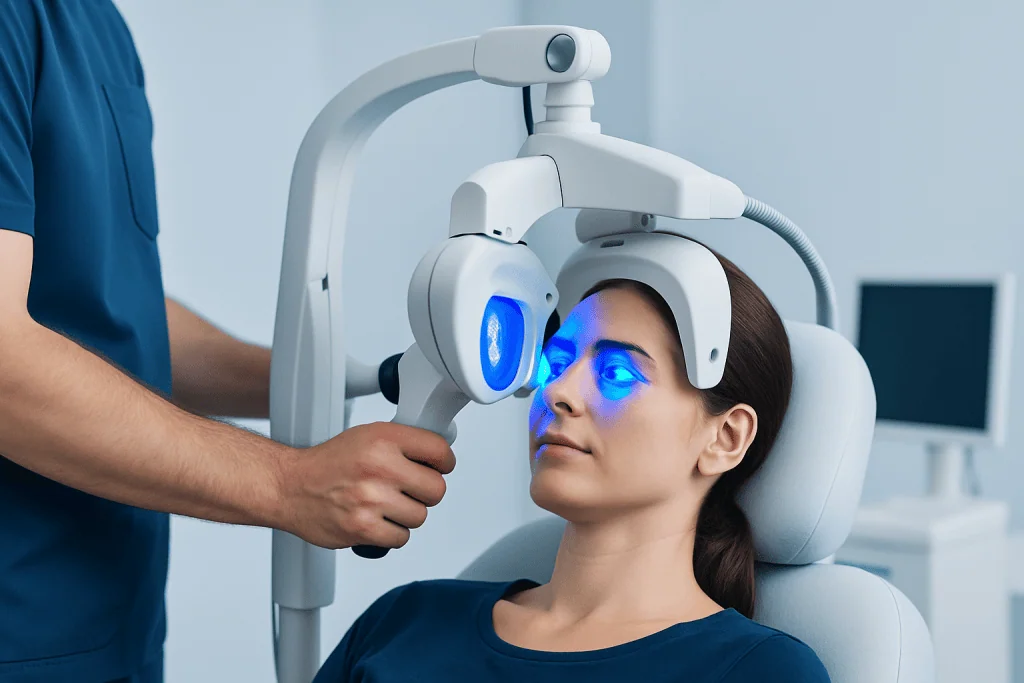
Meibomian glands sit along the upper and lower eyelids. They make meibum, an oily substance that forms the outer layer of the tear film and slows tear evaporation. In MGD, meibum may become thickened, the gland openings may become blocked, and eyelid inflammation may further disrupt tear-film stability.
LLLT delivers low-intensity light, commonly in visible red or near-infrared wavelengths, to the closed eyelid area. The proposed biological effects include supporting cellular energy processes, improving local circulation, and helping regulate inflammatory signalling. By reducing inflammation and improving the quality or flow of meibum, treatment may support a more stable tear film.
The precise response varies, and researchers are still clarifying which light settings, treatment schedules, and patient groups benefit most. Clinicians usually assess LLLT alongside established approaches such as warm compresses, eyelid cleansing, lubricating eye drops, and management of ocular surface inflammation.
Who may be a candidate for LLLT?

LLLT may be considered for adults with persistent dry-eye symptoms linked to MGD, particularly when symptoms continue despite appropriate daily eyelid care and lubricants. Typical symptoms include burning, grittiness, fluctuating vision, eye fatigue, watering, and discomfort in windy or air-conditioned environments.
An ophthalmologist or optometrist should first examine the eyelid margins, tear film, cornea, and meibomian glands. Tests may include tear break-up time, staining of the eye surface, assessment of gland secretions, and imaging of the glands where available. This helps distinguish evaporative dry eye from aqueous-deficient dry eye and from other conditions that can feel similar.
LLLT may not be appropriate for everyone. The clinician will consider photosensitivity, light-sensitive skin conditions, medicines that increase sensitivity to light, active eye or eyelid infection, recent procedures, and other relevant medical history. People with severe eye-surface disease or autoimmune-related dry eye may require additional or different treatment.
- Potential candidates have diagnosed MGD or evaporative dry eye.
- Symptoms remain troublesome despite basic care or recur frequently.
- They can attend supervised sessions and follow the recommended care plan.
- They have no contraindication identified during clinical review.
What happens during the procedure and recovery?
Before treatment, the eye-care team reviews symptoms, eye history, current medicines, and examination findings. Makeup and skin products around the treatment area may need to be removed. The eyes are kept closed and protected with appropriate shields or pads; light should not be directed into open, unprotected eyes.
The device is positioned around the eyelids and upper cheeks according to the manufacturer’s protocol and the clinician’s plan. A session is usually brief and should be comfortable, although warmth or mild skin tingling may be noticed. The number and spacing of sessions vary by device, severity of MGD, and response to treatment.
Most people return to usual activities shortly after a session. Mild temporary warmth, redness of the treated skin, or dry-eye fluctuation can occur. Symptom improvement may be gradual over the treatment course rather than immediate, and maintenance care may still be needed. The clinician may recommend continued eyelid hygiene, preservative-free lubricants, or other measures to protect the tear film.
Benefits, limitations and possible risks
The possible benefits of LLLT include improved comfort, less burning or grittiness, more stable vision between blinks, and better meibomian gland secretions. For some people, reducing eyelid inflammation can also make other dry-eye treatments work more effectively. It is non-invasive and does not involve an incision or injection.
However, benefit is not guaranteed. Dry eye is a long-term, multifactorial condition, and symptoms can change with seasons, screen use, hormonal changes, medications, and general health. Existing research is promising but includes studies of varying sizes, devices, protocols, and follow-up periods. LLLT should therefore be chosen after an individual clinical assessment rather than based on advertising claims.
Reported side effects are usually mild and temporary when treatment is professionally delivered. They may include transient skin warmth, redness, headache, or discomfort. Improper use of light-based devices, particularly without eye protection, may be unsafe. A qualified clinician should assess any persistent pain, worsening redness, new sensitivity to light, or visual change after treatment.
How effective is low light level therapy for dry eyes?
Clinical studies suggest that low level light therapy can improve dry-eye symptoms and some objective measures of tear-film stability in selected people with MGD. Improvements may include better meibomian gland secretion quality, longer tear break-up time, and reduced symptom scores. The strength of response differs between patients.
It is most reasonable to view LLLT as one part of treatment for evaporative dry eye. Results can be influenced by the severity of gland damage, eyelid inflammation, rosacea, contact lens use, adherence to home care, and whether other causes of dry eye are present. A clinician can help set realistic expectations and review whether the treatment is helping over time.
For some patients, related therapies may be considered within a personalised plan, including thermal eyelid treatment, management of blepharitis, prescription anti-inflammatory eye drops, or treatment for associated skin disease. Regular follow-up allows the plan to be adjusted according to symptoms and eye-surface findings.
Does red light therapy really work for dry eyes?
Red and near-infrared light used in medically supervised LLLT may help some people with MGD-related dry eye. The treatment is intended to influence eyelid inflammation and gland function, not simply to add moisture to the eyes. Its role is supported by growing, but not definitive, clinical evidence.
Not all red-light devices are designed or tested for dry-eye treatment. Consumer devices may differ substantially in wavelength, intensity, treatment area, safety features, and instructions. Because the eyes are highly sensitive to light exposure, self-treating the eyelids with a cosmetic or general-purpose device is not a substitute for professional assessment.
People with ongoing symptoms should have the cause assessed before choosing treatment. An eye specialist can determine whether MGD is present and whether LLLT is appropriate alongside established dry-eye management.
Can I just close my eyes during red light therapy?
No. Simply closing the eyes does not make unsupervised red-light exposure around the eyes safe or medically appropriate. Eyelids are thin, devices vary in their output, and appropriate treatment depends on correct settings, positioning, exposure time, and protective measures.
During clinical LLLT, the practitioner follows a defined protocol and uses suitable eye protection. Patients should not stare at a light source, use a device near the eyes against its instructions, or assume that a home red-light device will treat dry eye. If a person is considering light-based therapy, they should discuss it with an ophthalmologist or qualified eye-care professional first.
How much does Low-Level Light Therapy cost for dry eyes?
The cost of low-level light therapy for dry eyes varies by country, clinic, device, number of sessions recommended, and whether it is combined with other tests or treatments. Because dry eye often needs ongoing management, it is useful to ask for a clear written outline of the proposed treatment course, follow-up visits, and any likely maintenance care.
Insurance coverage also differs widely and may depend on the healthcare system and the reason for treatment. Patients can ask the clinic whether the consultation, diagnostic testing, treatment sessions, and prescribed eye-care products are billed separately. Cost should be considered alongside the quality of assessment, safety procedures, and whether the treatment is appropriate for the individual’s type of dry eye.
When to seek medical care
Dry-eye symptoms that persist for several weeks, interfere with reading or screen work, or do not improve with simple measures deserve an eye examination. This is especially important for people with rosacea, rheumatoid arthritis, Sjögren’s syndrome, thyroid eye disease, diabetes, previous eye surgery, or regular contact lens wear.
Prompt medical care is needed for severe eye pain, significant redness, injury, discharge, marked sensitivity to light, a sudden change in vision, or loss of vision. These symptoms can indicate a condition other than routine dry eye and should not be managed with light therapy or over-the-counter drops alone.
At Acibadem International, multidisciplinary specialists in JCI-accredited hospitals can assess dry-eye symptoms and coordinate treatment for international patients when eyelid, eye-surface, dermatological, or systemic factors are involved.
Frequently asked questions
Is low level light therapy painful for dry eyes?
LLLT is generally described as comfortable and non-invasive. Some people notice warmth or mild tingling around the eyelids during treatment, but significant pain is not expected. Any pain during or after a session should be reported to the treating clinician.
How many LLLT sessions are needed for dry eyes?
The number of sessions depends on the device protocol, the severity of meibomian gland dysfunction, and the individual response. Treatment is often delivered as a short course rather than a single session. The clinician will recommend a schedule after examining the eyes and eyelids.
How soon will I notice results after low level light therapy?
Some people notice reduced discomfort during the treatment course, while others need several weeks to judge whether symptoms are improving. Results can be gradual because the aim is to support eyelid gland function and reduce inflammation. Continued home care may affect the overall response.
Can LLLT replace artificial tears?
Usually, no. Lubricating drops can provide direct relief by supporting the tear film, while LLLT is intended to address aspects of eyelid inflammation and meibomian gland dysfunction. A clinician may recommend using both as part of an individual plan.
Is low level light therapy safe for everyone with dry eyes?
No treatment is suitable for every person. A clinician should review eye health, skin conditions, photosensitivity, medications, and possible alternative causes of symptoms before treatment. Professional supervision and eye protection are important for safe use near the eyes.
Can dry eye return after LLLT?
Yes. Dry eye and meibomian gland dysfunction can be chronic, and symptoms may return if underlying contributors remain. Ongoing eyelid hygiene, lubricants, environmental adjustments, and follow-up care may help maintain improvement.
References
- American Academy of Ophthalmology
- TFOS DEWS II Report
- National Eye Institute
- U.S. Food and Drug Administration
- American Optometric Association
This article is for general information only and is not a substitute for professional medical advice. Please consult a qualified doctor about your individual situation.
Explore treatments in Turkey — costs, top hospitals & a free quote
JCI-accredited · board-certified surgeons · reply within 24h
Add us as a Preferred Source to see more of our trusted health content across Google Search, AI Overviews and Discover.