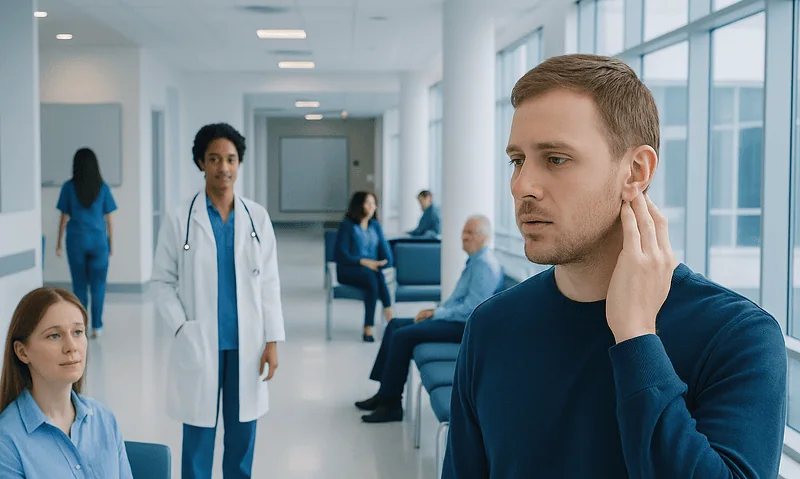
Lower Back Hurts Standing Up: What Patients Need to Know

Pain when standing after sitting is commonly linked to temporary stiffness, muscle strain, or irritation of the joints and discs in the lower spine. The exact pattern of pain matters: pain that travels down a leg, causes numbness, or worsens with walking may suggest nerve involvement or spinal narrowing.
Key Takeaways
- Pain when standing after sitting is commonly linked to temporary stiffness, muscle strain, or irritation of the joints and discs in the lower spine.
- The exact pattern of pain matters: pain that travels down a leg, causes numbness, or worsens with walking may suggest nerve involvement or spinal narrowing.
- Remaining gently active, improving sitting and lifting habits, and gradually strengthening the trunk and hips can support recovery.
- Bed rest is usually not helpful for uncomplicated low back pain; prolonged inactivity can increase stiffness and reduce muscle conditioning.
- Urgent medical care is needed for new bladder or bowel changes, numbness around the groin, major weakness, fever with back pain, or pain after significant injury.
When the lower back hurts standing up, the discomfort is often related to stiff muscles, irritated spinal joints, or changes in how the back moves after sitting or resting. Most episodes improve with gentle movement and self-care, but certain symptoms or persistent pain should be assessed by a qualified clinician.
Why the Lower Back May Hurt When Standing Up
If the lower back hurts standing up, it often means that the back is stiff or sensitive as it changes from a bent, supported position into an upright, weight-bearing one. Sitting, lying down, and bending forward change the pressure on the discs, joints, ligaments, and muscles of the lumbar spine. When a person rises, these tissues must coordinate quickly to straighten and stabilize the body.
A brief ache or tight pull that eases after a few steps is common and is often not a sign of serious disease. It may occur after long periods of sitting, an unfamiliar activity, poor sleep position, or a minor muscle overload. However, pain that is severe, repeats frequently, limits daily activities, or is accompanied by leg symptoms deserves a medical assessment.
Low back pain is a symptom rather than a single diagnosis. A clinician considers the location, timing, triggers, previous injuries, overall health, and neurological symptoms to identify the most likely source and decide whether testing or treatment is needed.
How the Pain Pattern Can Offer Clues
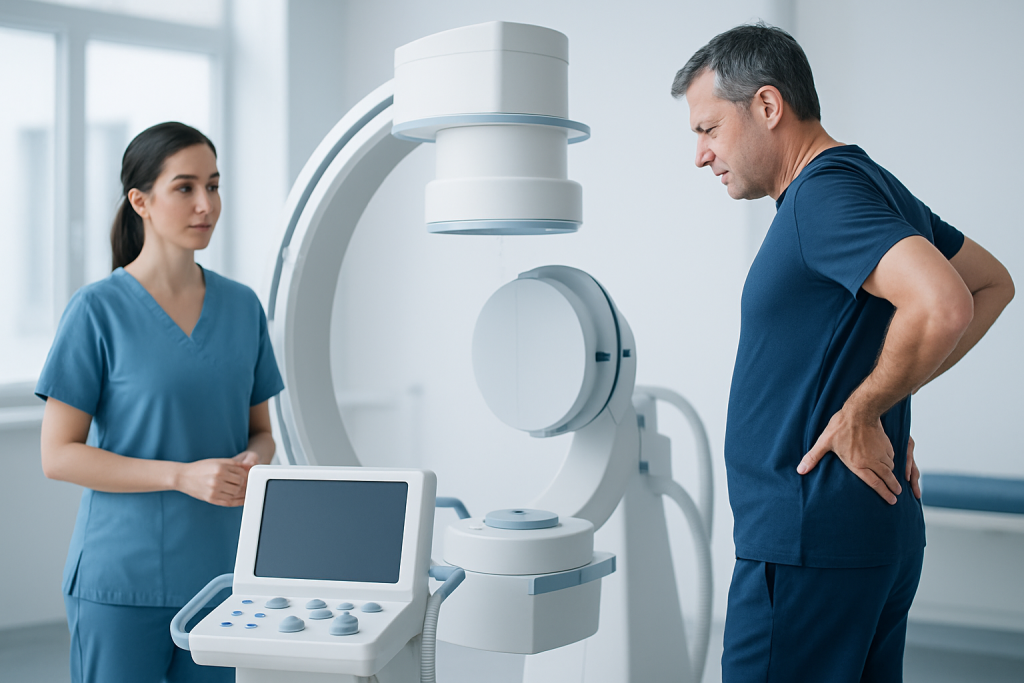
People describe standing-up pain in different ways. A central ache or stiffness across the beltline that improves with gentle movement may fit muscle tension, reduced flexibility, or irritation of the small facet joints at the back of the spine. Pain felt mainly after sitting can also reflect prolonged slouched posture, especially when the hips and lower back remain flexed for a long time.
A sharp pain with coughing, sneezing, bending, or rising from a chair can occur when a spinal disc is irritated. Discs are cushioning structures between the spinal bones. If a disc bulges or herniates and affects a nearby nerve root, pain may extend into the buttock, thigh, calf, or foot. This pattern is often called sciatica when the sciatic nerve pathway is involved.
Pain that is worse with standing or walking and improves when sitting or leaning forward can sometimes occur with spinal stenosis, a narrowing of spaces around spinal nerves that becomes more common with age-related changes. Back pain may also arise from the hip, sacroiliac joints, kidneys, or, less often, inflammatory or other medical conditions. These possibilities are why an individualized evaluation is important when symptoms do not settle.
Common Causes and Factors That Increase Risk
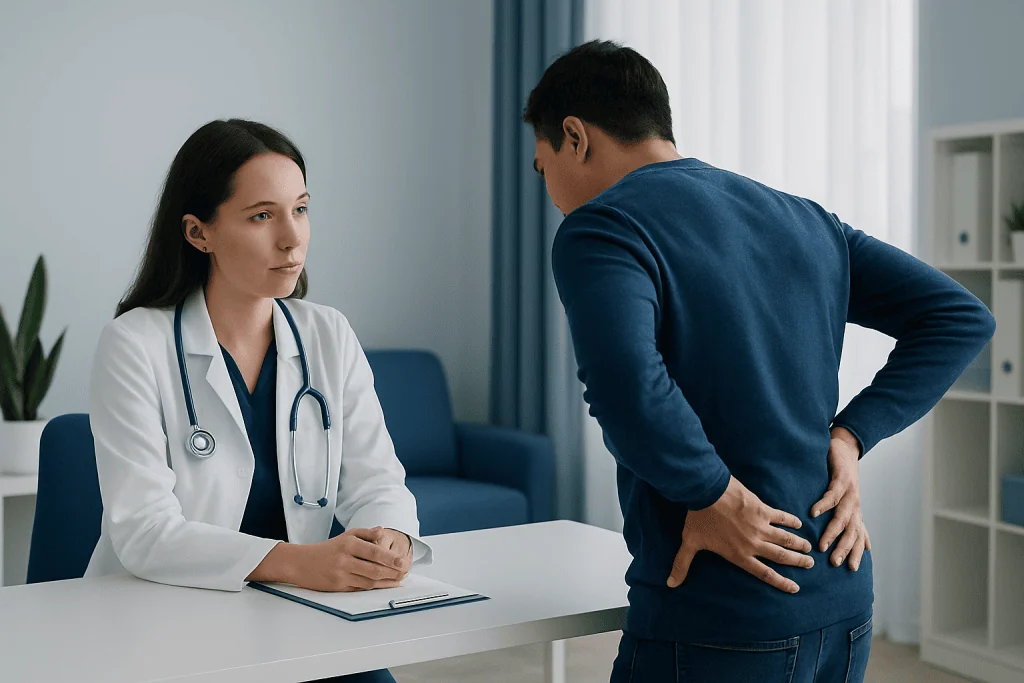
Muscle or ligament strain is among the most frequent reasons for lower back pain. It can follow lifting, twisting, repetitive work, a new exercise routine, gardening, prolonged driving, or simply doing more than the body is used to. Weakness or poor endurance in the trunk and hip muscles may make the back work harder during transitions such as standing from a chair.
Age-related spinal changes can also contribute. These include wear in the facet joints, disc degeneration, and reduced flexibility of surrounding tissues. These changes are very common on imaging, including in people without pain, so a scan result does not always identify the cause of symptoms or determine the best treatment.
Other factors may increase the likelihood of recurring discomfort:
- Long periods of sitting, especially with limited movement breaks
- Sudden increases in physical activity or lifting demands
- Previous back injury or episodes of back pain
- Reduced physical conditioning, sleep difficulties, or stress
- Pregnancy-related changes in posture and pelvic support
- Workstations, chairs, or driving positions that do not support comfortable posture
Having one or more of these factors does not mean that lasting damage has occurred. Many people recover well with a gradual return to normal activity and targeted rehabilitation.
What to Do at Home in the First Days
For uncomplicated new back pain, gentle activity is generally more helpful than complete rest. Short, frequent walks and changing position regularly can reduce stiffness. A person may find it easier to stand by first moving to the edge of the chair, placing both feet firmly on the floor, tightening the abdominal muscles gently, and pushing through the legs rather than twisting or pulling with the back.
Heat, such as a warm shower or heat pack used safely, may ease muscle tightness for some people. Others prefer a cold pack soon after a strain. Either should be wrapped in cloth and used for short periods to protect the skin. Over-the-counter pain medicines may be suitable for some adults, but they can interact with other medicines or be unsafe with certain kidney, stomach, heart, liver, bleeding, or pregnancy-related conditions. A pharmacist or doctor can advise on an appropriate option.
It is sensible to avoid activities that clearly worsen pain, such as heavy lifting or repeated bending, for a short time. At the same time, avoiding all movement can prolong stiffness. As symptoms allow, normal daily activities can be resumed gradually. Gentle stretching and strengthening are usually most useful when they are comfortable and performed consistently rather than forcefully.
Medical Assessment, Diagnosis, and Treatment Options
A clinician will usually begin with questions and a physical examination. They may check posture, range of movement, leg strength, reflexes, sensation, walking, and whether certain movements reproduce symptoms. This assessment helps distinguish common mechanical back pain from pain that may involve a nerve or another health condition.
Imaging is not routinely needed for recent uncomplicated low back pain. X-rays do not show discs or nerves well, and MRI or CT scans may reveal common age-related findings that are unrelated to symptoms. Imaging may be recommended when pain persists despite appropriate care, when significant nerve symptoms are present, or when there are warning signs for infection, fracture, cancer, or another serious cause.
Treatment is tailored to the cause and impact of pain. It may include education, activity modification, physiotherapy, supervised exercise, and short-term medicines when appropriate. Physical therapy can address movement habits, trunk and hip strength, flexibility, and safe lifting strategies. For selected people with confirmed nerve-related pain or other specific conditions, clinicians may discuss options such as epidural steroid injections or, less commonly, surgery. These treatments are considered carefully because not every type of back pain benefits from the same approach.
Reducing Repeat Episodes
Prevention is less about holding one “perfect” posture and more about varying positions, building capacity, and using good movement habits. People who sit for work can set reminders to stand, walk, or stretch briefly throughout the day. When getting up, moving slowly after prolonged sitting and avoiding a sudden twist can reduce the strain of the transition.
Regular physical activity supports the back, hips, and general health. Walking, swimming, cycling, yoga, Pilates, and strength training can all be appropriate if introduced at a manageable level. A physiotherapist can help choose exercises when pain is recurrent, when there has been a prior injury, or when a person is uncertain about how to return to activity safely.
For lifting, it helps to plan the movement, keep the object close to the body, bend at the hips and knees, and avoid twisting while carrying. Sleep, stress management, and stopping smoking can also support recovery, since pain is influenced by both physical load and overall wellbeing. If excess body weight is affecting mobility or comfort, a clinician can provide individualized, non-judgmental advice.
When to Seek Medical Care
Medical advice is appropriate if lower back pain lasts longer than a few weeks, keeps returning, is getting worse, causes sleep disruption, or interferes substantially with work, walking, or self-care. An appointment is also advisable for pain that spreads below the knee, persistent tingling or numbness, new weakness in a leg, unexplained weight loss, or a history of cancer, osteoporosis, immune suppression, or long-term steroid use.
Urgent assessment is needed for new difficulty controlling the bladder or bowels, inability to pass urine, numbness around the genitals or anus, rapidly worsening leg weakness, fever or feeling very unwell with back pain, or back pain after a significant fall, collision, or other injury. These symptoms are uncommon, but prompt evaluation is important.
Acibadem International’s multidisciplinary specialists and JCI-accredited hospitals assess and treat back pain and related spine conditions for international patients. A qualified doctor can help determine whether symptoms are likely to improve with conservative care or require further investigation.
Frequently asked questions
Why does my lower back hurt when I stand up after sitting?
Sitting can leave the muscles, joints, and discs of the lower back in a flexed position for a long time. When standing, these structures must straighten and support body weight, which can briefly trigger stiffness or pain. If the pain is persistent, severe, or travels into a leg, a clinician should assess it.
Is lower back pain when standing up a sign of a slipped disc?
It can be, but it is not the only explanation. A disc problem is more likely when pain is sharp and accompanied by pain, tingling, numbness, or weakness that travels into the buttock or leg. Many episodes are instead caused by muscle strain, joint irritation, or stiffness.
Should I rest if my lower back hurts when I get up?
Briefly reducing painful activities can be sensible, but prolonged bed rest is usually not recommended for uncomplicated low back pain. Gentle walking and regular position changes often reduce stiffness and help recovery. Activities should be increased gradually as comfort improves.
Can poor posture cause pain when standing from a chair?
A sustained slouched or unsupported sitting position may contribute to stiffness and muscle fatigue, especially if sitting lasts for hours without breaks. Posture is only one factor, and there is no single perfect position for everyone. Regular movement and comfortable ergonomic support are often more helpful than trying to hold a rigid posture.
When should lower back pain be treated as an emergency?
Urgent medical assessment is needed if back pain occurs with loss of bladder or bowel control, numbness around the groin or anus, rapidly worsening leg weakness, fever, or significant trauma. These symptoms can indicate a condition that needs prompt treatment. Most low back pain does not have these features.
Will I need an MRI for lower back pain?
Not usually at the beginning of a typical episode of low back pain. A clinician may recommend MRI or other imaging if symptoms persist, there are significant nerve symptoms, or warning signs suggest a more serious cause. The decision is based on the full clinical picture, not pain alone.
This article is for general information only and is not a substitute for professional medical advice. Please consult a qualified doctor about your individual situation.
Joint and spine care in Turkey — expert assessment & treatment
JCI-accredited · board-certified surgeons · reply within 24h
Add us as a Preferred Source to see more of our trusted health content across Google Search, AI Overviews and Discover.

More from the Health Library

Corned Beef Is Healthy: A Complete Medical Overview

Glp-1 News — Explained by Medical Evidence, Not Myths

Mastic Gum: A Complete Medical Overview

Posole Recipe — Explained by Medical Evidence, Not Myths
Secondary Syphilis: A Complete Medical Overview