Lumbago with Sciatica: A Complete Medical Overview

Lumbago with sciatica describes back pain plus radiating leg symptoms caused by irritation or compression of nerve roots in the lower spine. Common causes include a herniated disc, age-related spinal wear, spinal stenosis, and less often injury or other conditions affecting the lumbar spine.
Key Takeaways
- Lumbago with sciatica describes back pain plus radiating leg symptoms caused by irritation or compression of nerve roots in the lower spine.
- Common causes include a herniated disc, age-related spinal wear, spinal stenosis, and less often injury or other conditions affecting the lumbar spine.
- Warning signs such as progressive weakness, loss of bladder or bowel control, fever, or severe pain after trauma need urgent medical assessment.
- Most people improve with activity modification, physical therapy, pain relief measures, and time, but treatment depends on the underlying cause.
- A medical evaluation helps confirm the diagnosis, rule out serious conditions, and guide whether imaging or specialist treatment is needed.
Lumbago with sciatica means low back pain combined with pain, tingling, numbness, or weakness that travels along the sciatic nerve into the buttock and leg. It is a symptom pattern rather than a single disease, and it often improves with time and conservative care, although some people need imaging, injections, or surgery depending on the cause.
Overview: What lumbago with sciatica means
Lumbago with sciatica refers to low back pain together with symptoms that travel down one leg, and sometimes both, along the path of the sciatic nerve. The leg symptoms may feel sharp, burning, electric, tingling, numb, or weak. In everyday use, “lumbago” means lower back pain, while “sciatica” describes nerve-related pain coming from the lower spine.
This pattern usually happens when one or more nerve roots in the lumbar spine become irritated or compressed. A common example is a bulging or herniated disc pressing on a nearby nerve. However, sciatica is not always caused by a disc problem. Spinal narrowing, joint changes, inflammation, and less commonly other medical conditions can produce similar symptoms.
For many people, lumbago with sciatica improves over several weeks with non-surgical care. The most helpful next step is not simply to label the pain, but to identify what may be triggering it and whether any urgent warning signs are present. That is why an evaluation focuses on the pattern of symptoms, the physical examination, and selected tests when needed.
Symptoms and how they may feel
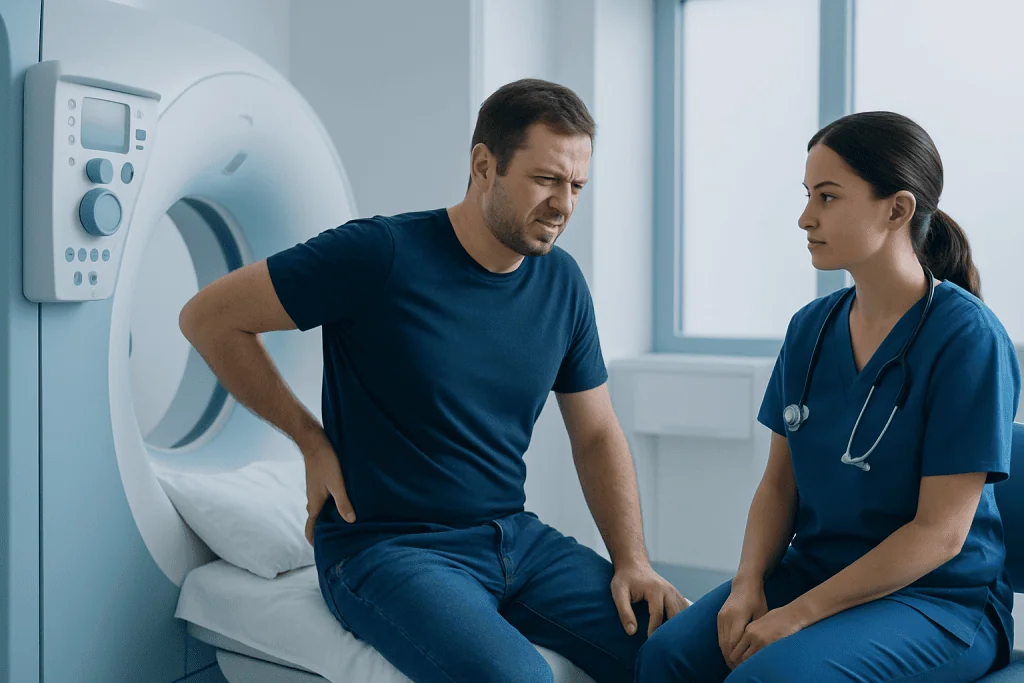
The hallmark feature is pain that starts in the lower back or buttock and radiates into the leg. Some people feel discomfort mainly in the calf or foot rather than the back. The pain may worsen with coughing, sneezing, bending, lifting, or sitting for long periods, because these actions can increase pressure around irritated nerves.
Symptoms vary from person to person. Some have a dull ache in the back with occasional shooting leg pain, while others describe intense burning or electric shock-like pain. Tingling and numbness can appear in a specific area of the leg or foot, depending on which nerve root is affected. Muscle weakness may make it harder to raise the foot, stand on the toes, or climb stairs.
Common symptoms can include:
- Low back pain with pain spreading into the buttock, thigh, calf, or foot
- Tingling, pins-and-needles, or numbness in the leg
- Pain that is worse when sitting, twisting, or straining
- Relief when changing position, walking gently, or lying down in some cases
- Weakness in part of the leg or foot
Because these symptoms can overlap with other causes of leg pain, such as hip disease, vascular problems, or peripheral nerve conditions, a doctor may consider other diagnoses if the symptom pattern is unusual. In some people, the problem may be related to a herniated disc or spinal stenosis, but the exact cause needs medical assessment.
Causes and risk factors

The most frequent cause of lumbago with sciatica is irritation of a lumbar nerve root. This can happen when the soft center of a spinal disc pushes outward and presses on a nerve, or when age-related changes narrow the spaces where nerves travel. The lower lumbar levels, especially L4-L5 and L5-S1, are commonly involved because they carry a great deal of body weight and movement.
Other causes include degeneration of the spine, arthritic enlargement of joints, thickening of nearby ligaments, and slippage of one vertebra over another. Less often, inflammation, infection, fractures, tumors, or conditions outside the spine can mimic sciatica. Piriformis syndrome is sometimes discussed, but true nerve root sciatica usually begins in the spine.
Several factors may increase the chance of developing this symptom pattern:
- Older age and normal wear-and-tear changes in the spine
- Jobs or activities involving repetitive lifting, twisting, vibration, or prolonged sitting
- Previous episodes of back pain
- Low physical conditioning or weak core support
- Smoking, which is linked with disc degeneration
- Excess body weight, which can add strain to the lower back
Risk factors do not mean someone will definitely develop sciatica, and many people without clear risk factors still experience it. A careful review of symptoms, work and activity patterns, and past spinal problems helps place the symptoms in context and guide treatment.
How doctors diagnose lumbago with sciatica
Diagnosis begins with a medical history and physical examination. The doctor asks when the pain started, where it travels, what makes it better or worse, and whether there is numbness, weakness, or bowel or bladder changes. The pattern of radiating pain often offers strong clues about which nerve root may be affected.
During the examination, the clinician may check posture, movement, reflexes, strength, sensation, and specific tests that stretch the sciatic nerve. A neurological examination is especially important because it helps identify whether a compressed nerve is affecting muscle function or sensation. The exam also helps distinguish nerve-root pain from hip, sacroiliac, muscle, or circulation-related problems.
Imaging is not always needed right away. Many people with recent symptoms and no warning signs can begin treatment without scans. However, imaging may be recommended if symptoms are severe, last longer than expected, return frequently, or are associated with weakness, trauma, fever, unexplained weight loss, or suspicion of a more serious problem. Magnetic resonance imaging is often the most useful test for nerve and disc-related causes. In selected cases, doctors may also use X-rays, CT scans, or nerve studies.
If symptoms suggest a significant disc problem, a patient may be evaluated for microdiscectomy or, in complex cases, other spine procedures. Diagnostic findings are always interpreted together with symptoms because some imaging changes are common even in people without pain.
Treatment options and recovery
Treatment depends on the cause, severity, and duration of symptoms. In many cases, the first approach is conservative care. This often includes staying as active as possible, avoiding movements that sharply worsen pain, using short-term pain relief strategies advised by a doctor, and starting physical therapy when appropriate. Gentle movement is usually more helpful than prolonged bed rest, which can lead to stiffness and slower recovery.
Physical therapy may focus on posture, flexibility, core strengthening, and ways to reduce strain on the lumbar spine during daily activities. Some people benefit from supervised exercises that gradually improve mobility and support the back. Heat or cold packs may help symptom relief, though they do not treat the underlying cause.
If pain remains significant or limits participation in rehabilitation, doctors may discuss medications or image-guided injections for short-term symptom control. When symptoms are caused by narrowing around the nerves, some patients may require procedures aimed at relieving pressure, such as lumbar decompression surgery. If spinal instability contributes to nerve compression, spinal fusion may be considered in selected situations.
Surgery is generally reserved for people with persistent disabling pain, progressive neurological deficits, or conditions unlikely to improve with conservative treatment alone. Recovery time varies by cause and treatment type. Even when surgery is needed, the goal is usually to relieve nerve pressure, improve function, and support a gradual return to everyday activities.
Prevention and self-care
Not every episode can be prevented, but practical habits can reduce strain on the lower back and may lower the chance of recurrence. Regular physical activity helps maintain flexibility, muscle support, and overall spine health. Exercises that strengthen the abdominal, hip, and back muscles can improve stability and body mechanics.
At home and at work, attention to posture and lifting technique matters. When lifting, it helps to keep the load close to the body, bend at the hips and knees rather than twisting through the spine, and avoid sudden heavy lifting when possible. Breaking up long periods of sitting with standing or walking can also reduce pressure on the lower back.
Useful self-care steps include:
- Stay gently active instead of resting in bed for long periods
- Use supportive sitting positions and change posture regularly
- Follow a clinician-guided home exercise program if one is provided
- Maintain a healthy body weight when possible
- Avoid smoking and seek support to stop if needed
- Return gradually to exercise and physically demanding tasks
Prevention is most effective when tailored to the person’s daily routines and the likely cause of symptoms. People with recurrent episodes may benefit from a structured rehabilitation plan and reassessment of workstations, driving habits, sleep surfaces, or sports techniques.
When to seek medical care
Medical advice is appropriate if low back pain and leg symptoms are severe, last more than a few weeks, keep returning, or interfere with walking, sleep, or daily function. A doctor should also assess pain that follows a fall, accident, or heavy lift, especially if it is intense or accompanied by weakness.
Urgent medical care is needed if there is new loss of bladder or bowel control, numbness in the groin or saddle area, rapidly worsening leg weakness, fever with back pain, or unexplained weight loss. These symptoms may point to a serious underlying problem that needs prompt evaluation.
People who have a history of cancer, osteoporosis, immune suppression, or recent infection should not ignore new severe back and leg pain. Near the end of the care pathway, some patients may benefit from multidisciplinary spine services. Acibadem International’s JCI-accredited hospitals and multidisciplinary specialists diagnose and treat spinal and nerve-related conditions for international patients when further assessment or treatment is needed.
Frequently asked questions
Is lumbago with sciatica the same as ordinary low back pain?
No. Ordinary low back pain stays mainly in the lower back, while lumbago with sciatica includes pain or other nerve symptoms that radiate into the buttock and leg. That radiating pattern suggests irritation of a nerve root or the sciatic nerve pathway.
How long does lumbago with sciatica usually last?
Many episodes improve within a few weeks, especially with conservative care and gradual activity. However, recovery time varies depending on the cause, symptom severity, and whether weakness or significant nerve compression is present. Persistent or worsening symptoms should be assessed by a doctor.
Does everyone with sciatica need an MRI?
No. Imaging is often not necessary at the start if symptoms are recent and there are no warning signs. A doctor may recommend an MRI when pain is severe, lasts longer than expected, recurs frequently, or is associated with weakness, trauma, or other concerning features.
Can exercise help, or should a person rest?
Gentle activity is usually more helpful than prolonged bed rest. A short period of reduced activity may be needed during severe pain, but extended rest can lead to stiffness and slower recovery. Exercises are best guided by a clinician or physical therapist when symptoms are significant.
What are the signs that sciatica may be serious?
Serious warning signs include loss of bladder or bowel control, numbness around the groin, rapidly increasing leg weakness, fever with back pain, or severe pain after trauma. These symptoms need prompt medical attention because they can suggest a condition requiring urgent treatment.
Can lumbago with sciatica come back?
Yes, it can recur, especially if the underlying spinal problem persists or daily activities continue to strain the lower back. Strengthening, posture improvement, weight management, and smoking cessation may help reduce the chance of future episodes. A personalized prevention plan is often useful after repeated attacks.
This article is for general information only and is not a substitute for professional medical advice. Please consult a qualified doctor about your individual situation.
Joint and spine care in Turkey — expert assessment & treatment
JCI-accredited · board-certified surgeons · reply within 24h
Add us as a Preferred Source to see more of our trusted health content across Google Search, AI Overviews and Discover.

More from the Health Library

Msg Vetsin: What Patients Need to Know

Cognitive: What Patients Need to Know

Drinking Water: What Patients Need to Know

Runny Nose: What Patients Need to Know

Pedialyte for Babies — Explained by Medical Evidence, Not Myths