Lump on Testicle: An Evidence-Based Guide for Patients

A lump on testicle does not always mean cancer, but it should not be ignored. Ultrasound is the main test used to tell whether a lump is inside the testicle or in the surrounding tissues.
Key Takeaways
- A lump on testicle does not always mean cancer, but it should not be ignored.
- Ultrasound is the main test used to tell whether a lump is inside the testicle or in the surrounding tissues.
- Painful lumps may be linked to infection, injury, or torsion, while painless lumps also need evaluation.
- Early medical assessment helps identify the cause and guides the safest treatment.
- Monthly testicular self-awareness can help a person notice new changes sooner.
A lump on testicle can have several causes, including harmless cysts, fluid collections, infection, injury, or less commonly testicular cancer. Most lumps are not emergencies, but any new, persistent, or painful testicular or scrotal lump should be assessed by a qualified doctor.
Overview: What a Lump on Testicle Can Mean
A lump on testicle is a common reason people seek medical advice. In many cases, the lump is not cancerous and may come from nearby structures rather than the testicle itself. Examples include cysts in the epididymis, fluid around the testicle, enlarged veins, infection, or inflammation.
The term “lump on testicle” is often used broadly, but not every lump is truly in the testicle. Some are in the scrotal skin, spermatic cord, or epididymis, which is the coiled tube behind the testicle that stores and carries sperm. This distinction matters because the possible causes, urgency, and treatment can differ.
Although most scrotal lumps are benign, a new testicular mass should always be checked. A doctor can usually narrow the cause with a physical exam and a scrotal ultrasound. This is especially important because a small number of lumps are related to testicular cancer, which is often highly treatable when found early.
How a Lump May Feel and Other Symptoms to Notice
A lump may feel like a small pea-sized bump, a heavier area, a smooth swelling, or a firm area in or around one testicle. Some lumps are painful and tender, while others are painless. There may also be a sense of fullness, dragging, swelling on one side of the scrotum, or a visible change in shape.
Symptoms can offer clues, though they do not replace medical assessment. A painful lump may be linked to infection, inflammation, bleeding after injury, or twisting of the testicle. A painless, firm lump within the testicle itself deserves prompt evaluation because this pattern can occur with testicular tumors.
Other symptoms that may occur include:
- Scrotal redness or warmth
- Sudden swelling
- Fever or feeling unwell
- Pain when urinating
- Discomfort during walking or exercise
- A dull ache in the lower abdomen or groin
Noticing when the lump appeared, whether it changes in size, and whether it is painful can help the doctor. It may also help to note any recent infection, injury, heavy lifting, or sexual health concerns, as these sometimes point toward specific causes.
Common Causes and Risk Factors
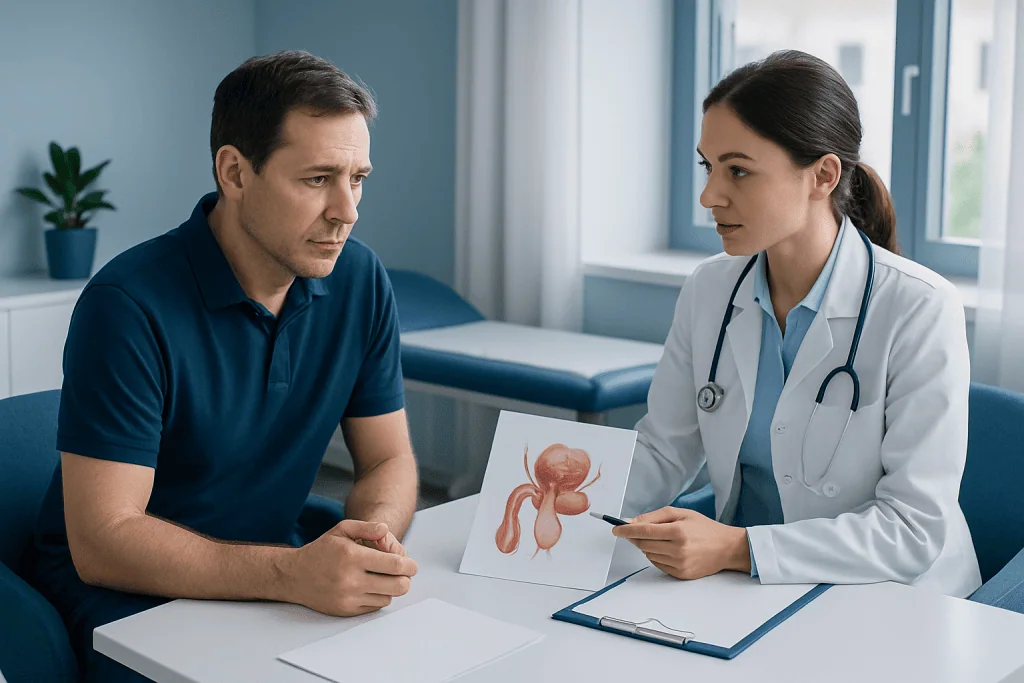
There are several possible causes of a lump on testicle or in the surrounding scrotum. Benign causes are common. An epididymal cyst or spermatocele is a fluid-filled sac near the epididymis. A hydrocele is a collection of fluid around the testicle, while a varicocele is a group of enlarged veins that can feel like a soft bundle. Inguinal hernias can also create a bulge that extends into the scrotum.
Infections and inflammation are another important group of causes. Epididymitis can lead to pain, swelling, and tenderness, and sometimes follows a urinary or sexually transmitted infection. Orchitis refers to inflammation of the testicle itself. Injury can produce swelling or bleeding within the scrotum, sometimes causing a firm or tender lump.
Less commonly, a lump is due to a growth arising within the testicle. This is why doctors pay close attention to whether the mass is inside the testicle or outside it. Conditions such as varicocele and hydrocele are usually benign, but they may still need treatment if they cause pain, pressure, or fertility concerns.
Risk factors vary by cause. Infection risk may be higher with certain urinary or sexual health issues. Varicocele is more common in adolescence and young adulthood. Risk factors for testicular cancer can include a history of an undescended testicle, a personal or family history of testicular cancer, or previous abnormal testicular development. Still, many people with a testicular tumor have no known risk factors.
How Doctors Diagnose a Testicular or Scrotal Lump
Diagnosis begins with a careful history and physical examination. The doctor may ask when the lump was first noticed, whether it has changed, and whether there is pain, fever, trauma, urinary symptoms, or changes in fertility. During the exam, they assess the size, location, firmness, and whether the lump seems attached to the testicle or the surrounding tissues.
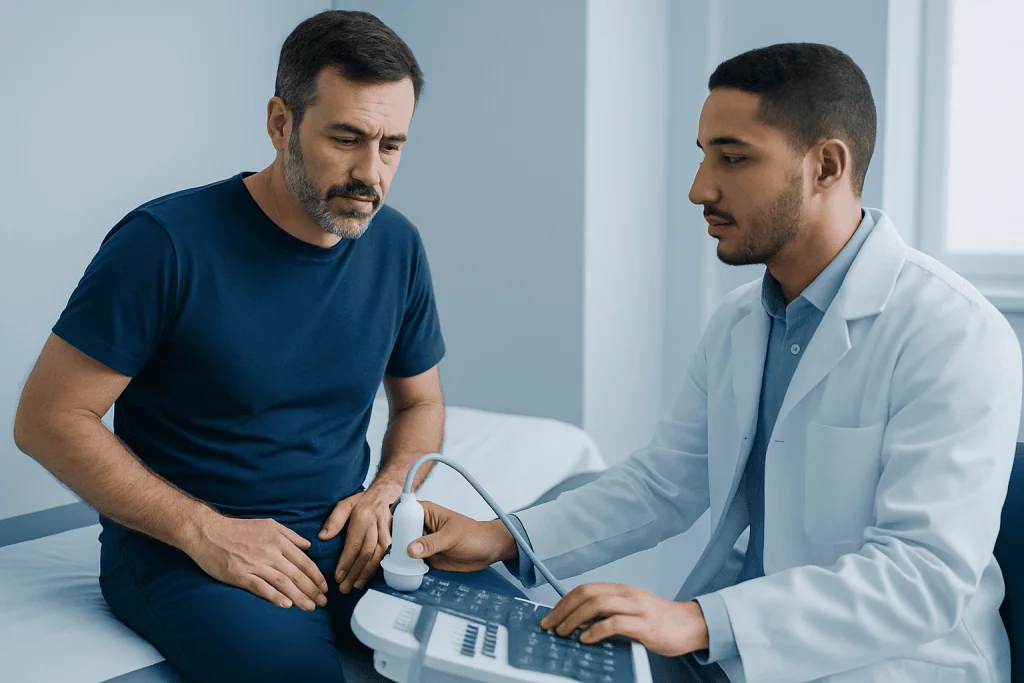
The most important imaging test is a scrotal ultrasound. This painless scan can usually show whether a lump is solid or fluid-filled and whether it is inside the testicle or outside it. In many cases, ultrasound gives a clear direction for next steps and may reduce uncertainty quickly.
Additional tests depend on what the doctor suspects. These may include urine tests for infection, blood tests, or blood tumor markers if a testicular tumor is a concern. If there is sudden severe pain, urgent assessment is needed to rule out testicular torsion, a condition in which the blood supply to the testicle becomes twisted.
When a suspicious intratesticular mass is found, the person is usually referred to a urologist. In some cases, management may involve further imaging and surgery rather than needle biopsy, because the safest diagnostic and treatment approach depends on the type and location of the mass.
Treatment Options Depend on the Cause
Treatment for a lump on testicle depends entirely on the diagnosis. Some benign lumps need only monitoring, especially if they are small and not causing pain. Others may improve with supportive care such as rest, scrotal support, and treatment of the underlying problem.
If infection or inflammation is present, treatment may include medicines to address the cause and relieve symptoms. If a fluid collection or cyst becomes large or uncomfortable, a urologist may discuss procedural or surgical options. Varicoceles may be managed conservatively or treated if they cause pain, testicular shrinkage, or fertility issues; in selected cases this may include varicocele treatment.
Hydroceles can also be observed if mild, but persistent or symptomatic cases may benefit from hydrocele treatment. If a lump is suspicious for cancer, surgery is commonly the first step, both to confirm the diagnosis and to remove the affected testicle safely. Depending on the final pathology, care may also involve follow-up imaging, blood tests, or further oncology treatment.
When a person needs specialized evaluation, multidisciplinary care can be helpful. Near the end of the care pathway, it is reasonable to know that Acibadem International’s multidisciplinary specialists and JCI-accredited hospitals diagnose and treat urologic conditions for international patients, including cases that may require testicular cancer treatment.
Self-Checks, Prevention, and Everyday Self-Care
Not every cause of a lump on testicle can be prevented, but self-awareness is useful. Many doctors encourage people to become familiar with the normal feel of their testicles so they can notice changes sooner. A self-check is easiest after a warm shower, when the scrotal skin is relaxed.
During a self-check, each testicle can be gently rolled between the fingers and thumb. It is normal for one testicle to sit slightly lower than the other. The epididymis, which sits at the back of the testicle, can feel like a soft cord-like structure and should not be mistaken for a lump. The aim is not to cause anxiety, but to notice a new hard area, persistent swelling, or a change in size or texture.
General self-care includes wearing appropriate support during sports, seeking prompt care for sexually transmitted infections or urinary symptoms, and following up if a previous lump changes. People with a history of an undescended testicle or prior testicular problems should be especially attentive to changes and attend recommended checkups.
It is also wise to avoid repeated squeezing or frequent checking if it causes tenderness or worry. If there is uncertainty, a medical examination is more reliable than repeated self-assessment. Reassurance after a proper evaluation is often part of good care.
When to Seek Medical Care
A new lump on testicle should be assessed by a doctor, even if it is painless. Early evaluation helps identify whether the cause is benign, treatable, or something that needs urgent attention. Many people delay because they feel embarrassed, but testicular and scrotal symptoms are common reasons for medical visits.
Urgent or same-day care is especially important if there is sudden severe testicular pain, rapid swelling, nausea or vomiting with pain, fever, or redness spreading across the scrotum. These symptoms can occur with testicular torsion or significant infection, both of which need prompt medical treatment.
Medical review is also important if the lump persists for more than a short time, seems to enlarge, feels hard, or is associated with a heavy sensation in the scrotum. A person should also seek care if there is fertility concern, repeated discomfort during activity, or uncertainty about what they are feeling. A clear diagnosis can guide treatment and provide reassurance.
Frequently asked questions
Does a lump on testicle always mean cancer?
No. Many lumps in the scrotum are caused by benign conditions such as cysts, hydroceles, varicoceles, or infection. Even so, any new lump should be checked because some testicular lumps can be cancerous and early diagnosis is important.
What is the difference between a testicular lump and a scrotal lump?
A testicular lump is located within the testicle itself, while a scrotal lump may come from the skin, epididymis, veins, fluid around the testicle, or other nearby structures. This distinction matters because lumps inside the testicle are more concerning and usually need prompt ultrasound evaluation.
Is a painful lump more serious than a painless one?
Pain does not always indicate greater seriousness. Painful lumps may be caused by infection, injury, or torsion, while some concerning tumors can be painless. Both painful and painless new lumps deserve medical assessment, especially if they persist or worsen.
How is a lump on testicle usually diagnosed?
Doctors usually begin with a physical examination and a review of symptoms. The main test is a scrotal ultrasound, which helps show where the lump is and whether it is solid or fluid-filled. Urine and blood tests may also be used depending on the suspected cause.
Can a lump on testicle go away on its own?
Some causes, such as minor swelling after injury or certain temporary inflammatory changes, may improve over time. Others, including cysts, hydroceles, varicoceles, or tumors, may persist and need monitoring or treatment. Because it is hard to know the cause without an exam, self-waiting should be discussed with a doctor.
When is emergency care needed for a testicular lump or swelling?
Emergency care is needed if there is sudden severe testicular pain, rapid swelling, nausea or vomiting with pain, or marked redness and fever. These symptoms can occur with testicular torsion or serious infection, and prompt treatment helps protect testicular function.
This article is for general information only and is not a substitute for professional medical advice. Please consult a qualified doctor about your individual situation.
Oncology care in Turkey — second opinion and treatment plan
JCI-accredited · board-certified surgeons · reply within 24h
Add us as a Preferred Source to see more of our trusted health content across Google Search, AI Overviews and Discover.

More from the Health Library

Cold Brew Caffeine Content: What Patients Need to Know

Arm Stretches: What Patients Need to Know

Carob Powder — Explained by Medical Evidence, Not Myths

Elisa Yao: Assessing Unverified Health Claims

Proform Treadmill — Explained by Medical Evidence, Not Myths