Lymphoma Rash Explained: Common Triggers and Red Flags

A lymphoma rash is not a single, unique rash pattern and can look different from person to person. Itching may happen with lymphoma even when no visible rash is present.
Key Takeaways
- A lymphoma rash is not a single, unique rash pattern and can look different from person to person.
- Itching may happen with lymphoma even when no visible rash is present.
- Many rashes in people with lymphoma are caused by dry skin, medicines, infections, or treatment side effects rather than the cancer itself.
- Red flags include a rash that does not go away, rapidly changes, becomes painful, or appears with swollen lymph nodes or other systemic symptoms.
- Diagnosis may require a skin exam, blood tests, imaging, or a skin or lymph node biopsy.
Lymphoma rash can refer to skin changes linked to lymphoma itself or to irritation caused by treatment, infection, or unrelated skin conditions. Most rashes are not lymphoma, but a rash that is persistent, unexplained, or accompanied by swollen lymph nodes, night sweats, fever, or weight loss should be assessed by a doctor.
Overview: What does lymphoma rash mean?
Lymphoma rash is a general term people use for skin changes that may happen with lymphoma, but it does not describe one specific appearance. In some cases, lymphoma directly affects the skin. In others, the skin problem is indirect and related to immune changes, severe itching, treatment side effects, infection, or an unrelated common rash such as eczema or contact dermatitis.
This is why lymphoma-related skin symptoms can be confusing. The rash may look like flat red patches, small bumps, plaques, scaly areas, hives, or widespread redness. Some people mainly notice intense itching without much visible rash at all.
Lymphoma itself is a cancer of the lymphatic system. The two broad groups are lymphoma, including Hodgkin lymphoma and non-Hodgkin lymphoma. A smaller group, called cutaneous lymphoma, starts primarily in the skin rather than in lymph nodes or other lymphatic tissues.
Because there is no single visual pattern that confirms lymphoma, a person should not try to diagnose the cause by appearance alone. A doctor looks at the full picture, including duration, associated symptoms, medical history, and whether the skin change improves with standard skin care or routine treatment.
How a lymphoma rash may look and feel
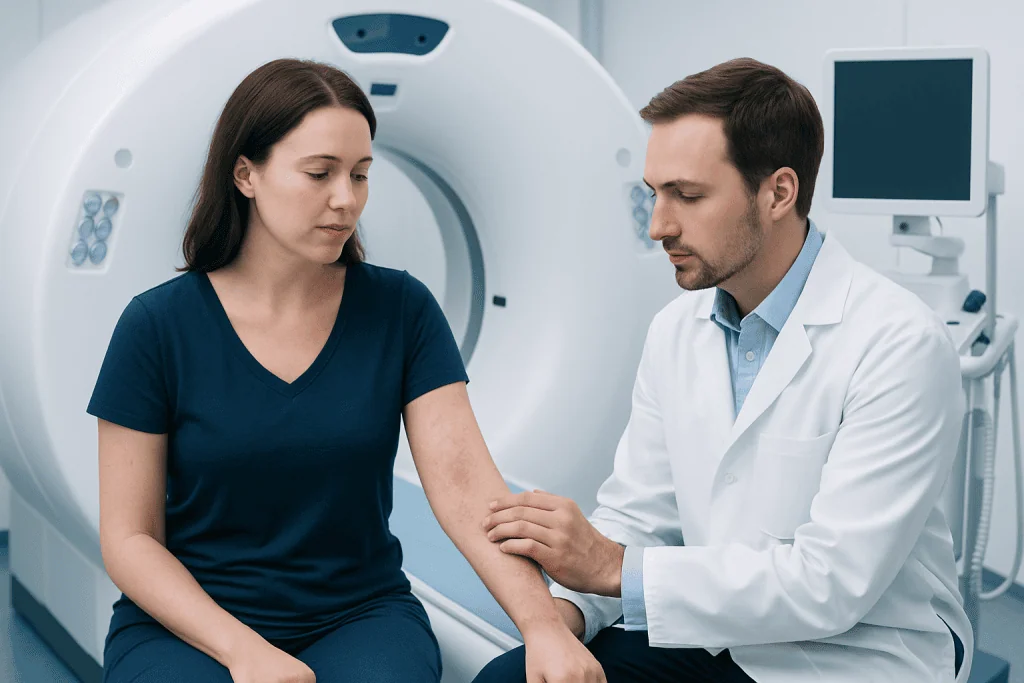
The appearance of a lymphoma rash varies widely. It may show up as pink, red, purple, or darker discolored areas depending on skin tone. The skin may be dry, scaly, thickened, rough, or flaky. Some people develop itchy bumps or raised patches, while others notice broad areas of irritation that come and go.
One important symptom is itching, also called pruritus. Itching may be mild or severe, localized or widespread, and sometimes worse at night. In Hodgkin lymphoma, itching can occur even before diagnosis and may happen without an obvious rash. Scratching can then create secondary marks, broken skin, or irritation that resembles a rash.
When lymphoma begins in the skin, skin changes may persist for weeks or months and may slowly expand. Cutaneous T-cell lymphoma, for example, can resemble eczema or psoriasis early on, which may delay diagnosis because it initially responds poorly or only briefly to standard creams.
- Possible features include persistent patches or plaques
- Unexplained severe itching
- Skin thickening or scaling
- New lumps, nodules, or tumors in or under the skin
- Generalized redness affecting large areas of the body
Common triggers and causes of rash in people with lymphoma

Not every rash in someone with lymphoma is caused by the cancer. In fact, common skin conditions remain common. Dry skin, allergic reactions, irritants, fungal infections, viral infections, eczema, psoriasis, and medication reactions can all cause rashes that may overlap with lymphoma-related symptoms.
Lymphoma can contribute indirectly to skin symptoms by altering immune function. This may make the skin more reactive, more prone to infection, or more likely to become inflamed. Some people also experience generalized itching due to chemical signals released in the body, even if there is no direct skin involvement.
Treatment can also be a trigger. Chemotherapy, targeted therapy, immunotherapy, radiation therapy, antibiotics, and supportive medicines may cause redness, dryness, sensitivity, or itchy eruptions. If skin symptoms begin after starting treatment, clinicians consider whether they reflect a drug side effect, treatment response, or a separate skin disorder. For some patients, care may involve chemotherapy or radiation therapy as part of overall lymphoma treatment, but any new skin change during therapy still needs proper assessment.
A less common but important cause is lymphoma involving the skin itself. This can happen when lymphoma starts in the skin or spreads there from elsewhere. In those situations, the rash often persists, changes slowly over time, or appears alongside enlarged lymph nodes and other symptoms.
Red flags that deserve closer attention
Most rashes are not a sign of cancer, but certain features make medical review more important. A rash should be evaluated if it lasts more than a few weeks, does not improve with basic skin care, returns repeatedly without a clear cause, or keeps spreading.
Other warning signs include swollen lymph nodes in the neck, armpits, or groin; unexplained fever; drenching night sweats; unusual fatigue; or unintended weight loss. These do not prove lymphoma, but they suggest that the skin symptom should be considered in the context of the whole body.
A doctor may also pay closer attention if the rash is unusually itchy, painful, bruised-looking, ulcerated, or associated with lumps under the skin. A rash that looks different from a person’s usual eczema or psoriasis pattern, or that stops responding to treatment that normally helps, also deserves a more detailed review.
People with a history of blood cancer or a known diagnosis of non-Hodgkin lymphoma or Hodgkin lymphoma should report new or changing skin findings promptly, especially during or after treatment.
How doctors diagnose the cause
Diagnosis starts with a careful history and physical examination. The doctor asks when the rash started, whether it itches or hurts, what medicines are being taken, and whether there are other symptoms such as fever, swollen glands, or weight loss. Because many benign skin conditions can mimic lymphoma, details about timing and progression are especially useful.
The skin is examined closely for its pattern, distribution, color, scale, thickness, and whether there are any lumps or ulcerated areas. Lymph nodes may also be checked. Sometimes photographs over time help show whether the rash is expanding, changing shape, or responding to treatment.
Further tests depend on what the clinician suspects. These may include blood tests, imaging, and most importantly a biopsy. A skin biopsy can show whether the rash is inflammatory, infectious, drug-related, or due to a cutaneous lymphoma. If enlarged lymph nodes are present, doctors may recommend additional tissue sampling and imaging, such as PET-CT or other scans, to understand the broader picture.
When lymphoma is confirmed or strongly suspected, patients are often assessed by specialists in hematology, oncology, dermatology, and pathology. This team approach helps distinguish between a skin disease that imitates lymphoma and true skin involvement by lymphoma.
Treatment options and symptom relief
Treatment depends on the cause, not just the appearance of the rash. If the problem is dry skin, eczema, or irritation, management may include fragrance-free moisturizers, gentle cleansers, avoiding hot showers, and prescription creams when needed. If infection or a medication reaction is involved, treatment is directed at that specific cause.
When the rash is related to lymphoma itself, treatment focuses on controlling the underlying disease. Depending on the type and extent of lymphoma, care may involve topical therapies, light-based skin treatment, systemic medicines, radiation, or broader oncology treatment such as bone marrow transplantation in selected cases. The right approach varies significantly between cutaneous lymphoma and lymphoma elsewhere in the body.
Itching relief is an important part of care. Doctors may suggest regular moisturization, avoiding wool and harsh products, keeping rooms cool, and using medicines to reduce itch when appropriate. Scratching can worsen inflammation and increase the risk of infection, so skin-protective measures matter even when the cause is still being investigated.
For international patients who need evaluation, Acibadem International’s multidisciplinary specialists and JCI-accredited hospitals diagnose and treat lymphoma-related conditions with coordinated input from oncology, dermatology, pathology, and imaging teams.
Self-care and prevention of skin irritation
There is no guaranteed way to prevent a lymphoma rash, because the symptom may arise from several different causes. However, sensible skin care can reduce irritation and make it easier to notice meaningful changes. Gentle daily habits may also improve comfort during cancer treatment.
Helpful steps include using a thick, fragrance-free moisturizer, washing with lukewarm rather than hot water, choosing mild soap substitutes, and avoiding new heavily scented products on irritated skin. Loose, breathable clothing may help reduce friction and sweating, both of which can aggravate itching.
Patients receiving cancer treatment should tell their care team before using over-the-counter creams, herbal products, or strong exfoliating treatments. Some products can worsen sensitive skin or interfere with treatment plans. It can also be helpful to keep a diary of when the rash flares, any new medications, and products applied to the skin.
Sun protection is also important, especially if the skin is inflamed or treatment has increased sensitivity. A doctor can advise on suitable sunscreens and whether certain therapies require stricter sun avoidance.
When to seek medical care
Medical advice should be sought if a rash lasts longer than two to four weeks, keeps returning, or does not improve with basic skin care. Review is also important if there is severe itching, skin pain, open sores, bleeding, or signs of infection such as warmth, pus, or fever.
Urgent assessment is recommended if a rash appears with swollen lymph nodes, unexplained weight loss, drenching night sweats, ongoing fever, or increasing fatigue. These symptoms do not always mean lymphoma, but they are important enough to justify prompt evaluation.
Anyone already diagnosed with lymphoma should contact their healthcare team about new skin changes during treatment or follow-up. Skin symptoms can reflect treatment effects, infection, allergy, or disease activity, and the correct response depends on early clinical review rather than self-diagnosis.
Frequently asked questions
What does a lymphoma rash usually look like?
There is no single rash that is unique to lymphoma. It may appear as itchy patches, scaly plaques, bumps, widespread redness, or darker discolored areas depending on skin tone. Some people have intense itching with little or no visible rash.
Can itching happen with lymphoma even without a rash?
Yes. Some people with lymphoma experience generalized itching before diagnosis, even when the skin looks mostly normal. Scratching can later create irritation or marks that resemble a rash.
Is every persistent rash a sign of lymphoma?
No. Most persistent rashes are caused by common conditions such as eczema, psoriasis, fungal infection, allergy, or drug reactions. However, a rash that does not improve, keeps spreading, or occurs with swollen lymph nodes or systemic symptoms should be checked by a doctor.
How do doctors tell the difference between eczema and lymphoma rash?
Doctors use the history, physical examination, and response to treatment as starting points, but appearance alone is often not enough. If the rash is unusual or persistent, a skin biopsy may be needed to confirm the diagnosis.
Can lymphoma treatment cause a rash?
Yes. Chemotherapy, immunotherapy, targeted drugs, antibiotics, and radiation can all trigger skin irritation or rash in some patients. That does not always mean the lymphoma is worsening, but the treatment team should still review any new skin symptoms.
When should someone worry about a lymphoma rash?
Concern is higher when a rash is persistent, rapidly changing, painful, or associated with lumps under the skin. It also deserves prompt medical review if it occurs with fever, night sweats, unexplained weight loss, or swollen lymph nodes.
References
- American Cancer Society
- National Cancer Institute
- NHS
- Leukemia & Lymphoma Society
- World Health Organization
This article is for general information only and is not a substitute for professional medical advice. Please consult a qualified doctor about your individual situation.
Lymphoma in Turkey — costs, top hospitals & a free quote
JCI-accredited · board-certified surgeons · reply within 24h
Add us as a Preferred Source to see more of our trusted health content across Google Search, AI Overviews and Discover.

Medical Oncology Department
Medical treatment of cancer with chemotherapy, immunotherapy and targeted therapies under a multidisciplinary tumor board.
60 specialists in this unit