Malignant Hyperthermia — Explained by Medical Evidence, Not Myths

Malignant hyperthermia is usually triggered by specific anesthetic gases or the muscle relaxant succinylcholine. It is caused by an inherited problem in muscle calcium regulation, most often linked to the RYR1 gene.
Key Takeaways
- Malignant hyperthermia is usually triggered by specific anesthetic gases or the muscle relaxant succinylcholine.
- It is caused by an inherited problem in muscle calcium regulation, most often linked to the RYR1 gene.
- Early warning signs can include rising carbon dioxide, muscle rigidity, fast heart rate, and rapidly increasing body temperature.
- The main emergency treatment is prompt dantrolene plus stopping the trigger drug and intensive supportive care.
- People with a personal or family history of malignant hyperthermia should tell every surgeon and anesthesiologist before any procedure.
Malignant hyperthermia is a rare but serious inherited reaction to certain anesthesia medicines, not a fever caused by infection or anxiety. It is a medical emergency, but it can be treated effectively when recognized quickly and managed with the right medication and supportive care.
Overview: what malignant hyperthermia really is
Malignant hyperthermia is a rare inherited reaction that can happen during or shortly after exposure to certain anesthesia medicines. It affects the way skeletal muscle cells handle calcium, causing the muscles to become overactive and the body’s metabolism to rise dangerously fast. This is why malignant hyperthermia is treated as an anesthetic emergency rather than an ordinary fever.
A common myth is that malignant hyperthermia simply means “high temperature during surgery.” In fact, the rise in body temperature may appear later, and the earliest clues are often changes such as increasing carbon dioxide levels, muscle stiffness, fast heart rate, or acidosis. The term can therefore be misleading if temperature is the only sign being watched.
Another important point is that malignant hyperthermia is not caused by emotional stress, poor fitness, or an infection picked up in the hospital. It is a genetic susceptibility that stays silent until a triggering anesthetic drug is used. Because modern anesthesia teams are trained to recognize and treat it quickly, outcomes improve greatly when the condition is identified without delay.
Symptoms and warning signs
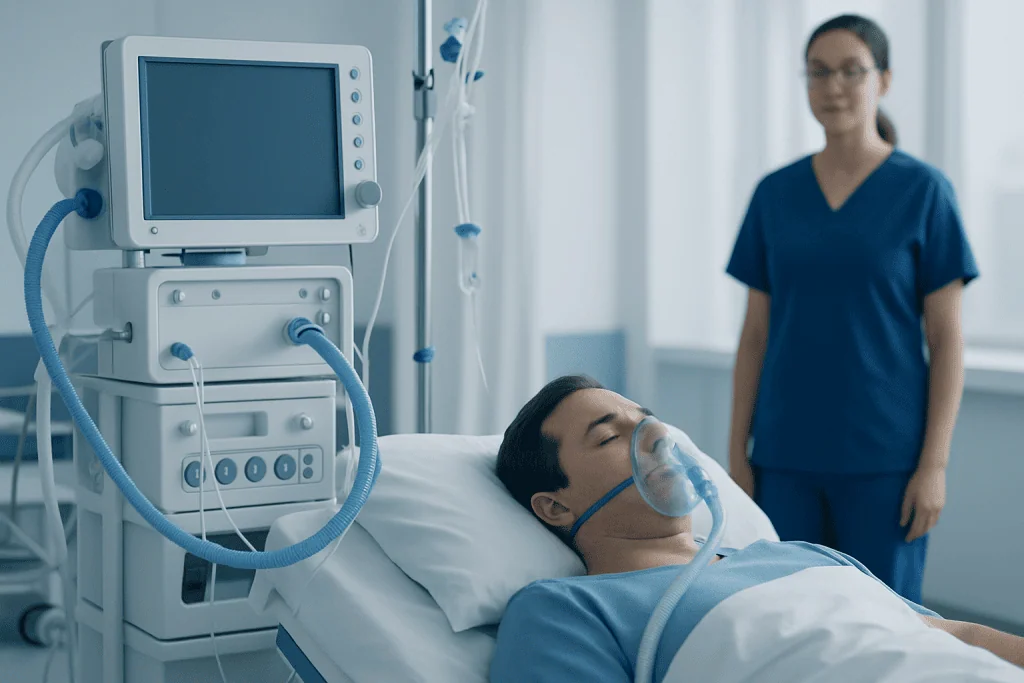
The signs of malignant hyperthermia can develop during anesthesia or in the early recovery period. They may begin suddenly or build over time. In many cases, the first signs are noticed by the anesthesia team through monitors and clinical observation rather than by the patient.
Typical warning signs include a rapid rise in exhaled carbon dioxide, fast heart rate, muscle rigidity, especially jaw rigidity after succinylcholine, rapid breathing if the person is breathing on their own, and changes in blood chemistry such as acidosis or high potassium. Body temperature can climb quickly, but this is often a later feature rather than the first one.
If the episode continues, complications can become severe because the muscles are consuming large amounts of energy and breaking down. This can lead to dark urine from muscle breakdown, abnormal heart rhythms, kidney strain, and problems with blood clotting. For this reason, prompt recognition is essential even when the temperature is not yet very high.
- Rapidly rising carbon dioxide during anesthesia
- Fast heart rate or irregular heartbeat
- Muscle stiffness or generalized rigidity
- High body temperature, often developing later
- Acidosis, high potassium, or muscle breakdown on testing
Causes, triggers, and risk factors

Malignant hyperthermia happens in people who are genetically susceptible, most often because of variants affecting calcium channels in muscle cells. The best known gene association is RYR1, and less commonly CACNA1S. These inherited changes make skeletal muscle react abnormally when exposed to certain anesthetic drugs.
The classic triggers are volatile inhaled anesthetics used to keep a person asleep during surgery and the depolarizing muscle relaxant succinylcholine. It is important for patients to know that not all anesthesia is dangerous in malignant hyperthermia. Many non-triggering anesthetic drugs can be used safely when the anesthesia team is aware of the risk and plans accordingly.
A personal history of unexplained severe reaction during anesthesia, or a family history of such a reaction, raises concern. Some muscle disorders are also associated with higher risk, and specialists may evaluate this in more detail if there are symptoms of inherited muscle disease. If a family member has confirmed malignant hyperthermia susceptibility, close relatives may also need assessment because the condition can run in families.
People sometimes confuse malignant hyperthermia with heat stroke or exercise-related collapse. These are different conditions, although there can be some overlap in underlying biology in selected cases. A doctor may also consider other diagnoses that mimic malignant hyperthermia, depending on the clinical setting.
How malignant hyperthermia is diagnosed
During an acute episode, the diagnosis is mainly clinical. The anesthesia team looks for a pattern of findings such as unexpectedly high carbon dioxide levels, muscle rigidity, increasing temperature, acidosis, and laboratory signs of muscle injury. Because treatment should not be delayed, doctors act on suspicion rather than waiting for confirmatory testing.
After recovery, further evaluation may help confirm whether a person is truly susceptible to malignant hyperthermia. This can include a detailed review of the event, family history, blood tests related to muscle injury, and referral to specialists in anesthesia, genetics, or neuromuscular medicine. In some centers, genetic testing may identify a known pathogenic variant linked to the condition.
Another specialized option is contracture testing performed on a muscle biopsy in expert centers. This test is not needed in every patient, but it can help when the diagnosis remains uncertain or when family screening is being considered. If a person has repeated muscle symptoms or doctors suspect a related inherited muscle disorder, they may also investigate conditions such as muscular dystrophy or other neuromuscular diseases.
Emergency treatment and hospital care
Malignant hyperthermia is treated as a medical emergency. The first steps are to stop the triggering anesthetic immediately, call for help, and give dantrolene as soon as possible. Dantrolene works by reducing abnormal calcium release in muscle cells, helping to stop the uncontrolled metabolic reaction.
Supportive treatment is just as important. The care team provides high-flow oxygen, active cooling if body temperature is rising, careful management of acid-base and electrolyte problems, treatment of abnormal heart rhythms when needed, and close monitoring of kidney function and urine output. Blood tests are repeated to track complications such as high potassium, muscle breakdown, and clotting changes.
Because complications can continue after the first crisis appears controlled, many patients need observation in an intensive care setting. Ongoing monitoring helps doctors detect recurrence, which can happen in some cases, and manage delayed problems safely. Depending on the surgery and the patient’s stability, additional evaluation or imaging may sometimes be part of the post-crisis workup, and hospitals may use MRI scanning or genetic testing when clinically appropriate during later assessment rather than in the emergency itself.
For patients with suspected inherited muscle disease or persistent weakness after an event, follow-up may involve a broader review by specialists, and in selected cases a muscle biopsy may help clarify the underlying diagnosis.
Living with susceptibility: prevention and self-care
The most effective prevention is simple but very important: tell every anesthesiologist, surgeon, dentist, and emergency clinician about any personal or family history of malignant hyperthermia before a procedure. This allows the team to avoid triggering drugs and prepare a safe anesthetic plan. Many people with malignant hyperthermia susceptibility undergo surgery safely when precautions are taken.
It is often helpful to keep written documentation, such as a medical alert card or bracelet, and to share details with close relatives. Family members may benefit from medical advice about whether they should be evaluated, especially if a known genetic variant has been identified. Good communication can prevent confusion in urgent situations.
Self-care does not mean treating the condition at home. Rather, it means reducing risk by keeping accurate records, asking questions before surgery, and making sure healthcare teams know the history in advance. If there is uncertainty about a previous anesthetic reaction, a planned consultation with specialists before future surgery can be very valuable.
In centers experienced in complex perioperative care, multidisciplinary teams can help coordinate evaluation and planning. Acibadem International’s specialists in anesthesiology, genetics, and neuromuscular care at JCI-accredited hospitals also assess and treat international patients with suspected malignant hyperthermia susceptibility when further investigation is needed.
When to seek medical care
Immediate medical care is needed if malignant hyperthermia is suspected during surgery or shortly afterward. This is an emergency that should be managed in a hospital by an anesthesiology team with access to dantrolene and critical care support. Patients and families should not try to judge severity based on fever alone.
Medical advice is also important before any planned procedure if the person has had a previous unusual reaction to anesthesia, unexplained very high fever or muscle rigidity around surgery, or a family history of malignant hyperthermia. A preoperative review can often identify risk, guide testing, and prevent exposure to trigger drugs.
After a suspected episode, follow-up care matters even if the person feels better. Doctors may recommend further evaluation to confirm susceptibility, explain future precautions, and discuss whether relatives should be assessed. People who have recurrent muscle symptoms, known inherited muscle disorders, or uncertain past events should discuss these with a qualified doctor rather than assuming anesthesia will be safe or unsafe without proper assessment.
Frequently asked questions
Is malignant hyperthermia the same as a high fever during surgery?
No. Malignant hyperthermia is a specific inherited reaction to certain anesthetic drugs, not just any rise in temperature. Fever may occur, but earlier signs often include increasing carbon dioxide, muscle rigidity, and fast heart rate.
Can someone know they have malignant hyperthermia before surgery?
Sometimes, especially if there is a personal or family history of an anesthesia reaction or a known genetic finding. However, many people do not know they are susceptible until they are exposed to a triggering drug. That is why family history and preoperative assessment are so important.
Are all forms of anesthesia dangerous in malignant hyperthermia?
No. Only certain trigger drugs are linked to malignant hyperthermia, mainly volatile inhaled anesthetics and succinylcholine. An experienced anesthesia team can use non-triggering alternatives and special preparation to provide anesthesia more safely.
How is malignant hyperthermia treated?
Treatment starts by stopping the trigger anesthetic and giving dantrolene right away. The patient also needs oxygen, cooling when needed, blood test monitoring, and treatment for complications such as electrolyte imbalance or abnormal heart rhythms.
Does malignant hyperthermia run in families?
Yes, it often does. It is usually inherited in a pattern that means close relatives may also be at risk. If one family member is diagnosed, other relatives should discuss evaluation with a doctor.
Can malignant hyperthermia happen after surgery is over?
Yes, signs can appear in the early recovery period as well as during the operation. That is one reason careful postoperative monitoring is important when malignant hyperthermia is suspected or confirmed.
References
- Malignant Hyperthermia Association of the United States
- National Institute of Neurological Disorders and Stroke
- GeneReviews
- American Society of Anesthesiologists
- National Library of Medicine
This article is for general information only and is not a substitute for professional medical advice. Please consult a qualified doctor about your individual situation.
Explore treatments in Turkey — costs, top hospitals & a free quote
JCI-accredited · board-certified surgeons · reply within 24h
Add us as a Preferred Source to see more of our trusted health content across Google Search, AI Overviews and Discover.
Check your numbers in seconds
BMI, calories, due date, blood pressure and 30+ more clinical calculators — free, instant, doctor-reviewed ranges.

More from the Health Library

Heatable Pad: A Complete Medical Overview

Scopolamine — Explained by Medical Evidence, Not Myths

Pepper Allergy: What Patients Need to Know

Loose Skin — Explained by Medical Evidence, Not Myths

Fingertips Bruised — Explained by Medical Evidence, Not Myths