Mange in Humans: A Complete Medical Overview

Mange in humans most commonly refers to scabies, which is caused by human-specific mites. The main symptoms are intense itching, a rash, and irritated skin, often worse at night.
Key Takeaways
- Mange in humans most commonly refers to scabies, which is caused by human-specific mites.
- The main symptoms are intense itching, a rash, and irritated skin, often worse at night.
- Diagnosis is usually based on the skin changes, symptoms, and sometimes a skin examination or scraping.
- Treatment may include prescription creams or oral medicines, and close contacts may also need care.
- Cleaning clothing, bedding, and towels helps reduce reinfestation after treatment.
- A doctor should assess persistent itching, spreading rash, or signs of skin infection.
Mange in humans usually describes a skin condition caused by microscopic mites, most often scabies rather than the forms of mange seen in pets. It can cause itching, a rash, and skin irritation, but it is treatable with proper medical diagnosis and care.
Overview: What Mange in Humans Means
Mange in humans is a common search term, but in medical practice it usually refers to scabies. Scabies is a skin infestation caused by tiny human-specific mites that burrow into the upper layer of the skin. This leads to an itchy rash and skin irritation. Although the word “mange” is often used for animals, the condition in people is typically discussed as scabies.
Human scabies is different from the mange seen in dogs or other pets. Animal mites may briefly irritate human skin after close contact, but they usually cannot live and reproduce on people for long. By contrast, scabies in humans is caused by mites adapted to humans, so the infestation can continue unless it is treated properly.
This distinction is important because many people worry they have “caught mange” from a pet when they actually have another skin problem, or they may have temporary irritation rather than a true human infestation. Conditions such as eczema or allergic skin reactions can also resemble scabies. A clinician can help clarify the cause and recommend the right treatment.
Symptoms and How It Can Look on the Skin
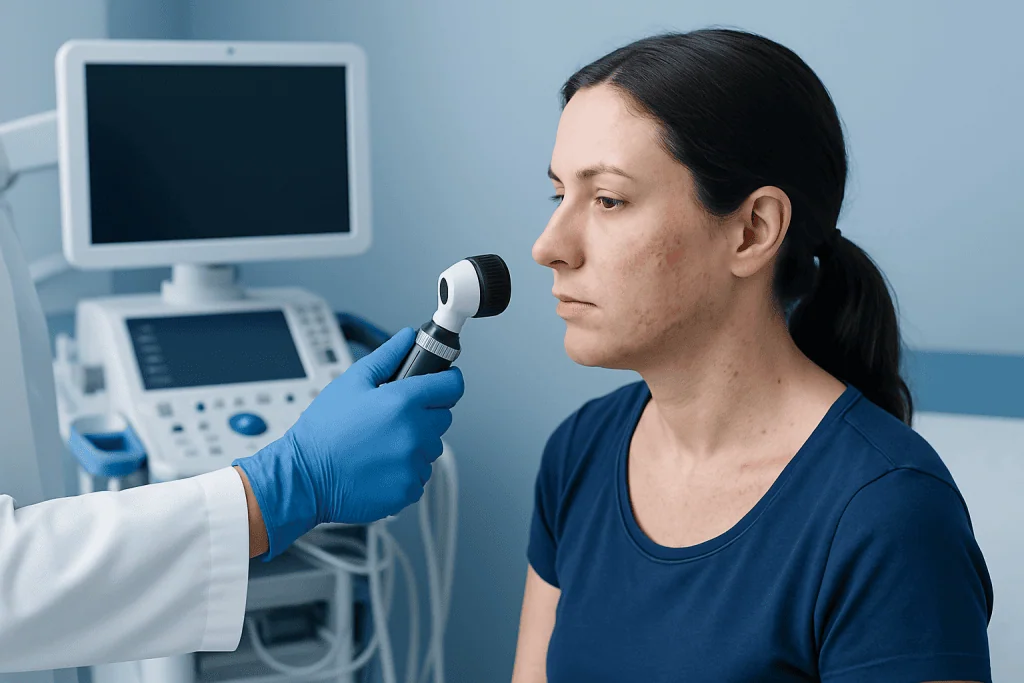
The most typical symptom of mange in humans is intense itching. Itching often becomes more noticeable at night or after getting warm in bed. The skin may also develop small bumps, redness, fine burrow-like lines, or patches that look irritated from scratching.
Common areas affected include the wrists, finger webs, elbows, armpits, waistline, buttocks, ankles, and the area around the genitals. In infants, older adults, and people with weakened immune systems, the rash can be more widespread and may also affect the scalp, palms, or soles. Scratching can break the skin and make it sore or crusted.
Symptoms may not appear immediately after first exposure. In someone who has never had scabies before, itching and rash can take several weeks to develop. If the person has had scabies in the past, symptoms may begin much sooner. Because the appearance varies, scabies can sometimes be confused with insect bites, dermatitis, or psoriasis.
- Severe itching, often worse at night
- Small red bumps or pimple-like rash
- Thin, wavy, grayish or skin-colored lines on the skin
- Sores or crusting caused by scratching
- Rash in more than one household member at the same time
Causes, Spread, and Risk Factors

Mange in humans, meaning scabies, is caused by Sarcoptes scabiei var. hominis. The female mite burrows into the superficial skin layer and lays eggs. The body reacts to the mites, eggs, and waste products, leading to itching and inflammation.
Scabies usually spreads through prolonged skin-to-skin contact. This is why it can pass between family members, sexual partners, children in close contact, or people living in shared environments. Less often, it may spread through recently used bedding, clothing, or towels, especially in more severe infestations.
Anyone can get scabies. It is not a sign of poor hygiene. However, the risk is higher in crowded living settings such as dormitories, nursing homes, care facilities, shelters, and households where one person is already infested. People with weakened immune systems, neurologic conditions, or limited ability to scratch may be at higher risk of a severe form called crusted scabies, which requires urgent medical attention.
Contact with animals can sometimes cause temporary itchy spots if animal mites reach human skin, but this is not usually the same as ongoing human scabies. If symptoms persist, spread to close contacts, or follow a pattern typical of scabies, a medical evaluation is helpful rather than assuming the cause is a pet-related rash.
How Doctors Diagnose Mange in Humans
Diagnosis usually starts with a medical history and skin examination. A doctor will ask when the itching began, whether it is worse at night, which body areas are involved, and whether other people in the home have similar symptoms. The pattern of the rash and the presence of burrows can strongly suggest scabies.
In some cases, the diagnosis is made clinically without extensive testing. In other situations, the clinician may use dermoscopy, a magnifying device that helps identify characteristic signs on the skin. A skin scraping or adhesive tape test may also be used to look for mites, eggs, or mite material under a microscope.
Because several skin conditions can look similar, doctors may consider other possibilities such as contact dermatitis, eczema, fungal infections, or drug-related rashes. If the diagnosis is uncertain, referral to a dermatologist may be appropriate. Evaluation by a specialist is especially helpful if symptoms continue after treatment or if crusted scabies is suspected; in some cases, doctors may recommend dermatology care for a detailed skin assessment.
Treatment Options and What Recovery Involves
The main treatment for mange in humans is prescription anti-mite therapy. This often includes a medicated cream or lotion applied to the skin from the neck down, and sometimes to the scalp in certain age groups or clinical situations. Some patients may need an oral anti-parasitic medicine, especially if the infestation is widespread, recurrent, or crusted.
Successful treatment depends not only on the right medicine but also on timing and technique. The treatment usually needs to be applied exactly as instructed and may need to be repeated after a set interval. Close household contacts and sexual partners are often treated at the same time, even if they do not yet have symptoms, because symptoms can take time to appear.
It is common for itching to continue for a few weeks after the mites have been killed. This does not always mean treatment has failed. The skin can remain inflamed while it heals. Doctors may suggest soothing moisturizers, anti-itch medicines, or treatment for secondary inflammation. If scratching has caused infection, additional care may be needed, sometimes through infectious diseases evaluation or primary medical management depending on the severity.
Crusted scabies needs prompt specialist treatment because it involves a very high mite burden and spreads more easily. This form often requires combined therapies and careful infection-control measures. In complex cases, multidisciplinary care may be useful, and Acibadem International’s specialists at JCI-accredited hospitals diagnose and treat skin and infectious conditions for international patients.
Home Care, Cleaning, and Prevention
After treatment begins, practical home measures help reduce the chance of reinfestation. Clothing, towels, and bedding used in the previous several days are usually washed in hot water and dried using heat when possible. Items that cannot be washed may be sealed in a bag for several days to a week, depending on medical advice and local guidance.
Vacuuming upholstered furniture and mattresses may also be reasonable, although human scabies mites generally do not survive long away from the body. Routine household cleaning is usually enough; extreme disinfection methods are not typically necessary. The most important step is making sure all advised contacts are treated at the same time.
To support skin recovery, people should avoid vigorous scratching, use gentle cleansers, and apply bland moisturizers if recommended by a clinician. Nails should be kept short to reduce skin injury. If the skin becomes very inflamed or broken, a doctor may also advise treatment approaches similar to those used in itchy skin management, although the underlying mite infestation still needs specific anti-scabies therapy.
- Wash recently used clothes, sheets, and towels
- Treat close contacts as advised
- Avoid sharing personal fabrics until treatment is complete
- Use gentle skin care while the rash heals
- Follow the full treatment plan even if symptoms improve early
When to Seek Medical Care
Medical care is advisable if itching is severe, persistent, or affecting sleep, or if a rash is spreading without a clear cause. A doctor should also assess symptoms when more than one person in the household has similar itching or when over-the-counter creams have not helped. Early diagnosis can shorten discomfort and reduce spread to others.
Prompt evaluation is especially important if there are signs of skin infection such as increasing redness, warmth, pain, swelling, pus, or fever. Babies, older adults, pregnant people, and anyone with a weakened immune system should seek professional advice rather than self-treating. These groups may need a tailored treatment plan.
Urgent care is needed if crusted or thick scaly skin develops, if the person is very unwell, or if symptoms return quickly after treatment. In situations where diagnosis is unclear, doctors may investigate related skin conditions or arrange further specialist review, including assessment for rashes that can mimic scabies.
Outlook and Common Misunderstandings
The outlook for mange in humans is generally very good with correct treatment. Most people recover fully, although the itching can take time to settle even after the mites are gone. Follow-up may be needed if symptoms remain severe, if new burrows appear, or if there is concern that contacts were not treated at the same time.
One common misunderstanding is that itching immediately after treatment means the medicine did not work. In many cases, the skin is still reacting to inflammation. Another misconception is that only people with poor hygiene get scabies; in reality, it can affect anyone through close contact.
It is also important not to assume every itchy rash is mange. Skin allergies, eczema, fungal infections, and other conditions may cause similar symptoms and need different treatment. A careful medical assessment helps identify the cause and avoid unnecessary or ineffective remedies.
Frequently asked questions
Is mange in humans the same as scabies?
In most cases, yes. When people say “mange in humans,” they are usually referring to scabies, a skin infestation caused by human-specific mites. The term mange is more commonly used for animals, while doctors usually use the word scabies for people.
Can humans catch mange from dogs or cats?
Animal mites can sometimes cause temporary itching or a short-lived rash in humans after close contact. However, these mites usually do not survive long or reproduce on human skin. Persistent or spreading symptoms are more suggestive of human scabies or another skin condition.
What does mange in humans look like?
It often looks like a very itchy rash with small red bumps, scratch marks, and sometimes thin wavy lines called burrows. The rash commonly appears on the wrists, between the fingers, around the waist, and in other skin folds. The exact appearance can vary by age and skin type.
How long does it take for treatment to work?
The mites are usually killed soon after effective treatment, but the itching can continue for several weeks while the skin heals. This lingering itch does not always mean treatment failed. A doctor should review symptoms if new lesions appear or if the condition does not improve as expected.
Does everyone in the household need treatment?
Often, yes. Close household members and sexual partners are frequently treated at the same time because they may be infested even before symptoms begin. Treating contacts together helps reduce reinfestation and ongoing spread.
Can mange in humans go away on its own?
True human scabies usually does not clear reliably without appropriate treatment. Because the mites can continue their life cycle on the skin, symptoms may persist and spread to others. Medical treatment is the safest way to resolve the infestation.
References
- World Health Organization
- Centers for Disease Control and Prevention
- American Academy of Dermatology
- National Health Service
- MedlinePlus
This article is for general information only and is not a substitute for professional medical advice. Please consult a qualified doctor about your individual situation.
Explore treatments in Turkey — costs, top hospitals & a free quote
JCI-accredited · board-certified surgeons · reply within 24h
Add us as a Preferred Source to see more of our trusted health content across Google Search, AI Overviews and Discover.

More from the Health Library

Bitter Melon — Explained by Medical Evidence, Not Myths

Amphetamine: A Complete Medical Overview

Strength Training for Loose Skin: An Evidence-Based Guide for Patients

Leqembi: What Patients Need to Know

Liposculpture Liposuction: An Evidence-Based Guide for Patients