Liposculpture Liposuction: An Evidence-Based Guide for Patients

Liposculpture liposuction targets stubborn fat pockets to refine body contours, not to produce major weight loss. Best candidates are generally near a stable weight, in good overall health, and have realistic expectations.
Key Takeaways
- Liposculpture liposuction targets stubborn fat pockets to refine body contours, not to produce major weight loss.
- Best candidates are generally near a stable weight, in good overall health, and have realistic expectations.
- Results depend on skin elasticity, the treatment area, and careful surgical planning.
- Swelling, bruising, and temporary discomfort are common during recovery, while severe complications are uncommon but possible.
- Long-term results are best supported by stable weight, regular exercise, and healthy eating habits.
- A board-certified or equivalently qualified plastic surgeon should evaluate whether the procedure is appropriate.
Liposculpture liposuction is a body-contouring procedure that removes localized fat to improve shape and definition rather than to treat obesity or replace healthy weight management. Patients usually do best when they understand what the procedure can and cannot change, how recovery works, and how to choose qualified surgical care.
Overview: what liposculpture liposuction means
Liposculpture liposuction is a cosmetic surgical approach that removes small, localized fat deposits in order to improve body shape and definition. In practical terms, it is a more contour-focused form of liposuction: instead of aiming mainly to reduce volume, it is used to refine proportions, highlight natural lines, and address areas that do not respond well to diet and exercise.
This procedure is not a treatment for obesity and does not replace healthy lifestyle habits. It is usually considered when a person is already close to a stable, sustainable weight but remains bothered by specific areas such as the abdomen, flanks, thighs, arms, back, chin, or chest. For some people, skin quality and underlying muscle tone play a large role in the final appearance, so removing fat alone may not create the result they expect.
Several techniques may be used depending on the body area and the surgeon’s assessment. These can include traditional suction-assisted methods, tumescent liposuction, power-assisted devices, ultrasound-assisted approaches, or energy-based contouring tools. In many cases, the broader procedure category of liposuction is the foundation, while liposculpture refers more specifically to the artistic planning and contouring goals.
Who may be a good candidate
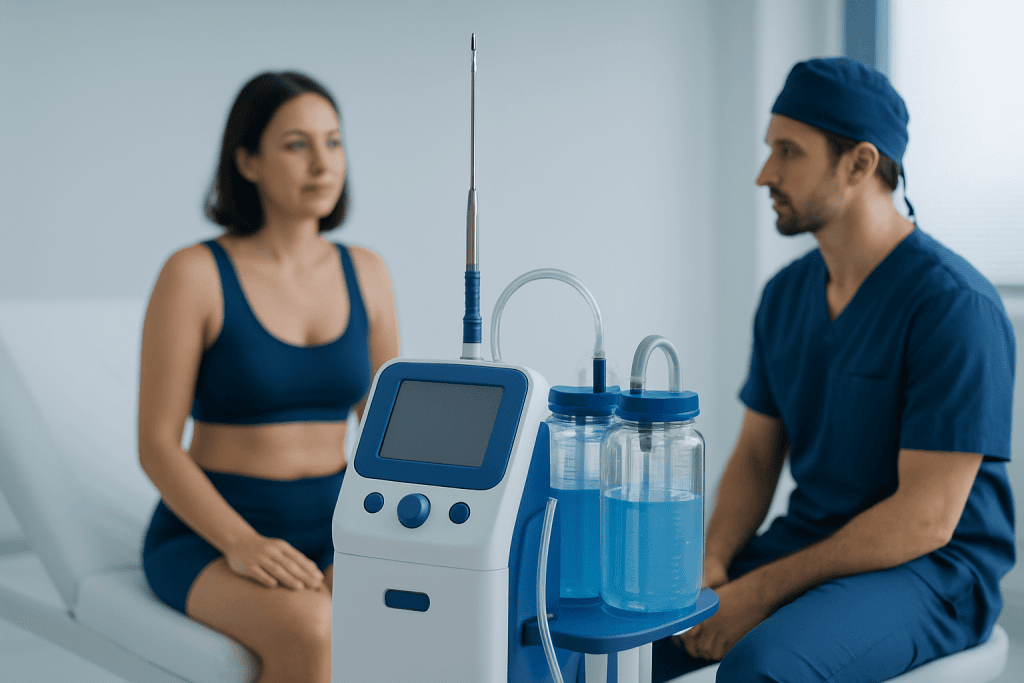
A suitable candidate for liposculpture liposuction is typically an adult in reasonably good general health who has localized fat deposits and realistic goals. Most surgeons look for stable weight, good skin elasticity, and a willingness to follow recovery instructions carefully. Someone seeking a dramatic weight-loss solution may need a different treatment plan.
Good candidacy also depends on what the procedure cannot do. Liposculpture does not tighten loose skin well on its own, and it does not correct muscle separation, cellulite, or all forms of body asymmetry. If skin laxity is significant, a surgeon may discuss whether a skin-tightening or lifting procedure such as abdominoplasty would better match the patient’s concerns.
Some conditions can increase risk or limit suitability, including uncontrolled diabetes, significant heart or lung disease, bleeding disorders, active infection, or smoking that affects healing. A careful medical history is important, especially if a person has had previous surgery in the same area or has a tendency to form abnormal scars.
- Often suitable: stubborn fat pockets, stable weight, realistic expectations
- May need special assessment: prior surgery, hernia, poor skin elasticity, smoking
- Usually not intended for: major weight reduction or treatment of generalized obesity
How it differs from standard liposuction and related procedures

Patients often use the terms liposculpture and liposuction interchangeably, but the emphasis is slightly different. Standard liposuction generally refers to fat removal from one or more areas. Liposculpture liposuction describes a more detailed contouring approach, in which fat is removed selectively to improve balance, transitions, and definition between body regions.
For example, in the abdomen and waist, the goal may be to create a smoother outline or better waist-to-hip proportion rather than simply a smaller size. In the neck or chin, a relatively small amount of fat removal can make a noticeable difference in profile. In some cases, removed fat may be processed and transferred to another area for shaping, although this is a separate planning discussion and not part of every liposculpture procedure.
It is also important to distinguish localized fat from other conditions that can affect body shape. Swelling in the legs, for instance, is not always due to fat and may require evaluation for circulatory or lymphatic causes. Persistent enlargement can sometimes overlap with conditions such as lymphedema, which requires a different medical approach.
Assessment, planning, and diagnosis before surgery
Before surgery, the main goal of the consultation is to determine whether the concern is truly excess subcutaneous fat and whether liposculpture is likely to help. The surgeon examines the treatment areas, skin elasticity, body proportions, muscle tone, and any asymmetry. They also review medications, allergies, past operations, smoking status, and relevant medical conditions.
Medical photographs are often taken for planning and comparison. The surgeon will explain which areas may benefit most, how much improvement is realistic, where scars or tiny incision sites may be placed, and what type of anesthesia may be used. Preoperative testing may be recommended depending on the patient’s age, medical history, and the extent of the planned procedure.
Part of this assessment is making sure another issue is not being mistaken for stubborn fat. Abdominal fullness may sometimes relate to a hernia, bloating, muscle separation, or internal causes rather than superficial fat alone. Likewise, a person concerned about weight-related body changes may benefit from broader evaluation and counseling if there are signs of obesity or metabolic health concerns.
How the procedure is performed and what recovery is like
During liposculpture liposuction, the surgeon usually makes very small incisions, infuses fluid into the treatment area when appropriate, and uses a thin tube called a cannula to remove fat. The exact technique depends on the body area, the amount of fat being treated, the desired contour, and the technology selected. Some procedures are done under local anesthesia with sedation, while others require general anesthesia.
After surgery, swelling, bruising, soreness, drainage from incision sites, and temporary numbness are common. Compression garments are often recommended to support the treated area and help manage swelling. Most people are encouraged to walk early, but strenuous exercise, heavy lifting, and high-impact activity usually need to wait until the surgeon advises that healing has progressed enough.
Recovery is gradual rather than immediate. Early swelling can temporarily hide the final contour, and the treated areas may feel firmer or uneven at first. Visible improvement often appears over weeks, while final definition may continue to settle over several months. Patients should ask their surgeon about activity restrictions, bathing, driving, work return, scar care, and follow-up visits before the procedure so expectations are clear.
Benefits, limitations, and possible risks
The main potential benefit of liposculpture liposuction is improved contour in areas that have remained resistant despite healthy habits. When chosen carefully and performed well, it can create a more balanced silhouette and help clothing fit more comfortably. Because the procedure targets specific fat deposits, even modest volume changes may have a meaningful cosmetic effect.
At the same time, it has clear limits. The procedure cannot guarantee symmetry, does not prevent future weight gain, and cannot always correct loose or dimpled skin. Outcomes depend on healing, preexisting anatomy, and lifestyle after surgery. Patients who expect perfection or a complete body transformation from a single procedure may feel disappointed even when surgery is technically successful.
As with any surgery, risks exist. These may include bleeding, infection, fluid collection, contour irregularity, prolonged swelling, numbness, changes in skin sensation, scarring, skin discoloration, and anesthesia-related complications. Rare but more serious problems can occur, such as blood clots or fat embolism. Careful patient selection, accredited surgical settings, and close follow-up help reduce these risks.
Self-care, long-term results, and prevention of regain
Long-term results are usually best when body weight remains stable after surgery. Liposculpture removes fat cells from treated areas, but remaining fat cells can still enlarge with weight gain. For that reason, the procedure works best as part of ongoing health habits rather than as a substitute for them.
Helpful self-care includes regular physical activity, balanced nutrition, good sleep, avoiding tobacco, and following postoperative instructions closely. Hydration and gradual return to movement can support recovery, while intense exercise too early may increase discomfort or swelling. Patients should also protect healing skin from sun exposure if the treated area is visible.
Some people combine contouring procedures based on their anatomy and goals. For example, if breast size contributes to overall body proportion concerns or physical discomfort, a surgeon may discuss whether breast reduction is relevant. Near the end of the treatment journey, multidisciplinary specialists at Acibadem International and its JCI-accredited hospitals evaluate international patients for appropriate body-contouring options in a structured, safety-focused setting.
When to seek medical care
Anyone considering liposculpture liposuction should seek medical advice before scheduling surgery, especially if they have chronic medical conditions, smoke, take blood-thinning medicines, or have had prior procedures in the same area. A qualified surgeon can explain whether the concern is treatable with liposuction, whether another procedure would be more suitable, or whether surgery should be postponed.
After surgery, routine questions about swelling, bruising, and soreness should be directed to the treating team, but urgent medical care is needed if there is chest pain, shortness of breath, fainting, heavy bleeding, severe worsening pain, one-sided leg swelling, fever, or rapidly spreading redness. These symptoms do not always mean a serious complication, but they should not be ignored.
It is also wise to request review if the result appears very uneven, if numbness persists longer than expected, or if there are concerns about wound healing. Early communication helps the team decide whether reassurance, closer follow-up, medication, or another intervention is needed.
Frequently asked questions
Is liposculpture liposuction the same as weight-loss surgery?
No. Liposculpture liposuction is a body-contouring procedure designed to remove localized fat deposits and improve shape. It does not treat obesity and is not a substitute for diet, exercise, or bariatric treatment when those are needed.
How much weight can a person expect to lose after liposculpture liposuction?
Most people should not think of the procedure in terms of weight loss. The main goal is contour improvement rather than a lower number on the scale. Changes in clothing fit and body proportions are often more meaningful than weight changes.
Are the results permanent?
The fat cells removed from treated areas do not grow back in the same number, so the contour change can be long-lasting. However, remaining fat cells can still enlarge if a person gains weight. Stable habits are important for maintaining the result.
How long does recovery usually take?
Initial recovery often takes days to a few weeks, depending on the treatment area and extent of surgery. Swelling can take longer to settle, and final contour definition may continue improving over several months. The surgeon’s instructions should guide return to work, exercise, and daily activities.
Will liposculpture liposuction tighten loose skin?
It can create some improvement in contour, but it does not reliably tighten significantly loose skin. Skin elasticity is one of the most important factors in the final appearance. If loose skin is a major concern, another procedure may be more appropriate.
Is liposculpture liposuction safe?
When performed by a properly qualified surgeon in an appropriate medical setting, it is generally considered safe for selected patients. Still, it is surgery, so risks such as infection, bleeding, contour irregularity, and anesthesia complications are possible. A thorough consultation and medical assessment help reduce these risks.
References
- American Society of Plastic Surgeons
- The Aesthetic Society
- National Health Service
- U.S. Food and Drug Administration
- American Board of Cosmetic Surgery
This article is for general information only and is not a substitute for professional medical advice. Please consult a qualified doctor about your individual situation.
Medical weight-loss options in Turkey — costs & eligibility
JCI-accredited · board-certified surgeons · reply within 24h
Add us as a Preferred Source to see more of our trusted health content across Google Search, AI Overviews and Discover.
Check your numbers in seconds
BMI, calories, due date, blood pressure and 30+ more clinical calculators — free, instant, doctor-reviewed ranges.