Manual FUE vs NeoGraft: What Is the Difference?

Both Manual FUE and NeoGraft are forms of FUE hair transplantation. The main difference is the method used to extract hair follicles from the donor area.
Key Takeaways
- Both Manual FUE and NeoGraft are forms of FUE hair transplantation.
- The main difference is the method used to extract hair follicles from the donor area.
- Neither approach is universally better; the best choice depends on hair type, scalp features, and surgeon experience.
- Natural-looking results depend heavily on planning, graft handling, and implantation technique.
- A specialist consultation helps determine the most suitable method for each patient.
Manual FUE and NeoGraft are both follicular unit extraction techniques used in hair transplantation. The main difference is whether the surgeon removes grafts by hand or with a powered device, while candidacy, surgical skill, and aftercare remain central to the final result.
Overview: What Manual FUE and NeoGraft Mean
Manual FUE and NeoGraft are two approaches to follicular unit extraction, a modern hair transplantation method used to move individual hair follicles from a donor area, usually the back or sides of the scalp, to areas of thinning or baldness. In both methods, the goal is the same: to harvest healthy follicular units carefully and place them in a way that supports a natural hairline and even density.
Manual FUE is performed with handheld instruments. The surgeon or surgical team uses a small punch tool to score around each follicular unit and remove it individually. NeoGraft is a powered FUE system that assists with extraction, often using suction to help remove grafts after the punch has separated them from surrounding tissue.
Because both are FUE techniques, they share many advantages compared with older strip-based methods. These may include tiny extraction sites, no long linear scar, and a recovery period that is often more comfortable for many patients. People researching hair transplant treatment are often comparing these two methods to understand whether the device used changes safety, recovery, or results.
In practice, the best option is not decided by the name of the technique alone. Donor hair quality, the degree of hair loss, scalp characteristics, hairstyle preferences, and the skill of the treating team all play major roles in choosing the most suitable approach.
How the Techniques Differ
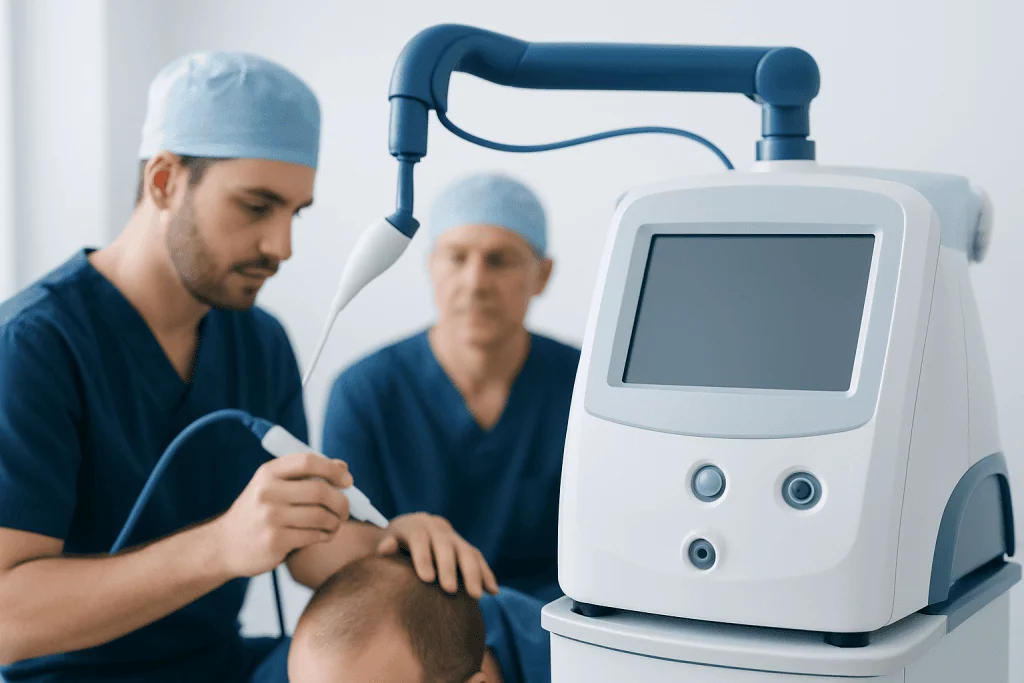
The main difference between Manual FUE and NeoGraft is how follicles are extracted from the donor area. In Manual FUE, the surgeon controls the punch by hand. This can allow a highly tactile, customized approach, especially when hair exits the scalp at unusual angles or when the surgeon wants very precise control over pressure and depth.
NeoGraft uses a motorized handpiece to assist with the same basic process. A powered punch can help standardize movement and may improve efficiency in some cases. The suction feature is designed to help collect grafts after extraction, which can support workflow during larger sessions.
Even with these technical differences, both methods still depend on careful surgical judgment. The angle of the punch, the depth of scoring, the protection of the follicle, and the way grafts are stored and implanted all affect survival of the transplanted hair. A powered system does not replace surgical experience, and a manual approach is not automatically superior simply because it is done by hand.
Patients may also notice differences in how clinics describe these methods. Some present NeoGraft as a branded device-based option, while Manual FUE is described more generally as a hand-controlled extraction technique. The terminology can sound very different, but both belong to the wider FUE family.
Benefits and Possible Limitations of Each Option

Manual FUE may be preferred when a surgeon wants maximum control over each graft. This can be helpful in people with curly hair, variable follicle direction, tighter scalp characteristics, or donor areas that require a particularly selective approach. Some surgeons feel hand control can reduce unnecessary trauma in complex cases, although outcomes still depend on the operator’s experience and technique.
NeoGraft may offer advantages in speed and consistency in some settings, especially when many grafts are planned. A powered device can reduce physical fatigue for the operator and may support efficient harvesting. For suitable candidates, this can make larger sessions more practical without changing the basic FUE principle.
At the same time, each method has possible limitations. Manual FUE can be more time-intensive, and results may vary significantly depending on the surgeon’s individual technique. NeoGraft, while efficient, still requires proper depth control and careful handling to avoid damaging follicles. If used without appropriate expertise, any extraction system can lead to transection, reduced graft survival, or overharvesting of the donor area.
For many people, the comparison is less about one method being universally better and more about which tool fits the individual’s anatomy and treatment plan. Patients with hair loss should focus on overall surgical planning rather than device names alone.
Who May Be a Good Candidate
Good candidates for either Manual FUE or NeoGraft generally have stable hair loss, realistic expectations, and an adequate donor area. The donor area must contain enough healthy follicles to redistribute without creating visible thinning. The pattern and likely future progression of hair loss are also important, because transplant design should remain natural over time.
People seeking hair transplantation may include those with male or female pattern hair loss, thinning after previous procedures, or some forms of scarring hair loss when assessed carefully by a specialist. Not every cause of shedding is suitable for transplant. For example, active inflammatory scalp conditions or temporary shedding disorders may need medical evaluation and treatment first.
Hair characteristics can influence the choice of technique. Curl pattern, hair shaft thickness, color contrast between hair and scalp, and the angle at which follicles emerge all affect extraction and cosmetic coverage. These details help the surgical team decide whether manual control, powered extraction, or another method is more appropriate.
A consultation usually includes scalp examination, review of medical history, and discussion of goals. In some cases, doctors may recommend combining transplant planning with dermatology evaluation to assess underlying scalp health or rule out other causes of thinning before surgery.
What to Expect During Diagnosis and Treatment Planning
Evaluation begins with a detailed assessment rather than immediate scheduling for surgery. The doctor typically reviews when hair loss started, whether it has been progressing, family history, medications, and any previous treatments. Photographs and scalp mapping may be used to document the donor and recipient areas and estimate the number of grafts needed.
The donor area is especially important in the Manual FUE vs NeoGraft decision. The surgeon examines hair density, follicle grouping, skin thickness, and the direction of growth. This helps predict how easy graft extraction may be and how much donor hair can be removed safely. Protecting the donor region is essential because it is a limited resource.
Treatment planning also includes design of the hairline and discussion of density goals. A conservative, age-appropriate plan is often best, especially in younger patients whose hair loss may continue. The doctor may also discuss whether medical therapies, such as approved medications for pattern hair loss, should be used before or after surgery to help preserve non-transplanted hair.
Some patients are also evaluated for associated concerns involving scalp appearance or facial balance. Depending on the case, related procedures such as beard transplant or eyebrow transplant may be discussed separately when restoration is desired in other hair-bearing areas.
Recovery, Results, and Long-Term Care
Recovery after Manual FUE and NeoGraft is often similar because both involve many small extraction sites and recipient incisions. Mild swelling, redness, tiny crusts, and temporary tenderness can occur in the first days after the procedure. The surgical team usually provides instructions on washing, sleeping position, activity limits, and when to return to normal routines.
Transplanted hairs commonly shed in the early weeks after surgery. This can be unsettling, but it is often a normal part of the process. The follicles remain under the skin and gradually begin to produce new hair over the following months. Visible improvement usually develops gradually rather than immediately, and final maturation takes time.
Long-term results depend on graft survival, the progression of native hair loss, and ongoing scalp care. A successful transplant does not stop future thinning in untreated areas, which is why ongoing follow-up matters. Some patients benefit from medical therapies or supportive hair care to maintain the surrounding hair and protect overall density.
Choosing an experienced center is important for both technique and aftercare. Near the end of the treatment journey, some international patients choose centers such as Acibadem International, where multidisciplinary specialists in JCI-accredited hospitals diagnose and treat hair restoration needs with individualized planning.
How to Choose Between Manual FUE and NeoGraft
When comparing Manual FUE vs NeoGraft, the most helpful question is often not which name sounds more advanced, but which method best fits the patient’s hair and scalp. A well-planned procedure performed by an experienced team generally matters more than whether extraction is manual or powered. Patients should ask who performs the harvesting, how grafts are protected, and how donor preservation is managed.
It is also useful to discuss the clinic’s experience with different hair types and patterns of loss. People with very curly hair, previous procedures, or limited donor reserves may need a more customized strategy. Others with straightforward donor characteristics may do very well with either method.
During the consultation, patients can ask practical questions such as how many grafts are recommended, what kind of hairline is planned, what recovery usually involves, and what realistic density can be achieved in one session. Clear communication helps align expectations with what surgery can safely accomplish.
In summary, both Manual FUE and NeoGraft are established FUE-based techniques. The right choice depends on individualized assessment, careful execution, and realistic long-term planning rather than marketing terms alone.
Frequently asked questions
Is NeoGraft the same as FUE?
NeoGraft is a device-assisted form of FUE, not a completely separate type of hair transplant. It follows the same basic principle of moving individual follicular units from a donor area to areas of hair loss.
Which is better, Manual FUE or NeoGraft?
Neither method is automatically better for everyone. The best choice depends on the patient's hair characteristics, donor area, treatment goals, and the experience of the surgical team.
Do Manual FUE and NeoGraft leave scars?
Both methods create many very small extraction sites rather than one long linear scar. Tiny marks can remain, but they are often less noticeable than a strip scar, especially when donor harvesting is done carefully and not excessively.
Is recovery different between Manual FUE and NeoGraft?
Recovery is usually similar because both are FUE techniques. Patients may have mild redness, swelling, and crusting for a short period, and they should follow the clinic's aftercare instructions closely.
How long does it take to see results after either procedure?
Transplanted hairs often shed first, which is a normal early stage. New growth generally appears gradually over several months, and fuller cosmetic results continue to mature over time.
Can anyone with thinning hair have a Manual FUE or NeoGraft transplant?
Not always. A person needs enough healthy donor hair, and the cause of hair loss should be assessed first because some scalp or medical conditions may need treatment before surgery is considered.
References
- American Academy of Dermatology
- International Society of Hair Restoration Surgery
- British Association of Dermatologists
- National Institutes of Health
- Mayo Clinic
This article is for general information only and is not a substitute for professional medical advice. Please consult a qualified doctor about your individual situation.
Hair transplant in Turkey — costs, graft counts & a free assessment
JCI-accredited · board-certified surgeons · reply within 24h
Add us as a Preferred Source to see more of our trusted health content across Google Search, AI Overviews and Discover.