Massage for Arthritis in the Hands: Symptoms, Causes, and Treatment Options

Gentle hand massage may temporarily reduce discomfort, stiffness, and tension around arthritic joints. Massage should not be painful and is generally avoided during a hot, swollen, or actively inflamed flare.
Key Takeaways
- Gentle hand massage may temporarily reduce discomfort, stiffness, and tension around arthritic joints.
- Massage should not be painful and is generally avoided during a hot, swollen, or actively inflamed flare.
- Osteoarthritis and rheumatoid arthritis can both affect the hands, but they have different causes and treatment needs.
- Hand exercises, activity modification, splints, medicines, and rehabilitation may be more important for long-term symptom control.
- New swelling, joint warmth, deformity, weakness, or persistent hand pain should be assessed by a qualified clinician.
Massage for arthritis in the hands may provide short-term relief from stiffness, aching, and muscle tension when it is gentle and adapted to the person’s symptoms. It cannot reverse joint damage or control inflammatory arthritis, so it works best as one part of a clinician-guided treatment and self-care plan.
Massage for Arthritis in the Hands: What It Can and Cannot Do
Massage for arthritis in the hands can help some people feel more comfortable by relaxing tight muscles, improving the sense of warmth in the tissues, and making gentle movement easier. For many people, the benefit is temporary: hands may feel less stiff or sore for a period after massage, especially when it is combined with heat, stretching, or a planned exercise routine.
Massage does not remove bone spurs, repair cartilage, stop joint damage, or cure arthritis. It also does not replace medical treatment for inflammatory conditions such as rheumatoid arthritis, where early treatment can help protect joints and overall health. The most useful approach is usually to view massage as a supportive comfort measure rather than a stand-alone treatment.
How well massage works varies. Some people prefer a few minutes of gentle self-massage at home, while others benefit from advice from a hand therapist, physiotherapist, occupational therapist, or licensed massage professional familiar with arthritis. A technique that feels soothing should never cause sharp pain, increased swelling, bruising, numbness, or symptoms that remain worse afterward.
How Hand Arthritis May Feel
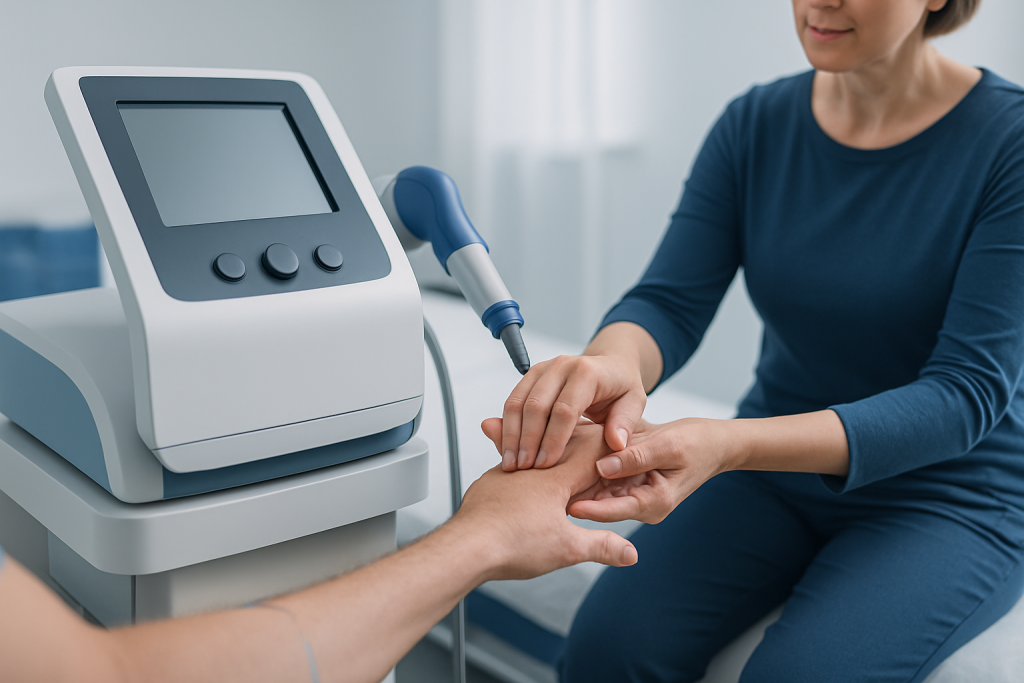
Arthritis in the hands may cause aching, tenderness, stiffness, reduced grip strength, or difficulty with everyday tasks such as opening jars, turning keys, typing, fastening buttons, or holding a cup. Symptoms can come and go. They may be worse after periods of inactivity, after repetitive hand use, or at particular times of day depending on the type of arthritis.
In osteoarthritis, discomfort often develops gradually. It commonly affects the joints near the fingertips, the middle finger joints, and the base of the thumb. Some people notice enlarged or knobbly joints over time, a grating sensation with movement, or pain when pinching and gripping.
Inflammatory arthritis can produce a different pattern. Rheumatoid arthritis often affects similar joints on both sides of the body and may lead to prolonged morning stiffness, soft swelling, warmth, and fatigue. Psoriatic arthritis may affect individual fingers or joints unevenly and can be associated with psoriasis skin or nail changes. A clinician can help distinguish these conditions because their treatment plans differ.
Why Arthritis Develops in the Hands

Arthritis is a broad term for conditions that affect joints and surrounding tissues. Hand osteoarthritis occurs when joint structures change over time, including cartilage and bone. Aging is one factor, but osteoarthritis is not an inevitable part of getting older. Genetics, previous hand injuries, certain occupations or activities involving repetitive force, and joint shape may all influence risk.
Rheumatoid arthritis is an autoimmune disease. The immune system mistakenly attacks the lining of joints, leading to inflammation that can damage cartilage, bone, tendons, and ligaments if not appropriately treated. Family history can contribute to susceptibility, while smoking and some environmental factors may raise risk in certain people.
Other possible causes of hand joint symptoms include gout, psoriatic arthritis, tendon conditions, nerve compression, and past fractures. This is why persistent symptoms should not simply be assumed to be “wear and tear.” An accurate diagnosis helps a person choose appropriate treatments and avoid techniques that could aggravate an active problem.
- Risk factors for hand osteoarthritis include family history, older age, prior injury, and repetitive joint strain.
- Risk factors for inflammatory arthritis may include family history, smoking, and autoimmune disease.
- Sudden severe pain in one joint may have a different cause and may need prompt medical assessment.
A Gentle Approach to Hand Massage
For people whose clinician has said massage is appropriate, a brief, gentle routine can be tried when symptoms are relatively settled. Washing the hands first, applying a small amount of unscented lotion or oil if desired, and sitting with the forearm supported can make the process more comfortable. People with reduced sensation, fragile skin, open wounds, or circulation problems should seek professional advice before using oils, heat, or massage.
One simple method is to use the thumb or fingers of the opposite hand to make light, slow strokes from the wrist toward the fingers and across the palm. Gentle circular movements may then be used in the fleshy areas of the palm and at the base of the thumb. Each finger can be supported and softly stroked from base to tip. Pressure should be light around painful or enlarged joints; forceful squeezing, pulling, cracking, or trying to “realign” a joint should be avoided.
Some people find that a warm compress or a warm-water soak before massage reduces stiffness. Others prefer a cool pack after activity if a joint feels irritated. Heat should not be used over a joint that is noticeably hot, red, or significantly swollen without medical guidance. Stopping is important if massage increases pain, tingling, numbness, swelling, or weakness.
Diagnosis: Finding the Cause of Hand Pain and Stiffness
Diagnosis begins with a medical history and examination. A clinician may ask when symptoms started, which joints are affected, whether stiffness is worse in the morning, whether there has been an injury, and whether symptoms occur elsewhere in the body. They will assess joint swelling, tenderness, range of motion, grip, skin changes, and the pattern of affected joints.
X-rays can show changes associated with osteoarthritis, previous injury, or later-stage inflammatory arthritis. Ultrasound or magnetic resonance imaging may be used in selected cases to assess soft tissues or early inflammation. Blood tests may support evaluation for rheumatoid arthritis or other inflammatory diseases, but no single test alone confirms every cause of hand arthritis.
Early assessment is particularly important if the hands are persistently swollen, warm, or painful at rest, or if morning stiffness lasts a long time. Identifying inflammatory arthritis early allows treatment to begin sooner. A primary care clinician may coordinate care, with referral to a rheumatologist, orthopedist, or hand specialist when needed.
Treatment Options Beyond Massage
Treatment is individualized according to the type of arthritis, severity of symptoms, affected joints, medical history, and daily activities. For hand osteoarthritis, a care plan may include education about joint protection, targeted hand exercises, pacing activities, assistive devices, and splints or braces. Hand therapy can help a person maintain movement, use the hands more comfortably, and adapt tasks that place painful strain on joints.
Medicines may be considered for pain or inflammation. Depending on the person’s health and the diagnosis, a clinician may recommend topical treatments, oral pain-relieving medicines, or anti-inflammatory medicines. These are not suitable for everyone, especially people with certain kidney, stomach, heart, bleeding, or medication-related risks, so individualized advice is important.
For rheumatoid arthritis and other inflammatory arthritides, disease-modifying medicines may be needed to control the immune-driven inflammation and reduce the risk of joint damage. In selected cases, injections or surgery may be discussed when symptoms remain severe despite conservative care. Surgery is usually considered only after a careful assessment of pain, function, joint damage, and treatment response.
Massage can fit into this broader plan when it is comfortable and does not worsen symptoms. A therapist may also teach safe mobility and strengthening exercises, which can provide more lasting support for hand function than massage alone.
Daily Self-Care and Joint Protection
Small changes in daily routines can reduce stress on painful hand joints. Using both hands to lift heavier items, choosing larger-handled utensils or pens, and using jar openers or other adaptive tools can reduce forceful gripping. Breaking longer jobs into shorter sessions and alternating activities can also help prevent a pain flare after repetitive tasks.
Regular, gentle movement is usually helpful. A hand therapist can suggest exercises designed for the individual’s diagnosis and joint pattern. Exercises should be done with controlled movement and should not cause lasting pain. Resting completely for long periods can contribute to stiffness and weakness, but pushing through substantial pain may aggravate symptoms.
General health measures also matter. Maintaining regular physical activity, not smoking, getting adequate sleep, and managing conditions such as diabetes can support overall wellbeing and recovery. For people with inflammatory arthritis, taking prescribed medicines as directed and keeping follow-up appointments are important parts of protecting joint health.
When to Seek Medical Care
A medical appointment is appropriate for hand pain or stiffness that lasts more than a few weeks, affects sleep or daily activities, or does not improve with simple self-care. Assessment is also recommended for reduced grip, recurrent swelling, visible joint changes, or symptoms that are getting progressively worse.
Prompt medical care is needed for a joint that becomes suddenly very painful, hot, red, or severely swollen, particularly if there is fever or a person feels unwell. These symptoms can occasionally signal infection or another urgent condition. New numbness, marked weakness, blue or pale fingers, or symptoms after a significant injury also require timely evaluation.
People with suspected inflammatory arthritis should not rely on massage alone. A rheumatology assessment can clarify the diagnosis and identify treatments that address the underlying inflammation. Acibadem International’s multidisciplinary specialists and JCI-accredited hospitals diagnose and treat hand arthritis and related joint conditions for international patients.
Frequently asked questions
Does massage help arthritis in the hands?
Gentle massage may temporarily ease hand stiffness, muscle tension, and aching for some people. Its effects vary, and it does not repair joint damage or treat the underlying cause of arthritis. It is best used alongside a treatment plan recommended by a clinician.
Should hands be massaged during an arthritis flare?
Deep massage should generally be avoided when joints are hot, red, markedly swollen, or very painful. Light touch may be comfortable for some people, but it is sensible to ask a clinician or hand therapist for guidance if flares are frequent. Cool therapy and rest from aggravating activities may be more suitable during active inflammation.
What type of massage is safest for hand arthritis?
Slow, light strokes and gentle circular movements around the palm, thumb base, and fingers are usually safer than deep pressure. Massage should not involve forceful pulling, joint cracking, or painful pressure directly over swollen joints. Stop if symptoms worsen during or after the session.
Is hand arthritis always osteoarthritis?
No. Osteoarthritis is common, but hand symptoms can also result from rheumatoid arthritis, psoriatic arthritis, gout, tendon problems, nerve compression, or injury. The distribution of symptoms, examination findings, imaging, and sometimes blood tests help establish the cause.
Can exercises be done after a hand massage?
A short massage or warm-up may make gentle range-of-motion exercises feel easier for some people. Exercises should be tailored to the diagnosis and should not cause significant or prolonged pain. A hand therapist can provide an appropriate program for strength, mobility, and joint protection.
When is hand pain a sign of inflammatory arthritis?
Persistent joint swelling, warmth, prolonged morning stiffness, symptoms in similar joints on both hands, and fatigue can suggest inflammatory arthritis. These signs do not confirm a diagnosis on their own, but they warrant medical assessment. Early evaluation is important because inflammatory arthritis may need medicines that control the disease process.
References
- American College of Rheumatology
- Arthritis Foundation
- National Institute of Arthritis and Musculoskeletal and Skin Diseases
- National Health Service
- Mayo Clinic
This article is for general information only and is not a substitute for professional medical advice. Please consult a qualified doctor about your individual situation.
Arthritis in Turkey — costs, top hospitals & a free quote
JCI-accredited · board-certified surgeons · reply within 24h
Add us as a Preferred Source to see more of our trusted health content across Google Search, AI Overviews and Discover.

Physical Medicine & Rehabilitation
Restoring movement and function after injury, surgery or neurological conditions.
153 specialists in this unit