Mastoiditis Treatment: How It Works, Results and What to Expect

Mastoiditis is a potentially serious infection of the bone behind the ear, often developing after a middle-ear infection. Treatment commonly involves antibiotics; many people with acute mastoiditis need hospital assessment and intravenous treatment initially.
Key Takeaways
- Mastoiditis is a potentially serious infection of the bone behind the ear, often developing after a middle-ear infection.
- Treatment commonly involves antibiotics; many people with acute mastoiditis need hospital assessment and intravenous treatment initially.
- A drainage procedure or mastoidectomy may be recommended when infection persists, an abscess forms, or complications are suspected.
- Symptoms often begin to improve within days of effective treatment, but complete recovery and follow-up can take weeks.
- New swelling behind the ear, fever, severe ear pain, ear discharge, dizziness, severe headache, or weakness of the face needs urgent medical assessment.
Mastoiditis treatment usually starts promptly with antibiotics and careful ear, nose and throat assessment. If infection does not drain adequately, is severe, or has caused complications, a procedure such as ear tube placement or mastoid surgery may be needed to remove infected tissue and protect hearing and nearby structures.
Mastoiditis treatment: how it works
Mastoiditis treatment clears a bacterial infection in the mastoid bone, the air-filled bone located behind the ear. It is most often a complication of acute otitis media, or a middle-ear infection. Because the mastoid sits close to the inner ear, facial nerve, brain, and major blood vessels, prompt medical evaluation and treatment are important.
Care is tailored to the person’s symptoms, examination findings, hearing status, and imaging results when imaging is needed. Treatment generally combines antibiotics with measures to help infected fluid drain from the middle ear. In more advanced cases, an ear, nose and throat (ENT) surgeon may drain an abscess, insert a small ventilation tube in the eardrum, or perform mastoid surgery.
The goal is not simply to reduce pain or fever. Clinicians also check that the infection is resolving, that the ear can drain normally, and that there are no signs of spread beyond the ear. Most people recover well when mastoiditis is recognized and treated early.
Symptoms, causes and who may need treatment
Mastoiditis commonly follows an ear infection that has not improved as expected, although it can occasionally develop rapidly. Symptoms may include persistent ear pain, fever, drainage from the ear, redness or tenderness behind the ear, and swelling that pushes the outer ear outward or downward. Children may be unusually irritable, tired, or reluctant to eat.
Not every painful ear infection is mastoiditis. However, swelling or marked tenderness behind the ear needs timely assessment, especially when it occurs with fever or worsening ear symptoms. People with recurrent ear infections, chronic ear disease, reduced immune defenses, or a history of ear surgery may need more individualized evaluation.
ENT specialists may also assess for related conditions that can affect middle-ear ventilation and drainage, including chronic middle-ear disease or a cholesteatoma. A cholesteatoma is an abnormal collection of skin cells in the middle ear that can damage nearby structures and may require different surgical management.
Diagnosis and deciding on the right approach

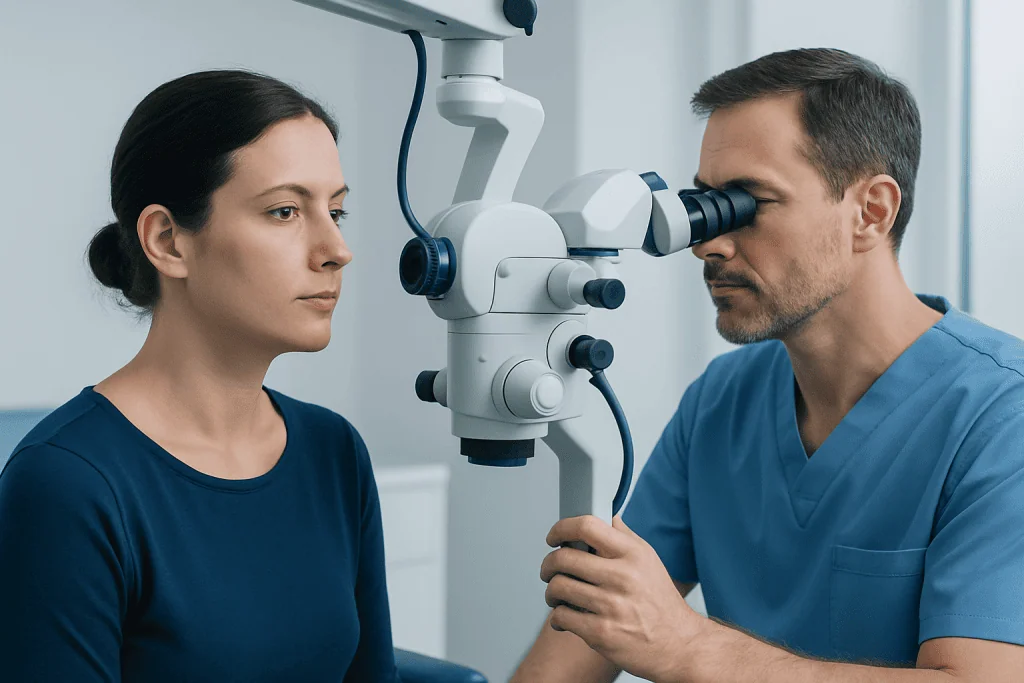
An ENT clinician diagnoses mastoiditis using the person’s history and a physical examination of the ear and area behind it. They may use an otoscope or microscope to look for fluid, pus, eardrum changes, or a perforation. Hearing testing can be helpful, particularly if symptoms have been present for some time or hearing seems reduced.
Blood tests may help show the degree of inflammation and guide monitoring. If the diagnosis is uncertain, symptoms are severe, or there is concern that infection has extended beyond the mastoid, a CT scan or MRI may be used. These scans can identify bone involvement, collections of pus, or rare complications affecting nearby tissues.
Samples of ear drainage may be sent for culture when available. This can identify the bacteria causing infection and help clinicians choose or adjust antibiotics. Treatment should not be delayed while waiting for culture results when mastoiditis is suspected.
How long does it take to get rid of mastoiditis?
With appropriate treatment, fever, pain, and swelling often begin to improve within a few days. However, the time needed to fully clear mastoiditis varies. It depends on the severity of infection, the bacteria involved, whether there is an abscess or bone damage, the person’s general health, and whether a drainage procedure or surgery is needed.
Antibiotic treatment may begin intravenously in hospital and later continue by mouth when the person is clearly improving and a clinician considers this safe. The overall course is often measured in weeks rather than days. Follow-up appointments are important because symptoms can improve before the infection has fully resolved.
After a procedure, recovery also includes wound healing, ear care, and sometimes repeat hearing checks. A clinician should reassess anyone whose symptoms stop improving, return after treatment, or worsen at any stage.
Do you get hospitalized for mastoiditis?
Many people with suspected acute mastoiditis are evaluated in hospital, and hospitalization is common when symptoms are significant. Admission allows intravenous antibiotics, pain and fluid management, frequent examination, imaging if required, and prompt ENT treatment if the infection is not responding or complications are found.
Hospital care is particularly likely for children, people with high fever or marked swelling behind the ear, those who appear unwell, and anyone with dizziness, severe headache, neurologic symptoms, or concern for infection beyond the ear. A person may be able to continue treatment outside hospital only when the infection is mild, they are stable, and close specialist follow-up is available.
Length of stay differs widely. Some people improve enough to transition to oral treatment after a short period, while those requiring surgery or treatment for complications may need longer monitoring. The treating team will base discharge decisions on clinical improvement, examination findings, and the safety of the follow-up plan.
Procedures for mastoiditis: step by step
If antibiotics alone are not enough, treatment may include a procedure to restore drainage and remove infected material. A common first step is myringotomy, in which an ENT surgeon makes a tiny opening in the eardrum to drain middle-ear fluid. A ventilation tube may be placed to keep the opening functioning temporarily and allow ongoing drainage.
For more extensive infection, an abscess, bone destruction, or failure to improve with medical treatment, a mastoidectomy may be advised. During this operation, performed under anesthesia, the surgeon works through an incision behind the ear and removes infected mastoid air cells while preserving important structures whenever possible. The middle ear may also be cleaned or drained during the same procedure. Mastoidectomy surgery is planned according to the location and extent of disease.
After surgery, the removed tissue or drainage may be tested to help guide antibiotic treatment. The care team monitors pain, fever, balance, facial movement, wound healing, and hearing. Patients receive individualized instructions about keeping the ear dry, dressing care, activity, and follow-up.
Is mastoiditis very painful?
Mastoiditis can be painful, particularly because inflammation may cause pressure in and around the ear. Pain may be felt in the ear or behind it, and the area may be tender to touch. Severity varies: some people mainly notice persistent earache, while others have substantial pain with swelling, fever, or headache.
Effective antibiotics, drainage when needed, and appropriate pain relief usually reduce discomfort as the infection comes under control. Pain that is rapidly worsening, is not relieved by prescribed treatment, or occurs with severe headache, stiff neck, confusion, vomiting, dizziness, facial weakness, or swelling behind the ear requires urgent medical review.
People should not place cotton buds, herbal drops, or unprescribed substances into a painful or draining ear. These can irritate the ear canal, complicate examination, or be unsafe when there is a hole in the eardrum.
What is the success rate of mastoiditis treatment?
Mastoiditis is generally treatable, and most people recover without lasting problems when they receive timely antibiotics, specialist assessment, and surgery or drainage when indicated. A single percentage cannot reliably describe the success rate because outcomes differ according to age, infection severity, presence of complications, the underlying ear condition, and how quickly treatment starts.
Clinicians judge success by improving fever, pain, swelling, ear drainage, examination findings, laboratory markers when relevant, and imaging in selected cases. Follow-up is essential to confirm that the infection has cleared and to check hearing and middle-ear function.
Possible risks of mastoiditis itself include hearing loss, infection spreading into surrounding tissues, facial nerve weakness, and, rarely, more serious intracranial complications. Risks of surgery can include bleeding, infection, altered taste, dizziness, hearing changes, and injury to nearby structures, but the surgical team discusses the individual risk profile and the reasons surgery may offer the safest route to recovery.
Recovery, self-care and when to seek medical care
During recovery, patients should take antibiotics exactly as prescribed and attend all scheduled follow-up visits. They should follow the surgeon’s advice about wound care, ear drops, bathing, swimming, flying, and returning to school, work, exercise, or other activities. Hearing may feel temporarily reduced when fluid, packing, or swelling is present, and it should be reviewed if it does not improve as expected.
Preventing mastoiditis mainly involves early assessment and appropriate treatment of ear infections that are severe, persistent, or worsening. Keeping routine vaccinations up to date and avoiding tobacco smoke exposure can support respiratory and ear health. For recurrent ear infections, an ENT clinician can discuss causes and preventive options.
When to seek medical care: urgent medical assessment is needed for pain, redness, tenderness, or swelling behind the ear; an ear that begins to protrude; high fever; worsening ear discharge; severe headache; persistent vomiting; marked drowsiness; dizziness; stiff neck; confusion; or weakness of the face. Acibadem International’s multidisciplinary specialists in JCI-accredited hospitals assess and treat ear infections and mastoid disease for international patients when specialist care is needed.
Frequently asked questions
Can mastoiditis be treated with antibiotics alone?
Some cases improve with antibiotics, particularly when identified early and there is no abscess, bone destruction, or evidence of spread. However, many people need hospital observation and intravenous antibiotics initially. Drainage or surgery may be necessary if symptoms do not improve promptly or the infection is more extensive.
When is mastoidectomy necessary for mastoiditis?
Mastoidectomy may be recommended when there is an abscess, infected tissue within the mastoid that needs removal, complications, or inadequate response to antibiotics and middle-ear drainage. The decision is made by an ENT surgeon after examination and, when appropriate, imaging. It is intended to control infection and protect nearby structures.
Can mastoiditis come back after treatment?
Recurrence is uncommon after effective treatment, but it can occur if infection is not fully cleared or if there is an underlying ear condition affecting drainage. Completing treatment and attending follow-up appointments lowers this risk. New ear pain, drainage, fever, or swelling behind the ear should be assessed promptly.
Will mastoiditis treatment affect hearing?
Hearing can be temporarily affected by middle-ear fluid, eardrum inflammation, packing after a procedure, or the infection itself. Most people experience improvement as inflammation and fluid resolve. Hearing testing may be arranged after treatment, especially following surgery or if hearing changes persist.
Is mastoiditis contagious?
Mastoiditis itself is not typically passed directly from one person to another. The respiratory viruses or bacteria that can contribute to ear infections may spread through usual respiratory contact. Good hand hygiene and avoiding close contact when acutely unwell can help reduce transmission of respiratory infections.
Can adults get mastoiditis?
Yes. Mastoiditis is often discussed in children because middle-ear infections are common in childhood, but adults can develop it as well. Adults with persistent ear symptoms, drainage, fever, or swelling behind the ear should seek prompt medical evaluation.
References
- American Academy of Otolaryngology–Head and Neck Surgery
- Centers for Disease Control and Prevention
- Merck Manual Professional Edition
- National Health Service
- World Health Organization
This article is for general information only and is not a substitute for professional medical advice. Please consult a qualified doctor about your individual situation.
Explore treatments in Turkey — costs, top hospitals & a free quote
JCI-accredited · board-certified surgeons · reply within 24h
Add us as a Preferred Source to see more of our trusted health content across Google Search, AI Overviews and Discover.