Measles vs Chickenpox: Key Differences and How Doctors Tell Them Apart

Measles typically causes cough, runny nose, red eyes, and a flat red rash that starts on the face and spreads downward. Chickenpox usually causes an itchy rash with bumps, blisters, and crusts present at the same time.
Key Takeaways
- Measles typically causes cough, runny nose, red eyes, and a flat red rash that starts on the face and spreads downward.
- Chickenpox usually causes an itchy rash with bumps, blisters, and crusts present at the same time.
- Doctors often tell them apart by the rash pattern, associated symptoms, vaccination history, and exposure history.
- Both infections are contagious, but measles is especially easy to spread through the air.
- Prompt medical advice is important for infants, pregnant people, immunocompromised patients, and anyone with breathing trouble, dehydration, or confusion.
Measles and chickenpox can both cause fever and a widespread rash, but they are different viral illnesses with different rash patterns, associated symptoms, and clinical clues. In general, measles causes high fever, cough, runny nose, red eyes, and a flat red rash, while chickenpox usually causes an intensely itchy rash with fluid-filled blisters appearing in crops.
Overview: Measles vs Chickenpox at a Glance
Measles and chickenpox are both viral infections that can cause fever and rash, so they are sometimes confused at first. However, they are caused by different viruses and usually look different once the full illness develops. Measles is caused by the measles virus, while chickenpox is caused by the varicella-zoster virus.
The quickest practical distinction is this: measles usually begins with several days of feeling unwell, high fever, cough, runny nose, and red or watery eyes, followed by a red rash that tends to spread from the face downward. Chickenpox often causes a very itchy rash made up of spots, tiny blisters, and crusted lesions that can appear on the scalp, face, chest, and body in repeated waves.
Because rashes can look different depending on skin tone, age, and stage of illness, a clear diagnosis is not always possible from appearance alone. Clinicians use the full symptom pattern, vaccination status, exposure history, and sometimes laboratory testing to confirm whether a person has measles, chickenpox, or another rash illness.
The side-by-side comparison below highlights the main differences doctors look for:
- Cause: Measles virus vs varicella-zoster virus
- Early symptoms: Measles often causes cough, coryza, and conjunctivitis; chickenpox may cause mild fever, tiredness, and itching
- Rash type: Measles rash is usually flat to slightly raised; chickenpox rash forms fluid-filled blisters
- Rash pattern: Measles spreads from face to body; chickenpox often starts on the trunk and scalp and appears in crops
- Itch: Usually mild or variable in measles, often marked in chickenpox
- Contagiousness: Both spread easily, but measles is especially contagious through the air
How the Symptoms Usually Differ

Measles often starts with a prodrome, meaning several symptoms appear before the rash. A person may develop high fever, cough, a runny nose, and red, irritated eyes. These symptoms can make measles resemble a significant viral respiratory illness before the skin changes become obvious.
The measles rash usually appears a few days later. It often starts at the hairline or behind the ears, then spreads to the face, neck, trunk, arms, and legs. The rash is commonly described as red and blotchy, sometimes with small raised areas, and the spots may merge together as it spreads.
Chickenpox tends to present differently. Fever may be mild to moderate, and some people feel tired or unwell before the rash, but the hallmark feature is an itchy eruption. The rash usually begins as small red spots that rapidly turn into clear fluid-filled blisters, then break and crust over.
A classic clue for chickenpox is that lesions are in different stages at the same time. On one area of skin, there may be fresh red bumps, intact blisters, and crusted spots together. This mixed-stage pattern is far less typical of measles. For background on chickenpox, patients may find it helpful to review how the rash changes over time.
The Rash Pattern Doctors Look For
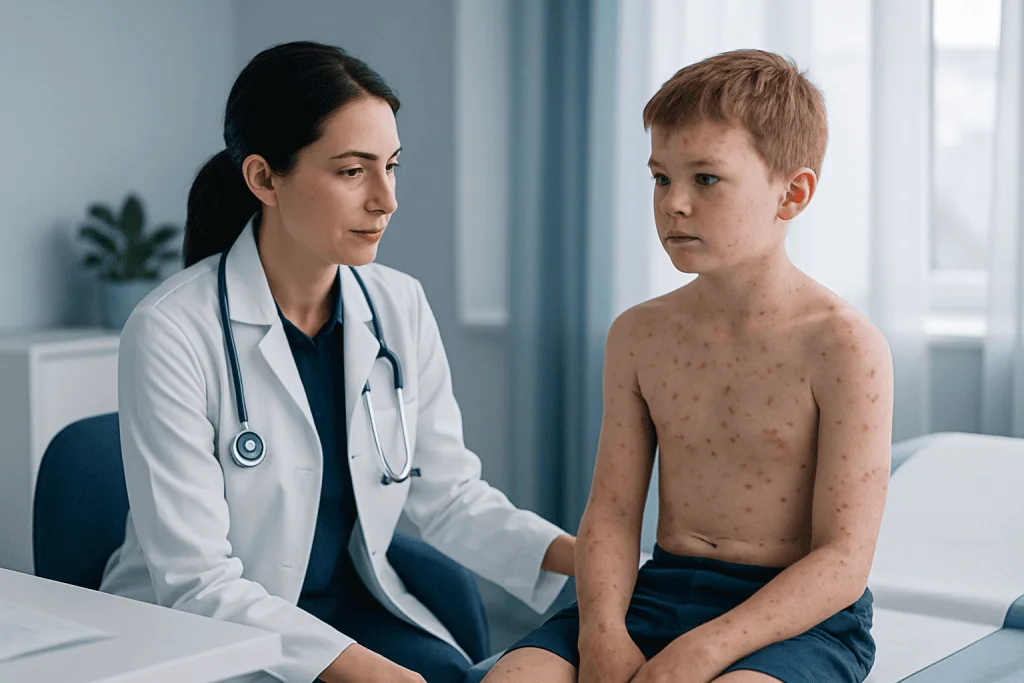
Rash pattern is one of the most useful clinical clues. In measles, the eruption usually follows a head-to-toe progression. It begins on the face and upper neck, then moves downward over the torso and limbs. The spots are generally not blister-like, and they do not usually appear in repeated waves over several days.
In chickenpox, the distribution is often more concentrated on the trunk, back, scalp, and face, though it can spread widely. The rash tends to come in crops, meaning new lesions continue to appear for a few days. That is why a clinician may see old crusts near brand-new blisters during the same examination.
Doctors also ask about itch. Chickenpox is usually very itchy, which can be a strong clue, especially in children. Measles can be uncomfortable, but the rash is not usually described as intensely itchy in the same way. Mouth findings matter too: tiny white spots inside the mouth, called Koplik spots, can support a diagnosis of measles when present.
Skin tone can affect how redness appears. On darker skin, a rash may look less bright red and more subtle, so texture, distribution, eye symptoms, fever pattern, and the presence of blisters become even more important. Clinicians avoid relying on color alone and consider the full picture.
How Clinicians Tell Them Apart
Doctors begin with history and examination. They ask when the fever started, when the rash appeared, whether the person has cough or red eyes, how itchy the rash is, and whether the spots are blistering or crusting. They also ask about recent travel, known exposure to a person with measles or chickenpox, and vaccination history.
Exposure history can be especially helpful. Measles may be suspected if someone has been around a confirmed case or has spent time in a setting where an outbreak occurred. Chickenpox is also contagious, but household spread is especially common when one person develops the characteristic itchy blisters. A clinician may also review whether the person has had the disease before or has been vaccinated.
In some cases, the diagnosis is made clinically. In others, laboratory testing is recommended, especially if measles is possible, public health action is needed, the person is at higher risk for complications, or the presentation is unusual. Testing may involve a swab, blood test, or other samples depending on timing and local protocols. If a rash illness raises concern for other infections, doctors may evaluate for alternatives such as rubella or other viral exanthems.
Because these conditions are contagious, infection-control measures matter. A suspected measles case may require prompt isolation because measles can remain airborne in indoor spaces after an infected person has left. This is one reason clinicians try to recognize measles early rather than waiting only for the rash to become obvious.
Causes, Spread, and Who Is at Higher Risk
Measles is caused by the measles virus, and chickenpox is caused by the varicella-zoster virus. Both are spread from person to person, but the route and degree of spread differ somewhat. Measles spreads very efficiently through respiratory droplets and airborne particles. Chickenpox spreads through respiratory secretions and direct contact with fluid from skin lesions.
People who are not vaccinated are at higher risk of getting either illness if they are exposed. Infants who are too young to be fully protected, pregnant people, and individuals with weakened immune systems are more vulnerable to severe disease or complications. Adults who did not have chickenpox or were not vaccinated can also become significantly ill.
Season, local outbreaks, travel, and community vaccination patterns can influence risk. In a clinic, doctors often think about whether someone has had a known exposure in the previous one to three weeks, because the timing between exposure and symptoms can fit one diagnosis better than another.
Complications are another reason the distinction matters. Measles can lead to dehydration, ear infections, pneumonia, or inflammation involving the brain. Chickenpox can cause skin infection from scratching, pneumonia, or more severe illness in at-risk groups. Patients reading about measles should keep in mind that early supportive care and careful monitoring can reduce risk.
What to Do if It Is Measles or Chickenpox
If either illness is suspected, the safest first step is usually to contact a healthcare professional before going into a clinic or emergency department, unless urgent symptoms are present. This helps the medical team advise on the next step while reducing the chance of exposing others. Rest, fluids, and fever management may be recommended, but treatment plans depend on age, overall health, and the severity of illness.
For measles, there is no routine antiviral treatment for most otherwise healthy people, so care is mainly supportive. Doctors focus on hydration, monitoring breathing, controlling fever, and watching for complications such as ear infection or pneumonia. If hospitalization is needed, care may include close observation and respiratory support. Evaluation in an infectious diseases service may be helpful when the diagnosis is uncertain, the patient is high risk, or public health precautions are needed.
For chickenpox, treatment is also often supportive, especially in healthy children with mild disease. Doctors may suggest strategies to reduce itching and lower the risk of scratching-related skin infection. In some adults, pregnant patients, newborns, or immunocompromised individuals, antiviral treatment may be considered if started appropriately and prescribed by a physician.
If complications develop, treatment may need to be more intensive. Breathing difficulty, severe dehydration, neurologic symptoms, or a worsening bacterial skin infection can require hospital care. When imaging or monitoring is needed because of possible chest complications, doctors may use services such as chest disease evaluation or pediatric care depending on the patient’s age and condition.
Prevention and Self-Care at Home
Vaccination is the most effective way to prevent both measles and chickenpox. Routine immunization greatly reduces the chance of infection and lowers the risk of severe illness if infection does occur. Anyone unsure of their vaccination status should discuss it with a qualified healthcare professional, especially before travel, pregnancy, or contact with vulnerable family members.
If someone develops a suspected contagious rash illness, staying home and avoiding close contact with others is important until medical advice is obtained. Good hand hygiene, separate personal items, and avoiding school, work, or social gatherings can help reduce spread. In chickenpox, keeping fingernails short may reduce skin damage from scratching.
At home, self-care focuses on comfort and monitoring. Encouraging fluids, watching urine output, and noting whether fever is improving can be useful. Parents and caregivers should also pay attention to behavior changes, poor feeding, unusual sleepiness, labored breathing, or a rash that becomes painful, rapidly inflamed, or infected.
Near the end of the care journey, some families need help with diagnosis confirmation, infection precautions, or follow-up after complications. Acibadem International’s multidisciplinary specialists and JCI-accredited hospitals evaluate and treat infectious conditions for international patients when more advanced assessment is needed.
When to Seek Medical Care
Medical advice should be sought promptly for any suspected measles because of its contagiousness and the need for careful assessment, especially in children, pregnant people, and those with weak immune systems. It is also sensible to contact a doctor if a rash illness is accompanied by high fever, poor fluid intake, persistent vomiting, or significant lethargy.
Urgent care is needed if there is trouble breathing, signs of dehydration, confusion, seizures, severe headache, neck stiffness, chest pain, or a rapidly worsening condition. For chickenpox, immediate evaluation is also important if the rash becomes very painful, the skin around lesions becomes increasingly red or swollen, or the person is pregnant, an adult with severe symptoms, or immunocompromised.
Families should not feel they must identify the illness on their own. Many viral rashes can overlap early on, and a qualified clinician can decide whether examination, testing, home care, or hospital evaluation is most appropriate. Early guidance can protect the patient and help prevent spread to others.
Because measles and chickenpox can resemble other infections at the beginning, it is best not to self-diagnose from images alone. A clinical review is the safest way to confirm what the rash represents and what treatment or isolation steps are needed.
Frequently asked questions
What is the main difference between measles and chickenpox?
The main difference is the pattern of symptoms and the type of rash. Measles usually causes high fever, cough, runny nose, red eyes, and a flat red rash that spreads from the face downward. Chickenpox usually causes an itchy rash with blisters and crusts appearing in different stages.
Can chickenpox be mistaken for measles?
Yes, especially early in the illness when fever and a general rash are the only obvious features. As the illness develops, the rash pattern, itch level, and associated symptoms usually help doctors tell them apart. Testing may be used when the diagnosis is uncertain.
Is the measles rash itchy like chickenpox?
Measles rash is not typically as intensely itchy as chickenpox. Chickenpox commonly causes marked itching because of its blistering lesions. Measles is more often associated with fever, cough, and eye irritation than severe itch.
How do doctors confirm measles or chickenpox?
Doctors first use the medical history and physical examination, including the order of symptoms and the appearance of the rash. They may also consider vaccination status and recent exposures. If needed, laboratory tests such as swabs or blood tests can help confirm the diagnosis.
Are measles and chickenpox both contagious?
Yes, both infections are contagious and can spread easily from person to person. Measles is especially contagious through the air, while chickenpox can spread through respiratory secretions and contact with blister fluid. People with suspected infection should seek medical advice about isolation.
What should a person do if they think they have measles or chickenpox?
They should contact a healthcare professional promptly, ideally before visiting a clinic in person unless urgent symptoms are present. This helps reduce exposure to others and allows the care team to advise on testing, home care, and warning signs. Fluids, rest, and monitoring for worsening symptoms are usually important.
References
- World Health Organization
- Centers for Disease Control and Prevention
- American Academy of Pediatrics
- National Health Service
- Mayo Clinic
This article is for general information only and is not a substitute for professional medical advice. Please consult a qualified doctor about your individual situation.
Chickenpox in Turkey — costs, top hospitals & a free quote
JCI-accredited · board-certified surgeons · reply within 24h
Add us as a Preferred Source to see more of our trusted health content across Google Search, AI Overviews and Discover.

More from the Health Library



Related Specialists

Dr. Volkan Demirdöğen
Anesthesiology
Assoc. Prof. Dr. Hilmi Kodaz
Medical Oncology
Dt. İpek Mehmetoğlu Torun
Oral & Dental Health
Assoc. Prof. Dr. Özlem Akgün Doğan
Pediatric Genetic Diseases