Medical Oncology vs Radiation Oncology: Key Differences Explained

Medical oncology treats cancer mainly with medicines such as chemotherapy, targeted therapy, immunotherapy, and hormone therapy. Radiation oncology treats cancer with high-energy radiation directed at a specific area of the body.
Key Takeaways
- Medical oncology treats cancer mainly with medicines such as chemotherapy, targeted therapy, immunotherapy, and hormone therapy.
- Radiation oncology treats cancer with high-energy radiation directed at a specific area of the body.
- Many patients receive both medical oncology and radiation oncology as part of a combined treatment plan.
- The best approach depends on the cancer type, stage, location, overall health, and treatment goals.
- Cancer care is usually guided by a multidisciplinary team rather than one specialist alone.
Medical oncology and radiation oncology are two core cancer specialties that often work together. One focuses on treating cancer with medicines, while the other uses carefully planned radiation to target tumors.
Overview
Understanding medical oncology vs radiation oncology can help patients and families feel more confident during cancer care. Both are important specialties within modern oncology, but they play different roles. In simple terms, medical oncology treats cancer with medicines that travel through the body or affect specific cancer cells, while radiation oncology uses focused radiation to treat a defined area.
These specialties are not in competition. In many cases, they are complementary. A person with cancer may see a medical oncologist, a radiation oncologist, a surgical oncologist, and other specialists such as radiologists, pathologists, and supportive care teams. Together, they create a treatment plan based on the cancer type, stage, symptoms, and the patient’s overall health and preferences.
Some cancers are treated mainly with medicine. Others are treated mainly with radiation. Many are managed with a combination of both, sometimes along with surgery. The goal may be to cure the cancer, control its growth, reduce the risk of recurrence, or relieve symptoms and improve quality of life.
What Medical Oncology Means
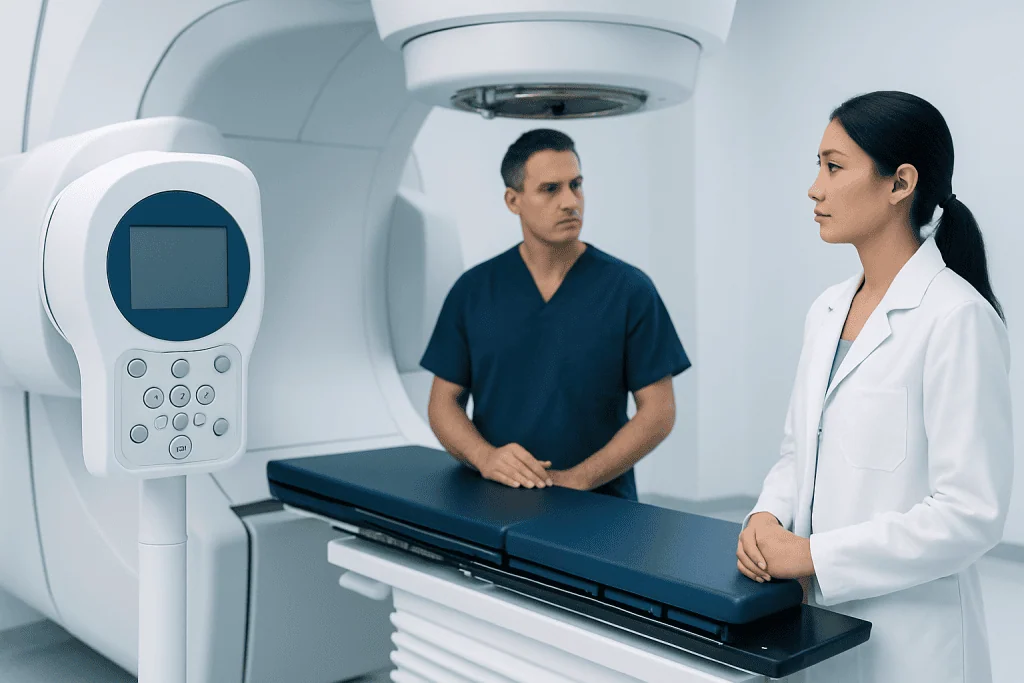
Medical oncology is the branch of cancer care that uses medicines to diagnose, monitor, and treat cancer. A medical oncologist is often the doctor who coordinates overall cancer treatment, especially when drug therapy is part of the plan. These specialists also help patients understand test results, treatment goals, and side effects.
Medical oncology includes several types of treatment. These may include chemotherapy, targeted therapy, immunotherapy, hormone therapy, or supportive medicines that help manage symptoms and treatment effects. Some medicines work throughout the body, which can be especially helpful when cancer cells may have spread beyond the original tumor site.
The treatment approach depends on the cancer type and its biology. For example, some cancers respond well to hormone-blocking medicines, while others are more likely to benefit from immunotherapy or targeted treatments. Medical oncologists may also recommend treatment before surgery or radiation to shrink a tumor, or after local treatment to lower the chance of the cancer coming back.
In practice, medical oncology often involves repeated clinic visits over time. Patients may have blood tests, scans, and regular follow-up appointments to check how well treatment is working and whether changes are needed. For some people, medical oncology care is the main treatment path; for others, it is one part of a broader plan.
What Radiation Oncology Means

Radiation oncology is the branch of cancer care that uses high-energy radiation to damage cancer cells and stop them from growing. A radiation oncologist plans and oversees this treatment. Because radiation is directed at a specific area, it is considered a local treatment rather than a whole-body treatment.
Radiation therapy is often used to treat tumors in one part of the body or to reduce the risk of cancer returning in a known area after surgery. It can also be used to relieve symptoms such as pain, bleeding, or pressure caused by a tumor. In some cases, radiation is given alone; in others, it is combined with chemotherapy or surgery.
Radiation treatment is carefully planned to target the tumor while protecting as much healthy tissue as possible. The process often begins with imaging and simulation, followed by a personalized treatment plan. Sessions themselves are usually brief, though treatment may be given over days or weeks depending on the goal and cancer type.
There are different forms of radiation treatment, including external beam radiation and, in selected cases, internal radiation methods. Patients who need radiation oncology treatment often work closely with therapists, physicists, and nurses in addition to the radiation oncologist.
Key Differences Between the Two Specialties
The clearest difference in medical oncology vs radiation oncology is the type of treatment used. Medical oncology uses medicines, many of which travel through the bloodstream and can affect cancer cells throughout the body. Radiation oncology uses precisely delivered radiation aimed at a particular tumor or region.
Another important difference is when each specialty is most useful. Medical oncology is often essential when cancer has spread, when there is a risk of microscopic disease elsewhere in the body, or when the biology of the tumor suggests a drug treatment will help. Radiation oncology is often helpful when treatment needs to be focused on one location, such as a primary tumor, nearby lymph nodes, or an area causing symptoms.
Side effects can differ as well. Medicines may cause whole-body effects because they circulate systemically, although side effects vary widely depending on the drug used. Radiation side effects are often related to the area being treated, such as skin irritation, fatigue, or nearby tissue effects. Both specialties carefully monitor and manage side effects throughout treatment.
The pace and structure of care may also feel different. Medical oncology may involve infusion visits, oral medicines, and long-term monitoring. Radiation oncology usually follows a preplanned schedule of treatment sessions over a defined period. Even so, both rely on regular assessment, communication, and adjustment based on response.
- Medical oncology: medicine-based, often systemic, useful for many cancer types and stages
- Radiation oncology: radiation-based, local treatment, often used for specific tumors or symptom relief
- Shared goal: control or eliminate cancer while preserving quality of life
When They Are Used Together
Many patients receive both medical oncology and radiation oncology because the two approaches can strengthen a treatment plan when used thoughtfully. This is common in cancers where both local control and whole-body treatment matter. For example, treatment may aim to shrink a tumor, remove or destroy the main cancer site, and reduce the risk of recurrence elsewhere.
Chemotherapy or other medicines may be given before radiation to shrink the cancer, during radiation to make treatment more effective in selected situations, or after radiation to treat any remaining cancer cells. The exact order depends on the tumor type, the urgency of symptoms, and the overall plan discussed by the care team.
A coordinated multidisciplinary approach is especially important for cancers that involve complex decisions. Patients may hear terms such as neoadjuvant therapy, adjuvant therapy, concurrent chemoradiation, or palliative treatment. These words describe timing and purpose, but the central idea is simple: the team matches each treatment to the patient’s needs.
Examples include treatment planning for breast cancer, where medicines and radiation may both play important roles, or for lung cancer, where the best combination depends on stage and tumor location. In selected cases, the oncology team may also discuss chemotherapy as one part of combined care.
How Doctors Decide the Best Option
Choosing between medical oncology, radiation oncology, or a combination of both depends on several factors. Doctors consider the cancer type, stage, grade, molecular features, exact location, and whether it has spread. They also look at age, general health, other medical conditions, and the patient’s priorities.
Diagnostic tests help guide these decisions. These may include biopsy results, blood tests, CT, MRI, PET imaging, and pathology reports that show how the cancer behaves. In many cancers, biomarker or genetic testing of the tumor helps determine whether targeted therapy, immunotherapy, hormone therapy, radiation, or other treatments are likely to help.
Treatment goals also matter. In some situations, the goal is cure. In others, the goal is to control the cancer for as long as possible, ease symptoms, or maintain daily functioning. A recommendation for radiation does not necessarily mean the disease is severe, and a recommendation for medicine does not always mean the cancer has spread. Each decision is made in context.
Patients should feel comfortable asking questions such as: Why is this treatment recommended now? What are the expected benefits? What side effects are possible? Are there alternatives? A clear discussion with the oncology team can help patients understand not only what is planned, but why it is the best fit for their situation.
Side Effects, Follow-Up, and Self-Care
Both specialties pay close attention to side effects and recovery. Medical oncology treatments can sometimes affect blood counts, appetite, digestion, energy, skin, or nerves, depending on the medicine used. Radiation therapy may cause fatigue and local effects in the treated area, such as skin changes, soreness, or temporary irritation of nearby tissues.
Not everyone experiences the same side effects, and many can be prevented, reduced, or treated early. Patients are usually advised to report new symptoms promptly rather than waiting for the next appointment. Practical support may include nutrition guidance, pain control, emotional support, and rehabilitation services when needed.
Self-care during treatment often focuses on rest, hydration, balanced eating, gentle activity as tolerated, and taking medicines exactly as prescribed. It is also helpful to keep a list of symptoms and questions for clinic visits. Patients should always check with their treatment team before starting supplements or other therapies, because some may interfere with cancer treatment.
After treatment, follow-up remains important. The team may monitor scans, blood tests, and recovery over time. Some patients will continue medicine for months or years, while others will move into surveillance. Near the end of care planning, patients may also ask about centers such as Acibadem International, where multidisciplinary specialists in JCI-accredited hospitals diagnose and treat cancer for international patients.
When to See an Oncologist
A person should see an oncologist when a biopsy or scan suggests cancer, when a doctor suspects a tumor needs specialist review, or when a second opinion would help clarify treatment choices. Some people meet a medical oncologist first, while others are referred directly to a radiation oncologist or surgeon depending on how the cancer was found.
It is also reasonable to seek oncology input if symptoms persist despite treatment, if cancer returns after earlier therapy, or if there are questions about whether additional treatment is needed. Early specialist review can help organize the next steps and avoid unnecessary delays.
Patients should seek prompt medical advice for symptoms such as unexplained weight loss, persistent lumps, unusual bleeding, long-lasting pain, difficulty swallowing, changes in bowel or bladder habits, or a cough that does not improve. These symptoms do not always mean cancer, but they deserve evaluation.
If cancer has already been diagnosed, urgent contact with the care team is important for fever, severe dehydration, breathing difficulty, uncontrolled pain, new neurological symptoms, or any sudden worsening during treatment. Quick communication allows problems to be assessed and treated safely.
Frequently asked questions
What is the main difference between medical oncology and radiation oncology?
Medical oncology uses medicines to treat cancer, such as chemotherapy, immunotherapy, targeted therapy, and hormone therapy. Radiation oncology uses carefully directed radiation to treat a specific tumor or area of the body.
Do patients ever need both medical oncology and radiation oncology?
Yes, many patients receive both. This is common when treatment needs to control the main tumor locally and also reduce the risk of cancer cells elsewhere in the body.
Is radiation oncology only used for advanced cancer?
No, radiation therapy is used in both early-stage and advanced cancers. It may be part of curative treatment, used after surgery, or given to relieve symptoms and improve comfort.
Does seeing a medical oncologist mean chemotherapy is definitely needed?
Not always. A medical oncologist may evaluate whether chemotherapy, targeted therapy, immunotherapy, hormone therapy, monitoring, or another option is most appropriate.
Which specialty usually coordinates overall cancer care?
In many cases, the medical oncologist helps coordinate the broader treatment plan, especially when medicines are involved. However, cancer care is usually a team effort, and the lead role can vary depending on the cancer type and treatment sequence.
Are side effects worse with medical oncology or radiation oncology?
Neither is automatically worse; the side effects are different. Medical oncology treatments may cause body-wide effects depending on the drug, while radiation side effects are often limited to the treated area and can vary by location.
References
- World Health Organization
- National Cancer Institute
- American Cancer Society
- European Society for Medical Oncology
- American Society for Radiation Oncology
This article is for general information only and is not a substitute for professional medical advice. Please consult a qualified doctor about your individual situation.
Oncology care in Turkey — second opinion and treatment plan
JCI-accredited · board-certified surgeons · reply within 24h
Add us as a Preferred Source to see more of our trusted health content across Google Search, AI Overviews and Discover.

Medical Oncology Department
Medical treatment of cancer with chemotherapy, immunotherapy and targeted therapies under a multidisciplinary tumor board.
60 specialists in this unitMore from the Health Library



Related Specialists

Assoc. Prof. Dr. Ürün Özer Ağırbaş
Psychiatry
Fzt. Tuğçe Kahraman
Physical Medicine & Rehabilitation
Dr. Berhan Bayram
Orthopedic Surgery & Traumatology
Assoc. Prof. Dr. Selin Özaltın
Gynecology & Obstetrics