Meningitis in Children: Symptoms That Need Emergency Care

Meningitis in children may be caused by viruses, bacteria, or less commonly fungi and other conditions. Bacterial meningitis is a medical emergency and needs immediate hospital treatment.
Key Takeaways
- Meningitis in children may be caused by viruses, bacteria, or less commonly fungi and other conditions.
- Bacterial meningitis is a medical emergency and needs immediate hospital treatment.
- Emergency signs include fever with severe headache, neck stiffness, unusual sleepiness, confusion, seizures, breathing difficulty, or a rash that does not fade when pressed.
- Babies may show different symptoms, such as poor feeding, irritability, vomiting, a weak cry, or a bulging soft spot.
- Vaccination, good hygiene, and prompt medical evaluation of concerning symptoms can help reduce risk and complications.
Meningitis in children is inflammation of the membranes around the brain and spinal cord, usually caused by an infection. Because symptoms can worsen rapidly, parents and caregivers should know the emergency warning signs and seek urgent medical care when they appear.
Overview of Meningitis in Children
Meningitis in children is inflammation of the meninges, the protective layers surrounding the brain and spinal cord. It is most often caused by an infection, and the illness can range from mild to life-threatening depending on the cause. Viral meningitis is often less severe, while bacterial meningitis can become dangerous very quickly and needs urgent treatment.
Children of any age can develop meningitis, including newborns, infants, school-aged children, and teenagers. Symptoms may look different depending on the child’s age. A baby may not be able to show classic signs such as neck stiffness or severe headache, so parents often need to watch for more general signs of serious illness.
Because the brain and spinal cord are involved, meningitis can affect alertness, behavior, movement, and body temperature. Some children become unwell over a day or two, while others worsen within hours. Early recognition and immediate medical assessment are important, especially when symptoms suggest bacterial meningitis or meningococcal disease.
Symptoms That Need Emergency Care
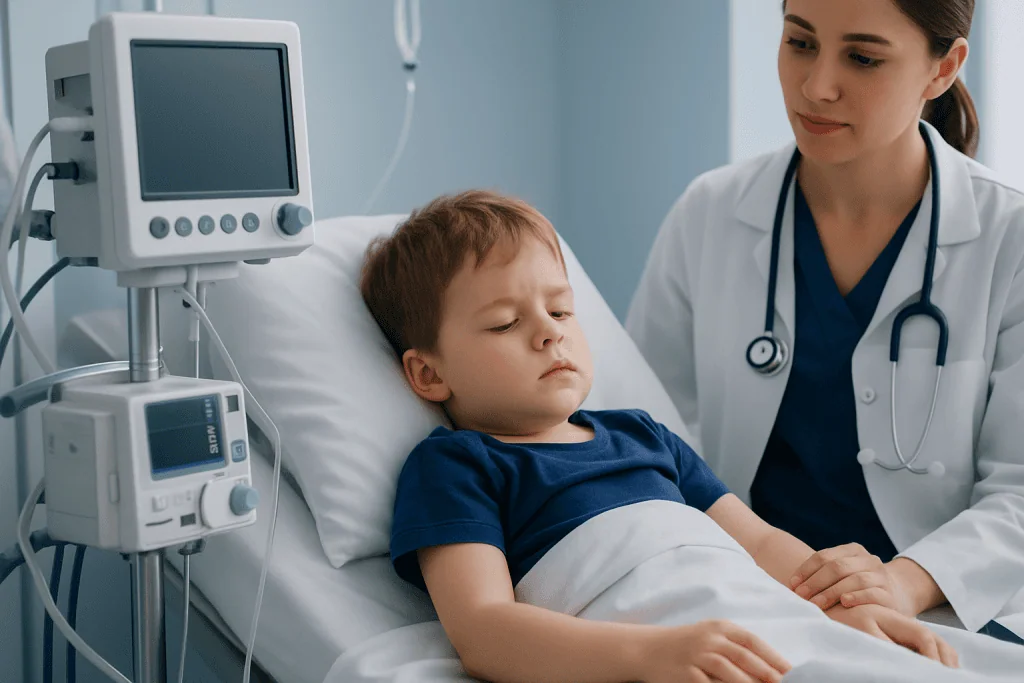
Parents and caregivers should seek emergency help right away if a child has signs that could suggest meningitis, especially when several symptoms occur together. A child with a high fever and sudden severe illness should not be watched at home if they seem confused, unusually drowsy, difficult to wake, or distressed.
Emergency warning signs can include:
- High fever
- Severe headache
- Neck stiffness or pain when bending the neck
- Confusion, unusual behavior, or reduced alertness
- Seizures
- Sensitivity to light
- Persistent vomiting
- Weakness, trouble walking, or poor balance
- Breathing difficulty or bluish skin
- A purple or red rash that does not fade when pressed with a glass
In babies and very young children, symptoms may be less specific. Warning signs can include poor feeding, repeated vomiting, unusual sleepiness, irritability that is hard to soothe, a weak cry, limpness or stiffness, a bulging soft spot on the head, cold hands and feet, or pauses in breathing. Any infant who appears seriously unwell needs urgent medical care.
Not every child with meningitis has all of the classic symptoms. A rash may be absent, especially early on. If a caregiver feels that a child is much sicker than expected, is rapidly worsening, or is difficult to wake, it is safest to seek emergency evaluation without delay.
Causes and Risk Factors
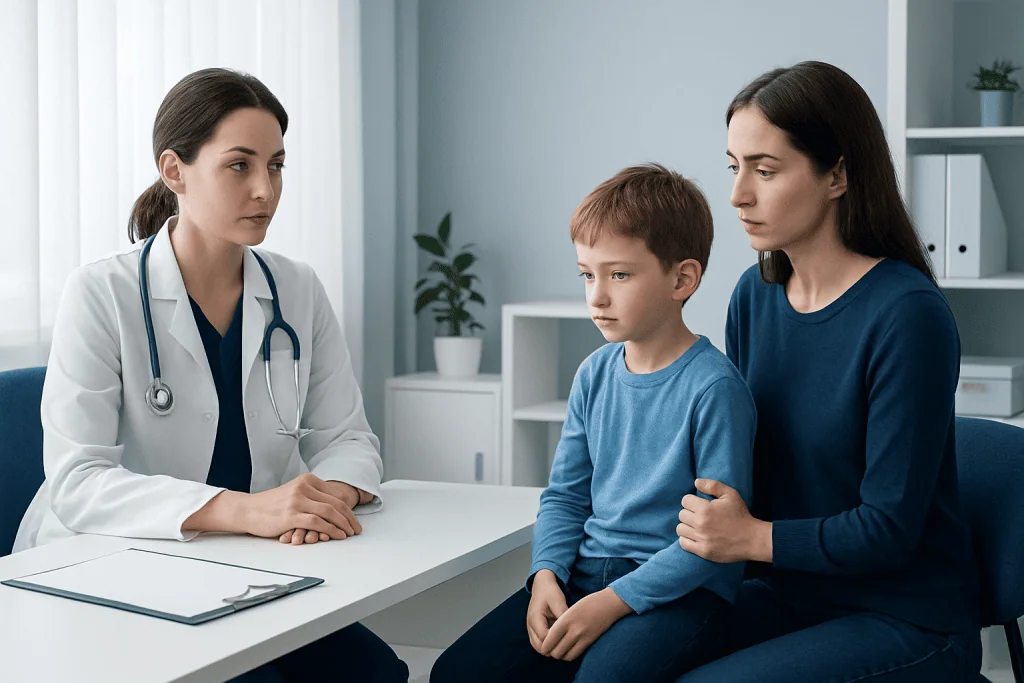
Meningitis in children can have several causes. Viral infections are common and may be caused by enteroviruses and other everyday viruses. Bacterial meningitis is less common but more serious. Bacteria that can cause meningitis include meningococcal bacteria, pneumococcal bacteria, and group B streptococcus in newborns. Less often, fungi, tuberculosis, certain medications, or inflammatory diseases may lead to meningitis.
The way meningitis spreads depends on the cause. Some viruses and bacteria pass from person to person through respiratory droplets, saliva, or close contact. A child may develop meningitis after another infection, such as an ear infection, sinus infection, bloodstream infection, or, more rarely, head injury or neurosurgery.
Some children have a higher risk than others. This includes newborns, children who are not fully vaccinated, those with weakened immune systems, children with cochlear implants, and those with certain anatomical differences or chronic medical conditions. Living in close quarters, such as dormitories or crowded households, may increase the chance of some infections spreading among older children and teenagers.
Meningitis can also be linked to other serious infections of the brain and nervous system. Doctors may consider related conditions such as encephalitis when symptoms include prominent confusion, seizures, or changes in behavior, because these conditions can overlap and may require urgent investigation.
How Doctors Diagnose Meningitis
Meningitis is diagnosed in hospital using a combination of medical history, physical examination, and tests. Doctors first assess how sick the child is, checking temperature, breathing, blood pressure, heart rate, hydration, alertness, and signs of a rash or neck stiffness. In babies, the examination may focus more on feeding, crying, movement, and the soft spot on the head.
Blood tests are commonly used to look for signs of infection and inflammation. In many cases, doctors also take blood cultures to identify bacteria in the bloodstream. If meningitis is suspected, a lumbar puncture may be recommended. This test collects a small sample of cerebrospinal fluid from the lower back so it can be examined for infection, inflammation, and the likely cause.
Depending on the child’s symptoms, doctors may order additional tests such as imaging or other infection studies. Brain imaging may be considered in selected situations, especially if there are seizures, unusual neurological findings, or concern about pressure inside the skull. The main goal is to diagnose quickly so treatment can begin as early as possible.
If bacterial meningitis is strongly suspected, treatment is usually started immediately, sometimes before all test results are available. This is because waiting for confirmation may increase the risk of complications.
Treatment Options and Hospital Care
Treatment depends on the cause of meningitis and how unwell the child is. Bacterial meningitis requires urgent hospital treatment with intravenous antibiotics and close monitoring. Children may also need fluids, oxygen, fever management, and medicines to help reduce inflammation in some cases. Supportive care is especially important in very young children and in children with severe illness.
Viral meningitis often improves with supportive treatment such as rest, fluids, and symptom relief, although some viral causes may require specific antiviral treatment. Doctors monitor for dehydration, pain, fever, and changes in alertness. Hospital admission may still be needed for infants, children with severe symptoms, or when the diagnosis is uncertain.
Some children with meningitis develop complications such as seizures, hearing problems, learning difficulties, or neurological changes. For that reason, recovery may involve follow-up with pediatric specialists and hearing assessment. When symptoms affect the brain or nervous system more broadly, pediatric neurology input can be important, and selected children may need advanced support in units experienced in neurology care or pediatric care.
Near the end of treatment planning, families may also need guidance about rehabilitation, school return, and follow-up testing. Acibadem International’s multidisciplinary specialists and JCI-accredited hospitals diagnose and treat meningitis and related neurological conditions for international patients when specialist hospital care is needed.
Prevention and Self-Care
Vaccination is one of the most effective ways to reduce the risk of some forms of meningitis in children. Routine childhood vaccines can protect against several important causes, including Haemophilus influenzae type b, pneumococcus, and meningococcus in eligible age groups and regions. Parents can ask their child’s doctor whether all recommended vaccines are up to date.
Good hygiene also matters. Regular handwashing, covering coughs and sneezes, and avoiding sharing cups, bottles, utensils, or toothbrushes can help reduce the spread of infections. When someone in a household is diagnosed with certain types of bacterial meningitis, close contacts may be offered preventive antibiotics by public health or medical teams.
At home, self-care should never replace urgent medical assessment if meningitis is suspected. Fever medicine or fluids may make a child more comfortable, but they do not treat the underlying cause. Caregivers should not wait for a rash to appear or for symptoms to become unmistakable before seeking help.
When to See a Doctor
A same-day medical review is important if a child has a fever with severe headache, neck pain, light sensitivity, repeated vomiting, or unusual tiredness. Medical advice is also needed if a baby is feeding poorly, crying weakly, becoming unusually irritable, or seems less responsive than normal. These symptoms do not always mean meningitis, but they should be assessed promptly.
Emergency care is needed immediately if a child is difficult to wake, confused, has a seizure, develops breathing problems, has a bulging soft spot, or shows a non-blanching rash. A child who rapidly worsens over a few hours should also be treated as an emergency. In these situations, caregivers should seek urgent hospital assessment rather than waiting for a routine appointment.
Parents know their child best, and it is appropriate to trust that instinct if something feels seriously wrong. Early assessment can help rule out dangerous conditions or allow treatment to start quickly. If another serious neurological problem is suspected, doctors may also evaluate for conditions such as epilepsy when seizures occur, or may involve specialists in pediatric neurology for further care.
Frequently asked questions
How quickly can meningitis get worse in a child?
Meningitis can worsen over hours or over a couple of days, depending on the cause. Bacterial meningitis may progress very quickly, which is why urgent medical attention is so important when warning signs appear.
Do all children with meningitis have a rash?
No. A rash does not happen in every case, and it may appear later in the illness. A child can still have meningitis without a rash, so other symptoms such as fever, severe headache, drowsiness, confusion, or neck stiffness should not be ignored.
What are the first signs of meningitis in babies?
Babies may show poor feeding, vomiting, irritability, unusual sleepiness, a weak cry, or limpness rather than classic neck stiffness. Some infants develop a bulging soft spot on the head or seem hard to wake. Any baby who looks seriously unwell should be assessed urgently.
Is viral meningitis less serious than bacterial meningitis?
Viral meningitis is often milder than bacterial meningitis, but it still needs medical assessment because symptoms can overlap early on. Only a clinician can determine the likely cause and whether hospital treatment is needed.
Can vaccination prevent meningitis in children?
Vaccines can reduce the risk of several important causes of meningitis, but they do not prevent every type. Keeping childhood immunizations up to date is one of the best preventive steps families can take.
Should a child with suspected meningitis be seen in the emergency department?
Yes, if the child has emergency warning signs such as confusion, seizures, breathing problems, a non-blanching rash, severe drowsiness, or rapid worsening. If symptoms are milder but concerning, urgent same-day medical advice is still recommended.
References
- World Health Organization
- Centers for Disease Control and Prevention
- National Health Service
- American Academy of Pediatrics
- National Institute of Neurological Disorders and Stroke
This article is for general information only and is not a substitute for professional medical advice. Please consult a qualified doctor about your individual situation.
Meningitis in Turkey — costs, top hospitals & a free quote
JCI-accredited · board-certified surgeons · reply within 24h
Add us as a Preferred Source to see more of our trusted health content across Google Search, AI Overviews and Discover.
Check your numbers in seconds
BMI, calories, due date, blood pressure and 30+ more clinical calculators — free, instant, doctor-reviewed ranges.