Meniscus Tear: Knee Locking, MRI Diagnosis, and Treatment Choices

The menisci are C-shaped cartilage cushions that help absorb shock and stabilize the knee. Knee locking, catching, swelling, and pain with twisting are typical signs of a meniscus tear, but other knee problems can cause similar symptoms.
Key Takeaways
- The menisci are C-shaped cartilage cushions that help absorb shock and stabilize the knee.
- Knee locking, catching, swelling, and pain with twisting are typical signs of a meniscus tear, but other knee problems can cause similar symptoms.
- MRI is the most useful imaging test for confirming the location and pattern of a suspected meniscus tear.
- Many small or degenerative tears improve with rest, activity modification, anti-inflammatory measures, and physical therapy.
- Surgery may be considered for displaced tears, persistent mechanical symptoms, or tears that are suitable for repair.
- Early assessment is recommended if the knee locks, gives way, swells significantly, or pain limits walking.
A meniscus tear is a common knee injury that can cause pain, swelling, catching, or a feeling that the knee is locked. Diagnosis usually combines a medical examination with imaging such as MRI, and treatment may range from self-care and physiotherapy to arthroscopic surgery when symptoms persist or the tear pattern requires repair.
Overview
A meniscus tear is an injury to one of the two crescent-shaped cartilage structures inside the knee. Each knee has a medial meniscus on the inner side and a lateral meniscus on the outer side. These structures act as shock absorbers, help spread body weight across the joint, and contribute to knee stability during walking, running, squatting, and turning.
Meniscus tears can happen suddenly during sports or daily activities, especially when the foot is planted and the knee twists. They can also develop gradually as the cartilage becomes less flexible with age. In that situation, a person may not remember a single injury; symptoms can begin after kneeling, rising from a chair, climbing stairs, or a longer walk.
The phrase “knee locking” is often associated with meniscus tears. True locking means the knee becomes physically stuck and cannot fully straighten or bend, sometimes because a torn piece of meniscus moves into the joint space. Some people use the word locking to describe painful catching, clicking, or hesitation. A clinician can help distinguish these patterns because the treatment approach may differ.
Symptoms of a Meniscus Tear
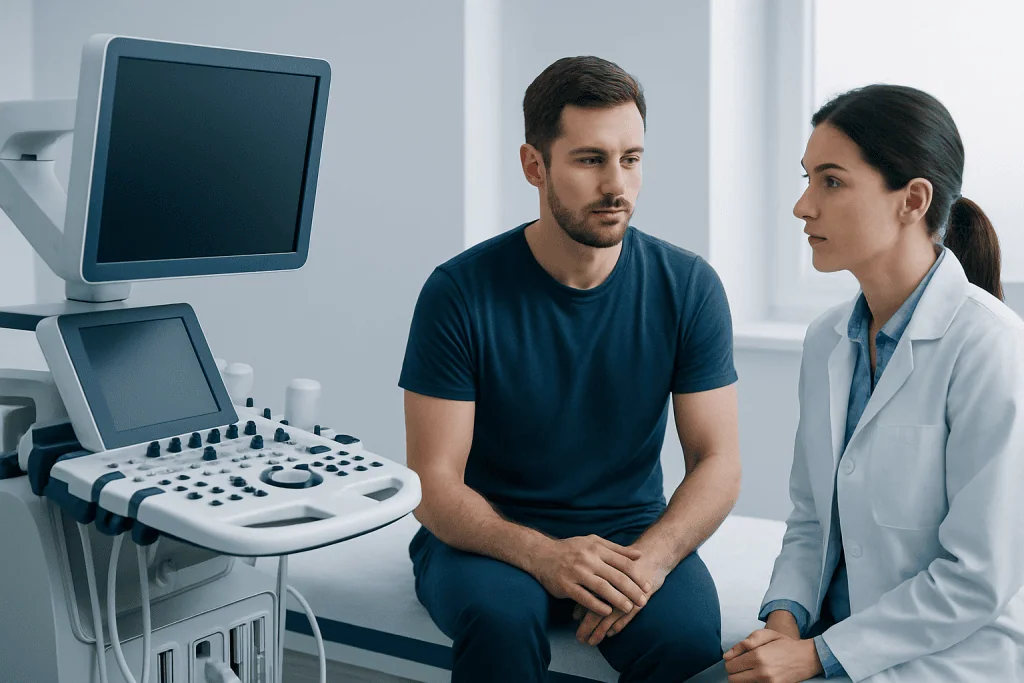
Symptoms vary according to the size, location, and type of tear. Some people feel a pop at the time of injury, while others notice pain and swelling over several hours or days. The knee may feel worse with twisting, pivoting, deep squatting, or getting in and out of a car. Pain is often felt along the joint line, either on the inner or outer side of the knee.
Common symptoms include:
- Pain during twisting, squatting, or kneeling
- Swelling or stiffness in the knee
- Catching, clicking, or a sensation that something is moving inside the joint
- Difficulty fully straightening or bending the knee
- A feeling of giving way or reduced confidence when walking
- True knee locking, where the knee becomes stuck in one position
Not every click means there is a serious injury. Knees can make noises for many reasons, including tendon movement, early arthritis, or normal joint mechanics. However, clicking combined with pain, swelling, reduced motion, or locking deserves medical evaluation, particularly if it follows a twisting injury.
Causes and Risk Factors
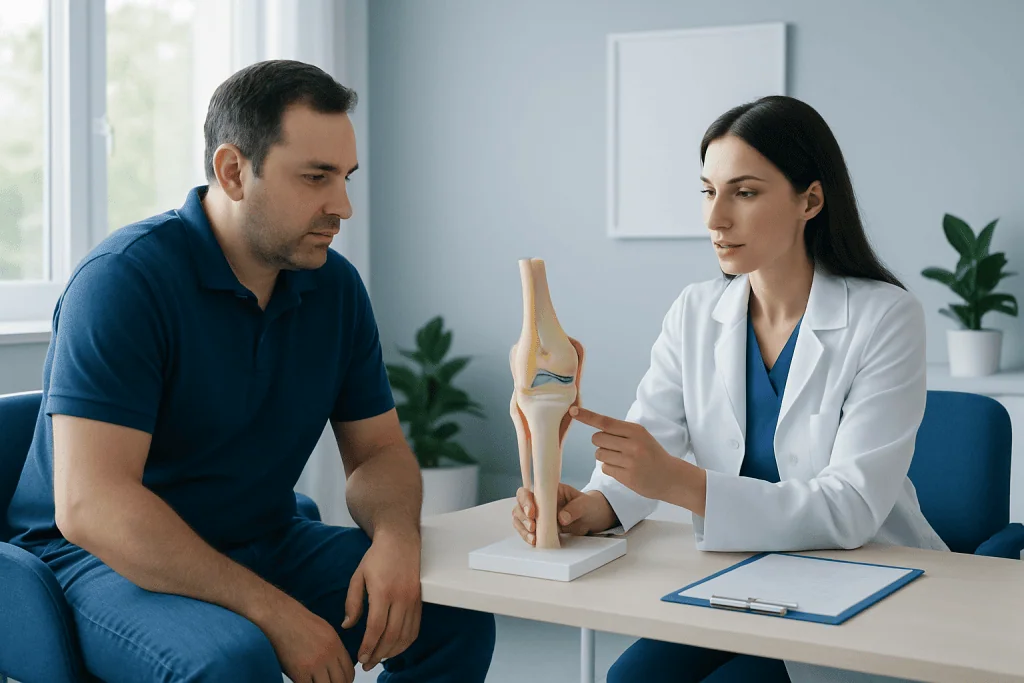
Acute meniscus tears often occur when the knee rotates while bearing weight. This is common in football, basketball, tennis, skiing, and similar activities that involve sudden changes in direction. A deep squat, rapid pivot, or awkward landing can place high stress on the meniscus, especially if the knee is slightly bent at the time.
Degenerative meniscus tears are different. Over time, the meniscus can become thinner and less resilient, making it more vulnerable to small splits. These tears may occur with relatively minor movements and are more common in middle-aged and older adults. They may also occur alongside cartilage wear or knee osteoarthritis, which can contribute to swelling and stiffness.
Risk factors include participation in pivoting sports, previous knee injury, muscle weakness around the hip or thigh, poor movement control, and jobs or activities that involve frequent squatting or kneeling. Excess body weight can increase load across the knee joint, while reduced flexibility or strength may change how forces are distributed during movement. Understanding these factors helps guide rehabilitation and prevention strategies.
How Meniscus Tears Are Diagnosed
Diagnosis begins with a careful medical history and physical examination. The doctor will ask how symptoms started, where the pain is located, whether swelling developed, and whether the knee catches, locks, or gives way. The examination usually includes checking range of motion, tenderness along the joint line, ligament stability, walking pattern, and specific maneuvers that may reproduce meniscal symptoms.
X-rays do not show the meniscus directly because it is soft tissue, but they may be useful to look for arthritis, fracture, alignment problems, or other bone-related causes of knee pain. In some cases, ultrasound may help assess fluid or other soft tissue structures around the knee, but it is not the main test for confirming an internal meniscus tear.
MRI is the most informative imaging test for suspected meniscus injury. It can show the location of the tear, the tear pattern, associated cartilage damage, ligament injuries, bone bruising, and joint fluid. MRI findings are interpreted together with symptoms because some meniscus changes, especially in older adults, may appear on imaging even when they are not the main cause of pain.
Understanding MRI Results and Tear Types
An MRI report may describe a tear as horizontal, vertical, radial, complex, flap, root, or bucket-handle. These terms help the orthopedic specialist understand how the meniscus is damaged and whether the torn tissue is likely to heal. For example, a bucket-handle tear is a displaced tear that can move into the joint and cause true locking. A root tear affects the attachment point of the meniscus and can significantly alter knee mechanics.
The blood supply of the meniscus is also important. The outer edge has better blood flow and is sometimes called the red zone. Tears in this area have a greater chance of healing, especially if repaired. The inner part has limited blood supply and may not heal as reliably, which can influence whether a tear is treated with repair, trimming, or non-surgical care.
It is common for patients to feel concerned when reading an MRI report with technical language. The key question is not only what the MRI shows, but whether the findings match the person’s symptoms, age, activity level, and examination. A clear discussion with an orthopedic doctor can help separate clinically important findings from changes that may be incidental.
Treatment Options: From Self-Care to Surgery
Treatment is individualized. Many small, stable, or degenerative meniscus tears can improve without surgery. Initial care may include relative rest, avoiding painful twisting and deep squatting, applying ice for swelling, using a compression bandage if advised, and taking pain-relieving or anti-inflammatory medicine when appropriate for the patient. People with stomach, kidney, heart, blood pressure, or blood-thinning concerns should ask a doctor before using anti-inflammatory medicines.
Physical therapy is often central to recovery. A rehabilitation program may focus on reducing swelling, restoring knee motion, strengthening the quadriceps and hamstrings, improving hip and core control, and retraining balance. The aim is to help the knee tolerate daily activities and reduce abnormal loading. For degenerative tears, therapy can be especially helpful when symptoms are linked to muscle weakness, stiffness, or early arthritis.
Surgery may be considered when there is true locking, a displaced tear, persistent mechanical catching, a repairable tear in a suitable location, or ongoing symptoms despite appropriate non-surgical treatment. Most meniscus procedures are performed arthroscopically through small incisions. The surgeon may repair the tear with sutures or anchors, or remove only the unstable torn fragment in a partial meniscectomy. Whenever possible, preserving meniscus tissue is preferred because the meniscus protects the joint over the long term.
Recovery depends on the treatment type. After a partial meniscectomy, rehabilitation may progress more quickly, although return to demanding activity still requires adequate strength and control. After a meniscus repair, protection is usually more important because the repaired tissue needs time to heal; weight-bearing and bending may be limited at first. The surgeon and physiotherapist provide a plan based on the tear pattern, procedure, and patient goals.
Prevention and Self-Care
Not all meniscus tears can be prevented, but knee conditioning can reduce risk and support recovery. Strengthening the quadriceps, hamstrings, gluteal muscles, and calf muscles improves control during turning, landing, and climbing stairs. Balance and neuromuscular training can help the body react more safely during quick movements, especially in sports that involve pivoting.
Good self-care means respecting pain and swelling as signals. If the knee becomes swollen after an activity, reducing load and allowing recovery time can prevent irritation from continuing. Supportive footwear, gradual increases in exercise intensity, and warming up before sports can also help. People returning to sport after a knee injury should do so gradually and ideally after medical or physiotherapy guidance.
For people with degenerative knee changes, maintaining a healthy body weight, staying active with low-impact exercise, and keeping the knee muscles strong may reduce symptoms. Cycling, swimming, elliptical training, and walking on even ground may be better tolerated than repeated deep squats or high-impact activities during flare-ups. The best activity plan is one that keeps the person moving without repeatedly provoking swelling or sharp pain.
When to See a Doctor
A person should seek medical assessment if knee pain follows a twisting injury, swelling develops, walking becomes difficult, or the knee cannot fully straighten. Prompt evaluation is especially important for true locking, because a displaced meniscus tear may need timely treatment to restore normal motion. Medical care is also recommended if the knee repeatedly gives way or symptoms do not improve with a short period of sensible self-care.
Urgent assessment is needed if there is severe pain after trauma, inability to bear weight, obvious deformity, fever with a hot swollen joint, or calf swelling with shortness of breath. These symptoms may indicate problems other than a meniscus tear and should be evaluated quickly. For most meniscus-related symptoms, an orthopedic specialist can guide appropriate imaging and treatment.
Acibadem International’s multidisciplinary specialists and JCI-accredited hospitals diagnose and treat meniscus injuries for international patients, including evaluation, MRI interpretation, physiotherapy planning, and surgical care when indicated. Patients should always discuss their individual risks, expected recovery, and alternatives with a qualified doctor before deciding on treatment.
Frequently asked questions
Can a meniscus tear heal on its own?
Some small tears, especially those near the outer edge of the meniscus with better blood supply, may improve with time and rehabilitation. Degenerative tears may also become less symptomatic with strength training and activity modification. Larger displaced tears or tears causing true locking are less likely to settle without medical treatment.
What does knee locking feel like with a meniscus tear?
True locking means the knee becomes stuck and cannot fully straighten or bend, often because a torn fragment blocks movement inside the joint. Some people use the term locking for painful catching or hesitation, which can have several causes. A doctor can examine the knee and decide whether imaging such as MRI is needed.
Is MRI always needed for a suspected meniscus tear?
Not always. A doctor may first diagnose the problem based on symptoms, physical examination, and sometimes X-rays to rule out other conditions. MRI is usually recommended when the diagnosis is uncertain, symptoms are significant, surgery is being considered, or there are signs of another internal knee injury.
When is surgery needed for a meniscus tear?
Surgery may be advised for a displaced tear, true knee locking, persistent mechanical symptoms, or a tear pattern that is suitable for repair. It may also be considered when non-surgical care has not improved pain and function. The decision depends on age, activity level, tear type, knee arthritis, and personal goals.
Is it better to repair or remove a torn meniscus?
When a tear is repairable, preserving the meniscus is generally preferred because the meniscus helps protect the knee joint. However, not all tears can heal after repair, especially those with poor blood supply or complex degenerative tissue. In those cases, removing only the unstable torn portion may be recommended.
How long does recovery take after a meniscus tear?
Recovery varies widely. Non-surgical treatment may improve symptoms over several weeks, while return to higher-level sport can take longer. After surgery, recovery depends on whether the meniscus was trimmed or repaired; repairs often require a more protected and longer rehabilitation period.
References
- American Academy of Orthopaedic Surgeons
- Mayo Clinic
- National Institute for Health and Care Excellence
- British Orthopaedic Association
- Radiological Society of North America
This article is for general information only and is not a substitute for professional medical advice. Please consult a qualified doctor about your individual situation.
Joint and spine care in Turkey — expert assessment & treatment
JCI-accredited · board-certified surgeons · reply within 24h
Add us as a Preferred Source to see more of our trusted health content across Google Search, AI Overviews and Discover.

Orthopedics & Spine
Care for bones, joints and the musculoskeletal system, including joint replacement, sports injuries and trauma.
125 specialists in this unit