Migraine vs headache: How to Tell the Difference and When It Matters
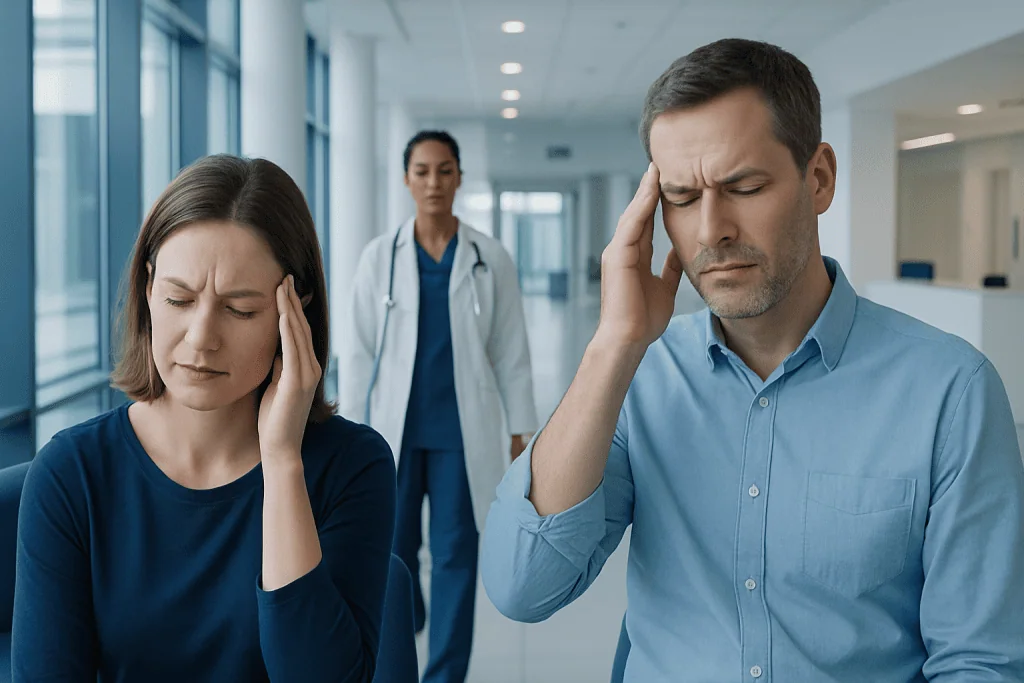
Migraine is a specific neurological condition, not just a severe headache. Headaches are often described by location and pressure, while migraine more often includes throbbing pain, nausea, and sensitivity to light or sound.
Key Takeaways
- Migraine is a specific neurological condition, not just a severe headache.
- Headaches are often described by location and pressure, while migraine more often includes throbbing pain, nausea, and sensitivity to light or sound.
- Doctors diagnose migraine and other headache types mainly from the pattern of symptoms and a careful medical history.
- Most headaches are not dangerous, but sudden severe pain, new neurological symptoms, or headache with fever need prompt medical assessment.
- Keeping a headache diary can help identify triggers and guide treatment.
Migraine and headache are not the same thing: migraine is a neurological disorder that often causes moderate to severe head pain plus symptoms like nausea, light sensitivity, or visual changes, while many other headaches cause pain without these features. Telling them apart matters because the likely triggers, treatment approach, and reasons to seek medical care can be different.
Migraine vs headache at a glance
When people compare migraine vs headache, the shortest answer is this: all migraines can involve head pain, but not all headaches are migraines. Migraine is a neurological disorder with a recognizable pattern of symptoms, while “headache” is a broad term that includes many different conditions, such as tension-type headache, sinus-related pain, cervicogenic headache, and headache linked to illness, dehydration, or medication overuse.
A simple side-by-side view can make the distinction clearer:
- Nature of the condition: Migraine is a neurological disease; headache is a symptom or category of disorders.
- Pain quality: Migraine often causes throbbing or pulsating pain; other headaches commonly feel like pressure, tightness, heaviness, or dull aching.
- Intensity: Migraine is often moderate to severe and may interrupt daily activity; many common headaches are mild to moderate.
- Location: Migraine may affect one side or both sides of the head; tension headaches often feel like a band around the head.
- Associated symptoms: Migraine may include nausea, vomiting, light sensitivity, sound sensitivity, smell sensitivity, dizziness, or aura; ordinary headaches may not.
- Activity effect: Physical activity often worsens migraine; many non-migraine headaches do not clearly worsen with routine movement.
- Duration: Migraine attacks often last hours to days; tension headaches may last from 30 minutes to many hours.
- Treatment approach: Migraine may require migraine-specific acute or preventive care; other headaches are treated based on the underlying type or trigger.
Because symptoms can overlap, people do not need to diagnose themselves with certainty. What matters most is recognizing the pattern: repeated disabling attacks with sensitivity to light, nausea, or aura point more strongly toward migraine, while a mild pressure-like pain after stress, poor sleep, or muscle tension may fit a non-migraine headache more closely.
What migraine usually feels like

Migraine is more than head pain. A migraine attack may unfold in phases, although not everyone experiences all of them. Some people notice early changes such as fatigue, neck stiffness, mood changes, food cravings, or trouble concentrating. Others develop an aura before the pain begins, which can involve flashing lights, zigzag lines, blind spots, tingling, or temporary difficulty speaking.
The headache phase is often moderate to severe and may feel pulsating or pounding. It can affect one side of the head, but it may also occur on both sides. Everyday movement, bending over, climbing stairs, or exercise may make the pain worse. Many people prefer to rest in a dark, quiet room until the attack improves.
Other migraine features are often just as important as the pain itself. Nausea, vomiting, sensitivity to light, sensitivity to sound, and sensitivity to smell are common. Some people feel dizzy, off balance, or mentally slowed. These associated symptoms help clinicians distinguish migraine from more common tension-type headaches.
Migraine symptoms vary from person to person. Some attacks are mainly painful, while others are more sensory or visual. Recurrent episodes that follow a recognizable pattern may indicate migraine, especially if the attacks interfere with work, school, sleep, or social life.
What other headaches usually feel like

The most common non-migraine headache is tension-type headache. This often causes a steady, pressing, or tightening discomfort rather than throbbing pain. Many people describe it as a band around the forehead or a weight on both sides of the head. It may be linked to stress, fatigue, prolonged screen use, jaw clenching, poor posture, or muscle tension in the neck and shoulders.
Other headache patterns can look different. Cluster headache causes very severe pain around one eye or temple and may occur in repeated cycles, often with tearing, nasal congestion, or eyelid drooping on the same side. Sinus-related pain is more likely when head pressure appears with nasal symptoms such as congestion, facial fullness, or infection. Neck-related headache can begin in the upper neck or back of the head and spread forward.
Some headaches happen because of a trigger rather than a primary headache disorder. Examples include dehydration, missing meals, alcohol use, viral illness, poor sleep, caffeine withdrawal, or overuse of pain medicines. In these cases, treatment often focuses on correcting the trigger and avoiding repeated use of quick-relief medication that can lead to rebound symptoms.
Because severe pain does not automatically mean migraine, and mild pain does not rule it out, pattern recognition is more useful than intensity alone. A clinician may also consider less common causes when headaches are new, changing, or accompanied by warning signs.
How a clinician tells them apart
Doctors usually diagnose migraine and other common headache disorders by listening carefully to the history of symptoms. They ask when the pain began, how often it happens, how long it lasts, where it is located, what it feels like, and what symptoms come with it. Questions about nausea, visual changes, sensitivity to light or sound, and whether movement worsens the pain are especially helpful when evaluating possible migraine.
A headache diary can be one of the most practical tools. Recording the date, time, duration, pain severity, associated symptoms, menstrual timing, sleep, stress, meals, and possible triggers can reveal a pattern that is hard to notice otherwise. This can also help separate occasional headaches from frequent or chronic migraine and may show whether medication overuse is playing a role.
Physical and neurological examinations help identify whether the pattern looks like a primary headache disorder or whether another cause should be investigated. Imaging tests such as MRI or CT are not needed for every headache. They are more likely to be recommended when there is a sudden change in pattern, abnormal neurological findings, new headache after age 50, recent head injury, cancer history, immune suppression, or symptoms that suggest another medical problem.
If the diagnosis is uncertain, or if headaches are frequent or disabling, referral for neurology evaluation may be useful. In some cases, doctors may also consider whether symptoms overlap with other conditions affecting the brain, nerves, eyes, sinuses, neck, or blood vessels, including brain tumor or stroke when warning signs are present.
Causes, triggers, and risk factors
Migraine is thought to involve changes in brain signaling, pain pathways, and sensitivity of the nervous system. It often runs in families, which suggests a genetic tendency. A migraine attack may be triggered by several factors rather than one single cause. Common triggers include stress, poor or irregular sleep, skipped meals, dehydration, hormonal changes, bright lights, strong smells, weather changes, alcohol, and certain foods in some individuals.
Other headaches have different risk factors. Tension-type headaches are often linked to stress, fatigue, eye strain, muscle tension, or prolonged sitting and screen use. Secondary headaches may occur with infections, sinus disease, elevated blood pressure in some situations, medication side effects, dental problems, or neck disorders. Repeated use of pain medicines on many days each month can itself cause medication-overuse headache.
Not everyone with a trigger develops headache, and triggers can change over time. A factor that seems important one month may not matter the next. For this reason, patients are often advised to look for repeated patterns rather than assuming that every attack has the same cause.
Understanding triggers can support prevention, but it should not become a source of anxiety. The goal is not to avoid every possible trigger perfectly. It is to identify practical changes that reduce attacks and improve quality of life.
What to do for each case
For an occasional mild headache, simple measures may be enough. Rest, hydration, regular meals, gentle stretching, reducing screen glare, and a calm environment can help. Some people benefit from brief use of over-the-counter pain relief, but it is important not to rely on it too often. Frequent use can make headaches harder to control over time.
For migraine, treatment is often divided into acute care and prevention. Acute treatment aims to stop or reduce an attack once it starts and works best when taken early in the course of symptoms. Prevention may be considered when attacks are frequent, prolonged, or disruptive. Preventive care can include lifestyle adjustments, trigger management, and doctor-guided medications or procedures tailored to the person’s headache pattern.
When headaches are recurrent or difficult to manage, a personalized plan is helpful. This may include assessment by a headache specialist, evaluation of sleep and stress, and review of all medicines and supplements. In selected cases, structured headache treatment or broader pain management support may be recommended to reduce frequency and improve daily functioning.
Near the end of the evaluation and treatment pathway, some patients may benefit from multidisciplinary care. Acibadem International’s specialists in JCI-accredited hospitals diagnose and treat headache disorders for international patients, especially when symptoms are persistent, complex, or affecting quality of life.
Prevention and self-care
Healthy routines can reduce both migraine and non-migraine headaches. The most useful habits are often the simplest: staying well hydrated, eating meals regularly, maintaining a consistent sleep schedule, limiting excess alcohol, and taking breaks from long periods of screen use. Good posture and attention to neck and shoulder strain may also help, especially in people who work at a desk.
Stress management matters because stress can trigger both migraine and tension-type headache. Practical approaches include regular physical activity, breathing exercises, mindfulness, stretching, and realistic scheduling of work and rest. For some people, untreated anxiety, depression, or poor sleep quality can make headaches more frequent, so addressing these issues can be an important part of care.
A headache diary remains one of the best self-care tools. It can help patients notice patterns such as headaches after skipped meals, around menstruation, during busy work periods, or after poor sleep. This information can guide doctor visits and reduce guesswork.
People should be cautious about self-treating repeated headaches without medical advice. If attacks are becoming more common, if medicine is needed often, or if symptoms are changing, professional assessment is appropriate. Early management may prevent headaches from becoming more frequent or more difficult to control.
When to seek medical care
Most headaches are not emergencies, but some situations need prompt medical attention. Medical care is especially important for a sudden severe headache that reaches maximum intensity quickly, a new headache with weakness, confusion, fainting, seizures, vision loss, trouble speaking, or numbness, or headache after a significant head injury. Headache with fever, stiff neck, or a new rash also deserves urgent evaluation.
People should also speak with a doctor if headaches are new after age 50, are steadily worsening, wake them from sleep, happen after exertion, cough, or sexual activity, or occur in someone with cancer, pregnancy, or a weakened immune system. Repeated vomiting, a major change in the usual pattern, or headache that does not improve with usual measures should also be assessed.
Even without emergency warning signs, routine medical review is helpful when headaches are frequent, disabling, or interfering with school, work, or sleep. A clinician can confirm whether the pattern fits migraine, tension-type headache, cluster headache, or another cause and can recommend the safest treatment strategy.
If symptoms suggest a more complex neurological issue, doctors may advise brain and nerve check-up services or other targeted assessment. Seeking help early can provide reassurance, reduce uncertainty, and support better long-term control.
Frequently asked questions
Is a migraine just a bad headache?
No. Migraine is a neurological disorder that often includes head pain along with nausea, light sensitivity, sound sensitivity, or visual symptoms. A person can have significant migraine-related disability even when the pain is not the most severe feature.
Can you have a migraine without head pain?
Yes, in some cases. Some people experience aura, dizziness, visual disturbances, or other neurological symptoms with little or no headache. This is one reason a clinician may ask about more than just pain intensity.
How do I know if my headache is tension or migraine?
Tension headaches usually feel like pressure or tightness and are less likely to cause nausea or strong sensitivity to light and sound. Migraine more often causes throbbing pain, worsens with activity, and comes with additional symptoms. Because overlap is possible, repeated or disabling episodes should be discussed with a doctor.
When should headache symptoms be taken seriously?
Headache should be assessed urgently if it is sudden and severe, follows a head injury, or comes with weakness, confusion, seizures, fever, stiff neck, or vision changes. It also deserves medical review if it is new, changing, or occurring more often than before.
What is the best first step if headaches keep coming back?
A good first step is to keep a headache diary and arrange a medical visit. Tracking symptoms, timing, triggers, and medicine use helps a clinician identify the likely headache type and choose appropriate treatment.
Can dehydration or stress cause both migraine and headache?
Yes. Dehydration, stress, irregular sleep, and skipped meals can trigger migraine attacks in some people and can also contribute to non-migraine headaches. The same trigger may affect one person strongly and another person not at all.
References
- World Health Organization
- National Institute of Neurological Disorders and Stroke
- American Migraine Foundation
- International Headache Society
- Mayo Clinic
This article is for general information only and is not a substitute for professional medical advice. Please consult a qualified doctor about your individual situation.
Migraine in Turkey — costs, top hospitals & a free quote
JCI-accredited · board-certified surgeons · reply within 24h
Add us as a Preferred Source to see more of our trusted health content across Google Search, AI Overviews and Discover.