Mild Scoliosis Therapy: How It Works, Results and What to Expect

Mild scoliosis often does not require surgery and may only need regular monitoring. Scoliosis-specific exercises, including the Schroth Method, can improve posture awareness, muscle control and function.
Key Takeaways
- Mild scoliosis often does not require surgery and may only need regular monitoring.
- Scoliosis-specific exercises, including the Schroth Method, can improve posture awareness, muscle control and function.
- Treatment choices depend on the curve measurement, age, remaining growth, symptoms and risk of progression.
- A brace may be recommended for some children or adolescents whose curves are growing or likely to progress.
- Mild scoliosis does not usually straighten completely without treatment, but many people live active, healthy lives with it.
Mild scoliosis therapy is usually a personalized plan of observation, scoliosis-specific exercise and, in selected growing children, bracing. Its main goal is to monitor the spinal curve and reduce the chance of progression, while supporting comfortable movement, confidence and daily function.
Mild Scoliosis Therapy: How It Works
Mild scoliosis therapy is a structured approach to caring for a small sideways curve of the spine. In many cases, it involves periodic check-ups and tailored exercises rather than an operation. The plan is designed to identify whether a curve is stable or changing and to help the person maintain strength, posture awareness, mobility and confidence in everyday activities.
Scoliosis is commonly measured on an X-ray using the Cobb angle. A curve of 10 to 20 degrees is often described as mild, although clinicians consider more than the angle alone. Age, stage of growth, curve pattern, family history and any symptoms all help determine whether observation, physiotherapy or bracing is appropriate.
Therapy is not intended to “force” the spine straight. Instead, it aims to support the body around the curve, improve movement habits and, when a person is still growing, reduce the likelihood that the curve will become larger. A specialist assessment is important because not every uneven shoulder, waistline or posture difference is scoliosis.
Who May Benefit From Mild Scoliosis Therapy
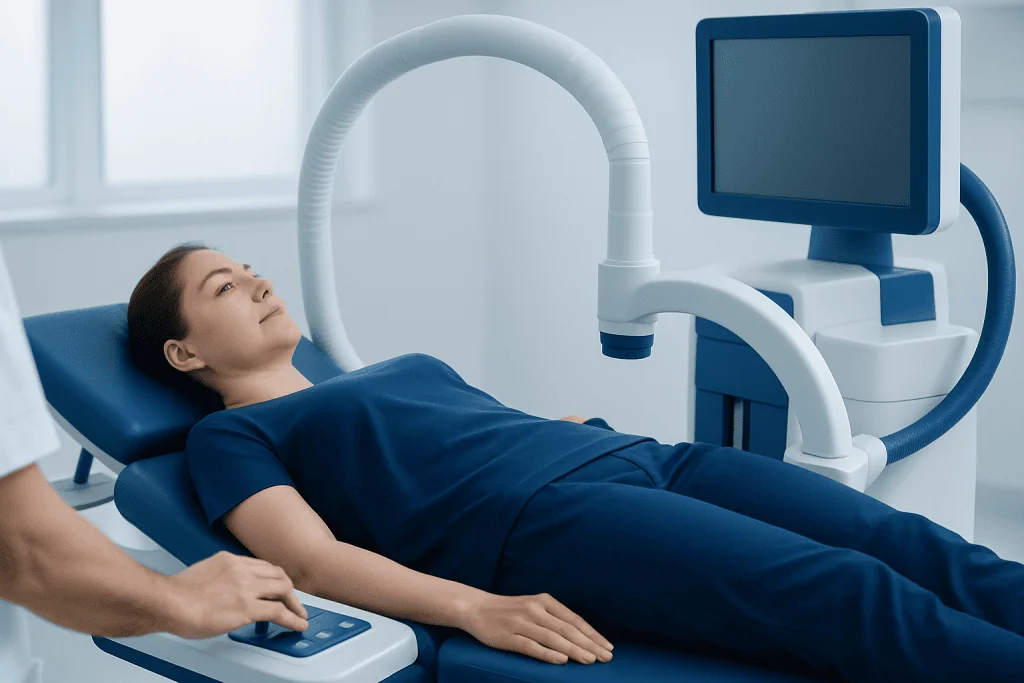
Children and teenagers are commonly assessed after scoliosis is noticed during a routine examination, school screening program or family observation. Growth is a key consideration because curves are more likely to change during rapid growth, including puberty. A clinician may recommend observation alone for a small, stable curve, with examinations and occasional imaging at intervals suited to the individual.
Scoliosis-specific physiotherapy may be helpful for children, adolescents and adults with mild curves. It may be considered when there are concerns about posture, muscle imbalance, reduced body confidence, discomfort or a curve that needs closer support during growth. Adults may also seek therapy to improve movement, manage symptoms and stay active, even when their curve is no longer changing substantially.
Bracing is not routinely needed for every mild curve. It is most often considered for children or adolescents who are still growing and have a curve that is progressing or has a meaningful risk of progression. A spine specialist can explain whether a brace is suitable and how it fits into a wider care plan.
- Regular follow-up is especially important during growth spurts.
- Therapy plans are adapted to the person’s age, curve location, activities and goals.
- New pain, weakness or neurological symptoms need medical assessment rather than exercise alone.
What Happens During Scoliosis Therapy
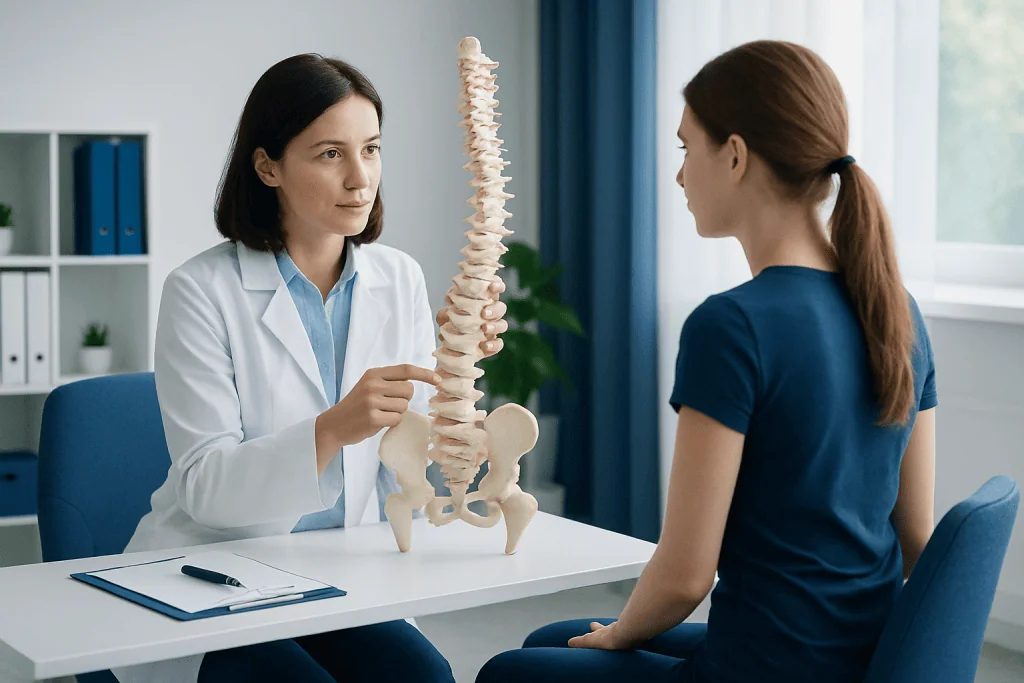
The first stage is a clinical evaluation. A doctor or physiotherapist reviews medical history, growth and menstrual history when relevant, family history and current symptoms. They examine standing posture, shoulder and pelvic balance, rib prominence and spinal movement. A forward-bend test may be performed, and an X-ray may be used to confirm and measure the curve when clinically appropriate.
If physiotherapy is recommended, the therapist develops an individualized program. Scoliosis-specific methods may include three-dimensional postural correction, breathing techniques, core and trunk muscle training, balance work and education about everyday positions. The Schroth Method is one commonly used scoliosis-specific exercise approach. It teaches the person to recognize their particular curve pattern and practice active correction with guided breathing and movement.
Sessions usually begin with instruction and supervised practice. The therapist checks technique, adjusts exercises as strength and coordination improve, and provides a home program. Follow-up sessions may be scheduled to review progress, reinforce correct form and adapt the program around growth, sports, school, work or pain-related needs. Scoliosis assessment and care may involve orthopedic, rehabilitation and pediatric specialists depending on the person’s age and needs.
If bracing is advised, a specialist team measures and fits the brace, explains wearing instructions and monitors skin comfort, fit and curve response. Bracing is generally used to prevent worsening during growth; it is not a guarantee that the curve will reduce.
Benefits, Limits and Possible Risks
A well-designed mild scoliosis therapy plan can help a person understand their condition and stay engaged in usual activities. Scoliosis-specific exercise may improve postural awareness, trunk control, movement confidence and quality of life. For people with discomfort, therapeutic exercise and general fitness can also support symptom management, although pain should always be assessed individually.
The most important benefit of observation is that it avoids unnecessary treatment while allowing clinicians to identify progression early. In growing children who meet clinical criteria, bracing can reduce the risk that a curve will progress to a size where surgery may be considered. Surgery is rarely part of care for mild scoliosis.
Results vary. Exercise cannot reliably eliminate every spinal curve, and a person may still need monitoring despite careful adherence. The main practical risks are usually temporary muscle soreness, fatigue or frustration while learning unfamiliar movements. Exercises should be taught by a qualified professional, since an unsuitable program or poor technique may not address the individual curve pattern.
Braces can cause pressure areas, skin irritation, heat discomfort or difficulties with body image and daily routines. Regular adjustments and open communication with the care team can help address these concerns. A clinician should assess persistent pain, numbness, weakness or symptoms that interfere with normal activities.
How Long Does Scoliosis Therapy Take?
The length of mild scoliosis therapy depends on the person’s age, growth stage, curve size, treatment goals and response to the program. Learning a scoliosis-specific exercise routine may take several supervised appointments, followed by regular home practice. Therapists commonly review the program over time rather than treating it as a single short course.
For children and adolescents, monitoring may continue until growth is largely complete because this is the period when progression is most likely. The interval between visits and X-rays is individualized to reduce unnecessary radiation exposure while still checking the curve appropriately. If a brace is prescribed, it may be used through the remaining growth period, as directed by the treating specialist.
Adults may use therapy in focused blocks to address movement, fitness or symptoms, then continue exercises independently with occasional review. Consistent, sustainable practice is generally more useful than intense exercise performed only briefly. The care team can help set realistic goals and decide when the plan should be changed.
What Age Is Best for Schroth Method?
The Schroth Method can be adapted for children, adolescents and adults, so there is no single “best” age. It is often introduced during late childhood or adolescence when a person can understand the instructions, take an active role in posture correction and practice regularly at home. It may be especially useful when a curve is being monitored during growth.
Children who are younger can still benefit from age-appropriate physiotherapy when it is delivered in an engaging, simplified way and supported by parents or caregivers. For adults, Schroth-based exercises may help improve body awareness, functional movement and confidence, even though the mature spine is less likely to change in structural shape.
Suitability should be determined after an assessment by a clinician experienced in scoliosis. The approach should complement, not replace, recommended medical follow-up, imaging or bracing. A therapist can select exercises that match the curve pattern, physical abilities and personal goals.
Does Mild Scoliosis Heal on Its Own?
Mild scoliosis does not usually “heal” on its own in the sense that the spinal curve disappears completely. However, many mild curves remain stable, particularly after a person has finished growing. Some small curves may appear less noticeable over time, and many people have no significant limitations in daily life.
In a growing child or adolescent, the key question is whether the curve is likely to progress. Regular assessment helps clinicians identify changes early and recommend treatment only when it is likely to be useful. Maintaining normal physical activity, general fitness and good movement habits is usually encouraged unless a specialist advises otherwise.
People should avoid relying on unproven devices, forceful manipulation or exercise programs that promise to cure scoliosis. A qualified healthcare professional can explain what can realistically be expected from observation, physiotherapy and bracing.
When to Seek Medical Care
A healthcare professional should assess a child, teenager or adult when there is a newly noticed uneven shoulder, prominent shoulder blade, uneven waist, rib prominence on bending forward or a visible lean to one side. Evaluation is also appropriate when a previously diagnosed curve seems to be changing, especially during a rapid growth period.
Medical care should be sought promptly for back pain that is severe, persistent or night-time in nature, or for pain accompanied by fever, unexplained weight loss, numbness, weakness, changes in walking, bowel or bladder changes, or other concerning symptoms. These features are not typical signs of uncomplicated mild scoliosis and require assessment for other possible causes.
Acibadem International’s multidisciplinary specialists and JCI-accredited hospitals provide assessment and treatment planning for international patients with scoliosis. A qualified orthopedic or rehabilitation clinician can explain whether observation, scoliosis-specific therapy, bracing or another approach is appropriate for the individual.
Frequently asked questions
Do they do anything for mild scoliosis?
Yes. Mild scoliosis is often monitored with regular examinations and, when needed, X-rays to check whether the curve changes. A clinician may also recommend scoliosis-specific physiotherapy, general exercise guidance or bracing for selected growing children and adolescents at risk of progression.
How long does scoliosis therapy take?
The duration varies with age, growth, curve pattern and treatment goals. Exercise therapy often includes supervised teaching followed by ongoing home practice and periodic reviews. Monitoring may continue through the years of growth, while adults may use therapy in shorter, goal-focused periods.
What age is best for Schroth Method?
The Schroth Method can be adapted for children, teenagers and adults. Adolescence is a common time to begin because young people can actively learn and practice the exercises while their curve is being monitored during growth. Younger children may also participate with an age-appropriate program and caregiver support.
Does mild scoliosis heal on its own?
Mild scoliosis usually does not disappear completely without treatment. However, many mild curves remain stable and do not cause major health problems, especially after growth is complete. Follow-up is important during childhood and adolescence because some curves can increase as the body grows.
Can people with mild scoliosis play sports?
Most people with mild scoliosis can safely participate in sports and regular physical activity. Exercise can support general fitness, strength and wellbeing. Individual restrictions are uncommon but may be recommended when there is significant pain, another medical condition or a specific concern identified by the treating clinician.
Is surgery needed for mild scoliosis?
Surgery is rarely needed for mild scoliosis. It is generally considered only for much larger curves, curves that continue to progress, or selected cases where symptoms and overall spinal balance require specialist discussion. Observation, exercise-based rehabilitation and bracing during growth are more typical options for mild curves.
References
- Scoliosis Research Society
- American Academy of Orthopaedic Surgeons
- National Institute of Arthritis and Musculoskeletal and Skin Diseases
- National Health Service
- International Society on Scoliosis Orthopaedic and Rehabilitation Treatment
This article is for general information only and is not a substitute for professional medical advice. Please consult a qualified doctor about your individual situation.
Joint and spine care in Turkey — expert assessment & treatment
JCI-accredited · board-certified surgeons · reply within 24h
Add us as a Preferred Source to see more of our trusted health content across Google Search, AI Overviews and Discover.