Miller Fisher Syndrome: Diagnosis, Outlook, and Modern Treatment Approaches

Miller Fisher syndrome is a rare variant of Guillain-Barré syndrome that affects the peripheral nerves. The classic pattern includes eye muscle weakness, unsteady walking, and reduced or absent reflexes.
Key Takeaways
- Miller Fisher syndrome is a rare variant of Guillain-Barré syndrome that affects the peripheral nerves.
- The classic pattern includes eye muscle weakness, unsteady walking, and reduced or absent reflexes.
- It often develops after a viral or bacterial infection and is thought to involve an abnormal immune response.
- Diagnosis is based on symptoms, neurological examination, and supportive tests such as nerve studies, spinal fluid analysis, and antibody testing.
- Many patients recover well, but close medical assessment is important because symptoms can overlap with other serious neurological conditions.
- Treatment may include observation, supportive care, rehabilitation, and sometimes intravenous immunoglobulin or plasma exchange.
Miller Fisher syndrome is a rare, usually treatable nerve disorder that commonly causes eye movement changes, balance problems, and reduced reflexes, often after a recent infection. Most people improve over weeks to months with careful diagnosis, supportive care, and in some cases immunotherapy.
Overview
Miller Fisher syndrome is a rare neurological condition in which the body’s immune system mistakenly affects peripheral nerves. It is widely considered a variant of Guillain-Barré syndrome and is best known for a characteristic group of symptoms: difficulty moving the eyes, problems with balance or coordination, and reduced or absent reflexes. Although the condition can feel sudden and frightening, it is often manageable and many people recover well with appropriate medical care.
This syndrome often appears days to weeks after a respiratory or gastrointestinal infection. In many cases, the immune system responds to the infection and then accidentally targets components of the nerves. Because the nerves that help control eye movement and coordination are commonly involved, early changes may include double vision, drooping eyelids, or an unsteady gait.
Miller Fisher syndrome is uncommon, and its symptoms can resemble those of other neurological disorders. For that reason, prompt evaluation by a neurologist is important. The condition may sometimes be discussed alongside Guillain-Barré syndrome, since they share immune-related mechanisms and some overlapping treatment principles.
Symptoms and How It May Present
The classic triad of Miller Fisher syndrome includes ophthalmoplegia, ataxia, and areflexia. Ophthalmoplegia means weakness or paralysis of the muscles that move the eyes, which can lead to double vision or trouble focusing. Ataxia refers to poor coordination and unsteady walking. Areflexia means reflexes, such as the knee-jerk reflex, are reduced or absent on examination.
Symptoms may begin gradually over a few days. Some people first notice blurred or double vision, drooping of one or both eyelids, or a feeling that their eyes are not moving together properly. Others may feel off balance, clumsy, or less steady than usual, especially when walking. Tingling, facial weakness, mild limb weakness, or swallowing difficulty can also occur in some cases.
Not every person has the exact same symptom pattern. Some people have features that overlap with other forms of Guillain-Barré syndrome, and a small number can develop more generalized weakness. Because symptoms may evolve, repeat medical assessment can be important, especially if breathing, swallowing, or walking become more difficult.
- Double vision or abnormal eye movements
- Drooping eyelids
- Unsteady gait or poor coordination
- Reduced or absent reflexes
- Facial weakness or numbness
- Tingling sensations or mild limb weakness
Causes and Risk Factors

Miller Fisher syndrome is believed to be an autoimmune condition. After an infection, the immune system may produce antibodies that mistakenly react with molecules on nerve tissue. In many patients, antibodies against a nerve-related target called GQ1b are found and can help support the diagnosis. These antibodies are especially associated with eye movement symptoms.
Common triggers include recent viral or bacterial illnesses, particularly upper respiratory or gastrointestinal infections. However, having an infection does not mean someone will develop Miller Fisher syndrome. The condition remains rare, and the reasons one person develops it while another does not are not fully understood. It does not appear to be directly inherited in most cases.
Risk factors are less clearly defined than in many chronic diseases because Miller Fisher syndrome is uncommon and usually follows a short-term immune event rather than a long-term lifestyle pattern. What matters most clinically is recognizing the timing: neurological symptoms often begin within a few days to a few weeks after a recent illness. A careful history helps doctors connect these events and consider the diagnosis early.
How Diagnosis Is Made
Diagnosis starts with a detailed medical history and neurological examination. Doctors look closely at eye movements, balance, coordination, reflexes, facial strength, speech, and swallowing. Since the symptoms can overlap with stroke, myasthenia gravis, brainstem disorders, and other nerve conditions, evaluation focuses on confirming the pattern and excluding other causes that may need different treatment.
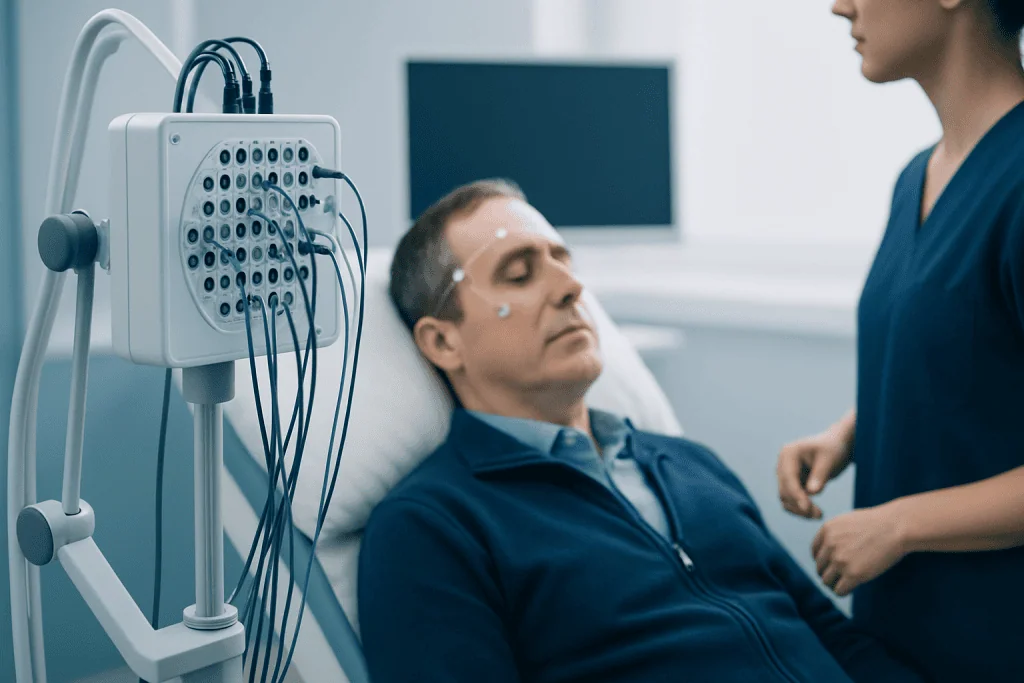
Supportive tests may include blood tests, spinal fluid analysis, and nerve conduction studies or electromyography. In some patients, spinal fluid shows elevated protein after the first several days of illness. Blood testing for anti-GQ1b antibodies can be especially helpful when the clinical picture suggests Miller Fisher syndrome. Brain imaging may also be used if doctors need to rule out a central nervous system cause such as stroke.
Some patients benefit from specialist testing depending on their symptoms. For example, if there is concern about overlapping nerve or brain involvement, doctors may request advanced neurological rehabilitation planning early, even while diagnosis is still being clarified. In selected cases, electromyography (EMG) and related nerve studies help assess how the peripheral nerves are functioning and support the overall clinical picture.
Modern Treatment Approaches
Treatment depends on symptom severity, the pace of progression, and whether there are overlapping features with Guillain-Barré syndrome. Many patients need monitoring in hospital at least during the early phase, especially if symptoms are changing, swallowing becomes difficult, or weakness spreads. Supportive care is a key part of treatment and may include help with hydration, nutrition, eye protection, mobility, and prevention of complications related to falls or reduced movement.
Immunotherapy may be recommended in some cases, especially when symptoms are significant or progressing. The most commonly used options are intravenous immunoglobulin and plasma exchange. These treatments aim to reduce the harmful immune response affecting the nerves. The choice depends on the patient’s overall condition, medical history, and the treating team’s assessment. Corticosteroids are not generally considered standard primary treatment for Guillain-Barré spectrum disorders.
Rehabilitation can be very helpful during recovery. Physical therapy may improve gait and coordination, while occupational therapy supports daily activities. If eye movement problems or facial weakness affect function, treatment plans can be tailored accordingly. In complex cases, a multidisciplinary team may consider broader care pathways that overlap with physical therapy and rehabilitation and, when symptoms extend beyond the classic pattern, management principles used in Guillain-Barré syndrome treatment.
Outlook, Recovery, and Self-care
The outlook for Miller Fisher syndrome is often favorable. Many people begin to improve within weeks, and substantial recovery is common over the following months. Eye movement problems, balance issues, and reflex changes usually improve gradually rather than all at once. Recovery speed varies from person to person and may depend on the severity of symptoms and whether there is overlap with broader Guillain-Barré syndrome.
During recovery, self-care focuses on safety and gradual return to activity. People may need support with walking, stairs, bathing, or driving until coordination and vision improve. Rest is important, but gentle supervised activity and rehabilitation exercises can also support recovery. Follow-up appointments help the medical team monitor progress and address any persistent symptoms.
It is also helpful for patients and families to know that fatigue can continue even after the most obvious neurological problems start improving. This does not necessarily mean the condition is worsening. A structured recovery plan, attention to nutrition and sleep, and guidance from a qualified clinician can make the healing period more manageable and reassuring.
When to Seek Medical Care
Medical care should be sought promptly if a person develops sudden double vision, drooping eyelids, new unsteadiness, difficulty walking, or rapidly reduced reflexes, especially after a recent infection. Early evaluation matters because Miller Fisher syndrome can look similar to other urgent neurological conditions and because symptoms may change over time.
Urgent assessment is especially important if there is trouble swallowing, shortness of breath, chest discomfort, faintness, rapidly worsening weakness, or inability to walk safely. These symptoms do not always occur, but when they do they need immediate medical attention. Emergency care is also appropriate if there is confusion, severe headache, or one-sided weakness, since doctors may need to rule out other causes.
After diagnosis, follow-up remains important even if symptoms seem mild. A neurologist can monitor recovery, check for overlap with related nerve disorders, and guide rehabilitation if needed. At Acibadem International, multidisciplinary specialists in JCI-accredited hospitals diagnose and treat neurological conditions such as Miller Fisher syndrome for international patients.
Frequently asked questions
Is Miller Fisher syndrome the same as Guillain-Barré syndrome?
Miller Fisher syndrome is generally considered a variant of Guillain-Barré syndrome rather than a completely separate disease. It shares an immune-related cause but often has a different symptom pattern, especially eye movement problems and balance difficulty.
What are the first signs of Miller Fisher syndrome?
Early signs often include double vision, drooping eyelids, and unsteady walking. Some people also notice reduced coordination or tingling after a recent infection.
How is Miller Fisher syndrome confirmed?
Doctors diagnose it using the symptom pattern, neurological examination, and supportive tests. These may include spinal fluid testing, nerve studies, and blood tests for anti-GQ1b antibodies.
Can Miller Fisher syndrome be cured?
There is no instant cure, but the condition often improves significantly with time and appropriate care. Many patients recover well over weeks to months, especially with careful monitoring and rehabilitation when needed.
Does everyone with Miller Fisher syndrome need hospital treatment?
Not everyone needs the same level of care, but many patients are monitored in hospital early on. This helps doctors watch for progression, swallowing problems, breathing issues, or overlap with more generalized Guillain-Barré syndrome.
Can Miller Fisher syndrome come back?
Recurrence is uncommon, but it can happen in a small number of people. Anyone with similar symptoms in the future should be assessed by a doctor promptly.
References
- National Institute of Neurological Disorders and Stroke
- National Organization for Rare Disorders
- Mayo Clinic
- Cleveland Clinic
- American Academy of Neurology
This article is for general information only and is not a substitute for professional medical advice. Please consult a qualified doctor about your individual situation.
Explore treatments in Turkey — costs, top hospitals & a free quote
JCI-accredited · board-certified surgeons · reply within 24h
Add us as a Preferred Source to see more of our trusted health content across Google Search, AI Overviews and Discover.