Minimally Invasive Surgery: Candidacy, Procedure Steps, and Recovery Timeline

Minimally invasive surgery uses small incisions, a camera, and specialized instruments to perform many types of operations. Not every patient or condition is a good fit; candidacy depends on the diagnosis, anatomy, overall health, and surgeon expertise.
Key Takeaways
- Minimally invasive surgery uses small incisions, a camera, and specialized instruments to perform many types of operations.
- Not every patient or condition is a good fit; candidacy depends on the diagnosis, anatomy, overall health, and surgeon expertise.
- Recovery is often faster than with open surgery, but healing time still varies by procedure and individual health factors.
- Benefits can include less pain, less blood loss, smaller scars, and shorter hospital stays.
- Possible risks include bleeding, infection, injury to nearby organs, blood clots, and the need to convert to open surgery.
Minimally invasive surgery is a way of performing certain operations through small incisions using a camera and specialized instruments. For suitable patients and procedures, it may offer less pain, shorter hospital stays, and a quicker return to daily activities than traditional open surgery.
Overview: What minimally invasive surgery means
Minimally invasive surgery is a surgical approach that allows doctors to perform an operation through smaller cuts than are used in traditional open surgery. Instead of making one large incision, the surgeon usually works through several small openings using a thin camera and long instruments. In some cases, the procedure may also be done with robotic assistance, which helps translate the surgeon’s hand movements into very precise instrument motions.
This approach does not mean a surgery is minor. The operation itself may still be complex, and it still requires careful preparation, anesthesia, and recovery. The term refers to how the surgeon reaches the area being treated, not whether the condition is simple or serious.
Many operations in the abdomen, chest, pelvis, joints, and other parts of the body can now be performed this way. Common examples include gallbladder removal, hernia repair, some gynecologic procedures, certain urologic operations, and selected cancer surgeries. Patients exploring minimally invasive surgery options may hear terms such as laparoscopic surgery, thoracoscopic surgery, endoscopic surgery, or robotic surgery, depending on the body area and technology used.
How it works and why it may be recommended
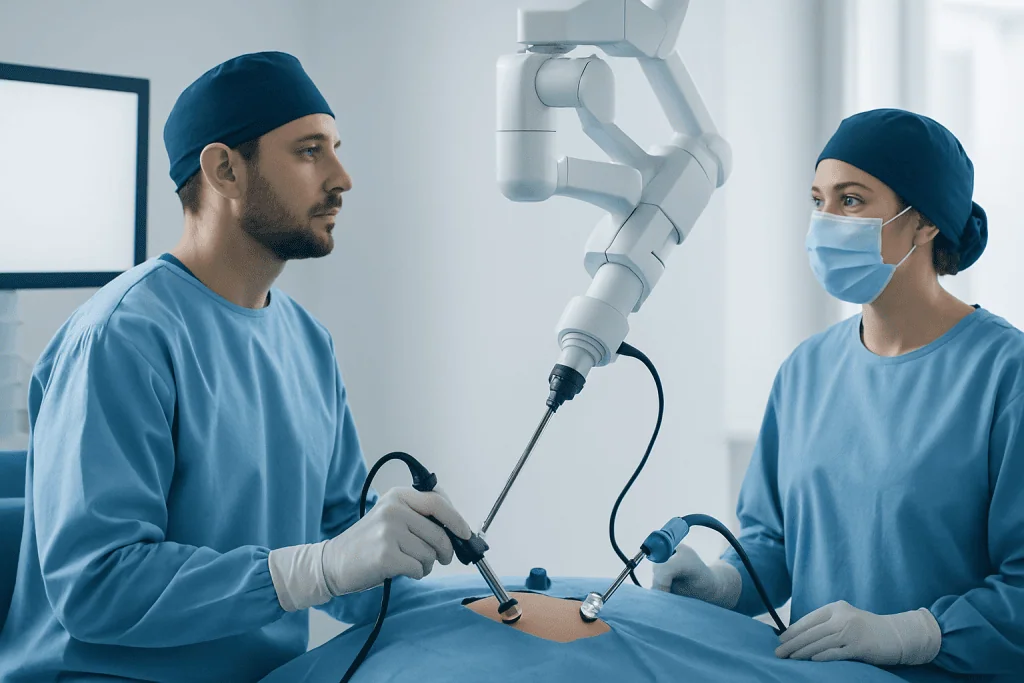
In a typical minimally invasive procedure, the surgeon creates small incisions and places a camera through one of them. The camera sends magnified images to a monitor, allowing the surgical team to see inside the body without opening a large area. Through the other small incisions, the surgeon inserts instruments designed to cut, grasp, remove, repair, or seal tissue.
The main reason doctors may recommend this approach is that it can reduce the physical stress of surgery on the body. Smaller incisions often mean less injury to skin and muscle, which may lead to less pain after surgery, reduced blood loss, shorter hospital stays, and a quicker return to movement and everyday tasks. Scarring is also usually smaller.
That said, minimally invasive surgery is not automatically the best choice in every case. Some operations still require an open approach for safety or better access. In other situations, a surgery may begin minimally invasively but need to be converted to an open operation if visibility is poor, bleeding occurs, or anatomy is more complicated than expected. This is a recognized part of safe surgical decision-making rather than a failure.
Who may be a good candidate

Candidacy for minimally invasive surgery depends first on the condition being treated. Some diseases and structural problems are especially well suited to this approach, while others are not. The size and location of the problem matter, as do previous surgeries, scar tissue, inflammation, obesity, pregnancy status, and whether emergency treatment is needed.
Doctors also consider the patient’s overall health. Heart and lung function, bleeding risk, diabetes control, kidney function, infections, and the ability to tolerate anesthesia all affect planning. Age alone does not decide candidacy; what matters more is the person’s general fitness and the specific operation being considered.
Imaging tests and specialist evaluation often help determine the safest route. For example, a surgeon may review scans before planning robotic surgery for a pelvic or urologic condition, or discuss whether a complex digestive problem might still need open surgery. In some cases, related conditions such as hernia or gallstones are common reasons patients ask whether a less invasive technique is possible.
Patients are often good candidates when the target area can be reached safely through small incisions, the surgical team has experience with the procedure, and there are no major factors that would make visualization or instrument movement unsafe. Final suitability should always be confirmed by the treating surgeon after a full review.
Step by step: what happens before, during, and after the procedure
Before surgery, patients usually attend a preoperative assessment. This may include a physical examination, blood tests, imaging, and a review of medications, allergies, and medical history. The care team explains eating and drinking restrictions, which medicines to stop or continue, and what to expect on the day of surgery. Patients may also be asked to stop smoking, arrange transportation, and prepare for a short period of limited activity at home.
On the day of the operation, the patient changes into a hospital gown and meets the anesthesia team. Most minimally invasive surgeries are performed under general anesthesia, although some procedures use other forms of anesthesia or sedation. Once the patient is asleep or comfortable, the surgeon makes the planned small incisions. In abdominal surgery, gas is often used to gently expand the space so the surgeon can see and work more clearly.
The camera and instruments are then inserted. The surgeon performs the necessary steps while watching a high-definition monitor. Tissue may be repaired, removed, biopsied, or reconstructed, depending on the goal of the operation. If robotic technology is used, the surgeon controls robotic arms from a console in the operating room. This can be particularly helpful for procedures requiring delicate dissection in tight spaces and may be discussed alongside general surgery planning.
At the end of the procedure, the instruments are removed and the small incisions are closed with stitches, surgical glue, or adhesive strips. The patient is taken to recovery for monitoring. Some people go home the same day, while others stay overnight or longer depending on the type of surgery, pain control, bowel function, and any medical conditions that need observation.
Benefits, limitations, and possible risks
The potential benefits of minimally invasive surgery are meaningful for many patients. Compared with open surgery, there is often less postoperative pain, smaller scars, lower blood loss, shorter hospitalization, and a faster return to walking, eating, and daily routines. These advantages can support recovery, but they vary by operation and individual health.
There are also limitations. A minimally invasive approach may take longer in some cases, especially for technically demanding procedures. It can be difficult when there is extensive scar tissue, severe infection, unexpected anatomy, or significant bleeding. In addition, the best outcome depends heavily on the experience of the surgical team and the suitability of the patient for that technique.
As with any surgery, risks are still present. Possible complications include infection, bleeding, blood clots, anesthesia-related problems, damage to nearby organs or blood vessels, wound issues, and delayed healing. Some patients also experience shoulder pain after certain laparoscopic procedures because of the gas used during surgery. If a surgeon needs to switch to an open incision for safety, that can increase recovery time but may be the right clinical decision.
Patients should feel comfortable asking how often their surgeon performs the planned procedure, what alternatives exist, and what recovery may look like in their specific case. Informed decision-making is an important part of safe care.
Recovery timeline and self-care after surgery
Recovery after minimally invasive surgery is often quicker than after open surgery, but it is still a gradual process. In the first 24 to 72 hours, patients commonly feel tired, sore, or bloated, and they may need prescription or over-the-counter pain relief as advised by their doctor. Walking early is usually encouraged because it supports circulation, lung function, and bowel activity.
During the first one to two weeks, many people can resume light daily activities, but lifting, strenuous exercise, and driving may need to wait until the surgeon says it is safe. Wound care instructions should be followed carefully. It is normal for the small incisions to feel tender, but worsening redness, drainage, fever, or severe pain should be reported promptly.
By two to six weeks, patients often return to more normal routines, depending on the procedure and their overall health. Some operations have a shorter timeline, while others, including more complex pelvic, chest, or cancer surgeries, require a longer recovery and closer follow-up. Full internal healing can continue for several weeks or months even when the patient feels much better externally.
Helpful self-care usually includes staying hydrated, eating a balanced diet, managing constipation if recommended, taking medicines exactly as directed, avoiding tobacco, and attending follow-up visits. If rehabilitation is needed, the doctor may recommend a gradual exercise plan or physical therapy to restore strength and mobility.
When to seek medical care
Anyone considering minimally invasive surgery should seek medical care if they have symptoms that may require evaluation, such as severe abdominal pain, a new lump or bulge, persistent vomiting, difficulty swallowing, unexplained bleeding, chest symptoms, or pain that interferes with normal activity. A doctor can determine whether surgery is needed at all and, if so, which approach may be safest.
After surgery, urgent medical advice is important if there is fever, shortness of breath, chest pain, heavy bleeding, increasing swelling, fainting, severe or worsening pain, inability to urinate, repeated vomiting, or signs of infection around the incision. Early attention can help prevent complications from becoming more serious.
For planned care, patients may benefit from an evaluation by a multidisciplinary team when the diagnosis is complex or there are several possible treatment paths. Near the end of the care journey, some international patients choose centers such as Acibadem International, where multidisciplinary specialists in JCI-accredited hospitals evaluate and treat conditions that may require minimally invasive techniques.
Frequently asked questions
Is minimally invasive surgery safer than open surgery?
It can be safer for the right patient and the right procedure, but it is not automatically safer in every situation. The safest option depends on the condition being treated, the patient’s overall health, and the surgeon’s experience.
Does minimally invasive surgery always mean a shorter recovery?
Recovery is often shorter than with open surgery, but the timeline varies widely by procedure. Some patients return to normal activities within days, while others need several weeks or more for full recovery.
Will there be less pain after minimally invasive surgery?
Many patients do have less pain because the incisions are smaller and there is often less disruption of muscle and tissue. However, some soreness, fatigue, and temporary discomfort are still normal after surgery.
Can a minimally invasive operation change to open surgery?
Yes. A surgeon may need to convert to an open procedure if there is bleeding, limited visibility, scar tissue, unexpected anatomy, or another safety concern. This is a standard precaution used to complete the operation safely.
Who is not a good candidate for minimally invasive surgery?
Some patients may not be suitable because of the type of disease, prior surgeries, severe inflammation, unstable medical conditions, or emergency circumstances. The decision is individualized after examination, tests, and surgical review.
How should someone prepare for minimally invasive surgery?
Preparation usually includes a preoperative visit, review of medicines, instructions about fasting, and planning for transport and recovery at home. Patients should also tell their doctor about all medical conditions, supplements, and any previous anesthesia issues.
References
- National Institutes of Health
- American College of Surgeons
- Society of American Gastrointestinal and Endoscopic Surgeons
- MedlinePlus
- World Health Organization
This article is for general information only and is not a substitute for professional medical advice. Please consult a qualified doctor about your individual situation.
Minimally Invasive in Turkey — costs, top hospitals & a free quote
JCI-accredited · board-certified surgeons · reply within 24h
Add us as a Preferred Source to see more of our trusted health content across Google Search, AI Overviews and Discover.

Robotic Surgery
Robot-assisted procedures across urology, gynecology and general surgery for greater precision and faster recovery.