

Miscarriage vs Menstruation: Key Differences and How Doctors Tell Them Apart

A late or unusually heavy period can sometimes be an early miscarriage, but bleeding alone cannot confirm this. A positive pregnancy test before or during bleeding makes pregnancy-related bleeding more likely and should be discussed with a clinician.
Key Takeaways
- A late or unusually heavy period can sometimes be an early miscarriage, but bleeding alone cannot confirm this.
- A positive pregnancy test before or during bleeding makes pregnancy-related bleeding more likely and should be discussed with a clinician.
- Doctors may use repeat hCG blood tests and ultrasound to distinguish a miscarriage from menstruation or other pregnancy-related conditions.
- Urgent assessment is important for severe pain, very heavy bleeding, dizziness, fainting, shoulder pain or fever.
- Most miscarriages happen because of chromosome changes in the embryo and are not caused by everyday activities.
Miscarriage and menstruation can both cause vaginal bleeding, cramping and passing clots, especially very early in pregnancy. The clearest difference is whether a pregnancy occurred; a clinician may use pregnancy tests, blood testing and ultrasound to determine the cause safely.
Miscarriage vs Menstruation: A Side-by-Side Comparison
Miscarriage and menstruation may feel similar because both can involve uterine cramping, bleeding and blood clots. However, menstruation is the shedding of the uterine lining when pregnancy has not occurred, while a miscarriage is the loss of a confirmed or developing pregnancy before 20 weeks. In very early pregnancy, a miscarriage may resemble a late, heavier-than-usual period, so symptoms alone cannot always provide a definite answer.
| Feature | Menstruation | Possible miscarriage |
|---|---|---|
| Pregnancy test | Usually negative | May be positive, faintly positive, or become negative as pregnancy hormone levels fall |
| Timing | Usually follows a person’s usual cycle pattern, although cycles can vary | May occur after a missed period or after a known positive pregnancy test |
| Bleeding | Often begins light, becomes heavier, then tapers over several days | May range from spotting to heavy bleeding; tissue or larger clots may be passed |
| Cramping | Often mild to moderate and familiar in pattern | Can be stronger than usual, wave-like, or associated with low back or pelvic pain |
| Other signs | May include typical premenstrual symptoms | Pregnancy symptoms may lessen, but this does not confirm a miscarriage |
| How it is confirmed | Usually no testing is needed | Pregnancy testing, repeat blood tests and/or ultrasound may be needed |
There is considerable overlap between these experiences. A person can also have bleeding in an ongoing pregnancy, and not all bleeding means a miscarriage. Anyone who has had a positive pregnancy test and then develops bleeding or pain should contact a qualified healthcare professional for individualized advice.
Clues That May Help, but Cannot Diagnose the Cause
A regular period commonly arrives around its expected time and follows a familiar pattern of bleeding and cramps. It may be somewhat different from month to month because stress, illness, travel, weight changes, hormonal contraception, perimenopause and other factors can affect the cycle. A heavier or more painful period is not, by itself, proof of pregnancy loss.
A miscarriage becomes more likely when bleeding starts after a missed period or a positive home pregnancy test. Bleeding may be heavier than a usual period and may include grayish tissue, clots or fluid, although clots can also occur during a heavy menstrual period. Cramping may be more intense than usual, but pain severity also varies widely among individuals.
Very early losses are sometimes called biochemical pregnancies or chemical pregnancies. In these cases, a pregnancy test may briefly be positive before bleeding begins around the time a period is expected. Without a prior positive test, it may be impossible to know whether a late, heavy period was a very early miscarriage or a delayed menstrual cycle.
How a Clinician Tells Them Apart

A clinician will usually begin by asking about the date of the last menstrual period, cycle regularity, pregnancy-test results, contraception, prior pregnancies and current symptoms. They may also ask about one-sided pelvic pain, dizziness, fever, discharge or risk factors for infection. This history helps determine whether the bleeding may be menstrual, related to an early pregnancy loss, or caused by another condition.
A urine or blood pregnancy test checks for human chorionic gonadotropin, known as hCG. When pregnancy is suspected, clinicians may repeat quantitative blood hCG testing about 48 hours apart to assess the pattern of change. Falling levels can support a diagnosis of a failing pregnancy, while rising levels do not by themselves confirm that the pregnancy is developing normally or located in the uterus.
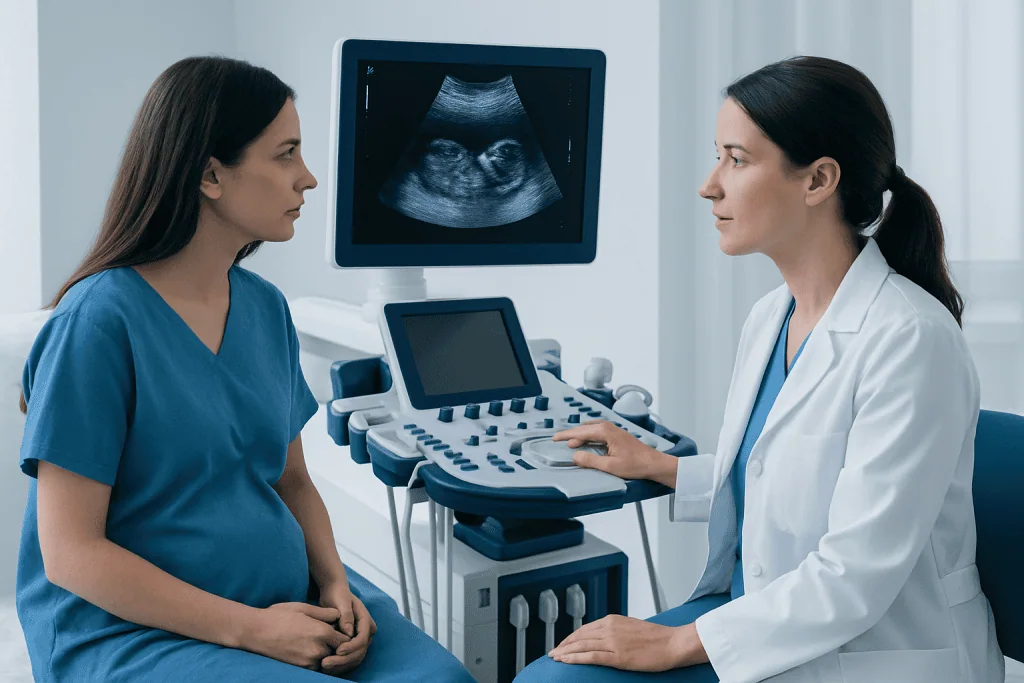
Pelvic ultrasound may show whether a pregnancy is located in the uterus and whether expected pregnancy structures are visible. In a very early pregnancy, an ultrasound may not yet provide a final answer, so repeat testing can be necessary. A pelvic examination may also be appropriate to assess bleeding, the cervix and possible infection, but it is only one part of the overall assessment.
It is especially important to rule out ectopic pregnancy, where a pregnancy develops outside the uterus, most often in a fallopian tube. Ectopic pregnancy can initially cause bleeding similar to a period or miscarriage, but it requires prompt medical evaluation and different treatment. One-sided pain, shoulder-tip pain, marked weakness or fainting should never be assumed to be a routine period.
What to Do if It Is a Period or a Possible Miscarriage
If the bleeding is consistent with a usual period, a person may track the start date, flow, clots and pain level. Rest, hydration and a heating pad may help with cramps. Over-the-counter pain relief may be suitable for many people, but they should follow the product instructions and seek advice from a pharmacist or clinician if they are pregnant, may be pregnant, have medical conditions or take other medicines.
If pregnancy is possible, taking a home pregnancy test can be helpful. A test is generally most reliable from the first day of a missed period, although timing and urine concentration can affect results. A negative test does not always exclude a very early pregnancy; if bleeding is unusual, a test was recently positive, or pregnancy symptoms and uncertainty continue, medical advice is appropriate.
For a confirmed miscarriage, management depends on gestational age, symptoms, ultrasound findings and personal preferences. Some people pass the pregnancy tissue naturally with expectant management. Others may be offered medication or a procedure to remove remaining tissue when clinically indicated. Follow-up is important to confirm that the miscarriage is complete and to address anemia, infection risk, Rh status where relevant, or ongoing symptoms.
Why Miscarriage Happens and What It Means for Future Pregnancy
Early miscarriage is common and is most often related to random chromosome changes that occur as an embryo develops. These changes are usually not inherited and are not caused by exercise, work, sexual activity, stress, a minor fall or ordinary daily activities. Knowing this may not remove the sadness of a loss, but it can help reduce feelings of self-blame.
Age, certain uterine conditions, uncontrolled diabetes, thyroid disease, some infections, smoking and previous pregnancy losses may influence miscarriage risk. However, many people who have one or more risk factors have healthy pregnancies, and many miscarriages occur without an identifiable cause. A clinician can review an individual’s history and recommend testing only when it is appropriate.
After one miscarriage, most people can go on to have a successful future pregnancy. The timing of trying again depends on physical recovery, emotional readiness and medical circumstances. People who have repeated losses, difficulty conceiving, or a history of ectopic pregnancy should discuss pre-pregnancy planning and early pregnancy monitoring with an obstetrician-gynecologist or fertility specialist.
When to Seek Medical Care
Medical advice should be sought promptly for bleeding during a known or suspected pregnancy, particularly after a positive pregnancy test. Contact a clinician as soon as possible if bleeding is heavier than a normal period, cramps are increasing, tissue is passed, or there is uncertainty about whether the bleeding is a period or pregnancy loss. Assessment can clarify what is happening and identify care that may be needed.
Emergency care is needed for severe or worsening abdominal or pelvic pain, pain mainly on one side, shoulder-tip pain, fainting, dizziness, confusion, shortness of breath, or very heavy bleeding that quickly soaks pads. These symptoms may indicate substantial blood loss or an ectopic pregnancy and should be evaluated without delay.
Fever, chills, foul-smelling vaginal discharge, or persistent increasing pain also require urgent medical attention because they can be signs of infection. Even when symptoms are physically mild, emotional support is valid and important. A healthcare team can discuss counseling, support resources and follow-up after a suspected or confirmed loss.
Recovery, Emotional Support and Follow-Up
Bleeding and cramping after an early miscarriage may continue for days to a few weeks, depending on how the miscarriage is managed. A clinician can explain what is expected in each situation and when to return for review. It is generally wise to avoid inserting anything into the vagina, including tampons, until a clinician has advised that it is safe if there has been a miscarriage or a procedure.
Grief after miscarriage can include sadness, numbness, anger, anxiety or relief, and these responses can change over time. Partners and family members may also be affected differently. Speaking with a trusted person, mental health professional, pregnancy-loss support group or healthcare clinician can be helpful, especially if low mood, anxiety, sleep difficulties or intrusive thoughts persist.
Acibadem International’s multidisciplinary specialists and JCI-accredited hospitals support international patients who need assessment and treatment for pregnancy-related bleeding, miscarriage and related reproductive health concerns. Care should always be tailored after an in-person clinical evaluation and appropriate testing.
Frequently asked questions
Can a miscarriage look exactly like a period?
A very early miscarriage can look much like a late or unusually heavy menstrual period. If there was no positive pregnancy test, it may not be possible to tell retrospectively. Testing during the episode or clinical assessment may provide more information.
How can someone tell whether bleeding is a period or miscarriage at home?
A home pregnancy test is the most useful initial clue if pregnancy is possible. However, tests and symptoms cannot always give a definite answer, particularly in very early pregnancy. A clinician can use repeat hCG testing and ultrasound when needed.
Can a negative pregnancy test mean it was not a miscarriage?
Not necessarily. In a very early miscarriage, hCG levels may fall quickly and a test may become negative by the time bleeding occurs. A negative result can also simply mean that the bleeding is a period, so the timing of symptoms and any earlier test results matter.
Is bleeding in early pregnancy always a miscarriage?
No. Some people have light bleeding or spotting in an ongoing pregnancy, and there are several possible causes. Because ectopic pregnancy and other conditions can also cause bleeding, it is important to contact a healthcare professional for advice after a positive pregnancy test.
Are clots a sign of miscarriage?
Clots can occur with both heavy periods and miscarriage, so they do not confirm either condition. Larger clots, tissue-like material, severe pain or heavy bleeding should be discussed with a clinician, especially when pregnancy is possible.
When can someone try to conceive after a miscarriage?
Many people can ovulate again before their next period, but the best timing depends on physical recovery, follow-up results and emotional readiness. A clinician can provide personalized guidance, particularly after an ectopic pregnancy, later miscarriage, infection or repeated pregnancy losses.
This article is for general information only and is not a substitute for professional medical advice. Please consult a qualified doctor about your individual situation.
Explore treatments in Turkey — costs, top hospitals & a free quote
JCI-accredited · board-certified surgeons · reply within 24h
Add us as a Preferred Source to see more of our trusted health content across Google Search, AI Overviews and Discover.

More from the Health Library

Grower vs Shower: Key Differences and How Doctors Tell Them Apart

6 Signs of Heart Attack a Month Before: Common Causes, Related Conditions, and When to See a Doctor

Stomach Abdominal Pain Diarrhea Explained: Common Triggers and Red Flags

Red Itchy Pimples on Legs: Possible Causes and When to Seek Care

What Does Shingles Look Like? Causes, Explanations, and Next Steps

Ssri vs Snri: Key Differences and How Doctors Tell Them Apart
Gynecology & Obstetrics Specialists at Acibadem

Dr. Alper Koçak
Gynecology & Obstetrics
Assoc. Prof. Dr. Arzu Yurci
Gynecology & Obstetrics
Dr. Asmar Hasanova
Gynecology & Obstetrics
Dr. Ayberk Çakır
Gynecology & Obstetrics