Mohs Micrographic Surgery: Procedure, Recovery and Results
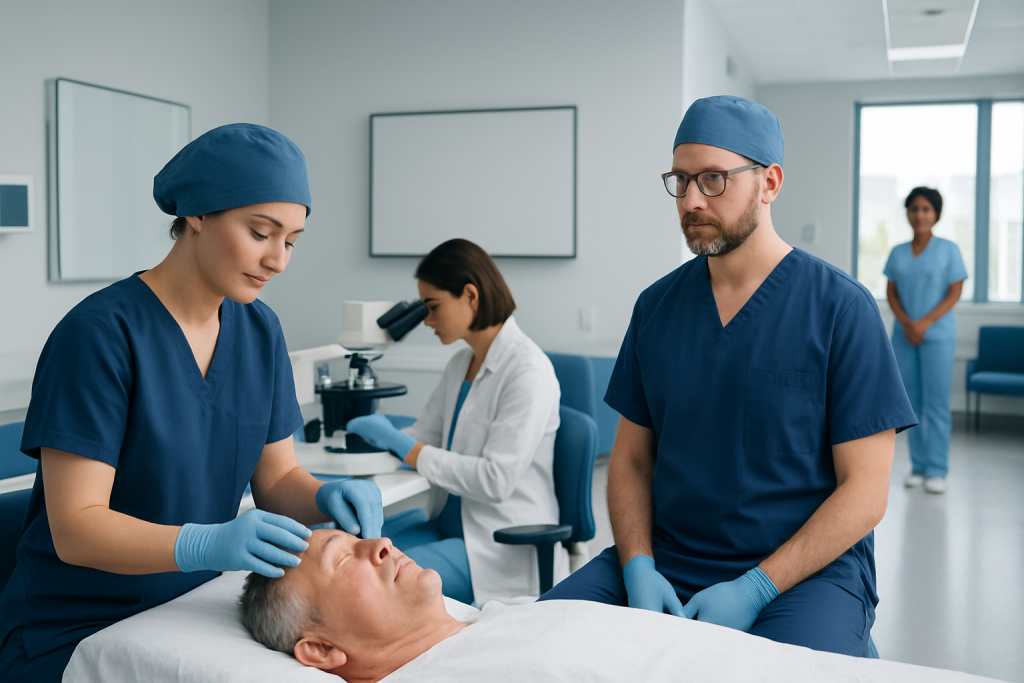
Mohs surgery combines cancer removal and immediate microscopic margin examination during the same appointment. It is commonly used for high-risk, recurrent, large, or poorly defined skin cancers, especially on the face, ears, hands, feet, and genital area.
Key Takeaways
- Mohs surgery combines cancer removal and immediate microscopic margin examination during the same appointment.
- It is commonly used for high-risk, recurrent, large, or poorly defined skin cancers, especially on the face, ears, hands, feet, and genital area.
- The number of stages and the final wound repair depend on how far cancer cells extend beyond the visible tumor.
- Recovery varies by wound size, location, and repair type; careful wound care and follow-up are important.
- Mohs surgery has high cure rates for appropriately selected non-melanoma skin cancers, but continued skin surveillance is still needed.
Mohs micrographic surgery is a specialized outpatient procedure that removes certain skin cancers in thin layers, with each layer examined under a microscope during the visit. It is designed to remove cancer completely while preserving as much healthy skin as possible, especially in visible or functionally important areas.
Overview: What Is Mohs Micrographic Surgery?
Mohs micrographic surgery is a precise technique used mainly to treat certain types of skin cancer. The surgeon removes the visible cancer along with a very thin layer of surrounding tissue, then examines that tissue under a microscope while the patient waits. If cancer cells are found at an edge, another layer is removed only from the area where cells remain.
This process continues until the examined edges are clear of cancer. By mapping and checking the full margin of each layer, Mohs surgery can help spare healthy tissue while still aiming for complete removal. It is most often performed under local anaesthetic in an outpatient setting.
The procedure is commonly used for basal cell carcinoma and squamous cell carcinoma. It may also be considered for selected rarer skin cancers or melanoma in situ when a specialist believes margin-controlled surgery is appropriate. A biopsy and clinical assessment are needed before deciding whether Mohs surgery is the best option.
Who May Be a Candidate for Mohs Surgery?
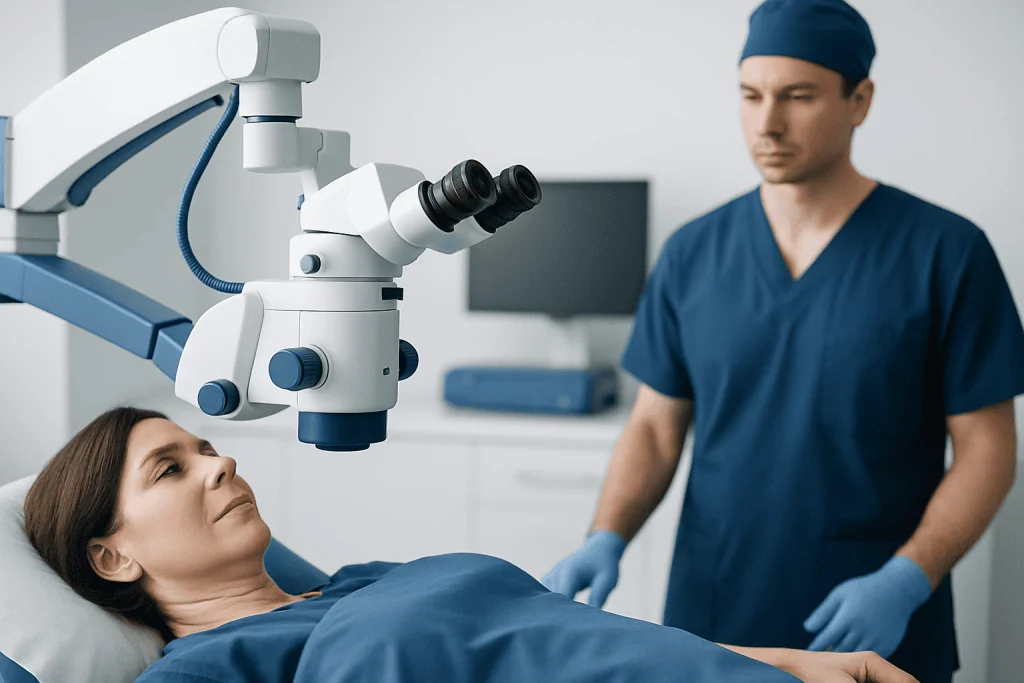
Mohs surgery is not necessary for every skin cancer. It is often recommended when preserving nearby normal skin is particularly important, such as for cancers on the nose, eyelids, lips, ears, scalp, fingers, toes, or genital area. These sites can have limited available tissue and may affect appearance or function after reconstruction.
A dermatologist or skin cancer surgeon may also recommend it for tumors that are large, have unclear borders, have returned after earlier treatment, grow quickly, have aggressive features under the microscope, or develop in people with reduced immune function. Previous radiation to the area can also influence treatment planning.
Factors such as the cancer type, biopsy findings, size, location, overall health, medicines, bleeding risk, and ability to manage wound care are considered together. Some lower-risk tumors may be appropriately treated with standard excision, topical therapy, cryotherapy, curettage, radiation therapy, or other approaches. The choice should be individualized with a qualified clinician.
How Mohs Micrographic Surgery Works Step by Step
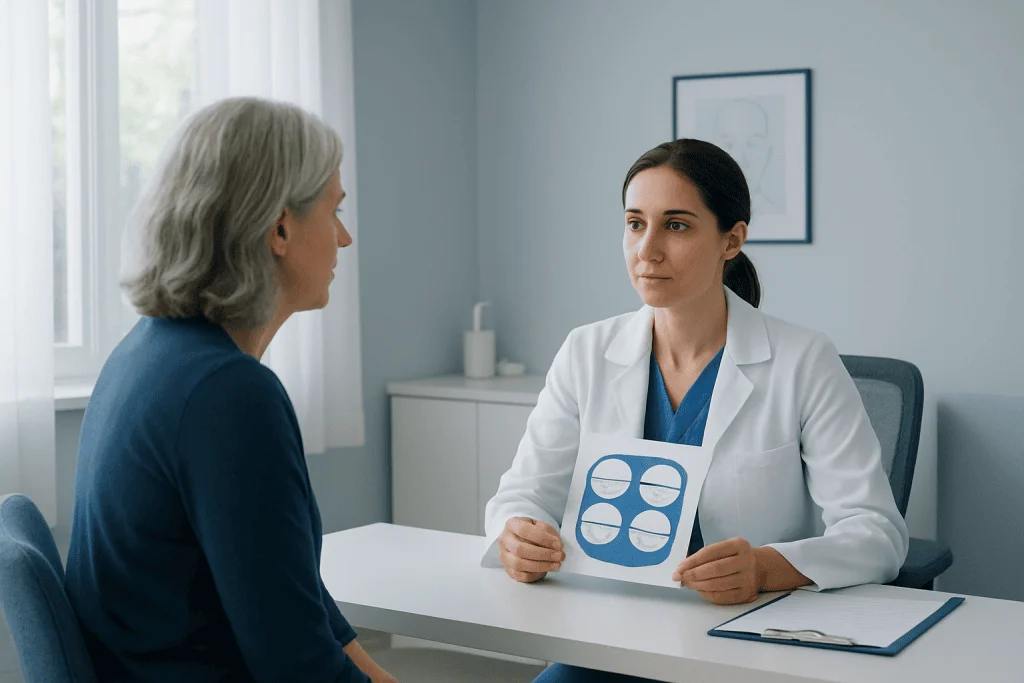
Before the procedure, the surgeon reviews the diagnosis, marks the treatment site, and gives local anaesthetic to numb the area. The visible tumor and a thin surrounding layer of tissue are removed. This first stage usually takes a relatively short time, but the microscopic processing that follows requires a waiting period.
The tissue is carefully mapped, frozen, cut into very thin sections, and examined under a microscope. This detailed map allows the surgeon to identify the exact location of any remaining cancer cells. If the margins are clear, surgery is complete. If cancer is present, the surgeon removes another small layer only from the mapped area and repeats the examination.
The number of stages cannot be predicted in advance because skin cancer may extend beyond what can be seen on the surface. Once the tumor has been cleared, the wound may be allowed to heal naturally, closed with stitches, repaired using a skin flap or graft, or referred to another specialist for reconstruction. Patients should expect the visit to take several hours and should arrange transport home if advised, particularly if the surgery is near the eye or involves sedation.
For patients seeking coordinated care, skin cancer treatment planning can include biopsy review, margin-controlled surgery, reconstruction, and long-term surveillance when clinically appropriate.
Benefits, Risks and Expected Results
The main benefit of Mohs surgery is that it examines the surgical margins during the procedure, rather than relying only on a sample of the edge. This offers excellent cancer-control results for appropriately selected skin cancers and may minimize removal of normal tissue. Tissue preservation can be especially meaningful on the face and other delicate areas.
Even so, no procedure is completely risk-free. Expected effects include tenderness, swelling, bruising, minor bleeding, and scarring. Possible complications include infection, wound separation, prolonged bleeding, numbness or altered sensation, a reaction to anaesthetic, and cosmetic or functional changes depending on the site and repair.
Scars usually improve gradually over months, but the final appearance depends on the size and depth of the wound, skin type, body location, healing, and reconstruction method. The care team can explain likely scar placement and whether later scar-care measures may be helpful. Promptly reporting unusual symptoms supports safe healing.
Mohs Surgery Recovery: Timeline and Aftercare
Recovery begins the day of surgery. A pressure dressing is commonly placed over the wound, and the team provides individualized instructions about when to remove it, how to clean the area, and which ointment or dressing to use. Keeping the wound clean, protected, and moist as directed can support healing.
For the first day or two, mild oozing, swelling, and discomfort can occur. Swelling may be more noticeable around the eyes, forehead, or cheeks and can peak after a few days before improving. Resting with the head elevated when appropriate and using a wrapped cool compress nearby, if the surgeon approves, may help reduce swelling.
If stitches are used, their removal date depends on the location and repair. A wound left to heal on its own may take weeks to close fully, while deeper repairs can continue settling for several months. Sun protection is important after healing because ultraviolet exposure can darken or redden a scar and increases the risk of future skin cancers.
Patients should follow their clinician’s instructions about pain relief and any medicines that affect bleeding. They should not stop prescribed blood-thinning medicines without guidance from the clinician who manages them. Follow-up skin checks remain important even after successful surgery.
How Long Should You Rest After Mohs Surgery?
Many people can return to quiet daily activities within one or two days after Mohs surgery, depending on the surgical site, wound size, repair, and comfort level. However, the treated area needs protection while healing, and the surgeon may recommend several days of reduced activity.
Strenuous exercise, heavy lifting, bending, swimming, and activities that stretch or bump the wound are commonly restricted for about one to two weeks, or longer after a flap, graft, or complex repair. These activities can increase bleeding, swelling, and tension on stitches. The safest timeline is the one provided by the surgical team.
Time away from work varies. Desk-based work may be possible sooner, while physically demanding jobs may require additional recovery time. People whose work involves dust, water exposure, contact sports, or sun exposure should ask for specific advice before returning.
What Not to Do After Mohs Surgery
After Mohs surgery, patients should avoid disturbing the wound or removing the original dressing earlier than instructed. They should not scratch, pick at scabs, apply unapproved products, or use makeup directly over an unhealed wound. Smoking and nicotine products can impair wound healing and should be avoided if possible.
Until the surgeon says it is safe, patients should avoid soaking the wound in baths, pools, hot tubs, or the sea. They should also avoid vigorous exercise, heavy lifting, and positions that place pressure or tension on the repair. Alcohol may increase bleeding in some people and can interact with certain pain medicines, so it is sensible to ask the care team about its use.
Do not make changes to prescribed medicines on your own. If bleeding occurs, the surgeon may recommend firm, continuous pressure for a specified period. Bleeding that does not stop with the instructions provided, or bleeding that rapidly soaks through dressings, requires medical advice.
What I Wish I Knew Before Mohs Surgery
It can be helpful to know that Mohs surgery is often a longer appointment than a standard skin procedure because laboratory processing and microscopic examination happen between stages. Much of the day may involve waiting, and patients may not know how many stages or what type of repair will be needed until the cancer is cleared.
Comfortable clothing, a snack if permitted, reading material, a charged phone, and a support person when appropriate can make the day easier. Patients should provide a complete medicine list, including supplements and non-prescription products, and mention allergies, bleeding problems, pacemakers or implanted devices, and previous reactions to local anaesthetic.
It is also useful to prepare for the possibility of a visible dressing, temporary swelling, and a scar. Asking in advance about transport, wound-care supplies, work restrictions, stitches, follow-up, and warning signs can reduce uncertainty. The surgeon can discuss whether reconstruction may be needed and who will perform it.
How Often Does Cancer Come Back After Mohs Surgery?
For suitable basal cell and squamous cell cancers, Mohs surgery is associated with very high cure rates, including for many tumors that have recurred after previous treatment. However, recurrence is still possible because cancer behavior varies and microscopic cells can occasionally remain or return. Individual risk depends on the tumor type, size, depth, location, pathology features, immune status, and whether the cancer was previously treated.
Mohs surgery does not prevent a new skin cancer from developing elsewhere. People who have had one skin cancer have a higher chance of developing another, so regular skin examinations are an important part of long-term care. The follow-up interval is tailored to the diagnosis and personal risk factors.
Between appointments, patients should become familiar with their skin and report a new, changing, bleeding, crusting, non-healing, or painful spot. Consistent sun protection, including shade, protective clothing, and broad-spectrum sunscreen used as directed, helps reduce future ultraviolet damage.
When to Seek Medical Care
Contact the surgical team promptly for increasing redness, warmth, worsening pain, pus-like drainage, fever, a bad odor from the wound, an opening in the repair, or bleeding that does not settle with the instructions given. These symptoms do not always mean a serious problem, but timely assessment can help prevent complications.
Seek urgent medical care for severe or persistent bleeding, symptoms of a serious allergic reaction such as trouble breathing or swelling of the face or throat, or any concerning sudden change in wellbeing. Patients should also contact their clinician if they are unsure how to perform wound care or if a dressing becomes loose, wet, or heavily soiled.
Acibadem International’s multidisciplinary specialists and JCI-accredited hospitals can assess and treat skin cancer for international patients, including coordination of Mohs surgery and reconstructive care when indicated.
Frequently asked questions
Is Mohs micrographic surgery painful?
The area is numbed with local anaesthetic, so patients should not feel sharp pain during tissue removal. They may notice pressure, movement, or brief discomfort during injections. Mild soreness after the procedure is common and can usually be managed according to the surgeon's advice.
How long does Mohs micrographic surgery take?
The total appointment often takes several hours because each tissue layer must be processed and examined under a microscope. The actual removal stage may be brief, but there can be waiting periods between stages. More extensive tumors or complex repairs can make the visit longer.
Will I have a scar after Mohs surgery?
Any procedure that removes skin can leave a scar. Mohs surgery aims to preserve as much healthy tissue as possible, but the final scar depends on the cancer size, location, number of stages, and repair method. Scars often mature and become less noticeable over time.
Can I drive myself home after Mohs surgery?
Some people can drive after surgery performed with local anaesthetic, but it may not be advisable if the procedure is near the eye, affects vision, involves a large repair, or if calming medication is used. The surgeon's office will provide specific guidance. Arranging a ride in advance is often a practical option.
Can I shower after Mohs surgery?
This depends on the wound location, dressing, and closure method. Many patients can shower after a short period, while avoiding direct spray and soaking, but the instructions may differ. The wound should not be submerged in a bath, pool, or hot tub until the care team confirms it is safe.
Does Mohs surgery cure skin cancer permanently?
Mohs surgery provides a high likelihood of cure for appropriate cancers, but no treatment can guarantee that a cancer will never recur. It also does not prevent new skin cancers from developing elsewhere. Ongoing skin checks and sun protection remain important after treatment.
References
- American Academy of Dermatology
- American Cancer Society
- National Cancer Institute
- British Association of Dermatologists
- National Comprehensive Cancer Network
This article is for general information only and is not a substitute for professional medical advice. Please consult a qualified doctor about your individual situation.
Oncology care in Turkey — second opinion and treatment plan
JCI-accredited · board-certified surgeons · reply within 24h
Add us as a Preferred Source to see more of our trusted health content across Google Search, AI Overviews and Discover.