Monoclonal Antibody Treatment: How It Works, Results and What to Expect

Monoclonal antibodies are targeted medicines used in cancer and several immune-mediated or infectious conditions. They may block growth signals, mark cells for immune destruction, deliver treatment to a target or reduce harmful inflammation.
Key Takeaways
- Monoclonal antibodies are targeted medicines used in cancer and several immune-mediated or infectious conditions.
- They may block growth signals, mark cells for immune destruction, deliver treatment to a target or reduce harmful inflammation.
- Treatment is commonly given by intravenous infusion, although some medicines are injected under the skin.
- Results vary by diagnosis, disease stage, biomarker findings and the individual medicine used.
- Infusion reactions, infections and organ-specific side effects are possible, so monitoring and follow-up are important.
Monoclonal antibody treatment uses laboratory-made proteins that recognize selected targets in the body, such as markers on cancer cells or molecules involved in inflammation. It may be used alone or alongside other therapies, and the expected benefits, treatment schedule and side effects depend on the specific antibody and condition being treated.
Overview: how monoclonal antibody treatment works
Monoclonal antibody treatment is a form of targeted medical therapy. Monoclonal antibodies are laboratory-made proteins designed to attach to a particular substance, called an antigen or target. Depending on the medicine, that target may be present on cancer cells, immune cells, inflammatory proteins or infectious organisms.
Once attached, an antibody can work in several ways. It may block a signal that helps abnormal cells grow, flag a cell for destruction by the immune system, interfere with inflammation, or carry another treatment directly toward a selected target. In cancer care, these medicines are often selected after testing the tumor for relevant biomarkers.
Monoclonal antibodies are not one single treatment. Each medicine has a distinct target, approved uses, schedule, monitoring plan and potential side effects. The treatment team explains why a particular antibody is being considered and whether it is used alone or together with surgery, chemotherapy, radiation therapy, hormone therapy or other medicines.
Who may be a candidate for treatment?
Candidacy depends first on the condition being treated. In oncology, a specialist considers the cancer type, stage, previous treatments, overall health and whether testing shows that the tumor has the target needed for a specific medicine. Some antibodies are used in early-stage disease, while others are used for advanced, recurrent or metastatic cancer.
Monoclonal antibodies are also used for selected autoimmune, inflammatory and allergic conditions, as well as in certain infectious diseases. In these settings, the clinician evaluates symptoms, disease activity, prior treatments, infection history, vaccination status and any medical conditions that could affect safety.
Before starting, patients may have blood tests, scans or other baseline assessments. The team reviews current medicines, known allergies, pregnancy or breastfeeding plans, heart or lung disease, liver or kidney problems, and prior reactions to infusions. These checks help individualize treatment and monitoring.
- Target or biomarker testing may be essential for some cancer medicines.
- Active or recurrent infections may need assessment before immune-targeting therapy.
- Not every patient with the same diagnosis will benefit from the same antibody.
What happens during a monoclonal antibody infusion?

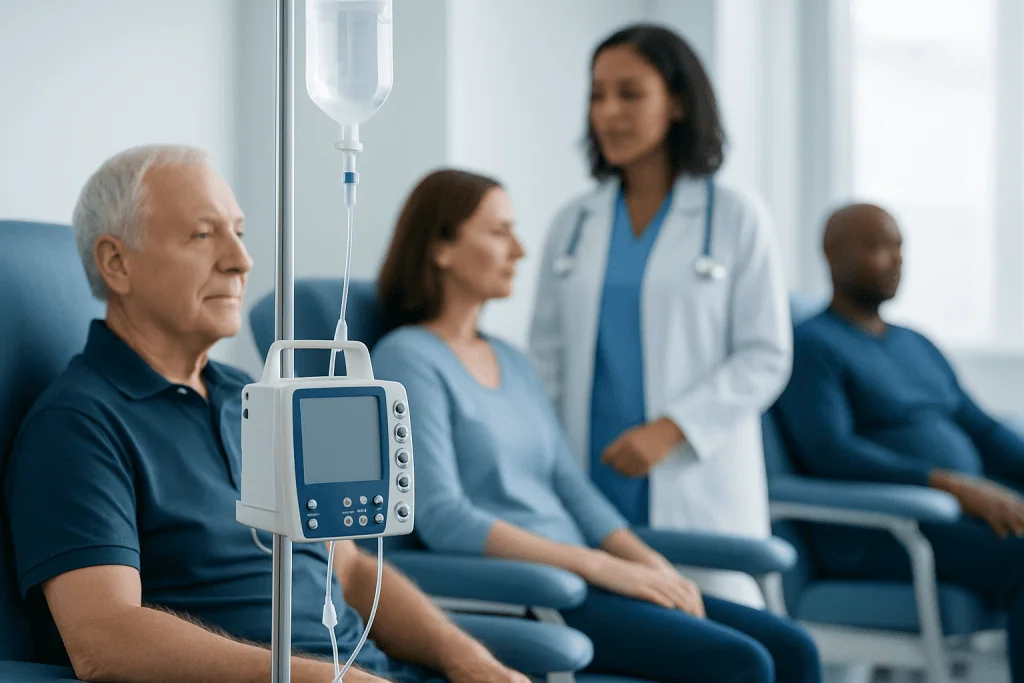
Many monoclonal antibodies are given through a vein in an infusion unit or hospital day-treatment setting. Some are administered as an injection under the skin. The exact process varies, but patients are usually assessed before treatment, including a review of symptoms, vital signs and relevant laboratory results.
For an intravenous infusion, a nurse places an IV line or accesses an existing central line. Some medicines require premedication, such as medication to reduce the chance of fever, rash or another infusion reaction. The first dose may be given more slowly because reactions are more likely to occur early in treatment.
During the infusion, staff monitor for symptoms such as flushing, itching, chills, fever, shortness of breath, chest discomfort, dizziness or changes in blood pressure. If a reaction occurs, the infusion may be slowed or paused and treatment may be given. A severe reaction is uncommon but requires immediate medical attention.
After the dose, patients may be observed for a period of time, especially after the first administration. The care team provides instructions about symptoms to report at home, future appointments, blood tests and the next treatment date.
Benefits, results and limits of monoclonal antibody treatment
The main potential benefit of monoclonal antibody treatment is precision: the medicine is designed to act on a defined target rather than affecting all rapidly dividing cells in the same way as traditional chemotherapy. This does not mean it is free from side effects, but it can offer an important treatment option for people whose condition has a suitable target.
In cancer treatment, benefits may include shrinking tumors, slowing growth, lowering the chance of recurrence in certain settings, easing cancer-related symptoms or helping another treatment work better. In inflammatory diseases, an antibody may reduce disease activity, prevent flares or improve daily functioning. The intended goal should be discussed clearly before treatment begins.
What is the success rate of monoclonal antibody cancer treatment?
There is no single success rate for monoclonal antibody cancer treatment. Outcomes differ substantially according to the cancer type, stage, tumor biology, antibody used, other treatments given and how the individual responds. For some cancers, an antibody can substantially improve outcomes in appropriately selected patients; in others, benefit may be more limited or temporary.
Oncologists use evidence from clinical trials and information specific to the individual diagnosis to discuss likely benefit. Scans, examinations, blood tests and symptom changes are used to assess response over time. A lack of response does not mean care has failed; alternative medicines, clinical trials, supportive care and other treatment approaches may be considered.
Side effects and the major challenges of monoclonal antibodies
Side effects vary widely because monoclonal antibodies act on different biological targets. Some people have few symptoms, while others need dose adjustments, extra monitoring or a change in treatment. It is important to report new symptoms promptly rather than waiting for the next appointment.
What are the common side effects of monoclonal antibody infusions?
Common infusion-related effects can include fever, chills, tiredness, headache, nausea, skin rash, itching, flushing or temporary changes in blood pressure. These can happen during treatment or soon afterward and are often manageable with monitoring, slowing the infusion or supportive medication. Injection-site redness or soreness can occur with medicines given under the skin.
What is the major problem with monoclonal antibodies?
A major challenge is that these medicines only work when the relevant target and disease biology are present, and a response may not occur or may lessen over time. In addition, the immune system and other organs can be affected in target-specific ways. Some antibodies raise infection risk, while others may rarely affect the heart, lungs, skin, liver, bowel, nerves or blood counts.
The treating team provides medicine-specific safety information before treatment. Patients should contact their clinical team urgently for severe breathing difficulty, facial or throat swelling, chest pain, fainting, high fever, confusion, uncontrolled vomiting or diarrhea, significant bleeding, or rapidly worsening symptoms.
Recovery timeline and how long antibodies remain in the body
Most people return home the same day after a monoclonal antibody infusion. Recovery after an uncomplicated session is usually brief, although fatigue, mild aches or flu-like symptoms may last for a day or several days. The first infusion can take longer than later doses because observation may be closer and the infusion rate may start slowly.
There is no universal recovery timeline because treatment schedules differ. Some antibodies are given weekly, every few weeks or at longer intervals. Blood tests and clinic visits may continue throughout treatment to check for response and side effects, including effects that can develop after several doses.
How long do monoclonal antibodies last in the body?
Many therapeutic monoclonal antibodies remain in the body for weeks, though the exact duration differs by medicine, dose, target and individual factors. Their biological effects can last longer than the time the drug can be measured in the bloodstream. Patients should ask their specialist about the expected timing for their specific medicine, especially before vaccinations, surgery, pregnancy planning or starting another treatment.
Helpful self-care includes resting as needed, staying hydrated if medically appropriate, eating regular nourishing meals and keeping a record of symptoms between visits. Patients should not start supplements, over-the-counter medicines or herbal products without checking with their care team, as interactions and safety concerns can vary.
When to seek medical care
Patients should contact the treatment team promptly if they develop a fever, persistent cough, sore throat, painful urination, new rash, severe fatigue, yellowing of the skin or eyes, worsening diarrhea, unusual bruising, or any symptom that is new or concerning. Early advice can help the team assess whether testing, supportive treatment or a change in the treatment plan is needed.
Emergency medical care is appropriate for severe shortness of breath, chest pain, swelling of the lips, tongue or throat, collapse, seizure, sudden confusion, severe allergic symptoms or signs of serious infection. Patients should tell emergency clinicians that they are receiving monoclonal antibody treatment and bring a medication list if possible.
Follow-up is an active part of treatment, not simply an administrative step. The specialist reviews treatment response, side effects and quality of life, then adjusts the plan where appropriate. Acibadem International’s multidisciplinary specialists and JCI-accredited hospitals diagnose and treat patients requiring monoclonal antibody treatment, including international patients.
Frequently asked questions
Is monoclonal antibody treatment the same as chemotherapy?
No. Monoclonal antibodies are targeted biologic medicines designed to recognize a particular target, while traditional chemotherapy generally affects rapidly dividing cells more broadly. Some people receive both treatments together because they may work in complementary ways.
Are monoclonal antibodies a type of immunotherapy?
Some monoclonal antibodies are considered immunotherapies because they help the immune system recognize cancer cells or alter immune activity. Others work mainly by blocking a growth signal or delivering a treatment to a selected target. The category depends on the specific medicine and its mechanism.
How is response to monoclonal antibody cancer treatment checked?
Response is commonly assessed with clinical examinations, symptom review, blood tests and imaging such as CT, MRI or PET scans when appropriate. The timing of assessments depends on the cancer type, treatment plan and reason for treatment. A specialist interprets results in the context of the whole clinical picture.
Can monoclonal antibody treatment cause delayed side effects?
Yes. Some side effects appear during an infusion, while others may occur days, weeks or occasionally longer after treatment begins. The possibility of delayed effects depends on the antibody and the body system it affects. Patients should follow the monitoring plan and report new symptoms promptly.
Can a person work or drive after a monoclonal antibody infusion?
Many people can resume normal activities after treatment, but this depends on how they feel, the medicine received and whether premedication causes drowsiness. It may be sensible to arrange transport after an early infusion or a long treatment day. The care team can provide individualized guidance.
Does monoclonal antibody treatment weaken the immune system?
Some monoclonal antibodies can alter immune activity and increase the risk of certain infections, while others have little effect on general immune defenses. The risk depends on the medicine, other treatments and the person’s health. Clinicians may recommend blood monitoring, infection-prevention steps or vaccination planning when appropriate.
References
- National Cancer Institute
- American Cancer Society
- U.S. Food and Drug Administration
- European Medicines Agency
- World Health Organization
This article is for general information only and is not a substitute for professional medical advice. Please consult a qualified doctor about your individual situation.
Oncology care in Turkey — second opinion and treatment plan
JCI-accredited · board-certified surgeons · reply within 24h
Add us as a Preferred Source to see more of our trusted health content across Google Search, AI Overviews and Discover.
Check your numbers in seconds
BMI, calories, due date, blood pressure and 30+ more clinical calculators — free, instant, doctor-reviewed ranges.

More from the Health Library



Related Specialists

Dr. Mustafa Mutlu
Inpatient Clinic Physicians Clinical Service
Dr. Mehmet Dolanbay
Gynecology & Obstetrics
Assoc. Prof. Dr. Caner Baran
Urology
Prof. Dr. Evrim Kadriye Tezcanlı
Radiation Oncology