How Long Can You Live with a Tracheostomy? Causes, Explanations, and Next Steps

A tracheostomy is an opening in the neck that helps air reach the windpipe when normal breathing is difficult or unsafe. Some tracheostomies are temporary, while others are needed long term or permanently.
Key Takeaways
- A tracheostomy is an opening in the neck that helps air reach the windpipe when normal breathing is difficult or unsafe.
- Some tracheostomies are temporary, while others are needed long term or permanently.
- Life expectancy is influenced mainly by the reason for the tracheostomy rather than by the tube itself.
- Good tube care, suctioning when needed, humidification, and prompt attention to problems can reduce complications.
- Breathing difficulty, a blocked or displaced tube, heavy bleeding, blue or gray skin, or sudden confusion require urgent medical care.
A tracheostomy itself does not set a person’s life expectancy. Many people live safely with a tracheostomy for years or for life, while the overall outlook depends largely on the underlying illness, injury, breathing needs, and quality of ongoing care.
How long can you live with a tracheostomy?
Many people can live for years, decades, or lifelong with a tracheostomy. The tracheostomy tube does not, by itself, determine how long someone will live. Instead, prognosis depends primarily on the condition that led to the tracheostomy, such as a temporary airway problem, a serious injury, a neurological condition, chronic lung disease, cancer, or a need for long-term ventilator support.
For some people, a tracheostomy is a short-term bridge during recovery from surgery, severe infection, trauma, or critical illness. Once swelling improves, breathing becomes stronger, or the original airway problem resolves, the tube may be removed. Others need a long-term tracheostomy but can still participate in daily activities, communicate in different ways, travel with planning, and receive care at home.
A stable tracheostomy is often manageable with training and regular follow-up. However, new breathing problems, changes in secretions, bleeding, fever, or tube difficulties should be reviewed promptly. A clinician will usually assess the airway and tube position, listen to the lungs, check oxygen levels, review the underlying condition, and arrange tests such as imaging, blood tests, or a scope examination when appropriate.
What a tracheostomy is and why it may be needed
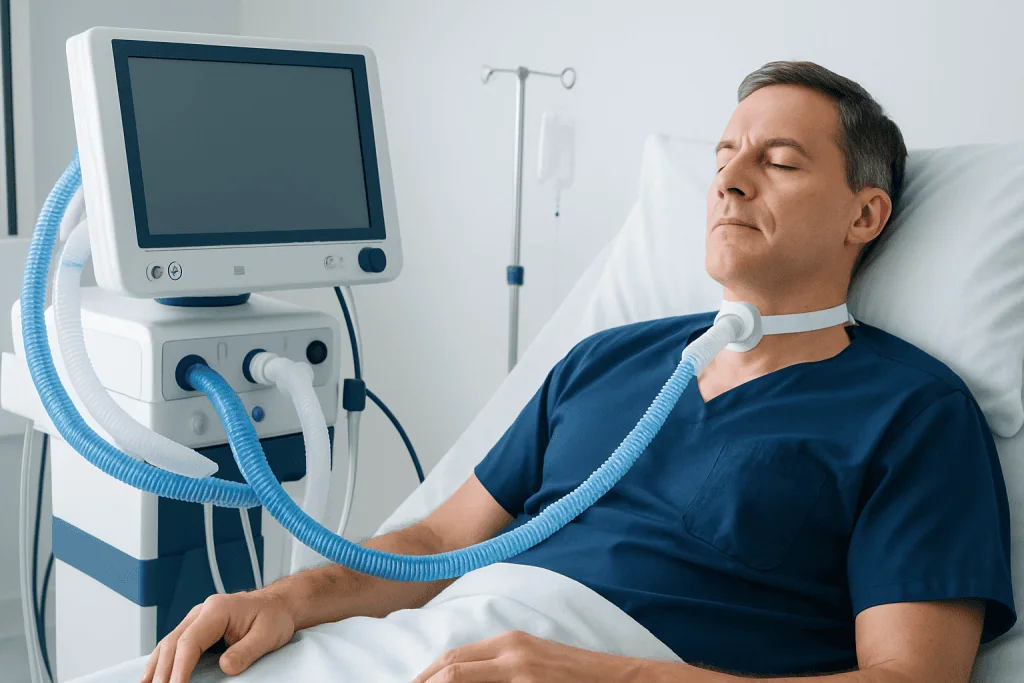
A tracheostomy is a surgically created opening, called a stoma, at the front of the neck that goes directly into the trachea, or windpipe. A tracheostomy tube is placed through this opening to keep the airway open and allow air to move into the lungs. It may be used instead of, or after, a breathing tube placed through the mouth.
Doctors may recommend a tracheostomy when there is a blockage or narrowing in the upper airway, when a person needs mechanical ventilation for an extended period, or when they cannot safely clear mucus from the lungs. It can also help protect the airway in some swallowing or neurological conditions. The reason, expected duration, and care plan should be discussed with the treating team and reviewed as the person’s health changes.
Tracheostomy tubes vary in size and design. Some have an inflatable cuff, which may be needed for ventilation or to help manage airflow; others are cuffless. Some people may use a speaking valve when it is clinically appropriate, while others communicate through speech, writing, gestures, technology, or support from speech and language therapists.
What affects life expectancy and long-term outlook

The most important factor is the underlying diagnosis. A person whose tracheostomy was placed because of temporary swelling after surgery may have a very different outlook from someone with progressive neuromuscular disease, advanced lung disease, severe brain injury, or an illness requiring permanent ventilator support. Age, heart and lung function, nutrition, mobility, infection risk, and the ability to manage secretions also affect overall health.
Whether the tracheostomy can eventually be removed, known as decannulation, also depends on the cause. Before removal, clinicians generally assess whether the upper airway is open, breathing is stable, coughing is strong enough to clear mucus, swallowing is safe, and the person can maintain adequate oxygen levels without the tube. A successful decannulation is possible for many people, but it is not appropriate or safe for everyone.
Long-term survival and quality of life can be supported by coordinated care. This may involve ear, nose and throat specialists, pulmonologists, intensive care specialists, respiratory therapists, nurses, speech and language therapists, physiotherapists, dietitians, and primary care clinicians. Individual goals, including comfort, communication, independence, and family support, are important parts of care planning.
Daily living and routine tracheostomy care
Routine care helps keep the tube open and the skin around the stoma healthy. Depending on the individual care plan, this may include cleaning the skin, changing dressings, checking ties, using humidification, and suctioning mucus when necessary. Caregivers should receive hands-on training from a qualified clinical team and should follow the specific instructions provided for that tube type and equipment.
Air entering through a tracheostomy bypasses the nose and mouth, which normally warm, filter, and humidify air. Dry air can make secretions thicker and harder to clear. A heat and moisture exchanger, room humidification, adequate fluids when medically suitable, and prescribed airway treatments may help maintain comfortable secretions. The care team can advise which options are appropriate.
People with a tracheostomy can often eat, sleep, move around, and leave home, but these activities may require adjustments. Swallowing should be assessed if there is coughing during meals, repeated chest infections, or concern about food or drink entering the airway. Bathing requires particular care because water must not enter the tube; swimming is generally not safe unless a specialist has provided specific guidance.
- Keep emergency supplies available, including the recommended spare tube and suction equipment if prescribed.
- Ensure family members or caregivers know the emergency plan and have relevant contact numbers.
- Attend planned tube changes and follow-up appointments.
- Avoid smoke, dust, and other airway irritants where possible.
Possible complications and warning signs
Many people have no major problems once a tracheostomy is well established, but complications can occur. Common concerns include thick secretions, skin irritation, granulation tissue around the stoma, infection, tube blockage, accidental tube displacement, and irritation of the windpipe. The likelihood and seriousness of these issues vary according to the person’s health, tube type, ventilation needs, and care setting.
Signs that merit medical advice soon include increasing redness, pain, swelling, drainage with an unpleasant smell, fever, new or worsening cough, more frequent suctioning needs, thicker or discolored mucus, or a noticeable change in breathing comfort. These symptoms do not always mean a serious complication, but they should not be ignored, particularly in a person with chronic lung or neurological disease.
Emergency help is needed if breathing becomes difficult, the tube is blocked or comes out and cannot be safely replaced according to the person’s emergency plan, there is heavy bleeding, lips or skin appear blue or gray, consciousness changes suddenly, or oxygen levels remain low despite prescribed measures. Caregivers should use the emergency instructions supplied by the treating team and contact local emergency services when urgent support is needed.
How doctors assess tracheostomy concerns
When someone with a tracheostomy develops new symptoms, the clinical assessment begins with breathing and airway safety. A doctor or respiratory clinician may check the tube’s position and patency, inspect the stoma and surrounding skin, measure oxygen saturation, listen to the chest, and review the amount and character of secretions. They will also ask about fever, pain, swallowing, sleep, recent infections, and changes in ventilation requirements.
Further tests depend on the concern. A chest X-ray or other imaging may be used when pneumonia, tube displacement, or another lung problem is suspected. Blood tests may help identify infection or inflammation. A flexible camera examination of the airway may be recommended to assess narrowing, granulation tissue, vocal cord movement, or readiness for decannulation. Swallowing assessments can identify aspiration risk and guide safer eating and drinking plans.
It is helpful to bring an updated medication list, details of the tube type and size, recent symptoms, oxygen or ventilator settings if used, and a record of suctioning or secretion changes. This information can help the care team identify whether symptoms relate to the tracheostomy, the lungs, or the underlying medical condition.
When to seek medical care and planning next steps
Routine follow-up is important even when a person feels well. The clinician may review the need for the tracheostomy, tube changes, communication options, lung health, nutrition, swallowing, and home support. People with a temporary tracheostomy should ask what recovery milestones are needed before a decannulation assessment can be considered. Those with a permanent tracheostomy can discuss ways to improve comfort, independence, and participation in everyday life.
Medical review should be arranged promptly for persistent cough, fever, worsening secretions, skin breakdown around the stoma, repeated tube blockage, pain, difficulty swallowing, or a decline in exercise tolerance. Urgent assessment is appropriate for any sudden change in breathing, suspected tube displacement, significant bleeding, or signs of severe infection. It is always reasonable to seek advice if a caregiver is unsure how to manage a change in the person’s usual condition.
Acibadem International’s multidisciplinary specialists and JCI-accredited hospitals can assess tracheostomy-related airway, respiratory, swallowing, and rehabilitation needs for international patients. A personalized review can clarify whether the tube is likely to be temporary, what follow-up is needed, and how the underlying condition may affect long-term outlook.
Frequently asked questions
Can a person live a normal life with a tracheostomy?
Many people with a tracheostomy lead active lives, although they may need daily care routines and practical adjustments. The extent of independence depends on the reason for the tracheostomy, breathing needs, mobility, communication, and available support. A care team can help set realistic goals for home, work, travel, and social activities.
Does a tracheostomy shorten life expectancy?
A tracheostomy does not automatically shorten life expectancy. It is usually the underlying illness or injury, rather than the tracheostomy tube, that has the greatest influence on prognosis. In some circumstances, a tracheostomy can support breathing and make long-term care safer or more comfortable.
Can a tracheostomy be removed?
Yes, some tracheostomies can be removed once the original problem has improved. Clinicians assess breathing strength, airway openness, cough effectiveness, secretion management, swallowing safety, and oxygen needs before making this decision. Removal should only be planned and performed with the treating medical team.
What are the signs of a blocked tracheostomy tube?
Possible signs include increased work of breathing, noisy breathing, difficulty passing a suction catheter, reduced airflow, agitation, low oxygen readings, or a sudden inability to clear secretions. A blocked tube can be an emergency. The person’s established emergency care plan should be followed, and emergency services should be contacted if breathing is affected.
Can someone talk with a tracheostomy?
Some people can speak with a tracheostomy, depending on the tube, cuff status, ability to exhale through the upper airway, and the underlying condition. A speaking valve may be suitable for selected patients after assessment by trained clinicians. Speech and language therapists can recommend safe communication options.
How often does a tracheostomy tube need to be changed?
The timing of tube changes varies by tube type, clinical condition, manufacturer guidance, and local care protocol. It should be determined by the treating team rather than by a fixed schedule used for everyone. A tube should not be changed at home unless the person or caregiver has been specifically trained and instructed to do so.
References
- American Thoracic Society
- American Academy of Otolaryngology–Head and Neck Surgery
- National Health Service
- MedlinePlus
- European Respiratory Society
This article is for general information only and is not a substitute for professional medical advice. Please consult a qualified doctor about your individual situation.
Oncology care in Turkey — second opinion and treatment plan
JCI-accredited · board-certified surgeons · reply within 24h
Add us as a Preferred Source to see more of our trusted health content across Google Search, AI Overviews and Discover.