Mouth Sexually Transmitted Disease: Symptoms, Causes, and Treatment Options

A mouth sexually transmitted disease may affect the lips, mouth, tongue, gums, or throat. Common oral STIs include herpes, gonorrhea, syphilis, HPV, and sometimes chlamydia.
Key Takeaways
- A mouth sexually transmitted disease may affect the lips, mouth, tongue, gums, or throat.
- Common oral STIs include herpes, gonorrhea, syphilis, HPV, and sometimes chlamydia.
- Some people have clear symptoms such as sores or sore throat, but many have no symptoms.
- Diagnosis may involve a physical exam, swab tests, and blood tests depending on the suspected infection.
- Treatment depends on the cause and may include antiviral or antibiotic medicines.
- Barrier protection and regular sexual health screening can help lower the risk.
A mouth sexually transmitted disease is an infection passed through oral sexual contact that can affect the lips, tongue, gums, inner cheeks, or throat. Some oral STIs cause sores, pain, or swollen glands, while others may cause few or no symptoms, so testing and medical evaluation are important when exposure is possible.
Overview: What a Mouth Sexually Transmitted Disease Means
A mouth sexually transmitted disease refers to a sexually transmitted infection that affects the mouth or throat after oral sexual contact. This can involve the lips, tongue, gums, roof of the mouth, inner cheeks, tonsils, or throat. In everyday use, people may say “oral STD” or “oral STI,” and both terms are commonly understood.
Several infections can spread this way, including herpes simplex virus, gonorrhea, syphilis, human papillomavirus (HPV), and, less commonly, chlamydia. The exact symptoms depend on which infection is present. Some people notice painful sores or a sore throat, while others feel completely well and only learn about the infection after testing.
Because oral infections may be mild or silent, they can be overlooked. That matters because even without obvious symptoms, a person may still pass the infection to a partner. Early assessment can help confirm the cause, guide treatment, and reduce the risk of ongoing transmission.
How Oral STIs Spread and Which Infections Are Most Common
Oral STIs usually spread during oral sex involving the genitals or anus. Infection can pass through direct contact with infected skin, mucous membranes, semen, vaginal fluids, rectal secretions, or visible sores. A person does not always need to have symptoms for transmission to happen.
The most recognized causes of a mouth sexually transmitted disease include oral herpes, oral gonorrhea, syphilis, and HPV-related infection. Herpes often causes blisters or ulcers around the lips or inside the mouth. Gonorrhea in the throat may cause soreness or may cause no symptoms at all. Syphilis can begin with a painless sore, and HPV may lead to warts or, in many cases, no noticeable signs.
Not every mouth sore or throat irritation is caused by a sexually transmitted infection. Canker sores, dental problems, common viral illnesses, and bacterial throat infections can produce similar symptoms. That is one reason why medical evaluation is helpful when symptoms appear after possible exposure.
Symptoms of a Mouth Sexually Transmitted Disease

Symptoms vary widely depending on the infection and the part of the mouth involved. Some people notice only mild irritation, while others develop more distinct signs such as ulcers, painful swallowing, or swollen lymph nodes in the neck. In some cases, there are no symptoms at all.
Possible symptoms can include:
- Sores, ulcers, blisters, or crusted lesions on the lips or in the mouth
- Redness, patches, or irritation on the tongue, gums, cheeks, or throat
- Sore throat or pain when swallowing
- Swollen glands in the neck
- Unusual mouth discomfort, burning, or tenderness
- Warts in or around the mouth
- Fever or general fatigue in some infections
Different infections may look different. Oral herpes may cause grouped blisters that break into painful sores. Gonorrhea of the throat may resemble a routine throat infection or may cause no symptoms. Syphilis may start with a single sore that is often painless. HPV-related changes may appear as small wart-like growths or remain hidden.
Because symptoms overlap, it is usually not possible to identify the cause by appearance alone. Persistent mouth sores, recurring ulcers, or throat symptoms after sexual exposure should be assessed by a qualified clinician.
Causes and Risk Factors
The immediate cause of a mouth sexually transmitted disease is exposure to an infectious organism during oral sexual contact. However, the chance of infection is influenced by several factors, including whether a partner has an active lesion, the type of sexual contact, and whether barrier protection is used.
Risk may be higher in people who have unprotected oral sex, multiple partners, a partner with a known STI, or a personal history of sexually transmitted infections. Breaks in the skin or mucosa, such as cuts, inflamed gums, or mouth ulcers, may also make transmission easier. Smoking and poor oral health can sometimes worsen irritation and make symptoms more noticeable, though they do not directly cause STIs.
It is also important to remember that some infections can be present for weeks, months, or longer without obvious signs. A person may unknowingly carry and transmit an infection. Related infections such as genital herpes and HPV infection can also involve oral exposure depending on the type of contact.
How Doctors Diagnose Oral STIs
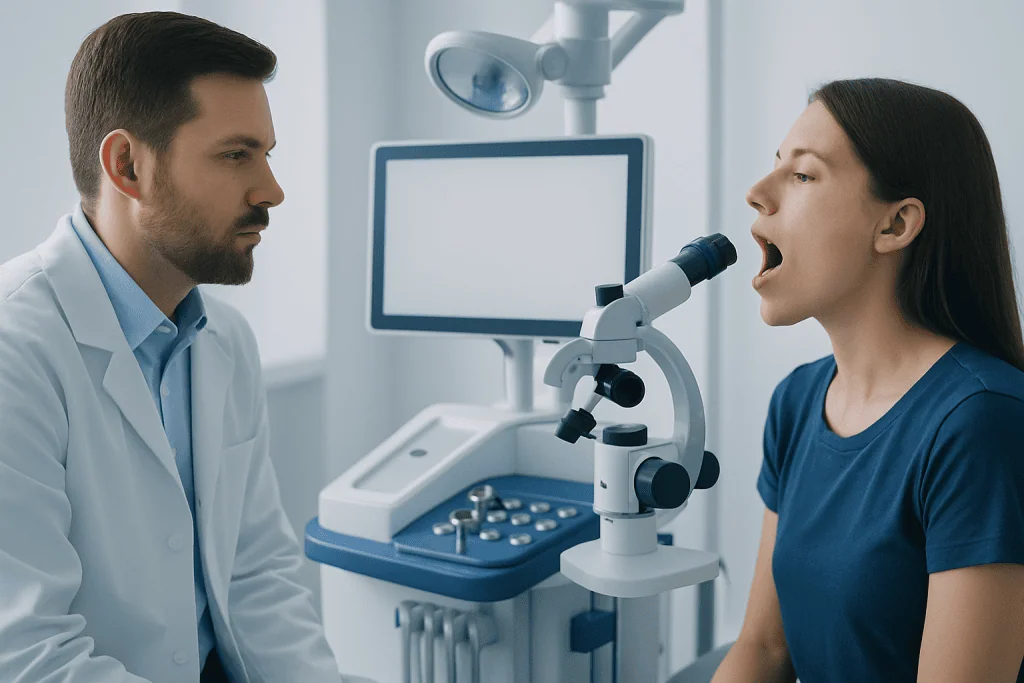
Diagnosis starts with a medical history and a careful examination of the mouth, lips, throat, and neck. The clinician may ask about recent symptoms, sexual exposures, prior STIs, and any lesions elsewhere on the body. This information helps narrow down the likely cause and guide testing.
Testing depends on the suspected infection. A throat or mouth swab may be used to look for gonorrhea and sometimes chlamydia. A swab from a sore can help identify herpes. Blood tests are commonly used for infections such as syphilis and may also be used in herpes assessment in selected situations. If a lesion is unusual, persistent, or suspicious for another cause, additional evaluation may be recommended.
Because oral symptoms can have many explanations, clinicians may also consider non-STI conditions such as oral thrush, aphthous ulcers, dental infections, or routine viral throat infections. In some cases, they may refer the patient for diagnostic imaging or specialist review if symptoms suggest a deeper neck problem rather than a surface infection.
Treatment Options and Recovery
Treatment depends entirely on the specific infection. Bacterial infections such as gonorrhea and syphilis are typically treated with prescribed antibiotics. Viral infections such as herpes are managed with antiviral medicines that can shorten outbreaks, reduce symptoms, and lower the risk of transmission, but they do not remove the virus from the body.
If oral HPV causes visible lesions, management depends on the location, size, and symptoms. Some lesions may be monitored, while others may need targeted treatment. Supportive care can also help while healing takes place, such as drinking fluids, avoiding irritating foods, and maintaining gentle oral hygiene.
It is important to avoid sexual contact until a clinician advises that it is safe, especially if sores are present or treatment has just begun. Partners may also need testing or treatment depending on the diagnosis. If the infection is related to herpes, care may overlap with approaches used in herpes treatment. If swallowing problems or throat masses raise concern for more complex ENT disease, a specialist may consider options such as ENT surgery when appropriate, though this is not routine for most oral STIs.
When symptoms do not improve as expected, follow-up matters. Ongoing pain, recurrent ulcers, or unexplained lesions should not be self-treated for long periods without professional advice.
Prevention and Self-Care
Prevention focuses on reducing exposure and recognizing symptoms early. Barrier methods such as condoms and dental dams can lower the chance of STI transmission during oral sex. Avoiding contact when a partner has visible sores, warts, or other symptoms also helps reduce risk, although infections can still spread without obvious signs.
Regular sexual health screening is an important part of prevention, especially for people with new or multiple partners. Honest communication with partners, prompt testing after a known exposure, and completing any prescribed treatment are all practical ways to protect both personal and partner health.
Simple self-care can ease mouth discomfort while medical evaluation is arranged. It may help to avoid very spicy, acidic, or rough-textured foods if sores are present. Good oral hygiene is useful, but it should be gentle; harsh mouthwashes or aggressive brushing can further irritate tender tissue.
Vaccination may also play a role in prevention for some people. HPV vaccination can help protect against important strains of HPV and is part of routine preventive care in many countries. A clinician can advise on age eligibility and timing.
When to Seek Medical Care
Medical care is advisable if there are mouth sores, a persistent sore throat, painful swallowing, swollen neck glands, or any new mouth lesion after possible sexual exposure. Testing is also worth considering after exposure even if there are no symptoms, because some oral STIs are silent.
Urgent assessment is important if there is trouble swallowing, difficulty breathing, dehydration due to mouth pain, rapidly worsening swelling, or a high fever. Any mouth sore that lasts more than about two weeks, repeatedly returns, or looks unusual should also be examined to rule out causes beyond infection.
People who have recurrent outbreaks, uncertain test results, or concern about partner exposure may benefit from specialist care. Near the end of the care pathway, Acibadem International’s multidisciplinary specialists and JCI-accredited hospitals evaluate and treat oral and sexually transmitted infections for international patients when more detailed assessment is needed.
Frequently asked questions
Can a sexually transmitted disease affect the mouth without symptoms?
Yes. A mouth sexually transmitted disease may cause no obvious symptoms, especially infections such as throat gonorrhea or HPV. That is why testing can still be important after possible exposure, even if a person feels well.
What does an oral STD look like?
It can look different depending on the infection. Some cause blisters, ulcers, or wart-like growths, while others cause only redness or a sore throat. Appearance alone cannot reliably identify the cause, so medical testing is often needed.
Is every sore in the mouth a sexually transmitted infection?
No. Many mouth sores are caused by non-sexually transmitted conditions such as canker sores, irritation, viral illnesses, or dental problems. A clinician can help distinguish between these causes based on the history, examination, and tests.
How is a mouth sexually transmitted disease treated?
Treatment depends on the infection. Bacterial causes are usually treated with antibiotics, while viral causes such as herpes are managed with antiviral medicines and symptom relief. A doctor will choose treatment based on examination and test results.
Can oral STIs go away on their own?
Some symptoms may improve, but the infection itself may still remain or continue to spread. Certain bacterial infections need treatment to fully clear, and viral infections such as herpes may remain in the body even after symptoms settle. Medical advice is the safest approach.
How can someone lower the risk of getting an STI in the mouth?
Using condoms or dental dams during oral sex can help reduce risk. Avoiding sexual contact when sores are present, having regular STI screening, and discussing sexual health openly with partners are also important preventive steps.
References
- Centers for Disease Control and Prevention
- World Health Organization
- National Health Service
- American Sexual Health Association
This article is for general information only and is not a substitute for professional medical advice. Please consult a qualified doctor about your individual situation.
Explore treatments in Turkey — costs, top hospitals & a free quote
JCI-accredited · board-certified surgeons · reply within 24h
Add us as a Preferred Source to see more of our trusted health content across Google Search, AI Overviews and Discover.