Mouth Sores Treatment: How It Works, Results and What to Expect

Most minor mouth sores improve without invasive treatment within one to two weeks. Treatment may include topical pain relief, protective products, medicated rinses and care for an underlying condition.
Key Takeaways
- Most minor mouth sores improve without invasive treatment within one to two weeks.
- Treatment may include topical pain relief, protective products, medicated rinses and care for an underlying condition.
- Antibiotics are not usually needed for common canker sores because they are not caused by bacteria.
- A sore that lasts more than two weeks, is unusually large or keeps returning should be assessed by a dentist or doctor.
- Avoiding irritating foods, tobacco and trauma to the mouth can support recovery and reduce recurrence.
Mouth sores treatment aims to reduce discomfort, support healing and address the cause when sores are recurrent, severe or persistent. Most minor sores heal within one to two weeks, while longer-lasting or unusual sores need professional assessment.
Mouth sores treatment: how it works and what to expect
Mouth sores treatment is selected according to the sore’s likely cause, location, severity and how often it returns. For common canker sores, also called aphthous ulcers, treatment usually focuses on easing pain, protecting the affected area and helping normal healing. Small sores often settle on their own within one to two weeks.
Some mouth sores result from an accidental bite, a sharp tooth, braces, dentures, burns from hot food, viral infections or irritation from tobacco. Less commonly, recurrent or persistent sores can be linked with nutritional deficiencies, immune-related conditions, digestive disorders or medicine side effects. Treating the trigger is an important part of effective care.
A clinician may recommend home measures for a simple, short-lived sore or prescribe topical medicines when pain is significant or ulcers are frequent. A dental or medical review is particularly important if a lesion does not heal as expected, because different oral conditions can look similar at first.
How mouth sores are assessed and who may need treatment
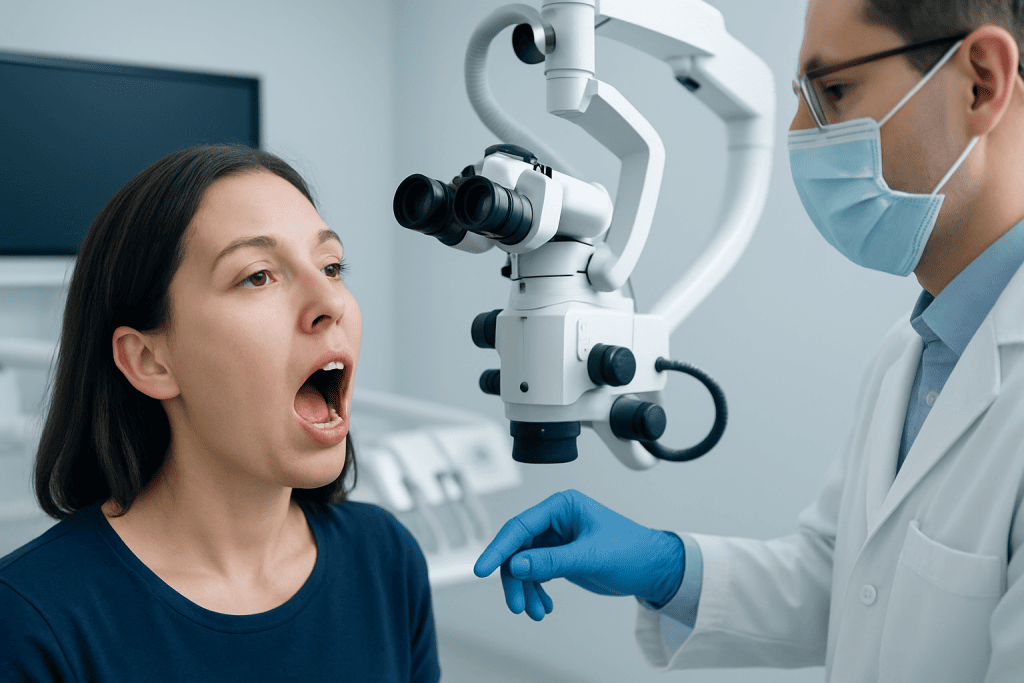
A dentist, family doctor, ear, nose and throat specialist, or oral medicine specialist commonly diagnoses mouth sores by asking about symptoms and examining the lips, tongue, gums, cheeks, palate and throat. Important details include when the sore began, whether it has occurred before, recent injury, dental appliances, foods, medicines, fever, weight change and other symptoms.
Most people with a single, typical canker sore do not need tests. However, a clinician may recommend blood tests when sores are frequent or severe, or when there are signs of anemia, vitamin or mineral deficiency, infection or an inflammatory condition. A sharp tooth, broken filling or poorly fitting denture may require dental correction.
People who may benefit from medical assessment include those with recurrent ulcers, severe pain that affects eating or drinking, weakened immunity, or sores appearing alongside skin, eye, genital or digestive symptoms. Persistent sores may need a specialist examination and, in some cases, a small tissue sample to clarify the diagnosis.
Mouth sores treatment step by step

For uncomplicated sores, care generally begins with symptom control and removal of local irritants. A clinician may suggest a gentle salt-water or baking-soda rinse, a protective oral gel or paste, and topical pain-relieving products. Antiseptic mouth rinses may be considered in selected cases, particularly when oral hygiene is difficult because of discomfort.
For more painful, larger or recurring canker sores, a clinician may prescribe a topical anti-inflammatory medicine, often in a paste, rinse or spray. These treatments are applied directly to the affected area and can shorten discomfort for some people when used as directed. More extensive disease may require assessment for an underlying cause and treatment tailored to that diagnosis.
When a sore is caused by mechanical trauma, the practical step is to remove the source of friction. This may involve smoothing a sharp tooth edge, adjusting a restoration, or modifying braces or dentures. Dental professionals can also advise on safe oral-care products for sensitive tissues and determine whether a separate dental problem is present.
For patients needing coordinated assessment, dental treatment may help identify trauma, infection or appliance-related irritation contributing to mouth sores. Treatment is individualized; no single medicine is appropriate for every type of oral ulcer.
Benefits, limits and possible risks of treatment
The main benefits of mouth sores treatment are reduced pain, easier eating and drinking, improved sleep and protection of the sore while it heals. If an underlying problem is found, such as a nutritional deficiency, dental trauma or inflammatory illness, addressing it may lower the chance of future episodes.
Results depend on the cause. A minor traumatic sore may improve soon after the irritant is removed, while recurrent canker sores can return despite appropriate care. Treatment can help manage episodes, but it may not prevent every recurrence.
Topical treatments can occasionally cause temporary stinging, altered taste or local irritation. Stronger prescription medicines may have additional risks and should only be used under professional guidance. Overusing mouthwashes containing alcohol may dry or irritate the mouth, and products that are not intended for oral tissues should not be applied to sores.
Antibiotics do not treat ordinary canker sores and are only used when a clinician identifies a bacterial infection that requires them. Self-treating a persistent lesion without evaluation can delay diagnosis of a condition that needs different care.
Recovery timeline and self-care during healing
Many small mouth sores begin to feel better after several days and heal fully within one to two weeks. The recovery timeline can be longer for larger ulcers, repeated trauma, viral infections or underlying health conditions. Pain often peaks during the first few days, especially with acidic, salty, spicy or rough-textured foods.
During recovery, soft and cool foods may be more comfortable. Drinking enough water, using a soft toothbrush and choosing a mild toothpaste can reduce irritation. It may help to avoid tobacco, alcohol, very hot drinks and foods that repeatedly sting the sore, such as citrus fruit, tomatoes or spicy dishes.
Keeping the mouth clean matters, even when brushing is uncomfortable. Gentle brushing and flossing around the painful area can help reduce plaque without injuring the tissue. If braces or dentures rub against a sore, a dentist can suggest adjustments or protective measures.
- Choose soft foods and take small bites.
- Rinse gently after meals if food debris causes discomfort.
- Avoid picking, scraping or biting the sore.
- Follow the instructions for any prescribed gel, rinse or paste.
What drink kills bacteria in the mouth?
No drink safely “kills” all bacteria in the mouth, and trying to sterilize the mouth is neither possible nor desirable. The mouth normally contains many microorganisms, including helpful bacteria that contribute to a balanced oral environment.
Water is the best everyday drink for oral health because it helps rinse away food particles and supports saliva production. Unsweetened tea may also be a reasonable choice, but it is not a treatment for an infection or mouth sore. Sugary drinks can increase the risk of tooth decay, while acidic drinks may irritate sores and weaken tooth enamel over time.
If an antiseptic rinse is appropriate, a dentist or doctor can recommend one designed for oral use. It should be used as directed and not substituted with strong household products, undiluted alcohol or hydrogen peroxide, which can damage oral tissues.
What are the four common mouth problems?
Four common mouth problems are tooth decay, gum disease, mouth sores and bad breath. Tooth decay develops when bacteria use sugars to produce acids that damage teeth. Gum disease involves inflammation of the gums and can progress if plaque is not effectively removed.
Mouth sores include canker sores, injury-related ulcers and cold sores around the lips, which have different causes and treatments. Bad breath may be linked to food, dry mouth, gum disease, tongue coating, smoking or some medical conditions. Regular dental care can identify many of these concerns early.
Other frequent issues include dry mouth, tooth sensitivity, oral thrush and damage from teeth grinding. A dental assessment is useful when symptoms persist, recur or interfere with normal eating, speaking or sleeping.
What's a better word for mouth?
In everyday language, “mouth” is the clearest and most appropriate word. In clinical settings, healthcare professionals may use “oral cavity” to describe the space inside the mouth, including the tongue, gums, inner cheeks, palate and floor of the mouth.
Depending on the exact location, a clinician may also use more specific terms. For example, the lining tissue is called the oral mucosa, the roof is the palate, and the area at the back of the mouth leading toward the throat is the oropharynx. Using precise terms helps identify where a sore is located and what may be causing it.
How does a healthy mouth look?
A healthy mouth usually has gums that are firm and generally pink or naturally pigmented, without persistent swelling, bleeding or tenderness. Teeth should be clean and intact, while the tongue and inner cheeks should look moist and free of sores, thick patches or unexplained lumps.
Normal appearances vary between individuals. For example, gum color differs with natural pigmentation, and some people have harmless variations in the tongue’s surface. What matters most is a change that does not resolve, such as a new ulcer, red or white patch, swelling, bleeding or ongoing pain.
Regular dental examinations help establish what is normal for an individual and identify changes early. Good oral hygiene, adequate hydration and avoiding tobacco are important for maintaining healthy oral tissues.
When to seek medical care
Medical or dental care is advisable for a mouth sore that lasts longer than two weeks, returns often, is very large, spreads, or does not respond to simple comfort measures. Prompt assessment is also important when pain prevents adequate eating or drinking, or when there is fever, facial swelling, trouble swallowing, swollen neck glands or unexplained weight loss.
People with diabetes, immune suppression, cancer treatment, inflammatory bowel disease or other long-term conditions should seek guidance sooner if new mouth sores develop. Children, older adults and anyone at risk of dehydration may need timely care when pain limits fluid intake.
Acibadem International’s multidisciplinary specialists and JCI-accredited hospitals can assess persistent oral symptoms and coordinate dental, ENT, dermatology or internal medicine care for international patients. A qualified clinician can determine whether the sore is benign and self-limiting or needs further investigation.
Frequently asked questions
How long do mouth sores usually take to heal?
Most small canker sores and minor injury-related ulcers heal within one to two weeks. Healing may take longer if the area continues to be irritated or if there is an underlying health condition. A sore lasting more than two weeks should be checked by a dentist or doctor.
Are mouth sores contagious?
Common canker sores inside the mouth are not contagious. Cold sores, which usually occur on or around the lips and are caused by herpes simplex virus, can be contagious when the virus is active. A clinician can help distinguish between these conditions.
Can stress cause mouth sores?
Stress does not directly cause every mouth sore, but it may be a trigger for recurrent canker sores in some people. Poor sleep, minor injury, illness and some foods may also contribute. Keeping track of episodes can help identify personal triggers.
Should a person use salt water for mouth sores?
A gentle salt-water rinse may soothe some people and help keep the area clean. It should not be swallowed, and it may sting briefly. If it causes worsening pain or irritation, the person should stop and ask a clinician about other options.
Can vitamin deficiency cause mouth sores?
Deficiencies in nutrients such as iron, vitamin B12 or folate can be associated with recurrent mouth ulcers in some people. Testing is not needed for every single sore, but a clinician may consider it when ulcers are frequent, severe or accompanied by fatigue or other symptoms. Supplements should be taken only when appropriate for the individual.
What is the fastest way to relieve mouth sore pain?
Protective oral gels, clinician-recommended topical pain relief and avoiding irritating foods may help reduce discomfort. Cool, soft foods and adequate fluids can also be useful. Severe pain or difficulty drinking should be assessed promptly.
References
- American Dental Association
- National Institute of Dental and Craniofacial Research
- Mayo Clinic
- NHS
- World Health Organization
This article is for general information only and is not a substitute for professional medical advice. Please consult a qualified doctor about your individual situation.
Persistent digestive symptoms? Get evaluated in Turkey
JCI-accredited · board-certified surgeons · reply within 24h
Add us as a Preferred Source to see more of our trusted health content across Google Search, AI Overviews and Discover.