Moxibustion Treatment: How It Works, Results and What to Expect

Moxibustion uses heat from the herb mugwort, usually near rather than directly on the skin. Research suggests possible benefits for selected symptoms, but evidence quality and results vary.
Key Takeaways
- Moxibustion uses heat from the herb mugwort, usually near rather than directly on the skin.
- Research suggests possible benefits for selected symptoms, but evidence quality and results vary.
- A qualified practitioner should screen for burns, smoke sensitivity, skin problems and other safety concerns.
- Moxibustion should not replace diagnosis or recommended treatment for serious, persistent or worsening symptoms.
- The number and frequency of sessions should be individualized rather than based on a fixed schedule.
Moxibustion treatment is a traditional therapy that applies heat from dried mugwort to selected body areas, often alongside acupuncture. Some people use it for pain, nausea or pregnancy-related concerns, but its benefits depend on the condition and should be considered alongside evidence-based medical care.
Overview: What Is Moxibustion Treatment?
Moxibustion treatment is a form of traditional East Asian medicine in which dried mugwort, also called Artemisia vulgaris, is burned to create therapeutic warmth. The practitioner places or holds the heat source close to selected areas of the body, commonly acupuncture points. It may be used on its own or together with acupuncture.
The proposed aim is to warm tissues and influence symptoms such as pain, stiffness, nausea or fatigue. In traditional medicine frameworks, it is also described as supporting the flow of energy, or qi. From a modern clinical perspective, the most immediate effect is local heat stimulation, although the full biological mechanisms and clinical effects remain under study.
Moxibustion is not a proven cure for medical conditions. It may be considered as a complementary approach for appropriate individuals, after a clinician has evaluated the underlying cause of symptoms and discussed safe, evidence-based treatment options.
What Does Moxibustion Do to the Body?
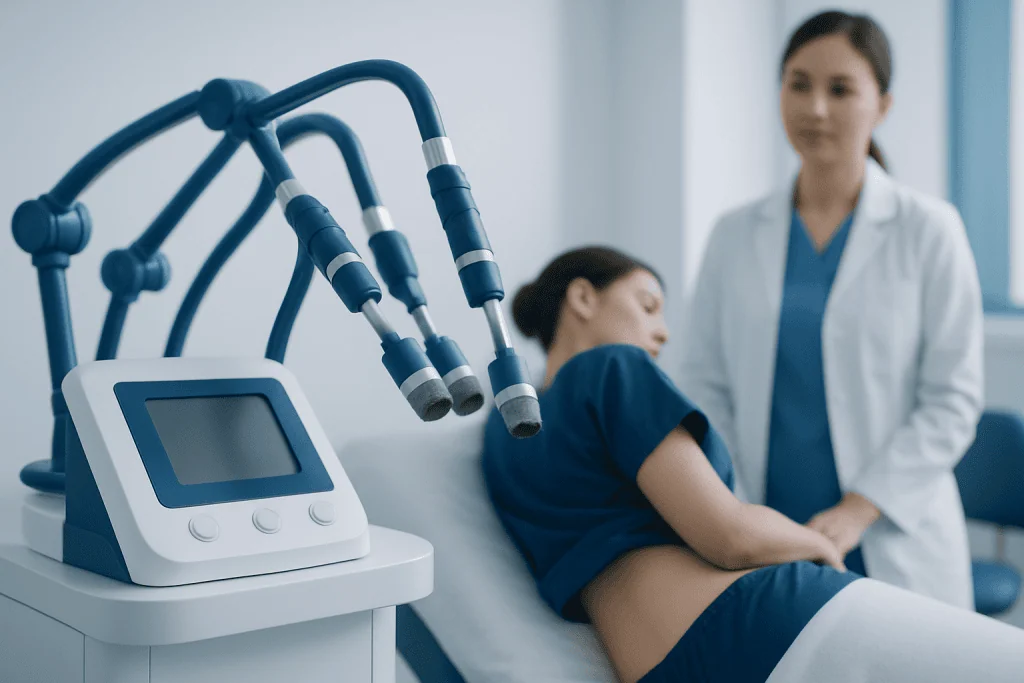
During moxibustion, warmth stimulates the skin and underlying tissues. Heat can produce temporary muscle relaxation, increase local blood flow and alter how pain signals are perceived. The calm, focused setting of a treatment session may also help some people feel more relaxed.
Researchers are studying whether moxibustion influences inflammatory pathways, the nervous system and circulation. However, these possible mechanisms do not establish that it works for every symptom or condition. Findings from clinical studies differ because treatment methods, comparison groups and outcome measures vary.
Moxibustion often overlaps with acupuncture care. If pain or another symptom is ongoing, a medical assessment remains important to identify conditions that may need targeted treatment, such as arthritis, nerve compression, infection or a chronic pain condition.
Candidacy, Benefits and Limits of Evidence
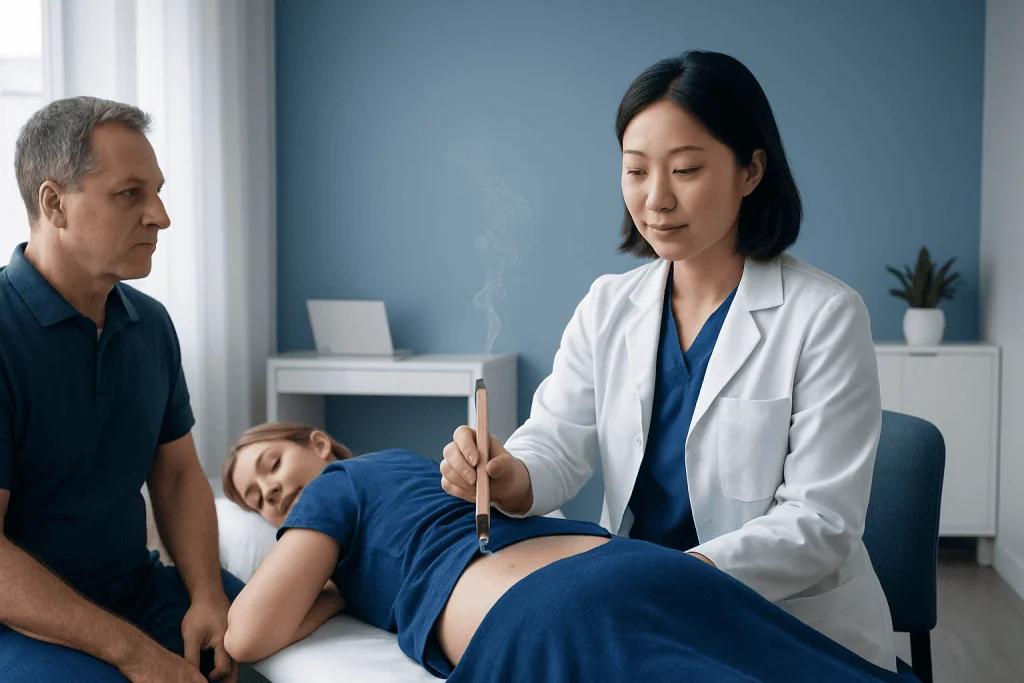
People may ask about moxibustion for musculoskeletal pain, menstrual discomfort, digestive symptoms, fatigue, nausea or recovery-related wellbeing. A clinician or qualified practitioner should first consider the symptom pattern, medical history, current medicines, pregnancy status and whether there are warning signs requiring conventional medical evaluation.
There is some research suggesting moxibustion may offer symptom relief in selected situations, especially when used alongside standard care. One commonly discussed use is in late pregnancy for a fetus in breech position, but the evidence is mixed and it should only be considered with guidance from an obstetric clinician. It should never delay monitoring or recommended obstetric care.
Moxibustion may not be suitable for people with reduced sensation, poor circulation, active skin disease, open wounds, a history of serious burns, uncontrolled respiratory disease triggered by smoke, or an allergy or sensitivity to mugwort. Extra caution is needed for people with diabetes, peripheral neuropathy or conditions affecting blood flow.
A consultation with an appropriately trained healthcare professional can help determine whether complementary approaches, including acupuncture treatment, fit safely within an individual care plan.
What to Expect During a Moxibustion Procedure
Before treatment, the practitioner should ask about symptoms, diagnoses, medications, allergies, pregnancy and previous reactions to heat or smoke. The individual is usually positioned comfortably on a treatment table or chair, with the treatment area accessible while preserving privacy.
In indirect moxibustion, a practitioner holds a smoldering moxa stick near the skin and moves it to provide steady, comfortable warmth. A protective barrier may be used in some techniques. Direct moxibustion, where material is placed on the skin, has a greater burn risk and is not appropriate for many people.
The person should feel warmth but not pain, stinging or intense heat. They should tell the practitioner immediately if the area feels too hot or uncomfortable. Sessions vary in length according to the technique and treatment area, and some practitioners combine the therapy with acupuncture or manual therapies.
Afterward, the skin may look mildly pink and feel warm for a short time. The practitioner should check the skin before the person leaves and provide clear advice on what to watch for at home.
How Long Does It Take for Moxibustion to Work?
There is no reliable timeline that applies to everyone. Some people report feeling relaxed or noticing temporary symptom relief during or shortly after a session, particularly when treatment is being used for muscle tension or discomfort. Others notice no meaningful change.
When moxibustion is used as part of a longer plan, any response is usually reviewed over several sessions rather than judged from a single treatment. The appropriate review period depends on the symptom, its severity and the treatments being used at the same time.
Persistent symptoms should not be managed by repeatedly extending complementary therapy without reassessment. If there is little or no improvement, or symptoms worsen, a qualified doctor should review the diagnosis and care plan.
What Is the Success Rate of Moxibustion?
Moxibustion does not have one meaningful success rate because it is used for many different concerns and studies define success differently. For example, a study may measure short-term pain change, improvement in nausea, a change in fetal position or a person’s overall quality of life. These outcomes cannot be combined into one number.
Research quality is variable, and positive findings in small or difficult-to-blind studies may not translate into dependable results for every patient. For several uses, evidence remains limited or uncertain. Moxibustion should therefore be viewed as a possible supportive therapy rather than a replacement for treatments with established benefit.
A realistic goal is to discuss the specific symptom being treated, what improvement would be meaningful, how long treatment will be tried, and when the plan should be changed. This shared decision-making approach helps protect patients from ineffective or unnecessarily prolonged care.
How Often Should Moxibustion Be Done?
The frequency of moxibustion should be individualized. It may depend on the condition being addressed, whether moxibustion is combined with other therapies, the person’s response, skin tolerance and the treatment method used. There is no universally appropriate schedule.
A qualified practitioner may recommend a short trial with planned reassessment rather than an open-ended series of visits. Each session should include a check for irritation, burns, new symptoms or any reason to stop. People should avoid self-treating with burning moxa unless they have been specifically taught how to do so safely.
For pain and movement concerns, a broader plan may include medical assessment, activity modification, rehabilitation and physical therapy and rehabilitation. Complementary care is most useful when it supports, rather than replaces, a coordinated treatment plan.
Safety, Recovery and When to Seek Medical Care
Most people can return to usual activities immediately after an uncomplicated session. The main risks are skin burns, blistering, irritation, allergic reactions and respiratory discomfort from smoke. Ash or embers can also create a fire hazard. Smokeless moxa products may reduce smoke exposure but do not eliminate heat-related risks.
Medical care should be sought promptly for a burn with blistering, increasing redness, swelling, pus, fever, severe pain, breathing difficulty or a widespread rash after treatment. A doctor should also assess pain that is sudden, severe, worsening, associated with weakness or numbness, or accompanied by unexplained weight loss, fever or changes in bladder or bowel control.
During pregnancy, any treatment intended to influence fetal position or labor should be discussed with the maternity team first. People should not use moxibustion to manage chest pain, stroke-like symptoms, severe abdominal pain, significant bleeding or other urgent symptoms.
Acibadem International’s multidisciplinary specialists and JCI-accredited hospitals can assess symptoms and discuss suitable conventional and complementary care options for international patients. A careful diagnosis is the first step before deciding whether moxibustion has a safe role in an individual treatment plan.
Frequently asked questions
Is moxibustion treatment the same as acupuncture?
No. Acupuncture involves inserting very thin needles at selected points, while moxibustion uses heat generated from mugwort. The two treatments are often used together, but either may also be used separately.
Does moxibustion hurt?
It should feel comfortably warm, not painful. A person should tell the practitioner immediately if they feel burning, stinging or excessive heat, so the treatment can be adjusted or stopped.
Can moxibustion cause burns?
Yes. Burns and blisters are recognized risks, particularly when moxa is placed directly on the skin or heat is held too close for too long. Treatment should be performed by a trained practitioner using appropriate safety measures.
Can moxibustion be used during pregnancy?
It is sometimes discussed for breech presentation late in pregnancy, but evidence is mixed and it is not suitable for everyone. Pregnant individuals should speak with their obstetric clinician before using it and should continue all recommended prenatal monitoring.
Who should avoid moxibustion?
People with impaired sensation, poor circulation, open wounds, active skin irritation or smoke-sensitive respiratory conditions may need to avoid it. A clinician should also review its suitability for people with diabetes, neuropathy, allergies to mugwort or complex medical conditions.
Can moxibustion replace medical treatment?
No. Moxibustion may be considered as a complementary therapy for some symptoms, but it should not replace diagnosis, prescribed medicines, rehabilitation or urgent medical care. Ongoing or concerning symptoms should be evaluated by a qualified healthcare professional.
References
- National Center for Complementary and Integrative Health
- World Health Organization
- American College of Obstetricians and Gynecologists
- Cochrane
- National Institutes of Health
This article is for general information only and is not a substitute for professional medical advice. Please consult a qualified doctor about your individual situation.
Persistent digestive symptoms? Get evaluated in Turkey
JCI-accredited · board-certified surgeons · reply within 24h
Add us as a Preferred Source to see more of our trusted health content across Google Search, AI Overviews and Discover.