MRI-Guided Focused Ultrasound: Incision-Free Treatment Explained

MRI-guided focused ultrasound uses concentrated ultrasound energy and MRI imaging to treat tissue precisely without a surgical incision. It is not suitable for every person or every condition; careful screening is essential.
Key Takeaways
- MRI-guided focused ultrasound uses concentrated ultrasound energy and MRI imaging to treat tissue precisely without a surgical incision.
- It is not suitable for every person or every condition; careful screening is essential.
- Benefits may include shorter recovery time, less pain, and no surgical wound compared with some traditional procedures.
- Possible risks depend on the condition treated and the area targeted, and should be discussed with a qualified specialist.
- Treatment planning, imaging review, and follow-up are important parts of safe and effective care.
MRI-guided focused ultrasound is a noninvasive treatment that combines focused sound energy with real-time MRI guidance to target tissue without surgical incisions. It may help selected patients with certain neurological conditions, tumors, pain disorders, and uterine fibroids, depending on individual evaluation.
Overview
MRI-guided focused ultrasound, often shortened to MRgFUS, is an advanced treatment that delivers concentrated ultrasound energy to a carefully selected target inside the body. At the same time, magnetic resonance imaging (MRI) helps the medical team visualize the target, plan the treatment area, and monitor temperature changes in real time. Because no incision is made, it is often described as an incision-free or noninvasive procedure.
The basic idea is similar to using a magnifying glass to focus sunlight on one point, except this technology uses sound energy instead of light. Ultrasound waves pass through the skin and other tissues, then converge at a precise spot where they generate heat or create a specific therapeutic effect. Nearby tissues are intended to be spared as much as possible because the energy is focused only at the chosen target.
MRI-guided focused ultrasound is used for selected conditions rather than as a one-size-fits-all treatment. Depending on the center and the patient’s diagnosis, it may be considered for movement disorders such as tremor, some pain-related conditions, certain bone or soft tissue lesions, and uterine fibroids. In some cases, it may also play a role in treating carefully chosen tumors or easing symptoms when other options are limited.
For many patients, the main appeal is that treatment can sometimes be performed without open surgery, general anesthesia in some cases, or a long hospital stay. Still, the best approach depends on the condition being treated, the location of the target, and the patient’s overall health. A specialist team helps decide whether MRgFUS is likely to be safe and beneficial.
How the Technology Works
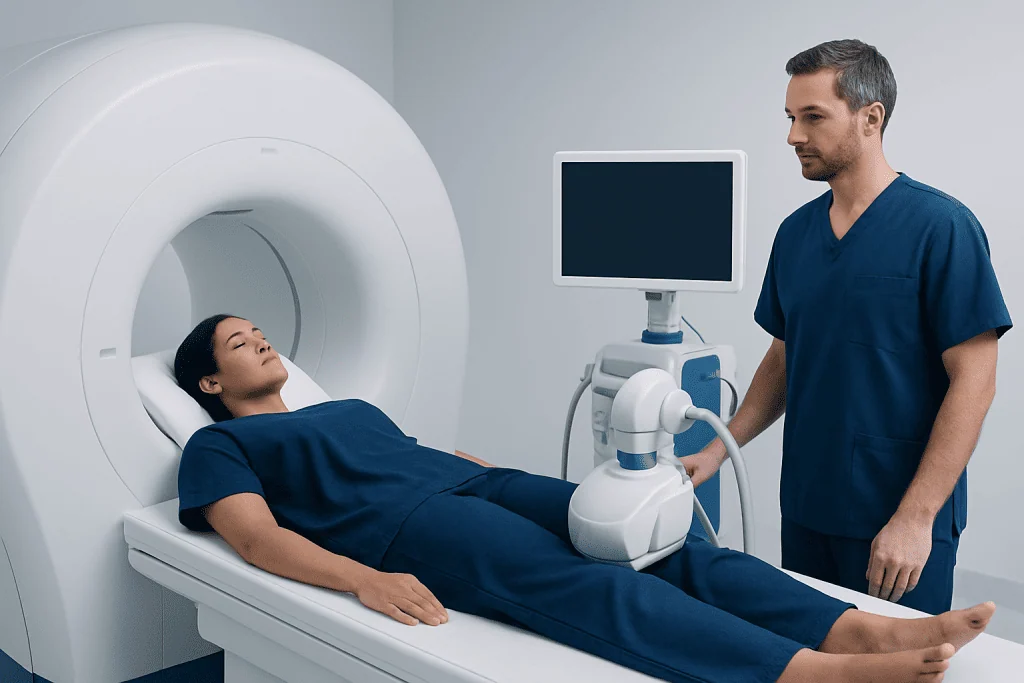
Focused ultrasound works by sending multiple ultrasound beams from a device outside the body. Each individual beam passes through tissue with relatively little effect, but where the beams meet, the energy becomes strong enough to produce a therapeutic change. In many applications, that change is heat, which can destroy or shrink abnormal tissue. In other settings, focused ultrasound may be used to alter nerve pathways or support targeted treatment strategies.
MRI is a key part of the process because it does more than simply show anatomy. It helps the doctor identify the exact treatment area, avoid nearby sensitive structures, and monitor temperature changes during treatment. This real-time feedback allows the team to test the effect with low-energy sonications first and then gradually adjust the treatment plan for safety and precision.
The procedure is highly planned and individualized. Imaging studies performed before treatment help determine whether the target can be reached safely and effectively. Factors such as tissue density, body shape, the presence of scars or implants, and the path the ultrasound must travel can all affect candidacy.
Depending on the condition, the purpose may be to destroy small areas of tissue, reduce fibroid volume, or interrupt abnormal circuits causing symptoms such as tremor. This is why MRgFUS is often discussed alongside other advanced options such as MRI imaging and, in selected cases, stereotactic radiosurgery, although the technologies are different and each has its own role.
Who May Benefit From MRI-Guided Focused Ultrasound

MRI-guided focused ultrasound may be considered for people who need treatment but wish to avoid an incision, or for those who are not ideal candidates for conventional surgery. It can be especially helpful when a condition is well localized and can be clearly targeted on imaging. In movement disorders, for example, some patients with tremor may be evaluated for a focused ultrasound procedure when symptoms interfere with daily life and medicines have not provided enough relief.
In women’s health, MRgFUS may be an option for selected people with symptomatic uterine fibroids, particularly when symptoms such as heavy bleeding, pelvic pressure, or discomfort affect quality of life. In musculoskeletal care, it may sometimes be used for certain painful bone lesions or other carefully chosen conditions. In oncology, use depends heavily on the type, size, and location of the lesion and the expertise of the center.
Not everyone is a candidate. A person may not be suitable if the target cannot be safely reached, if MRI is not possible, or if the expected benefit is low compared with other treatments. Previous operations, metal implants, body habitus, skull characteristics in brain applications, and the need to protect nearby organs or nerves can all influence the decision.
Because candidacy is so individualized, evaluation usually involves a multidisciplinary team. Depending on the reason for treatment, this team may include radiologists, neurologists, neurosurgeons, gynecologists, oncologists, pain specialists, and anesthesiology professionals. In some cases, patients are also compared with alternatives such as medication, conventional surgery, embolization, or radiation oncology treatments.
What to Expect Before, During, and After the Procedure
Before treatment, the patient typically undergoes imaging review, medical assessment, and a discussion of goals, benefits, alternatives, and possible risks. Instructions may include fasting for a period before the procedure, reviewing current medications, and planning for transportation home. The exact preparation depends on the body area being treated and whether sedation, pain relief, or additional monitoring will be needed.
During the procedure, the patient lies on an MRI table while the focused ultrasound system is positioned over the treatment area. The team uses MRI to map the target and then delivers a series of low-energy test sonications followed by therapeutic sonications. Communication with the team is important, especially in neurological applications where the patient may be asked about sensations or symptom changes during treatment.
The length of the procedure can vary. Some patients are awake or lightly sedated, while others may need a different anesthesia plan depending on the indication and treatment area. The medical team monitors comfort, vital signs, and imaging throughout the session to help maximize safety and precision.
Afterward, many patients are observed for a period and then return home the same day, though this is not always the case. Mild soreness, fatigue, swelling, temporary numbness, or short-term symptom fluctuations may occur, depending on the treatment site. Follow-up appointments and repeat imaging are often used to assess response and watch for delayed side effects.
Benefits, Limitations, and Possible Risks
The most obvious benefit of MRI-guided focused ultrasound is that it does not require a surgical incision. For selected patients, this may mean less blood loss risk, no surgical wound, and a shorter recovery period than with open procedures. It can also offer a highly targeted treatment approach, which is especially valuable when accuracy matters greatly.
Another advantage is real-time treatment monitoring. MRI guidance allows doctors to see where energy is being delivered and to track thermal effects during treatment. This helps improve control and may reduce unnecessary exposure to surrounding tissue. For some patients, MRgFUS can provide symptom relief while avoiding or delaying more invasive procedures.
At the same time, there are important limitations. MRgFUS does not replace surgery, medication, radiation, or other procedures in every case. Some targets are too large, too diffuse, too close to sensitive structures, or too difficult to reach safely with ultrasound. In addition, results may vary, and some people may need additional or alternative treatment later.
Risks depend on the condition and body area treated, but may include pain during treatment, skin irritation, swelling, numbness, balance changes, weakness, nerve irritation, or incomplete symptom relief. In neurological uses, side effects can sometimes affect sensation or movement. The doctor explains these risks in the context of the specific diagnosis so the patient can make an informed decision.
Diagnosis, Planning, and Choosing the Right Treatment
Good outcomes begin with accurate diagnosis. MRI-guided focused ultrasound is a treatment platform, not a diagnosis by itself, so doctors first confirm exactly what condition is present and whether symptoms truly come from that target. Depending on the case, evaluation may include physical examination, MRI, ultrasound, blood tests, neurological assessment, or other imaging studies.
Treatment planning is detailed and condition-specific. Specialists review the size, location, and behavior of the lesion or the pathway to be targeted. They also consider the patient’s age, general health, medications, reproductive plans when relevant, and previous treatments. This step is especially important because a technically possible treatment is not always the best treatment.
Patients often benefit from asking how MRgFUS compares with other options. For example, a person with fibroids may discuss focused ultrasound, medication, or surgery such as myomectomy. Someone with a neurological problem may compare it with medicines, implanted devices, or conventional neurosurgical techniques. Understanding the pros and cons of each option helps align treatment with personal goals.
Near the end of the evaluation process, the team usually discusses practical expectations: the chance of symptom improvement, the need for follow-up, and whether future treatment might still be necessary. At experienced centers such as Acibadem International, multidisciplinary specialists in JCI-accredited hospitals assess international patients for advanced treatments including MRI-guided focused ultrasound when appropriate.
Self-Care, Recovery, and When to See a Doctor
Recovery advice depends on the treatment site, but most patients are encouraged to rest, stay hydrated, and follow all discharge instructions carefully. Temporary fatigue or mild discomfort can occur after some procedures, and the doctor may recommend avoiding strenuous activity for a short time. Any medication changes should be made only under medical guidance.
Keeping follow-up appointments is an important part of self-care. Some benefits appear quickly, while others develop gradually over weeks or months. Repeat imaging or clinical assessments help show whether the treatment is working as expected and whether any additional care is needed.
Patients should contact a doctor promptly if they develop worsening pain, fever, significant swelling, new weakness, persistent numbness, severe dizziness, unusual bleeding, or any symptom that feels concerning after treatment. These issues do not always mean a serious problem, but they should be assessed. Early communication can help address side effects and support safer recovery.
Anyone considering MRI-guided focused ultrasound should seek medical advice if symptoms are interfering with daily life, if previous treatment has not helped enough, or if they want to understand whether a noninvasive option may be suitable. A qualified specialist can explain whether MRgFUS fits the diagnosis and what results are realistic for that individual case.
Frequently asked questions
Is MRI-guided focused ultrasound the same as surgery?
No. MRI-guided focused ultrasound is considered noninvasive because it does not require a surgical incision. It uses focused sound energy and MRI guidance to treat a target inside the body.
Does MRI-guided focused ultrasound hurt?
Comfort levels vary depending on the condition being treated and the body area involved. Some patients feel warmth, pressure, or temporary discomfort during parts of the procedure, and the medical team monitors this closely.
What conditions can MRI-guided focused ultrasound treat?
It may be used for selected conditions such as some movement disorders, uterine fibroids, certain pain-related problems, and carefully chosen tumors or lesions. Availability and suitability depend on the diagnosis, anatomy, and the experience of the treating center.
How long is recovery after MRI-guided focused ultrasound?
Recovery is often shorter than with open surgery, but it still depends on what is being treated. Some people go home the same day, while others may need observation and follow-up before returning fully to usual activities.
Can everyone have MRI-guided focused ultrasound?
No. Some patients are not candidates because of the target location, MRI limitations, certain implants, prior procedures, or other medical factors. A specialist evaluation is needed to decide whether it is appropriate.
Are the results permanent?
Results can be long-lasting for some patients, but permanence depends on the condition treated and the body’s response. In some cases, symptoms may improve only partly or may return over time, making follow-up important.
References
- World Health Organization
- National Institute for Health and Care Excellence
- Radiological Society of North America
- American College of Radiology
- U.S. Food and Drug Administration
This article is for general information only and is not a substitute for professional medical advice. Please consult a qualified doctor about your individual situation.
Ultrasound in Turkey — costs, top hospitals & a free quote
JCI-accredited · board-certified surgeons · reply within 24h
Add us as a Preferred Source to see more of our trusted health content across Google Search, AI Overviews and Discover.

Check-up & Preventive Medicine
Comprehensive health screenings designed for early detection and prevention.
3 specialists in this unitMore from the Health Library



Related Specialists

Dr. Emrah Turunç
Internal Medicine
Assoc. Prof. Dr. Bahattin Tanrıkulu
Neurosurgery
Yaren Kasal
Physical Medicine & Rehabilitation
Assoc. Prof. Dr. Emre Özgü
Gynecology & Obstetrics