MRI Safety With Metal Implants: What Patients Need to Check Before a Scan
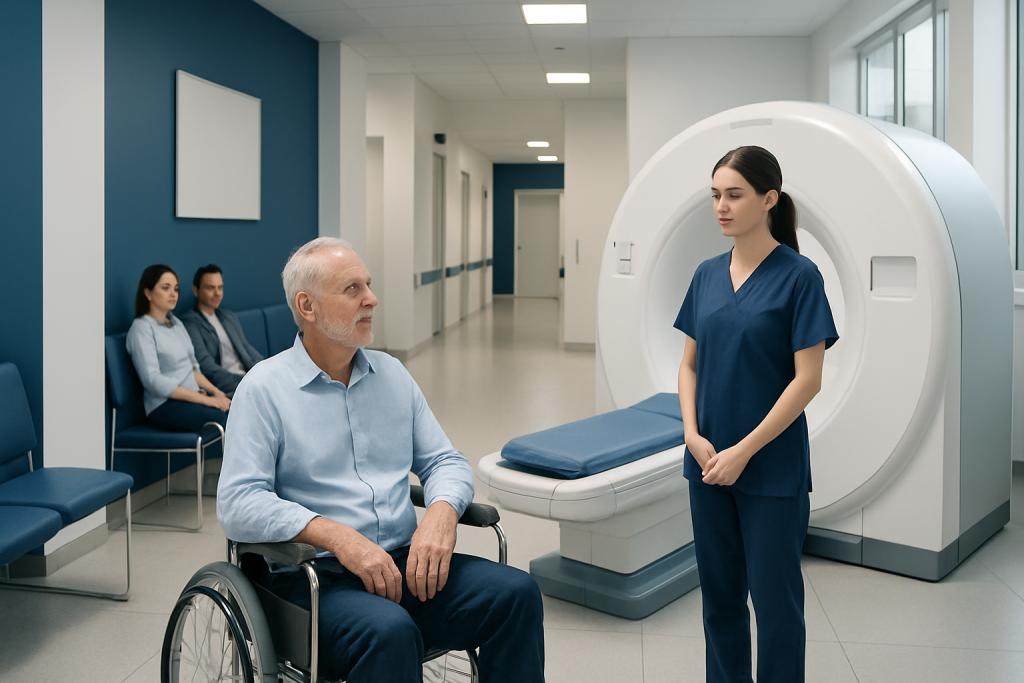
Not all metal implants prevent MRI; many are MRI-safe or MRI-conditional. The exact implant name, manufacturer, model, and date of placement are important before scanning.
Key Takeaways
- Not all metal implants prevent MRI; many are MRI-safe or MRI-conditional.
- The exact implant name, manufacturer, model, and date of placement are important before scanning.
- MRI teams assess risks such as movement, heating, device malfunction, and image distortion.
- Patients should always tell the imaging center about any implant, metal fragment, or prior surgery.
- If MRI is not suitable, the doctor may recommend another imaging test.
MRI safety with metal implants is not the same for every patient or every device. Many people with implants can still have an MRI, but the implant type, body location, and scan conditions must be checked carefully in advance.
Overview: Can a Person With Metal Implants Have an MRI?
MRI uses a strong magnetic field and radio waves to create detailed images inside the body. Because magnets interact with some metals and electronic devices, MRI safety with metal implants must be reviewed before the scan. This does not automatically mean that MRI is unsafe. In many cases, a person with an implant can still be scanned safely when the implant has been properly identified and the correct MRI conditions are followed.
Implants vary widely. Some are made from materials that are not strongly attracted to magnets, while others contain components that may heat up, move slightly, stop working properly, or interfere with image quality. For this reason, the most important step is not guessing based on the word “metal,” but confirming exactly what the implant is.
Hospitals and imaging centers usually screen every patient carefully before MRI. They may ask about pacemakers, joint replacements, aneurysm clips, dental work, spinal hardware, ear implants, vascular stents, surgical clips, contraceptive devices, medication pumps, and any history of metal injuries. This review helps the radiology team decide whether MRI can go ahead, whether special precautions are needed, or whether another imaging method would be better.
Which Implants and Metal Objects Matter Most?
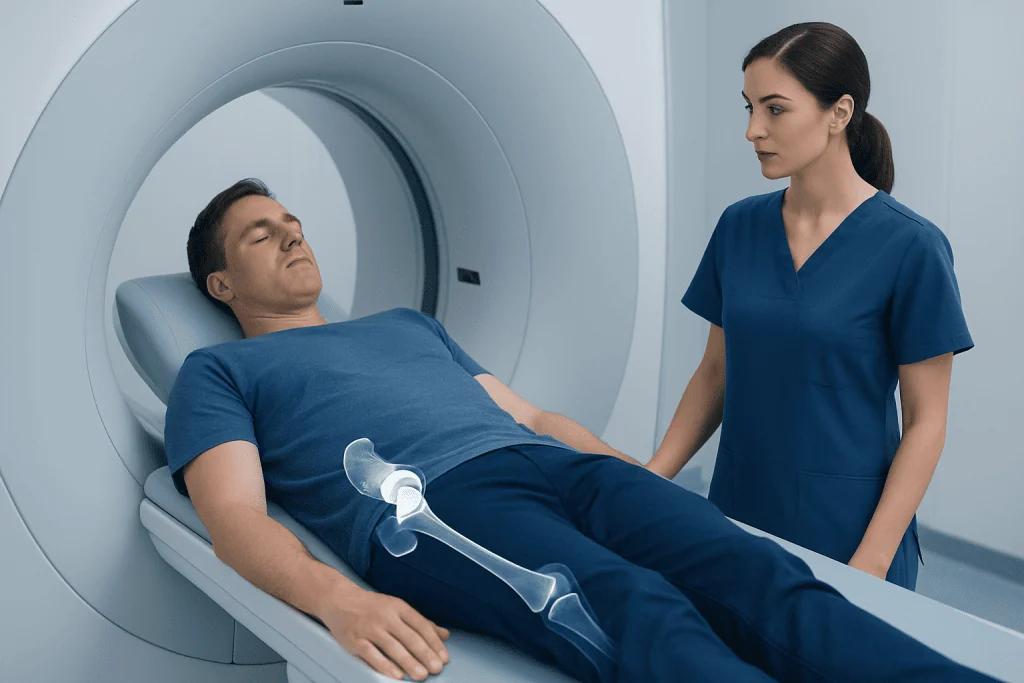
Some metal items are commonly compatible with MRI, while others need strict evaluation. Orthopedic implants such as hip and knee replacements, screws, plates, and many spinal fixation devices are often MRI-compatible or MRI-conditional. Even when they are considered safe, they can still create image distortion, especially if the scan is near the implant.
More caution is needed with implanted electronic or magnet-sensitive devices. These may include pacemakers, implantable cardioverter defibrillators, cochlear implants, neurostimulators, insulin pumps, programmable shunts, infusion pumps, and certain older aneurysm clips. These devices may require special MRI protocols, device checks before and after the scan, or in some situations, MRI avoidance.
Metal fragments in the eye or body can also be important, particularly after welding, grinding, industrial work, or blast injuries. Even a tiny fragment can pose a risk depending on where it is located. The MRI team may request an X-ray or other screening test first if there is any concern.
- Often low concern after verification: many joint replacements, dental fillings, crowns, and modern surgical clips
- Need careful review: cardiac devices, cochlear implants, neurostimulators, medication pumps, vascular implants
- May need additional imaging first: possible metal fragments in the eye or near vital organs
Why MRI Can Be Risky for Some Implants

The main safety concerns are movement, heating, malfunction, and image artifact. A strong magnetic field can attract certain ferromagnetic metals. If an implant is poorly secured or made from a magnet-sensitive material, there may be a risk of movement. This is why older implants or implants with uncertain records require extra attention.
Radiofrequency energy used during MRI can also cause some devices or wires to heat up. This matters especially for long conductive components or implants near sensitive tissues. In addition, electronic implants may not work as intended during or after the scan unless they are specifically approved for MRI under defined conditions.
Another issue is image quality. Metal can distort the MRI image, making nearby structures harder to assess. This does not usually create a safety problem, but it may reduce the usefulness of the test. In some cases, radiologists can adapt the scan with special metal artifact reduction techniques, or the doctor may choose another imaging study such as MRI scanning alternatives including CT when it better answers the clinical question.
What Patients Need to Check Before a Scan
Before an MRI, patients should try to gather as much information as possible about any implant or metal device in the body. Helpful details include the exact device name, manufacturer, model number, serial number if available, date of implantation, and the hospital or surgeon who placed it. Many patients receive an implant card after surgery or device placement. Bringing this card to the appointment can be extremely useful.
If the patient does not know what implant they have, the imaging center may ask for surgical records or contact the implanting doctor. Sometimes previous imaging, such as X-rays, can help identify the device. It is safer to delay the scan briefly for verification than to proceed with incomplete information.
Patients should also mention temporary or external items that may contain metal. These include hearing aids, insulin pumps, medication patches with metallic backing, body piercings, removable dental appliances, hair accessories, and some cosmetic products containing metallic particles. The MRI team will explain what must be removed before entering the scanner room.
- Bring any implant card or device paperwork
- Share details of past surgeries, even if they were many years ago
- Report any history of metal injury to the eyes or body
- Tell the team about tattoos, permanent makeup, or medication patches if asked
- Never assume an implant is safe without formal confirmation
How Hospitals Decide Whether MRI Is Safe
MRI teams use established safety categories when reviewing implants. A device may be described as MRI-safe, MRI-unsafe, or MRI-conditional. MRI-conditional means the scan can be done only under specific requirements, such as a certain magnet strength, body position, device programming setting, or monitoring plan. These details matter and should be followed exactly.
The decision usually involves the radiologist, MRI technologist, and sometimes the specialist responsible for the implant, such as a cardiologist, neurosurgeon, or orthopedic surgeon. For example, a patient with a heart rhythm device may need device interrogation and reprogramming before and after the scan. A person with hearing or neurological implants may need similar specialist input.
In some situations, the team may suggest another test instead of MRI. A CT scan or ultrasound may be more suitable if the implant status is uncertain or if metal artifact would make MRI less helpful. When spine hardware, joint replacements, or prior brain surgery are relevant, the team may also review related conditions such as brain tumors or herniated discs in the broader clinical context to choose the most informative imaging approach.
Special Situations: Pacemakers, Aneurysm Clips, and Pregnancy
Some situations deserve especially careful planning. Modern pacemakers and defibrillators are often designed to allow MRI under controlled conditions, but they still require a formal protocol. This may include checking the device model, confirming lead compatibility, adjusting settings temporarily, and monitoring the patient during the scan. Older or non-compatible systems may pose greater restrictions.
Aneurysm clips are another important example. Many newer clips are made from MRI-compatible materials, but some older clips may not be. Because clips are placed near delicate blood vessels in the brain, accurate identification is essential before MRI. The same principle applies to cochlear implants and implanted neurostimulators, which can contain magnets or electronics that need special handling.
Pregnancy adds a separate layer of review. MRI itself does not use ionizing radiation, and it may be appropriate during pregnancy when medically needed. However, if the pregnant patient also has a metal implant, the implant assessment still needs to be completed as usual. The care team will weigh the benefit of imaging against any potential concern and choose the safest approach for both parent and baby.
What to Expect on the Day of the MRI
On the day of the scan, patients are usually asked to complete a detailed safety questionnaire. It is important to answer every question carefully, even if the issue seems minor. If there is any uncertainty, the patient should say so rather than guessing. MRI safety depends on accurate information.
Before entering the scanner room, all removable metal objects must be taken off. This usually includes jewelry, watches, phones, keys, bank cards, glasses, hairpins, and removable medical devices unless specifically approved. Some clothing may also need to be changed if it contains metallic fibers, zippers, or fasteners.
If the MRI is approved with conditions, the team may follow a tailored plan. This can include using a specific scanner strength, limiting certain sequences, monitoring symptoms, or arranging additional supervision. Patients should tell the staff immediately if they feel warmth, discomfort, pulling, dizziness, or any unusual sensation during the exam.
At experienced centers, these checks are part of routine care. Acibadem International’s multidisciplinary specialists and JCI-accredited hospitals evaluate implant details carefully and coordinate imaging decisions for international patients when MRI or alternative tests are needed.
When to Speak With a Doctor or Imaging Center Early
Patients should contact the imaging center before the appointment if they know they have an implant, are unsure what was placed during past surgery, or have ever been told they should avoid MRI. Early communication gives the team time to review records and prevent delays on the day of the scan. This is especially helpful for cardiac devices, brain clips, ear implants, pumps, and stimulators.
It is also wise to seek advice if there has been a recent procedure, because some implants have timing recommendations before MRI. In other cases, a device may be safe only after it has become firmly fixed in place. The implanting doctor or radiology team can explain whether waiting is appropriate.
Urgent medical attention should be sought if a person has symptoms that need prompt diagnosis, even if MRI may be complicated by an implant. The treating doctor can decide whether MRI can be organized safely or whether another imaging method should be used without delay. The goal is always to balance safety with the need for timely medical care.
Frequently asked questions
Can someone with a joint replacement have an MRI?
Often, yes. Many modern hip, knee, and other orthopedic implants are compatible with MRI or can be scanned under defined conditions. The imaging team still needs to know the exact implant details because safety and image quality can vary.
Are dental fillings, crowns, or braces a problem for MRI?
Most dental fillings and crowns are not a safety problem during MRI. However, braces and other dental hardware can distort images of the head, face, or jaw. Patients should still tell the MRI team about all dental work before the scan.
What if the patient does not know what implant they have?
The scan should not rely on guesswork. The imaging center may ask for operation notes, an implant card, previous imaging, or contact information for the surgeon or hospital. Sometimes the MRI is delayed briefly until the device can be identified safely.
Can a pacemaker patient ever have an MRI?
In many cases, yes, but only after careful review. Some pacemakers and defibrillators are designed for MRI under specific conditions and require coordinated checks before and after the scan. The decision should be made by the radiology team together with the heart specialist.
Why does the MRI staff ask about old metal injuries to the eye?
A tiny metal fragment in or near the eye can move or heat during MRI, which may be dangerous. This risk matters especially for people with past metalworking, welding, grinding, or explosion-related injuries. If needed, the team may arrange an X-ray or another screening test first.
If MRI is not safe, what other scans might be used?
That depends on the reason for imaging and the part of the body being studied. CT, ultrasound, or sometimes X-ray may provide the needed information when MRI is unsuitable or less useful. The doctor will choose the option that best answers the clinical question while keeping the patient safe.
References
- American College of Radiology
- Radiological Society of North America
- U.S. Food and Drug Administration
- National Health Service
- International Society for Magnetic Resonance in Medicine
This article is for general information only and is not a substitute for professional medical advice. Please consult a qualified doctor about your individual situation.
Explore treatments in Turkey — costs, top hospitals & a free quote
JCI-accredited · board-certified surgeons · reply within 24h
Add us as a Preferred Source to see more of our trusted health content across Google Search, AI Overviews and Discover.