Msafp Screening: How It Works, Results and What to Expect

MSAFP screening is commonly performed between 15 and 20 weeks of pregnancy, often ideally around weeks 16 to 18. The test estimates the likelihood of open neural tube defects and may also signal that pregnancy dating or other clinical details need review.
Key Takeaways
- MSAFP screening is commonly performed between 15 and 20 weeks of pregnancy, often ideally around weeks 16 to 18.
- The test estimates the likelihood of open neural tube defects and may also signal that pregnancy dating or other clinical details need review.
- A result outside the expected range is not a diagnosis; most people with an unusual result do not have an affected baby.
- Results are interpreted using multiples of the median (MoM), adjusted for gestational age and other individual factors.
- The test requires a routine blood draw, has no recovery time, and does not create a physical risk to the fetus.
- Ultrasound, repeat blood testing, genetic counseling, and sometimes amniocentesis may be offered after an abnormal screen.
MSAFP screening is a prenatal blood test that measures alpha-fetoprotein (AFP) in the pregnant person’s blood, usually during the second trimester. It does not diagnose a fetal condition, but it can identify pregnancies that may benefit from ultrasound or diagnostic testing.
MSAFP screening: an overview
MSAFP screening, short for maternal serum alpha-fetoprotein screening, is a blood test offered during pregnancy. It measures alpha-fetoprotein, a protein made mainly by the developing fetus, that passes into the amniotic fluid and small amounts into the pregnant person’s bloodstream. The result is used to estimate whether the pregnancy has a higher-than-expected chance of certain conditions.
The test is a screening test rather than a diagnostic test. In other words, an MSAFP screen result cannot confirm that a baby has a health condition, and a typical result cannot rule out every condition. It helps the pregnancy care team decide whether more detailed assessment, most often ultrasound, would be useful.
MSAFP may be ordered as a stand-alone test or as part of a second-trimester multiple-marker screening panel. Practices differ by country, health system, and individual pregnancy history. Many pregnancies now also include detailed ultrasound assessment, which is an important part of screening for structural differences.
How MSAFP screening works and who may be offered it
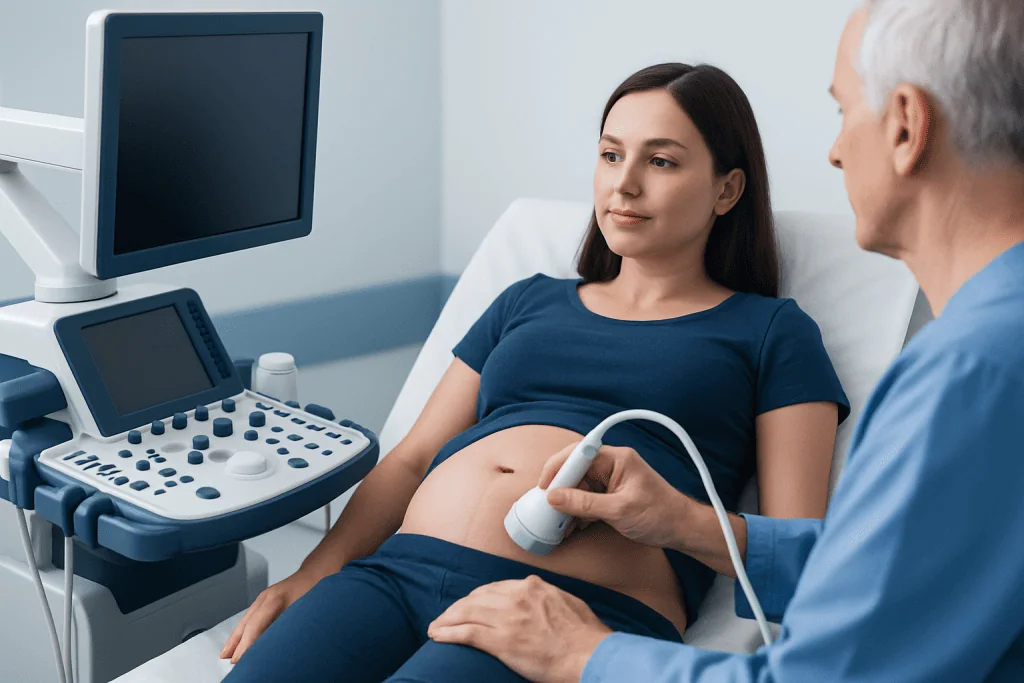
AFP levels change naturally as pregnancy progresses. A laboratory compares the measured AFP level with the expected median level for the same gestational age, then reports the value as a multiple of the median, or MoM. The interpretation may be adjusted for factors such as the pregnant person’s weight, diabetes status, number of fetuses, and the method used to date the pregnancy.
MSAFP screening timing is usually between 15 and 20 weeks of pregnancy. It is often most informative in the middle of that window, around 16 to 18 weeks. Accurate dating matters because even a small difference in estimated gestational age can affect whether AFP appears higher or lower than expected.
A clinician may discuss this screening with people who want second-trimester assessment for open neural tube defects, including spina bifida and anencephaly. It may also be considered when first-trimester screening or noninvasive prenatal testing has already been performed, because those tests do not assess every type of structural condition in the same way.
Deciding whether to have prenatal screening is personal. A doctor, midwife, or genetic counselor can explain what the test can and cannot show, what follow-up could involve, and how the information may fit an individual’s values and pregnancy care plan.
What does the MSAFP screening test detect?

MSAFP screening mainly helps identify pregnancies with a higher chance of an open neural tube defect. These conditions occur when the neural tube, the early structure that forms the brain and spinal cord, does not close completely. Higher AFP levels can be associated with open spina bifida or anencephaly, although detailed ultrasound is needed to assess the fetus directly.
An elevated level can also occur for reasons unrelated to a fetal structural condition. Common explanations include an incorrect due date, a multiple pregnancy, vaginal bleeding, or differences involving the placenta. Less commonly, it may be associated with certain abdominal wall defects or pregnancy complications that require closer monitoring.
Lower-than-expected AFP can be seen in some chromosome conditions when MSAFP is interpreted as part of a combined serum screening panel. On its own, however, MSAFP is not a definitive chromosome test. It should not be used to diagnose Down syndrome or other genetic conditions.
The most useful next step after an unexpected result is usually confirmation of pregnancy dating and a detailed ultrasound. Depending on the findings and personal preferences, the care team may also suggest genetic counseling or diagnostic testing such as amniocentesis.
The procedure: what happens during and after the blood test
MSAFP screening is simple and similar to other routine blood tests. No fasting, anesthesia, or special preparation is usually required. Before the blood sample is taken, the clinician or laboratory may confirm information such as estimated due date, current weight, diabetes history, and whether there may be more than one fetus.
A healthcare professional cleans a small area of skin, usually on the arm, and collects a blood sample with a needle. The draw generally takes only a few minutes. The sample is then sent to a laboratory, where AFP is measured and interpreted in relation to the pregnancy details provided.
There is no recovery timeline beyond routine care after a blood draw. Most people can return to normal activities immediately. Mild tenderness, a small bruise, or brief light-headedness can happen, but serious complications are uncommon.
The principal benefit is that the test can identify a need for more detailed assessment during a stage of pregnancy when ultrasound and specialist consultation can provide useful information. Its limitation is the possibility of false-positive or false-negative screening results, which is why results should always be reviewed in clinical context.
How long does it take to get MSAFP test results back?
MSAFP test results are commonly available within several days to about one week after the blood sample reaches the laboratory. The exact MSAFP results time depends on the laboratory, local processing schedules, whether the test is part of a larger panel, and whether information such as gestational age needs to be checked.
If a result needs review, the care team may contact the patient sooner or arrange a follow-up appointment. This does not necessarily mean that a problem has been found. It often means that the laboratory value needs to be interpreted alongside ultrasound findings, pregnancy dates, or other health information.
For people wondering, “msafp test how long for results,” the best source is the clinic or laboratory that arranged the test. They can explain their usual reporting time and how results will be communicated. It is reasonable to ask when and how to expect the result before leaving the appointment.
What is a normal MSAFP score?
There is no single AFP number that is normal for every pregnancy because AFP changes significantly from week to week. Laboratories usually express the result as MoM, which compares an individual result with the median expected value at that stage of pregnancy. A value near 1.0 MoM is close to the median for that reference group.
Many laboratories consider a value below approximately 2.0 to 2.5 MoM to be within the expected range for screening purposes in a singleton pregnancy, but cutoffs vary. The laboratory and pregnancy care team use their own validated ranges and adjustments. Therefore, a person should not interpret an MoM value independently or compare it directly with someone else’s result.
A higher or lower value does not establish a diagnosis. Dating differences, twins or other multiples, maternal factors, and laboratory calculations can all change the result. A clinician may recommend ultrasound, repeat evaluation, or referral to a maternal-fetal medicine specialist to clarify what the result means.
Is MSAFP the same as NIPT?
No. MSAFP and noninvasive prenatal testing (NIPT) are different blood tests with different purposes. MSAFP measures a fetal protein in maternal blood and is mainly used to screen for open neural tube defects and, in some settings, as part of broader second-trimester serum screening.
NIPT analyzes small fragments of placental DNA circulating in the pregnant person’s blood. It is primarily used to screen for certain chromosome differences, such as trisomy 21, trisomy 18, and trisomy 13. NIPT is highly accurate for the chromosome conditions it screens for, but it is still a screening test and does not replace diagnostic testing when confirmation is needed.
Because their strengths differ, having NIPT does not automatically make MSAFP or second-trimester structural assessment unnecessary. A detailed fetal ultrasound remains important in prenatal care. The most appropriate approach depends on gestational age, medical history, local recommendations, and the type of information a person wishes to have.
When to seek medical care
People should contact their maternity care team if they have not received expected results, do not understand an MSAFP screen result, or are worried after being told that further testing is recommended. Prompt discussion can clarify whether the result may relate to pregnancy dating, multiple pregnancy, an ultrasound finding, or another factor that needs evaluation.
Urgent medical advice is appropriate for symptoms such as heavy vaginal bleeding, severe or persistent abdominal pain, fluid leakage, fainting, fever, or a noticeable reduction in fetal movement later in pregnancy. These symptoms are not caused by MSAFP screening itself, but they should be assessed promptly during pregnancy.
For abnormal screening results, maternal-fetal medicine, radiology, genetics, and obstetric specialists may work together to plan next steps. Acibadem International’s multidisciplinary specialists and JCI-accredited hospitals provide diagnostic assessment and pregnancy care for international patients.
Frequently asked questions
When is MSAFP screening done?
MSAFP screening is generally performed between 15 and 20 weeks of pregnancy. Many clinicians prefer the test around 16 to 18 weeks because AFP interpretation is particularly well established during this period. The exact timing may vary according to dating ultrasound results and local care protocols.
Does an abnormal MSAFP result mean the baby has a birth defect?
No. An abnormal result means the measured AFP level differs from the expected range after the laboratory’s adjustments. Incorrect pregnancy dates, multiple pregnancy, bleeding, and placental factors can affect the result. Further ultrasound and, in selected cases, diagnostic testing can provide clearer answers.
Can MSAFP screening tell the baby’s sex?
No. MSAFP screening measures alpha-fetoprotein and is not designed to identify fetal sex. Ultrasound or certain DNA-based prenatal tests may provide sex information, depending on gestational age, local practice, and personal preferences.
Do I need to fast before an MSAFP test?
Fasting is usually not needed for MSAFP screening. People should follow any instructions from the clinic, particularly if blood is being collected for other tests at the same visit. It can be helpful to drink water and inform the staff if there is a history of feeling faint during blood draws.
What happens after a high MSAFP result?
The clinician commonly reviews the estimated due date and other clinical details, then recommends a detailed ultrasound. This scan can check fetal anatomy, confirm the number of fetuses, and assess the placenta. Genetic counseling and diagnostic testing may be discussed if uncertainty remains or if ultrasound findings raise concern.
Can MSAFP screening be performed with twins?
Yes, but interpretation is more complex because AFP levels are often higher in multiple pregnancies. The laboratory needs accurate information about the number of fetuses and gestational age. A specialist may help interpret results alongside ultrasound findings.
References
- American College of Obstetricians and Gynecologists
- Centers for Disease Control and Prevention
- National Health Service
- MedlinePlus
- Society for Maternal-Fetal Medicine
This article is for general information only and is not a substitute for professional medical advice. Please consult a qualified doctor about your individual situation.
Explore treatments in Turkey — costs, top hospitals & a free quote
JCI-accredited · board-certified surgeons · reply within 24h
Add us as a Preferred Source to see more of our trusted health content across Google Search, AI Overviews and Discover.
Check your numbers in seconds
BMI, calories, due date, blood pressure and 30+ more clinical calculators — free, instant, doctor-reviewed ranges.