Physio Tape Rotator Cuff: An Evidence-Based Guide for Patients
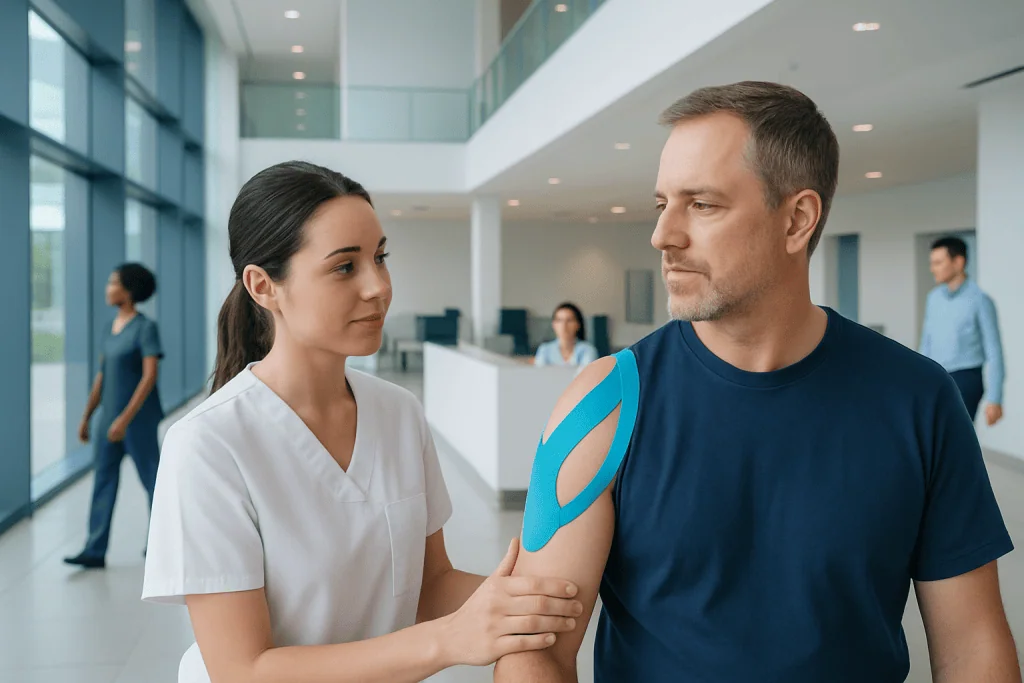
Physio tape, also called kinesiology tape, may temporarily reduce rotator cuff-related shoulder pain for some people. Tape does not repair a torn tendon, reverse degeneration, or replace strengthening and movement rehabilitation.
Key Takeaways
- Physio tape, also called kinesiology tape, may temporarily reduce rotator cuff-related shoulder pain for some people.
- Tape does not repair a torn tendon, reverse degeneration, or replace strengthening and movement rehabilitation.
- Correct assessment matters because shoulder pain can arise from the rotator cuff, joint arthritis, neck conditions, instability, or other causes.
- Tape should feel comfortable and should not cause tingling, numbness, rash, increasing pain, or restricted circulation.
- Persistent weakness, a sudden injury, inability to lift the arm, or severe pain should be assessed by a qualified clinician.
Physio tape for a rotator cuff problem may offer short-term pain relief, greater comfort during movement, or improved confidence while exercising. Evidence suggests its effects are usually modest and temporary, so it is best used as one part of a clinician-guided rehabilitation plan rather than as a stand-alone treatment.
Overview: Can Physio Tape Help a Rotator Cuff?
Physio tape for rotator cuff pain can be a useful short-term support for some people, particularly when it helps them move more comfortably during daily activities or prescribed exercise. Physio tape usually refers to elastic kinesiology tape applied to the skin around the shoulder. It is not the same as rigid athletic tape, which is designed to limit movement more firmly.
The rotator cuff is a group of four muscles and their tendons that help stabilize the shoulder and lift or rotate the arm. Pain in this region is common and may be related to tendon irritation, overuse, age-related tendon changes, bursitis, partial or full-thickness tears, or shoulder mechanics. Because several conditions can produce similar symptoms, tape should not be used to self-diagnose a rotator cuff injury.
Research on kinesiology tape for shoulder pain has produced mixed results. Some studies suggest small, short-term improvements in pain or range of motion when tape is used alongside exercise and other rehabilitation measures. However, benefits are not consistent for every person, and the tape has not been shown to heal a damaged tendon. A physiotherapist or doctor can help decide whether it is appropriate for the individual situation.
How Physio Tape May Work
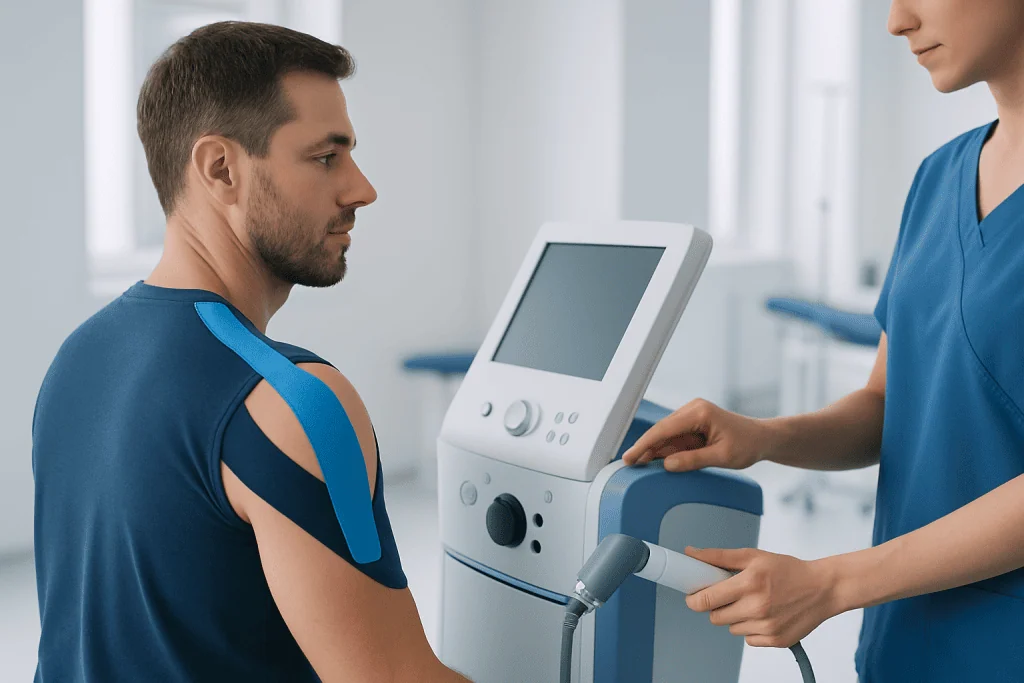
Elastic tape is thought to work mainly through sensory input from the skin. The tape may alter how the nervous system perceives pain, increase awareness of shoulder position, and provide a feeling of support during movement. Some people also find that it reminds them to avoid sudden, painful motions or poor posture.
These effects should be understood as supportive rather than structural. When applied correctly, kinesiology tape does not hold a torn rotator cuff tendon together or substantially change the strength of the shoulder. It should not be relied on to make heavy lifting, overhead sport, or strenuous work safe when those activities are painful or medically restricted.
There is also no single universally correct taping pattern. A clinician may select a technique based on whether pain occurs while lifting the arm, reaching behind the back, sleeping on the shoulder, or performing work or sports tasks. The plan should be individualized and reviewed if symptoms change.
Who May Benefit and Who Should Be Cautious

Physio tape may be considered for adults with mild to moderate rotator cuff-related shoulder pain who are already following a rehabilitation plan. It can be particularly helpful as a temporary aid during selected exercises, return to ordinary activities, or periods when shoulder discomfort is limiting confidence. Its usefulness is usually judged by a practical question: does it allow more comfortable, better-quality movement without worsening symptoms afterward?
People with a recent major injury, marked weakness, recurrent shoulder dislocation, suspected fracture, or a possible complete tendon tear should seek assessment before trying to manage the problem with tape. A sudden loss of the ability to raise the arm after a fall, collision, or lifting injury needs timely medical attention.
Skin safety is equally important. Tape should generally be avoided over open wounds, sunburn, active skin infection, fragile skin, or a known adhesive allergy. People with reduced sensation, circulation problems, significant swelling, or medical conditions affecting skin healing should ask a clinician before use. Removing tape promptly is sensible if itching, burning, blisters, numbness, color change, or increasing pain develops.
Using Tape Safely as Part of Rehabilitation
For the best chance of a useful result, application should be taught by a physiotherapist, sports medicine clinician, or another trained health professional. They can check shoulder movement, examine the neck and upper back, and identify whether the proposed tape placement fits the diagnosis. They can also show how to prepare the skin and remove tape gently to reduce irritation.
Before application, the skin should be clean, dry, and free from creams or oils. The tape should lie smoothly without painful pulling, tight wrapping, or folds that rub the skin. It should never be applied so tightly that it causes tingling, coldness, swelling, blue or pale fingers, or a pulsing sensation. These symptoms mean the tape should be removed.
Tape is usually most useful when paired with an active plan. Depending on the diagnosis, this may include gradual rotator cuff and shoulder-blade strengthening, flexibility work where appropriate, posture and activity adjustments, and a paced return to overhead tasks. Resting completely for prolonged periods can lead to stiffness and weakness, while pushing through substantial pain may delay recovery. A clinician can help find the appropriate balance.
Evidence-Based Treatment Beyond Tape
Exercise-based rehabilitation is generally a central part of care for many rotator cuff-related problems. A physiotherapist may prescribe exercises to improve rotator cuff strength, shoulder-blade control, chest and upper-back mobility, and tolerance for everyday movement. Programs are normally progressed gradually, based on symptoms, function, occupation, sport, and imaging findings when imaging is needed.
Simple measures may also help in the early stages. These can include modifying aggravating activities, avoiding repeated heavy overhead work for a time, using cold or heat according to personal comfort, and discussing suitable pain-relief options with a doctor or pharmacist. Sleep can be easier with the painful arm supported on a pillow or by avoiding pressure directly on that shoulder.
Medical assessment may lead to further options when symptoms are persistent, severe, or associated with a significant tear. These may include diagnostic imaging, a supervised rehabilitation program, treatment for inflammation or other pain sources, and, in selected cases, surgical consultation. The choice depends on the individual rather than on an MRI result alone; many tendon problems improve without surgery, while some acute tears require earlier specialist review.
Practical Self-Care and Prevention
Shoulder symptoms often improve when activities are modified rather than stopped altogether. Reducing the weight, repetition, reach, or speed of painful tasks can maintain activity while allowing the shoulder to settle. For example, someone may temporarily keep commonly used items at waist level, take more frequent breaks from overhead work, or use two hands for lifting where possible.
Gradual conditioning is important for prevention and return to activity. Warming up before sport, increasing training volume slowly, and maintaining strength in the shoulder, upper back, and trunk may improve load tolerance. Good technique and adequate recovery are especially relevant for people who swim, throw, play racquet sports, perform manual labor, or regularly lift overhead.
Symptoms should guide progress. Mild discomfort that settles soon after exercise can be acceptable in some rehabilitation plans, but sharp pain, increasing night pain, or worse function the next day suggests that the activity may need to be adjusted. Keeping a brief record of painful activities and symptom patterns can help a clinician tailor treatment.
When to Seek Medical Care
Medical care should be sought promptly after a fall, collision, or sudden pulling injury if there is severe pain, visible deformity, major swelling, numbness, or an inability to move the arm normally. Urgent assessment is also important if the shoulder is red, hot, very swollen, or accompanied by fever or feeling unwell, as these signs may indicate a problem other than a routine tendon condition.
A non-urgent appointment with a doctor or physiotherapist is appropriate when shoulder pain lasts more than a few weeks, repeatedly disrupts sleep, limits work or self-care, or is associated with ongoing weakness. Assessment is particularly important when the arm cannot be lifted as before, pain began suddenly during an injury, or symptoms are getting worse despite activity changes and home care.
Acibadem International’s multidisciplinary specialists at JCI-accredited hospitals can assess shoulder conditions and coordinate rehabilitation or orthopedic care for international patients. The appropriate next step is an individualized examination, rather than relying on tape or online guidance alone.
Frequently asked questions
Does physio tape heal a rotator cuff tear?
No. Physio tape does not repair a torn rotator cuff tendon or reverse tendon degeneration. It may provide temporary comfort or movement support while a person follows an appropriate rehabilitation plan, but it is not a substitute for medical assessment when a tear is suspected.
How long should kinesiology tape stay on the shoulder?
The recommended wear time varies with the tape product, skin sensitivity, and clinician instructions. It should be removed sooner if it causes itching, burning, rash, worsening pain, numbness, or circulation changes in the arm or hand. A qualified clinician can advise on safe use for the individual.
Can people apply rotator cuff tape themselves?
Some people can learn a safe technique after being shown by a physiotherapist or trained clinician. However, self-application may be less effective if the cause of pain has not been assessed or the tape is placed too tightly. It is sensible to obtain professional guidance, especially after an injury or when symptoms are persistent.
Is kinesiology tape better than exercise for rotator cuff pain?
Kinesiology tape should not be viewed as better than exercise-based rehabilitation. For many rotator cuff-related conditions, progressive exercise and activity modification are key parts of recovery. Tape may be an optional addition when it improves comfort enough to support participation in rehabilitation.
Can physio tape make shoulder pain worse?
Yes, it can if it irritates the skin, is applied too tightly, or encourages a person to do activities that exceed the shoulder's current capacity. It should be removed if symptoms worsen during use. New weakness, severe pain, or loss of arm movement needs clinical evaluation rather than repeated taping.
Should tape be used for shoulder pain at night?
Some people find tape comfortable overnight, while others experience skin irritation or do not notice a benefit. It should never feel constricting, and it should be removed if it disrupts sleep or causes discomfort. Supporting the arm with pillows and discussing persistent night pain with a clinician may be more helpful.
References
- American Academy of Orthopaedic Surgeons
- American Physical Therapy Association
- National Institute for Health and Care Excellence
- Journal of Orthopaedic & Sports Physical Therapy
- Mayo Clinic
This article is for general information only and is not a substitute for professional medical advice. Please consult a qualified doctor about your individual situation.
Rotator Cuff in Turkey — costs, top hospitals & a free quote
JCI-accredited · board-certified surgeons · reply within 24h
Add us as a Preferred Source to see more of our trusted health content across Google Search, AI Overviews and Discover.

More from the Health Library



Related Specialists

Assoc. Prof. Dr. Bedriye Koyuncu Sökmen
Gastrointestinal Oncology Unit Clinical Service
Dr. Cansel Karaali
Anesthesiology
Dr. Olcayto İncedere
Cardiology
Dr. Erbil Ulus Duman
Ophthalmology